Who regulates organic mushroom supplements?
The USDA Agricultural Marketing Service administers the National Organic Program, or NOP. FDA still regulates dietary-supplement labeling and safety matters within its authority, but FDA explicitly directs the organic question to USDA. A supplement making an organic claim must therefore satisfy the applicable USDA organic rules as well as the other federal rules that apply to the product.
USDA states that mushrooms may be certified under current production and handling standards and must comply with organic labeling requirements. Certification involves an operation and its organic system, not a federal finding that a supplement is effective. A USDA seal should never be read as FDA approval or clinical endorsement.

The four organic labeling categories
The front claim and the ingredient panel work together. Water and salt are excluded from the percentage calculation described by USDA.
| Label category | Certified organic content | USDA seal | What to inspect |
|---|---|---|---|
| 100 percent organic | All ingredients and processing aids within the category are certified organic | Permitted | Ingredient list, certifier statement and certificate scope |
| Organic | At least 95 percent | Permitted | Which permitted nonorganic ingredients make up the remainder |
| Made with organic… | At least 70 percent | Prohibited | The named organic ingredients or food groups and information panel |
| Specific organic ingredients | Less than 70 percent may be organic | Prohibited | Only the individually identified ingredients are organic |
The percentages describe the formulation's organic agricultural content under the program rules. They do not tell you the milligrams of mushroom extract or the proportion of a proprietary blend.
What “100 percent organic” means
This is the narrowest category. USDA describes it as applying to products whose ingredients are 100 percent certified organic, excluding salt and water, with processing aids also meeting the category requirements. The USDA organic seal may appear, though its use is optional.
For a single-ingredient mushroom powder, this category may be comparatively simple to understand. A gummy or flavored blend has many more components: sweeteners, gelling agents, flavors, colors, acids and processing aids. The claim applies to the whole eligible composition, not only to the mushroom named on the front.
What a product labeled “organic” means
The unqualified “organic” category generally requires at least 95 percent certified organic content, excluding salt and water. The remaining fraction is constrained by the organic regulations and National List rules; it is not an unrestricted allowance for any conventional ingredient.
The USDA seal may appear on an eligible product, but a missing optional seal does not necessarily mean the product lacks certification. Look for the organic claim, identified organic ingredients and the “certified organic by” statement naming the certifier. Those elements are more informative together than a green color palette or leaf illustration.
What “made with organic” means
A product in this category contains at least 70 percent certified organic ingredients, excluding salt and water, and follows additional composition restrictions. The principal display panel may identify up to three organic ingredients or ingredient categories in the permitted wording.
It may not use the USDA organic seal and may not represent the finished product simply as “organic.” A pouch that says “made with organic mushrooms” therefore makes a different claim from “organic mushroom gummies.” The first requires checking which named mushroom ingredients are certified; the second speaks to the qualifying composition of the finished product.
When only one ingredient is organic
A product below the 70 percent threshold can identify particular certified organic ingredients in its ingredient statement. That does not make the finished supplement an organic product. For example, “organic Lion's Mane extract” within a longer ingredient list can be meaningful, but the front panel cannot turn that ingredient-specific fact into an unqualified finished-product claim.
This distinction matters for comparison. One formula may certify the mushroom input while another certifies the whole multi-ingredient product. Neither fact tells you which contains more mushroom or which has stronger compositional evidence.
Read the front and information panels together
Start with the exact phrase on the front. Then move to the information panel and ingredient statement. USDA guidance says organic ingredients must be identified, often through the word “organic” or a defined reference mark. Packaged products in applicable categories should also identify the certifying body below the handler or distributor information.
Check whether the certification language applies to the finished product, a named ingredient or a supplier. A supplier certificate for an input does not automatically certify the retailer's complete gummy. Conversely, a finished-product certification should rest on the certified handling system and qualifying ingredients, not merely on one mushroom certificate.
How to verify the certifier and operation
Record the name following “certified organic by.” USDA authorizes accredited certifying agents and provides the Organic INTEGRITY Database for finding certified operations and certification information. Search the legal operation name rather than relying only on the consumer-facing brand.
Match several fields:
- operation and facility name;
- certifying agent;
- certification status;
- product or handling scope when available;
- effective dates and current standing;
- the relationship between the certified operation and label distributor.
A database record supports the operation's certification status. It is not, on its own, a finished-lot assay and should not be described as one.
Ingredient certification versus finished-product certification
Supply chains create multiple documents. A mushroom grower may be certified. An extract processor may handle certified material. A contract manufacturer may formulate a gummy. The brand on the pouch may be a distributor. A strong evidence chain shows how certified status is maintained through each relevant handling stage.
Ask whether the certificate covers the input, the processing operation, the finished formula or all applicable stages. The label's certifier statement usually points to the certifier of the final handler or distributor arrangement required by the rules. Batch and purchasing records should connect the actual materials used.

Organic does not prove mushroom identity
Certification can verify production and handling against organic standards, but the word “organic” does not authenticate a Latin species name. Once mushrooms are powdered or extracted, visual identity is difficult. Supplier controls, microscopy and genetic methods may support identity depending on the material.
Use the mushroom DNA testing guide to understand what ITS barcoding or PCR can establish. Remember that DNA testing also has limits after extensive processing. Organic and identity evidence belong in separate columns.
Organic does not prove fruiting body or extract quality
Mycelium and fruiting body from the same species can both be produced under organic systems. Certification does not decide which fungal material a product should use or verify a label's fruiting-body statement. It also does not specify extraction solvent, yield, native extract ratio or carrier fraction.
Those fields require the label, supplier specification and process records. The mushroom extraction guide explains why a process name is not a universal quality score, while the maltodextrin guide covers carrier and denominator questions.
Organic does not prove beta-glucans or potency
Organic standards do not establish a required beta-glucan percentage for a mushroom supplement. A certified organic powder can have high, low or unreported beta-glucan content. A nonorganic product can still provide a valid compositional assay. The two claims answer different questions.
If a marker percentage matters, ask whether it was measured on the ingredient or finished product, whether the basis is as-is or dry weight and whether the lot matches. See the beta-glucan label guide for that interpretation.
Organic does not replace contaminant testing
Organic production restricts methods and substances, but the seal is not a report showing that a finished lot was tested for every pesticide, heavy metal, microbe, mycotoxin or residual solvent. Contaminant risk depends on raw materials, environment, processing, facility controls and the test panel.
Ask for analyte-specific results where relevant. Read the sample description, method, reporting units and limits. A “pass” without the panel cannot show what was actually assessed. The mushroom gummy COA guide provides a product–lot–sample–panel workflow.
Organic does not establish a health effect
Certification is not a clinical study. It does not demonstrate better absorption, greater effectiveness or a particular outcome. Human research may study specific species, preparations and doses; those findings cannot be transferred merely because another product is organic.
Compare evidence to the exact material in the study. Then keep the buying question modest: certification can be a legitimate preference about agricultural production and handling without becoming a promise of superior therapeutic performance.
How Mood's current mushroom products fit
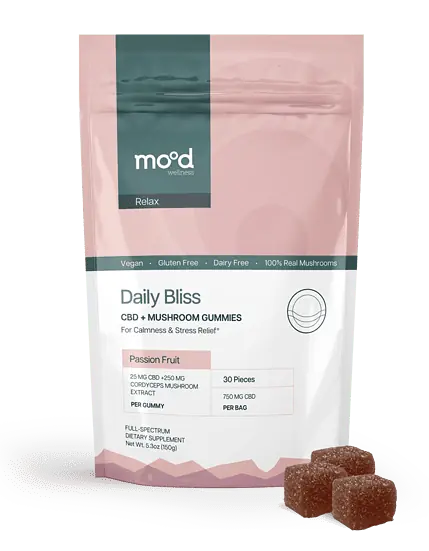
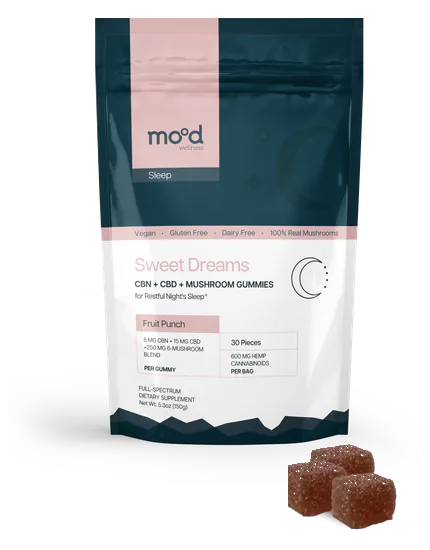
Mood's current mushroom pages describe particular formulas, mushroom ingredients and product attributes. In this review, we did not treat those pages as proof that the current finished products are USDA certified organic unless a matching label or certification record supported that exact claim.
That boundary is important. “No grain/fillers,” “fruiting body,” an extract amount and “organic” are separate statements. One cannot silently prove another. Shoppers can review the current functional mushroom collection and ask support whether any organic certificate applies to the mushroom input or the finished product they would receive.
A practical comparison checklist
For each product, write down:
- The exact organic wording on the principal display panel.
- Whether a USDA seal appears and whether that category permits it.
- Which ingredients are identified as organic.
- The named certifying agent.
- The certified operation and current status.
- Whether documentation covers an input or the finished formula.
- The mushroom species and material.
- Extract amount, serving size and any carrier.
- Separate identity and composition evidence.
- Separate finished-lot contaminant and cannabinoid reports where relevant.
This method lets organic preference influence the decision without allowing it to erase more direct quality evidence.
Record the verification date
Certification status and formulations can change. Save the operation name, certifier, database result, label version and date checked. Reverify after a reformulation, supplier change or materially different package rather than carrying an old conclusion forward.

Bottom Line: Organic Mushroom Supplements
An authentic USDA organic claim is useful, specific information about production, handling and formulation under the National Organic Program. Read the category precisely: 100 percent organic, organic, made with organic and a specifically identified organic ingredient do not mean the same thing.
Verify the certifier and certified operation, then keep organic status in its proper lane. It does not prove species, fruiting body, marker content, contaminant status, cannabinoid potency or effectiveness. The best comparison pairs a valid organic claim with transparent identity, composition, batch and safety documentation.
Quick answers
Frequently asked questions about Organic Mushroom Supplements
What is the practical answer about Organic Mushroom Supplements?
An authentic USDA organic claim is useful, specific information about production, handling and formulation under the National Organic Program. Read the category precisely: 100 percent organic, organic, made with organic and a specifically identified organic ingredient do not mean the same thing. Verify the certifier and certified operation, then keep organic status in its proper lane.
Which Mood product fits this topic?
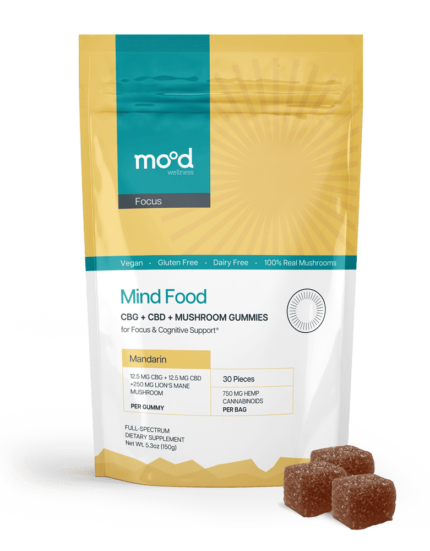
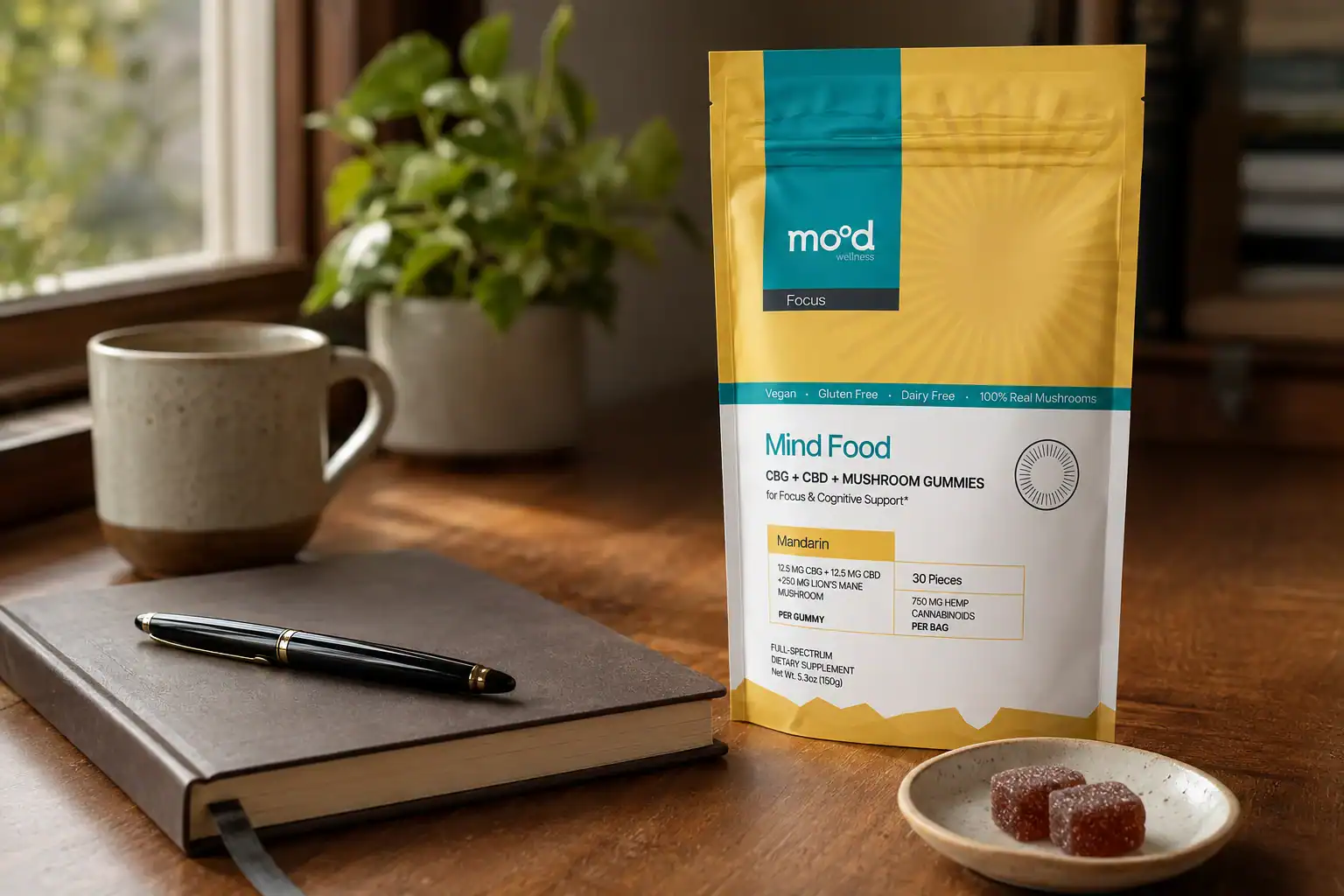
Mind Food is the most relevant Mood option for this topic. Mood Mind Food combines CBD, CBG and Lion’s Mane in a stimulant-free gummy designed for a calm, focused daytime routine.
What should I compare before choosing a product?
Compare the cannabinoid amount per measured serving, the complete ingredient list, spectrum or THC information, current product directions and available batch documentation. The best choice is the formula that fits the goal and is easy to use consistently.
How should I start using a new CBD or cannabinoid product?
Follow the current package directions, choose a low-demand first-use window and keep timing and meal context reasonably consistent. Review medication, pregnancy, liver and impairment considerations with a qualified clinician when relevant.
References
- USDA Agricultural Marketing Service. Labeling Organic Products.
- USDA Agricultural Marketing Service. Labeling Requirements for the U.S. Organic Market.
- USDA Agricultural Marketing Service. Accredited Certifying Agents.
- FDA. Questions and Answers on Dietary Supplements.
- FDA. Organic on Food Labels.