The combined result is approximately what would be expected by adding the effects of each active compound.
CBD science guide
What is the entourage effect?
CBD, THC, minor cannabinoids and terpenes can affect one another. But an interaction does not automatically make a product better. This guide explains what researchers have measured, what remains uncertain and what that means when you compare CBD products.
Bottom lineSome cannabis compounds interact. Research has not shown that every full-spectrum product creates the same effect-or a better one.
What is the entourage effect? It is the idea that compounds in cannabis-such as cannabinoids, terpenes and flavonoids-can change one another's effects when used together. A mixture may act more strongly, more weakly or simply differently from an isolated compound. It is not automatically safer or more effective.
In this guide
01 · Start with the definition
“Together” does not always mean “more”
“The whole is greater than the sum of its parts” is memorable, but it skips an important point: compounds can strengthen, reduce or simply add to one another's effects. Researchers must measure which relationship occurred.
The combination produces a larger result than expected from the individual compounds. This must be demonstrated, not assumed.
One compound reduces or changes another's effect. A mixture can also increase side effects or alter absorption.
THC + CBD
The shortest useful definition
An entourage effect means that one compound changes the effect of another when both are present. The change may affect strength, duration, absorption or side effects. It can be helpful, neutral or harmful. Scientists use the narrower word synergy only when the combination produces more than the expected added effect.
Four different things people may mean by “entourage”
Compounds may act at the same receptor, at different receptors in one pathway or in opposing signaling systems. The response changes even when the amount reaching the blood does not.
One compound may change how the body absorbs, breaks down or clears another. A stronger effect may therefore come from higher exposure, not from synergy at a receptor.
Aroma, taste and expectation can change the overall experience. That experience can be genuine without proving that cannabinoids and terpenes cooperated pharmacologically.
A complex extract may behave differently from purified CBD. That observation is useful, but it does not identify which ingredient mattered or whether the relationship was additive, synergistic or antagonistic.
The practical lessonFinding THC and CBD in the same product proves that both are present-not that CBD will neutralize THC or that the formula is synergistic. Researchers must compare defined doses and ratios, measure a specific outcome and repeat the result before calling the interaction a dependable entourage effect.
1998
The phrase “entourage effect” entered the scientific literature.
Where did the term come from?
Shimon Ben-Shabat and colleagues introduced the phrase after a preclinical experiment involving 2-AG, a signaling molecule made by the body. Companion fatty-acid compounds increased several measured effects of 2-AG even though they showed little cannabinoid activity alone. The study did not test full-spectrum CBD oil, and it did not show that every cannabis mixture is better than an isolate.
Later publications expanded the idea to combinations of plant cannabinoids and aromatic compounds. That broader use is now common, but it covers several different questions: CBD with THC, major cannabinoids with minor cannabinoids, cannabinoids with terpenes, and whole extracts compared with purified compounds.
The scientists behind the idea
From cannabinoid chemistry to the “entourage effect”
The phrase did not begin as a slogan for full-spectrum CBD. It emerged from decades of Israeli research that first made individual cannabinoids-and later the body's own cannabinoid messengers-possible to study with chemical precision.
1963–64
Raphael Mechoulam and colleagues clarified the chemistry of CBD and isolated and characterized Δ9-THC.
Raphael Mechoulam and Yehiel Gaoni made the molecules measurable
Working first at the Weizmann Institute, Raphael Mechoulam and Yuval Shvo clarified the structure of CBD in 1963. The following year, Yehiel Gaoni and Mechoulam reported the isolation and structural characterization of the principal intoxicating constituent of cannabis, Δ9-THC. Their work did not propose an entourage effect. Its importance was more fundamental: researchers could finally study defined cannabinoids rather than an ill-characterized plant mixture.
Mechoulam later moved to the Hebrew University of Jerusalem and helped build the field of cannabinoid and endocannabinoid chemistry. That distinction matters. He is often called the “father of cannabis research,” but the discoveries were collaborative, and earlier chemists-including Roger Adams, Alexander Todd, Robert Cahn and František Šantavý-made important contributions to cannabinoid chemistry.

1992–95
Anandamide and 2-AG revealed that the body makes its own cannabinoid-receptor messengers.
Why the endocannabinoid discoveries came first
After cannabinoid receptors were identified, William Devane, Lumír Hanuš, Mechoulam and colleagues isolated anandamide in 1992. In 1995, teams led by Mechoulam and by Takayuki Sugiura independently reported 2-arachidonoylglycerol, usually shortened to 2-AG, as another endogenous cannabinoid-receptor ligand. This shifted the scientific question from “What does cannabis contain?” to “How does the body's own signaling system regulate itself?”
That shift is the missing context in many commercial explanations. The original entourage experiment examined substances produced inside the body alongside 2-AG. It was not a comparison of CBD isolate with a hemp extract.

Shimon Ben-Shabat and the 1998 experiment
Shimon Ben-Shabat was first author of the 1998 European Journal of Pharmacology paper, joined by Ester Fride, Tzviel Sheskin, Tamar Tamiri, Myung Ho Rhee, Zvi Vogel, Tzvi Bisogno, Luciano De Petrocellis, Vincenzo Di Marzo and Raphael Mechoulam.
The team examined two naturally occurring glycerol esters found with 2-AG. These companion molecules showed little cannabinoid activity on their own in the tested models, yet they increased several measured effects of 2-AG. The authors called this an “entourage effect.” The word described enhancement by neighboring endogenous compounds-not a blanket rule that every component of cannabis works synergistically.
The following year, Mechoulam and Ben-Shabat discussed the broader history of cannabis, anandamide and 2-AG and suggested that related compounds could help explain the activity of some botanical medicines. Later authors extended the concept to plant cannabinoids and terpenes. That extension is a hypothesis to test, not part of what the 1998 experiment directly demonstrated.
Attribution mattersThe term is frequently credited to Mechoulam alone. A more accurate account credits Ben-Shabat as the paper's first author and names the multidisciplinary team that performed the work. Mechoulam's role is central, but the “entourage effect” was a collaborative scientific proposal.
02 · Possible mechanisms
How could cannabis compounds influence one another?
Compounds can interact at receptors, during absorption or while the body breaks them down. These mechanisms make an entourage effect possible. They do not, by themselves, prove a meaningful benefit in people.
THC acts primarily at CB1 and CB2 cannabinoid receptors. CBD has low direct affinity for those receptors and influences a wider signaling network. Minor cannabinoids and terpenes have their own proposed targets.
One compound can affect enzymes or transport processes that determine how quickly another is absorbed or cleared. The result may be more exposure, less exposure or a different timeline.
Aroma, taste, route, THC content and other ingredients can shape what a person notices. A different experience is worth recording, but it does not prove pharmacological synergy.

Does CBD cancel out THC?Not reliably. Their interaction depends on dose, ratio, timing and route. In controlled oral research, a CBD-dominant extract increased THC exposure and adverse effects compared with the same THC dose without a large CBD dose. Other studies also fail to show consistent protection. Never use CBD as a safety strategy for driving or excessive THC.
03 · Evidence, not slogans
Is the entourage effect real?
Yes, specific cannabis compounds can interact. What has not been proven is the broader claim that every full-spectrum product works better than isolate, or that it works better for every person.
Laboratory and animal studies have identified interactions among selected cannabinoids, terpenes and signaling pathways. Some standardized THC/CBD medicines have clinical evidence, although this does not reveal which ingredient caused each outcome.
Reviews find contradictory results, small samples and few controlled human trials. Extracts differ by compound, ratio, dose and delivery method, making broad comparisons difficult.
Instead of asking whether “the entourage effect works,” ask whether a defined formula outperformed a defined comparator for a defined outcome in people.
The often-cited whole-extract versus CBD-isolate study
A frequently cited 2015 mouse study compared purified CBD with a CBD-rich plant extract in an inflammation model. Purified CBD worked within a narrower dose range, while the extract produced a more consistent dose response. This is a useful preclinical clue-not proof that a retail full-spectrum oil is more effective in people. The study used a specific extract, model and outcome that cannot be transferred to every product or wellness goal.
Standardized cannabis medicines are not ordinary CBD oils
Some trials study medicines containing both THC and CBD, such as nabiximols. Those findings show that a specific standardized cannabinoid medicine can be tested; they do not establish that CBD alone created the result or that all full-spectrum hemp products behave similarly. Formulation, dose, quality control and intended use must match before evidence can be transferred.
How to weigh the research
What each type of research can-and cannot-tell us
Not all studies answer the same question. Cell and animal experiments can show that an interaction is possible; controlled human trials are needed to show that a defined formula produces a useful real-world outcome.
Controlled human trials
Best suited to testing whether a defined combination changes a meaningful outcome compared with placebo or another formula. Few trials directly isolate entourage mechanisms.
Observational evidence
Can identify patterns among people using different chemotypes or products. It cannot fully separate formula effects from expectation, preference, dose or selection bias.
Animal studies
Useful for testing dose response, behavior and tissue effects under controlled conditions. Species differences and experimental doses limit direct consumer conclusions.
Cell and receptor studies
Reveal possible targets and interactions. They establish plausibility, not whether typical oral servings create a noticeable or beneficial human effect.
Evidence that combinations can behave differently
Active compounds can interact; this is a basic principle of pharmacology. THC and CBD can change one another's absorption and subjective effects. Minor cannabinoids influence different biological targets, and some terpenes are active in laboratory models.
The open question is whether those interactions follow a repeatable pattern that makes a complex extract predictably better than purified CBD. A mixture may improve one outcome while worsening another. It may also behave differently only at concentrations that a typical consumer product never reaches.
Individual response adds another layer of uncertainty. Metabolism, medications, prior cannabis exposure, food and expectations can all affect what a person notices.
Why positive and negative studies can both be informative
A study that finds no interaction does not prove interactions never occur. It shows that the tested compounds, concentrations, model and outcome did not demonstrate one. Likewise, a positive receptor or animal result does not prove a clinically useful benefit. The productive response is not to choose the result that supports a preferred product; it is to define the conditions under which an effect appears and then test those conditions in people.
Recent reviews reach a similar middle position. They find enough mechanistic and early experimental evidence to justify better research, but not enough consistent clinical evidence to use “entourage effect” as a universal explanation. That conclusion is more useful than either extreme. It allows consumers to consider full-spectrum products while rejecting guarantees that science has not earned.
04 · Compare the label
Full-spectrum vs broad-spectrum vs CBD isolate
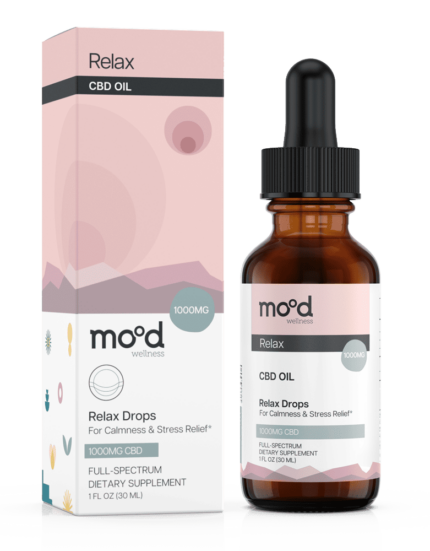
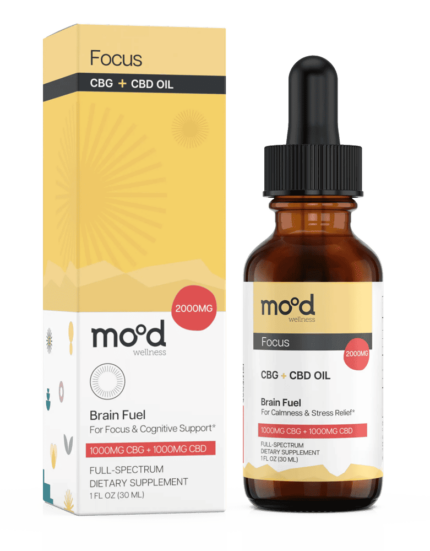
Full-spectrum, broad-spectrum and isolate describe what a product contains-not how well it will work. Because manufacturers use these labels differently, check the current batch certificate of analysis rather than relying on the package alone.
| Extract type | Usually contains | Potential advantage | Important limitation |
|---|---|---|---|
| Full-spectrum | CBD, small amounts of other cannabinoids, terpenes and legally permitted trace THC | Preserves a wider chemical profile for readers who prefer a whole-extract formula | Can expose sensitive users to THC and may create a drug-testing risk; “full” does not guarantee meaningful levels of every compound |
| Broad-spectrum | CBD plus selected cannabinoids and/or terpenes, with THC removed or reduced below the test limit | A broader profile for people trying to avoid THC | “THC-free” depends on the test method and batch; composition varies widely |
| CBD isolate | Purified CBD with no intentionally retained cannabinoids or terpenes | Simple composition and easier attribution of effects | No accompanying plant profile; purity still requires independent verification |

Do you need THC for an entourage effect?THC can participate in cannabinoid interactions, but the term is also used for THC-free combinations of CBD, minor cannabinoids and terpenes. There is no clinically proven minimum THC amount that “activates” an entourage effect. If avoiding THC matters, choose based on safety and testing-not a marketing promise.
Why the same category can contain very different products
Two bottles can both say “full-spectrum” yet contain very different amounts of CBD, THC, CBG, CBC and terpenes. Extraction, processing, storage and added ingredients all shape the finished profile. The category name alone cannot show that two products are equivalent.
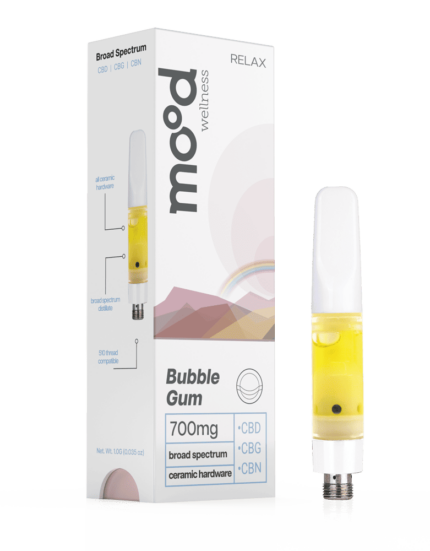
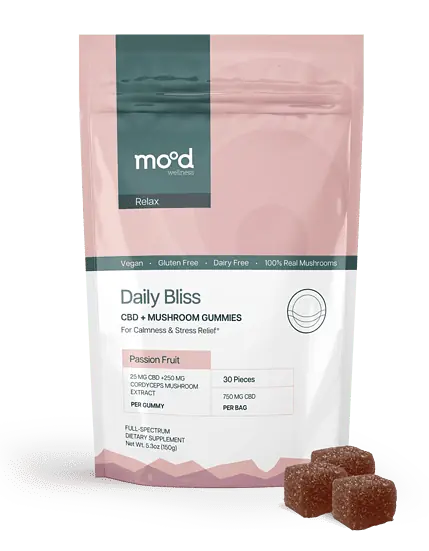
Format matters too. Oils, gummies and inhaled products are absorbed on different timelines, even when their labels list similar cannabinoid amounts. Evaluate the formula, serving size and delivery route together.
05 · Meet the mixture
Cannabinoids, terpenes and flavonoids play different roles
Finding a compound on a lab report does not mean the product contains enough to produce a meaningful effect. Check the measured amount, then compare any benefit claim with research on that compound, dose and delivery method.
CBD and THC are the best studied. CBG, CBN and CBC are called minor cannabinoids because they usually occur at lower levels. Early research does not justify treating them as proven remedies for focus, sleep, pain or disease.
Myrcene, limonene, pinene, linalool and beta-caryophyllene contribute aroma and are biologically active in some models. Reviews conclude that terpene-cannabinoid synergy in people remains insufficiently demonstrated.
These plant pigments include compounds such as cannflavins, quercetin and apigenin. Their chemistry is interesting, but their contribution at the concentrations present in consumer CBD products is not established.
A practical compound reference
| Compound | What it is | What research can reasonably say | What the label should not imply |
|---|---|---|---|
| CBD | Major non-intoxicating cannabinoid | Biologically active, clinically established in one prescription medicine for specific seizure disorders, with many other uses still under study | That a retail serving inherits prescription-drug evidence or treats a disease |
| THC | Intoxicating cannabinoid active at CB1 receptors | Can alter perception, coordination, memory and the experience of other cannabinoids; effects change with dose and route | That trace THC is risk-free for every user or drug test |
| CBG | Minor cannabinoid and biosynthetic precursor | Shows interesting receptor activity and preclinical findings; controlled human evidence remains limited | That it reliably improves focus, mood or inflammation |
| CBN | Oxidation product associated with aged THC | Has distinct pharmacology, but evidence for CBN as a dependable sleep aid is still developing | That its presence guarantees sedation or restorative sleep |
| Myrcene | Terpene found in cannabis, hops and other plants | Has aroma and experimental biological activity; human synergy with CBD is not established | That a typical product amount produces a proven sedative effect |
| Limonene | Citrus-associated terpene | Contributes aroma and is being investigated in several models | That citrus aroma establishes an anti-anxiety or mood benefit |
| Beta-caryophyllene | Terpene also able to act at CB2 receptors | Mechanistically notable and supported by preclinical work | That receptor activity alone predicts pain or inflammation relief in people |
| Flavonoids | Plant pigments and polyphenolic compounds | Important to plant biology, with laboratory research on individual molecules | That trace flavonoids materially amplify a retail CBD serving |
The most responsible way to discuss these compounds is molecule by molecule and outcome by outcome. Broad statements such as “terpenes boost cannabinoids” hide the concentration, route and target required for the claim. A measured profile is valuable information; it becomes evidence of a benefit only when the relevant finished formula has been tested appropriately.
06 · Testing the hypothesis
What would actually prove an entourage effect?
A lab report showing several compounds proves only that they are present together. To demonstrate synergy, researchers must compare the mixture with its individual ingredients and show that the combined result exceeds the expected added effect.
Every cannabinoid, terpene, dose and ratio must be characterized. “Full-spectrum” is too broad to function as an experimental formula.
The mixture must be compared with its principal ingredients at equivalent exposures-not only with placebo.
Researchers need a dose-response model showing what result would be expected if the compounds were merely additive.
A cell or animal signal should survive controlled human testing with a meaningful outcome and independent replication.
Synergy is a mathematical claim, not a description of complexity
To test synergy between THC and CBD, researchers must measure each cannabinoid at defined doses and then test the same doses together. They first calculate the combined result expected from the individual dose-response curves. Only a result that reliably exceeds that modelled expectation can support a synergy claim.
This is one reason the literature remains unsettled. Many studies compare a complex extract with one purified cannabinoid, yet the two preparations may differ in absorption, dose, formulation and dozens of minor constituents. If the extract performs differently, the design may not reveal which component mattered or whether the interaction was truly synergistic.
What a product certificate can-and cannot-add
A batch report can confirm that multiple cannabinoids or terpenes were measured together. That helps define the mixture, which is the first step in testing the hypothesis. It cannot establish receptor-level cooperation, clinical superiority or a predictable experience. Composition is evidence of composition-not evidence of entourage.
07 · Safety
A broader spectrum can also mean more variables
CBD does not intoxicate in the same way as THC, but it still affects the body. Medication interactions, trace THC and differences between batches matter even when a product is marketed for everyday wellness.
CBD can alter the processing of some medicines and has been associated with liver injury, particularly at pharmaceutical doses. Ask a clinician or pharmacist when you take medication.
THC can impair driving. Full-spectrum products may also produce a positive drug test. A legal hemp label or “non-intoxicating” claim is not a guarantee.
Avoid cannabis-derived products during pregnancy or breastfeeding unless specifically directed by a qualified clinician. Use extra caution with THC sensitivity, sedation or prior adverse reactions.
This guide is educational and is not medical advice. Do not use CBD or cannabis products to delay professional care or to diagnose, treat, cure or prevent a disease.
08 · Quick answers
Entourage effect FAQ
Is the entourage effect scientifically proven?
Not as a universal effect. Researchers have measured specific interactions, and some mixtures have shown different effects from isolated compounds. Reviews still find limited and contradictory clinical evidence for the broad claim that whole-spectrum products are consistently superior.
Is full-spectrum CBD better than isolate?
Not automatically. Full-spectrum offers a wider compound profile, while isolate provides simpler composition and avoids intentionally retained THC. The better fit depends on safety needs, preferences, product quality and the outcome being evaluated.
Can full-spectrum CBD make you high?
Properly labeled hemp-derived full-spectrum CBD contains only trace THC and is not intended to be intoxicating. Sensitivity, serving size, accumulation, mislabeling and other ingredients can change the experience. Do not drive until you know how the complete product affects you.
Does broad-spectrum CBD have an entourage effect?
It can contain multiple cannabinoids and terpenes that may interact, so marketers often use the term. However, the presence of several compounds does not prove synergy or a stronger outcome.
Do terpenes make CBD work better?
Terpenes have biological activity in laboratory and animal research, but human evidence that typical terpene levels reliably enhance CBD is limited. Treat a measured terpene profile as composition information, not proof of a benefit.
Will full-spectrum CBD show on a drug test?
It can. Repeated exposure to trace THC may be enough for a positive result, and labels are not always accurate. Anyone subject to testing should understand that no over-the-counter CBD product can guarantee a negative result.
How this guide was built
How we checked the evidence
Laboratories, clinical researchers and marketers often use “entourage effect” to mean different things. We kept the evidence separate by checking the exact compounds, formula, dose, study type and outcome behind each claim.
Our review standard
We prioritized systematic and scoping reviews, randomized human studies, authoritative public-health guidance and the original scientific papers that shaped the term. Commercial explainers were reviewed to understand reader questions and common misconceptions, not to establish scientific conclusions.
For each important claim, we asked five questions: Was the study conducted in cells, animals or people? What exact formula was tested? How was it used? Was the outcome objective, self-reported or mechanistic? And has another research team reproduced the finding?
These distinctions matter because a receptor experiment cannot predict how a gummy feels, and a trial of a standardized prescription spray cannot validate every full-spectrum oil. When research supports biological plausibility but not a dependable human benefit, the language below says exactly that.
Original concept: 1998Human trials reviewedRecent reviews: 2023–2024FDA and NCCIH guidanceLast reviewed: Aug 2026
Cells, animals, observational data and controlled human trials answer different questions.
A named medicine, whole extract and consumer oil cannot be treated as interchangeable.
Statistical change, clinical relevance and an individual experience are not the same result.
Conflicting findings and missing replication are stated rather than hidden behind certainty.
09 · Scientific sources
Sources and further reading
- Ben-Shabat et al. An Entourage Effect: inactive endogenous fatty acid glycerol esters enhance 2-AG cannabinoid activity (1998)
- Mechoulam and Ben-Shabat. From gan-zi-gun-nu to anandamide and 2-AG (1999)
- Gaoni and Mechoulam. Isolation, Structure, and Partial Synthesis of an Active Constituent of Hashish (1964)
- Christensen et al. Decoding the Postulated Entourage Effect of Medicinal Cannabis (2023)
- Simei et al. Does the “Entourage Effect” in Cannabinoids Exist? (2024)
- Cogan. The “Entourage Effect” or “Hodge-Podge Hashish” (2020)
- Spindle et al. Oral THC with and without CBD: randomized clinical trial (2023)
- Lawn et al. Acute cannabis effects with and without CBD (2023)
- NCCIH: Cannabis and Cannabinoids-What You Need to Know
- FDA: What You Need to Know About Products Containing CBD
Last evidence review: August 27, 2026. Scientific understanding can change as larger and better-controlled trials are published.
Continue learning
Build the full CBD picture
Understand receptors, signaling pathways and why a mechanism is not the same as a proven benefit.
Compare established, promising, mixed and early evidence by wellness goal.
Learn formats, timing, milligram calculations and a consistent first routine.



MOOD MAGAZINE
PRACTICAL WELLNESS GUIDES
Clear answers.Better choices.
Simple guides to CBD, functional mushrooms and everyday wellness.
Learn what to look for, compare your options and choose with confidence.
READ MORE GUIDES