
Why the terminology is confusing
The NIH Office of Dietary Supplements defines a traditional tincture as a liquid made by soaking an herb in alcohol and water. That preparation can concentrate and preserve botanical constituents, and traditional strength may be expressed as a botanical-to-finished-product ratio.
CBD retail usage is less disciplined. Products called “CBD tincture,” “hemp tincture,” “CBD oil tincture,” “drops” or “extract” may all appear in similar amber bottles. Some are oil solutions. Some contain alcohol and water. Some are emulsions. Some use several carriers.
Historical analytical literature also uses “tincture” broadly. A 2017 CBD-label study distinguished viscous extracts suspended in oil, alcohol tinctures and vaporization liquids. A newer commercial study grouped 100 sampled liquid products as tinctures while evaluating their actual cannabinoid labels and contaminants. These categories describe the studies; they do not create one legally uniform retail definition.
Use the name as a search clue, then verify the formula.
Four liquid categories to recognize
| Category | Common liquid system | What to verify | Do not assume |
|---|---|---|---|
| Traditional botanical tincture | Alcohol and water | Alcohol type/amount, botanical ratio, CBD units | That all CBD “tinctures” use alcohol |
| CBD oil solution | MCT, hemp seed, olive or another edible oil | Carrier, CBD mg/mL, flavor, allergen source | That carrier name proves better absorption |
| Emulsion or water-compatible liquid | Water plus emulsifiers/surfactants and oil phase | Full excipient list, stability, mixing directions | That “water soluble” means fully dissolved or universally faster |
| Ambiguous retail tincture | Unclear until label is read | Ingredients, directions and manufacturer answer | Anything from the front-panel word alone |
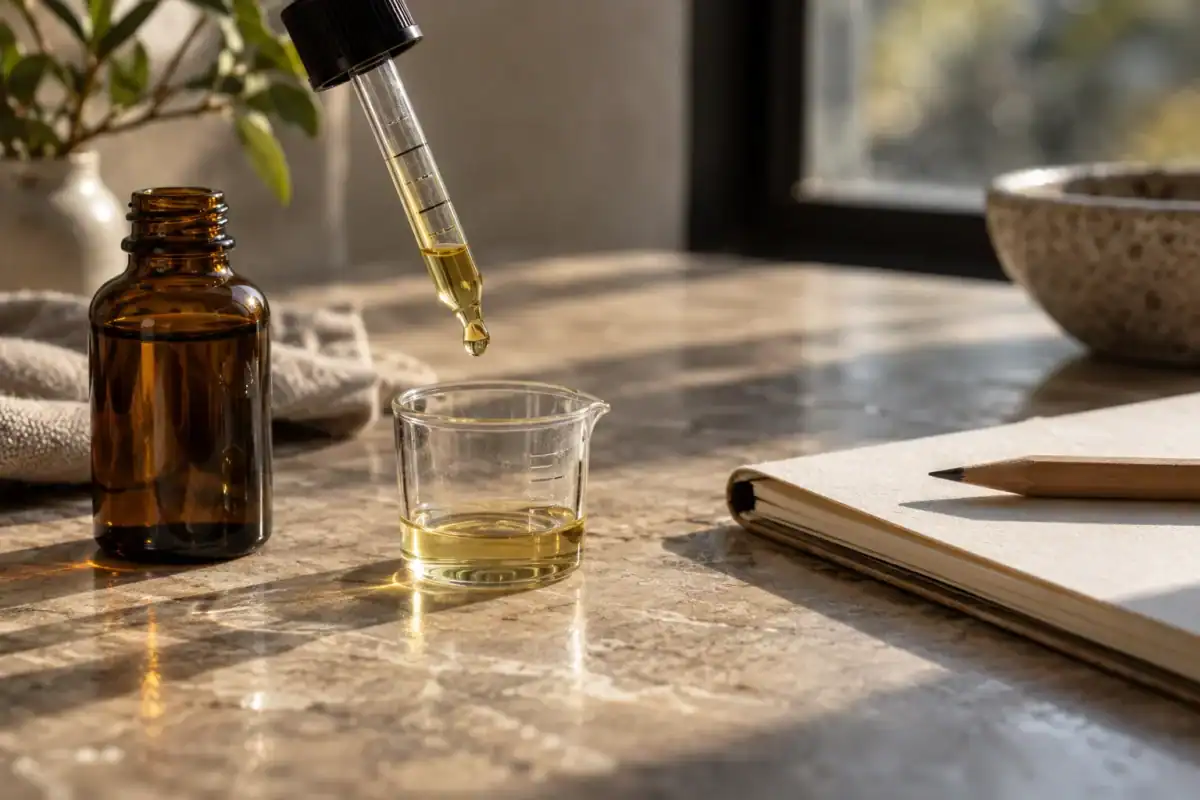
Color is not enough. A clear liquid can contain alcohol, water, glycerin or refined oil. A cloudy liquid may be an emulsion or a product with a stability problem. Identify ingredients rather than guessing from appearance.

Read the ingredient list in order
Carrier oils
Look for coconut-derived MCT, fractionated coconut oil, hemp seed oil, olive oil or another edible oil. The carrier dilutes the hemp extract to a measurable concentration and affects flavor, viscosity, storage and tolerance.
Carrier choice deserves its own comparison. Use the MCT, hemp seed and olive oil guide rather than treating every oil as interchangeable.
Alcohol and water
A traditional tincture may identify alcohol and purified water. Check whether alcohol content is stated and whether alcohol conflicts with personal, medical, religious, recovery or workplace constraints. “Alcohol-free tincture” signals nontraditional marketing usage; determine what liquid replaces alcohol.
Do not infer that a dropper-size serving contains a negligible amount of alcohol without product-specific data.
Glycerin
Vegetable glycerin is sweet and viscous. It may appear in alcohol-free liquid extracts or multi-solvent systems. Glycerin does not make a product an oil, and “vegetable” does not prove the whole formula is vegan.
Emulsifiers and surfactants
Water-compatible formulations can use lecithin, gums, modified starches or other emulsifying systems. “Nano,” “liposomal” and “water soluble” are technology claims that require exact formulation and evidence. CBD itself is lipophilic; a clear marketing phrase does not establish clinical superiority.
Flavors and additional actives
Mint, citrus, sweeteners, terpenes, CBG, CBN, THC, melatonin or botanicals can materially change the comparison. Keep each active separate. A product with more ingredients is not automatically more complete.

Normalize CBD concentration
Ignore the bottle name until the units match. Record:
- total CBD in the bottle;
- bottle volume in mL;
- CBD concentration in mg/mL;
- labeled serving volume;
- CBD per labeled serving;
- other cannabinoids per mL and serving; and
- number of labeled servings.
The basic concentration calculation is:
CBD mg/mL = total labeled CBD ÷ bottle volume in mL
A 900 mg bottle containing 30 mL has a labeled concentration of 30 mg/mL. If a labeled measured serving is 0.5 mL, the arithmetic label amount is 15 mg CBD. This example teaches units; it is not a dose recommendation and does not describe a specific Mood bottle.
Use the CBD oil strength guide for concentration and serving math. Do not assume one dropperful equals 1 mL or that every drop has the same volume.
Measurement matters more than the nickname
A marked oral syringe or graduated dropper can support a measured mL volume when it matches the product and its units are readable. An unmarked bulb dropper creates more uncertainty. Drops-per-mL varies with device, angle, liquid viscosity, temperature and technique.
Follow the package. Keep the device upright when reading volume, control bubbles and avoid touching the tip to the mouth or other surfaces. The CBD dropper measurement guide covers technique without turning label arithmetic into dosage advice.
If an alcohol-water liquid and an oil liquid use different devices, compare measured mL, not “one squeeze.”

Taste and mouthfeel
Oil formulations can feel rich or coating and may carry grassy, earthy, nutty or olive notes. MCT is often relatively neutral; hemp seed and olive oils may contribute more flavor.
Alcohol-based tinctures can feel sharp, warming or drying. Glycerin can taste sweet and viscous. Emulsions may appear milky or have a different mouthfeel.
Flavor cannot verify potency or purity. A bitter oil is not automatically stronger, and a sharp tincture is not automatically more concentrated. Unexpected rancid, fermented, solvent-like or otherwise disturbing odor deserves a pause and manufacturer review.
Route and directions
Retail pages may say “oral,” “sublingual,” “hold under the tongue” or “swallow.” Use the exact product directions. A bottle shape does not determine route.
In practice, some or all of a held liquid may eventually be swallowed. Contact time, volume, formulation and user technique vary. Do not convert a sublingual marketing claim into guaranteed absorption.
Never use an oral oil or tincture for vaping. Inhalation products require different ingredients and safety controls. Likewise, do not swallow a topical product merely because it contains CBD oil.
Is tincture faster than CBD oil?
No universal class-level answer is supported. CBD pharmacokinetics vary with dose, formulation technology, route, fed status and individual physiology. A systematic review and meta-regression included oil-, alcohol-, water- and technology-based formulations and found substantial heterogeneity.
A small crossover trial in 12 healthy volunteers evaluated a specific CBD oil solution alongside other specific formulations. It does not establish that every oil acts like that product or compare the retail meanings of “tincture” and “oil.”
Two products using the same marketing term can have different concentrations, carriers and directions. Two products using different terms can be the same basic oil solution. Product-specific evidence beats category folklore.
Is one absorbed better?
Not from the name alone. CBD has low and variable oral bioavailability. Oil carriers, emulsions, particle technologies, food and other factors may affect exposure, but evidence must match the exact formulation.
Be cautious with percentage-absorption claims that lack a named comparator, dose, meal condition, population and study. A laboratory dissolution result, animal study or manufacturer-sponsored small trial is not automatically a real-world clinical advantage.
Follow consistent food instructions. Do not add high-fat food or alcohol to change absorption unless the product and clinician guidance support it.
Alcohol avoidance and compatibility
People may avoid alcohol for medical, recovery, religious, pregnancy, medication or personal reasons. If that matters, look for an explicit ingredient statement and ask the manufacturer whether alcohol is used in the finished liquid, not merely somewhere during extraction.
An extract can be produced with ethanol and later formulated into an oil after the solvent is removed. That is different from a finished tincture in which alcohol remains a major liquid component. Ask which meaning applies.
“Alcohol-free” does not establish a product's safety with medication. CBD itself may interact with drugs, and other ingredients can matter.
Storage and stability
Oil solutions are affected by time, light, heat, oxygen, carrier oxidation and packaging. Alcohol-water tinctures and emulsions have different stability questions. Water-containing systems can require controls that an anhydrous oil does not; alcohol can change preservation but does not make a product indefinitely stable.
Follow the exact storage statement. Keep the cap closed, use the supplied device and protect the label and lot code. Do not refrigerate, freeze, heat, dilute or transfer the liquid unless directed.
If the product becomes cloudy, layered, discolored or unexpectedly odorous, document it rather than applying a generic “tincture” rule.
COA and lot verification
A certificate of analysis should match the product and lot and identify dates, laboratory, sample, methods, units and analytes. A potency panel does not prove contaminant coverage. A bulk-extract result may not establish the concentration of the finished bottle.
Use the CBD COA guide and batch-number matching workflow. For liquids, confirm whether results are reported per mL, per gram, percentage by weight or another basis before comparing them with the label.
Commercial CBD studies have documented label variability and contaminants across sampled products. Those findings support verification but do not prove that a particular Mood bottle, or any untested bottle, is accurate or inaccurate.
How Mood's Relax Drops fit
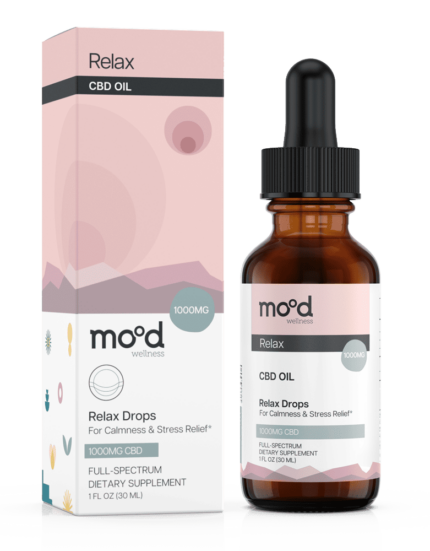
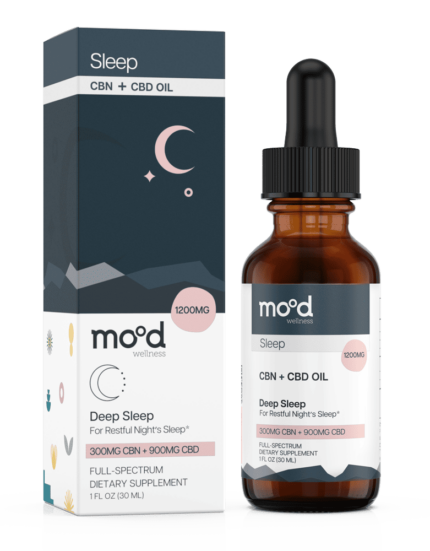
Mood's current Relax Drops are oil-based products. The product pages identify an oil carrier and dropper format; they should not be described as traditional alcohol-and-water tinctures merely because shoppers search that term.
Check the exact bottle for total CBD, volume, mg/mL, full-spectrum status, carrier, flavor, serving directions, date marks and lot. Then review Mood's lab-results directory for a matching report.
During our September 2026 review, several publicly linked Mood files were older cannabinoid-potency reports. They can describe the named samples and reported analytes, but they do not prove a current lot or full contaminant coverage.
Compare current options in the Mood CBD oils collection only after normalizing concentration. Product-page naming and collection placement do not replace the bottle label.
A buyer's checklist
Before choosing either label, answer:
- What is the actual liquid base?
- Does the finished product contain alcohol?
- Which carrier oil, glycerin or emulsifiers are present?
- What are CBD mg/mL and CBD per measured serving?
- Which other cannabinoids and actives are present?
- Is THC acceptable for drug-test and impairment risk?
- Does the device show usable mL marks?
- What route and food instructions are printed?
- What storage conditions apply?
- Does the COA match the exact product and lot?
- Can the responsible company explain ambiguous terminology?
For broader selection, use the CBD buyer's guide. Prefer a clear formula over a familiar nickname.
Safety Boundaries for CBD Tincture vs CBD Oil
CBD may interact with medications and may involve liver and other risks. Full-spectrum liquids may contain THC and can contribute to impairment or a positive drug test. An alcohol-based tincture adds separate alcohol considerations.
Do not drive or operate machinery when impaired. Keep all bottles and droppers away from children and pets. Pregnancy, breastfeeding, significant liver disease, medication use, planned surgery and safety-sensitive work warrant professional guidance.
Only one prescription CBD drug is FDA approved. A retail bottle labeled “tincture” or “CBD oil” does not inherit that approval.

Bottom Line: CBD Tincture vs CBD Oil
Traditionally, tincture means an alcohol-and-water botanical preparation. CBD oil means CBD or hemp extract carried in edible oil. Retail CBD naming often blurs that distinction, so the ingredient list is more reliable than the front-panel word.
Identify the actual liquid system, normalize CBD in mg/mL, inspect other actives and THC, evaluate taste and alcohol constraints, use a measured device and match the certificate to the exact lot. Neither term proves superior absorption, onset, purity or effect.
Quick answers
Frequently asked questions about CBD Tincture vs CBD Oil
What is the practical answer about CBD Tincture vs CBD Oil?
Traditionally, tincture means an alcohol-and-water botanical preparation. CBD oil means CBD or hemp extract carried in edible oil. Retail CBD naming often blurs that distinction, so the ingredient list is more reliable than the front-panel word. Identify the actual liquid system, normalize CBD in mg/mL, inspect other actives and THC, evaluate taste and alcohol constraints, use a measured device and match the certificate to the exact lot.
Which Mood product fits this topic?
Relax Drops is the most relevant Mood option for this topic. Mood Relax Drops provide a clearly labeled CBD oil format for shoppers who want flexible serving control and an easy way to build CBD into a daily or evening routine.
What should I compare before choosing a oil?
Compare the cannabinoid amount per measured serving, the complete ingredient list, spectrum or THC information, current product directions and available batch documentation. The best choice is the formula that fits the goal and is easy to use consistently.
How should I start using a new CBD or cannabinoid product?
Follow the current package directions, choose a low-demand first-use window and keep timing and meal context reasonably consistent. Review medication, pregnancy, liver and impairment considerations with a qualified clinician when relevant.
Sources
- NIH Office of Dietary Supplements. Dictionary of Dietary Supplement Terms and Botanical Dietary Supplements Background Information. Accessed September 9, 2026.
- Bonn-Miller MO, et al. “Labeling Accuracy of Cannabidiol Extracts Sold Online.” PMCID: PMC5818782.
- Gidal BE, et al. “Product labeling accuracy and contamination analysis of commercially available cannabidiol product samples.” PMCID: PMC10982813.
- “Pharmacokinetics of Cannabidiol: A Systematic Review and Meta-Regression Analysis.” PMCID: PMC11397906.
- Hosseini A, et al. “A phase I trial of the safety, tolerability and pharmacokinetics of cannabidiol administered as single-dose oil solution and sublingual wafer.” PMID: 33075170.
- U.S. Food and Drug Administration. Consumer information on cannabis-derived compounds including CBD. Accessed September 9, 2026.
- U.S. Food and Drug Administration. What the FDA is Doing to Protect Consumers from Cannabidiol (CBD) in Foods. Accessed September 2026.