Carrier oil versus hemp extract
A CBD oil usually contains at least two functional parts:
- a cannabinoid-containing hemp extract; and
- an edible carrier oil that dilutes and disperses the extract to a usable concentration.
The carrier is not merely packaging filler. It affects viscosity, flavor, appearance, handling and possibly how the total formulation behaves. But it should not be confused with the active cannabinoid declaration.
Hemp seed oil deserves special clarity. It is pressed from seeds and can be used as a food oil. CBD-rich extract comes primarily from other hemp plant material and is added separately. “Hemp oil” is ambiguous marketing language: it may mean hemp seed oil, cannabinoid extract or a finished blend.
Look for explicit ingredient names such as “medium-chain triglyceride oil,” “hemp seed oil,” “extra-virgin olive oil” and “full-spectrum hemp extract.”

MCT, hemp seed and olive compared
| Attribute | MCT oil | Hemp seed oil | Olive oil |
|---|---|---|---|
| Common source | Often coconut; sometimes palm or another source | Hemp seeds | Olives |
| Typical flavor | Neutral to very mild | Green, grassy or nutty | Mild to distinctly olive-like |
| Texture | Light and fluid | Light to medium | Medium, depending on grade and temperature |
| Label question | What is the source and exact ingredient name? | Does “hemp oil” mean seed oil or cannabinoid extract? | What grade and flavor profile is used? |
| Tolerance question | Does the serving cause digestive discomfort? | Does seed sensitivity or flavor matter? | Does the richer flavor suit repeated use? |
| Evidence limit | MCT name alone does not prove superior CBD exposure | Botanical relationship to hemp does not prove more CBD | Familiar food use does not prove better cannabinoid delivery |
This table compares ordinary characteristics, not clinical outcomes. A carefully engineered formulation can behave differently from a simple oil blend even when both list a lipid ingredient.
MCT oil
MCT means medium-chain triglycerides. Retail MCT oil is commonly derived from coconut oil, although sourcing can vary. It is popular in CBD tinctures because it has a neutral taste, remains liquid and mixes easily into a simple formula.
Practical Advantages of Carrier Oil
- unobtrusive flavor;
- light mouthfeel;
- clear or pale appearance;
- convenient dropper handling; and
- widespread supplier availability.
Questions to Ask About Carrier Oil
- Is the MCT coconut-derived, palm-derived or from another source?
- Is it certified organic if that claim matters?
- Are flavors or other oils also present?
- Does the labeled serving cause GI discomfort?
- What storage instructions apply to the finished product?
MCT can cause digestive symptoms for some people, particularly at larger amounts. A CBD tincture typically uses a relatively small oil serving, but tolerance remains individual.
FDA's updated allergen guidance no longer includes coconut on its Tree Nut List for major-allergen labeling. That does not mean coconut allergy is impossible. Coconut remains an ingredient that should be named in the ingredient list when used, subject to labeling rules and exemptions.
Hemp seed oil
Hemp seed oil is pressed from Cannabis sativa seeds. It can contribute color and a characteristic green or nutty flavor. Some brands choose it to keep the carrier and cannabinoid extract within a single plant story.
That story should not replace label precision. Hemp seeds do not naturally provide the same cannabinoid-rich material as a CBD extract. A bottle containing only hemp seed oil should not be assumed to contain CBD.
Practical Advantages of Carrier Oil
- recognizable plant source;
- distinctive food-oil flavor for shoppers who enjoy it; and
- possible preference for a less neutral sensory profile.
Questions to Ask About Carrier Oil
- Does the label clearly separate hemp seed oil from hemp extract?
- Is the stronger flavor acceptable for daily use?
- Is the bottle protected from light and closed tightly?
- What is the product's labeled use-by or expiration date?
- Does the finished oil have a current batch report for cannabinoids?
Color is not a potency test. A dark green oil may owe its appearance to seed oil or plant pigments, while a pale oil may still contain the labeled CBD concentration.
Olive oil
Olive oil is a familiar edible carrier with a flavor that can range from mild to peppery. It can work well for shoppers who prefer a recognizable pantry ingredient and do not mind its sensory character.
Practical Advantages of Carrier Oil
- familiar source and culinary history;
- readily understood ingredient name; and
- flavor that some people prefer over neutral MCT.
Questions to Ask About Carrier Oil
- Is the carrier identified simply as olive oil or by a particular grade?
- Does its flavor interfere with holding the oil in the mouth?
- Are other carrier oils blended into the product?
- How should the finished bottle be stored?
- Is CBD concentration stated in mg/mL rather than implied by bottle color?
Do not import general olive-oil health claims into a CBD product. The amount used in a tincture may be small, and the product has to be evaluated as its actual finished formula.
Taste and mouthfeel may decide the routine
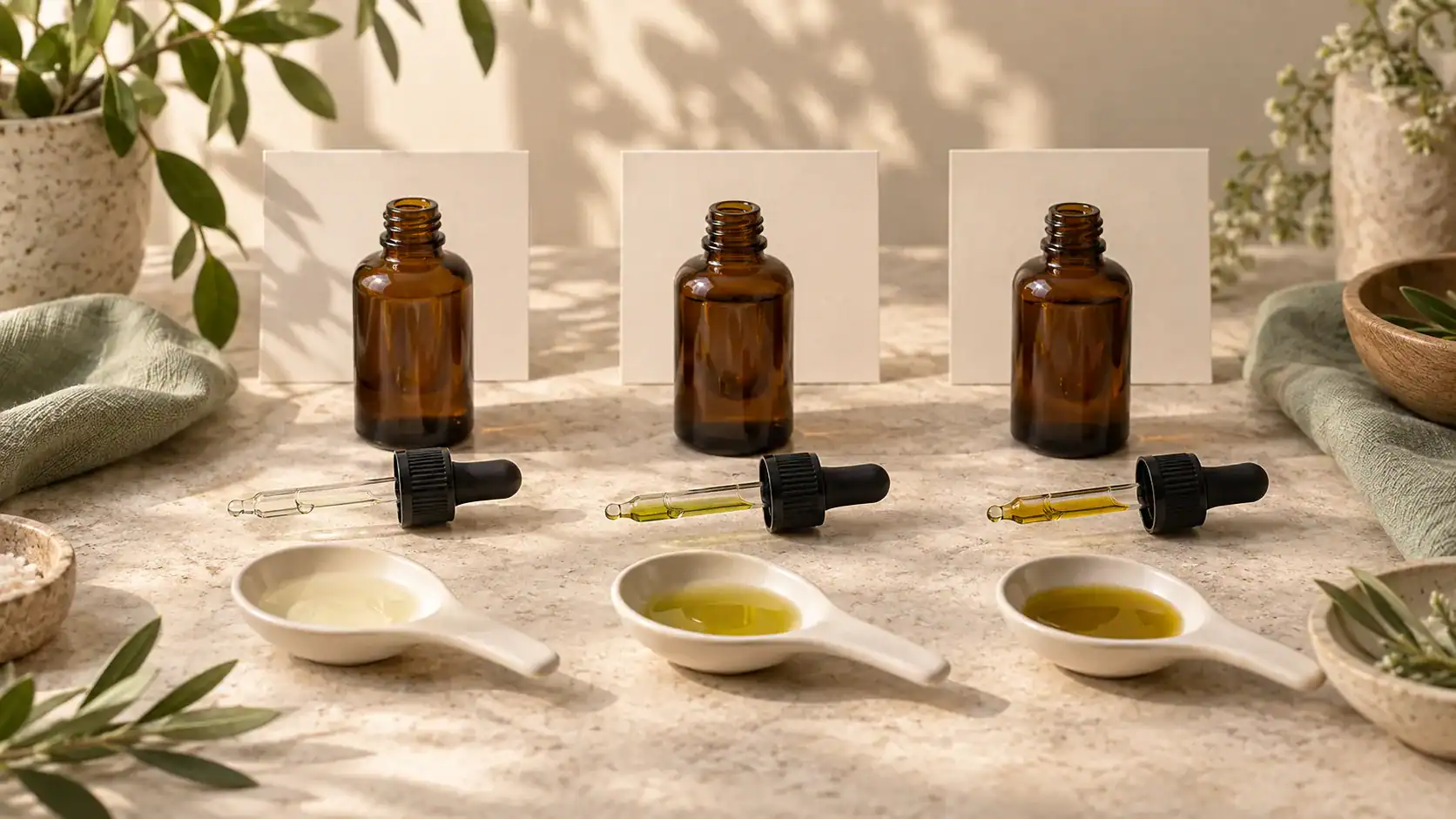
An oil that looks ideal on paper can fail if its flavor makes consistent use unpleasant. Sensory fit is a legitimate purchasing criterion even when it is not clinical evidence.
Consider:
- neutral versus grassy or olive-forward flavor;
- thin versus richer mouthfeel;
- flavored versus unflavored formula;
- aftertaste from the hemp extract itself; and
- whether the dropper releases a consistent stream.
Flavorings can introduce new ingredient, allergen or sweetener questions. “Natural flavor” does not describe the carrier source. Read the entire ingredient statement.
If possible, choose a smaller bottle only after checking the economics and concentration. The dedicated CBD bottle-size guide explains why 15, 30 and 60 mL cannot be compared without total CBD and mg/mL.
What absorption research actually shows
CBD is lipophilic, and formulation affects oral delivery. Human pharmacokinetic studies have compared oil-based, powder and engineered lipid formulations. They show that the way CBD is solubilized and formulated can change measured exposure.
One small crossover study in 12 healthy men compared synthetic CBD as powder, in sesame oil and in a self-nano-emulsifying system. Both lipid-based vehicles increased exposure versus powder, while the oil and engineered system showed different absorption patterns.
A later phase-I study compared a proprietary lipid-matrix formulation with CBD powder and found substantially higher exposure for that specific lipid formulation. Another recent study compared an encapsulated powdered emulsion with pharmaceutical CBD oil under fed and fasted conditions.
These studies do not answer the retail question “Is MCT better than hemp seed or olive oil?” They involve specific doses, manufacturing systems, populations and administration conditions. Carrier identity is only one part of a formulation.
No adequate direct human trial was identified that holds CBD source, concentration, dose, bottle, food condition and manufacturing constant while changing only among ordinary MCT, hemp seed and olive carriers.
Therefore avoid claims such as:
- MCT absorbs three times faster;
- olive oil makes CBD last longer;
- hemp seed oil creates an entourage effect;
- one carrier guarantees stronger results; or
- carrier choice determines onset by itself.
Those claims require product-specific comparative evidence.
Food can outweigh a simple carrier story
Pharmaceutical CBD research has shown that fed versus fasted conditions can materially change exposure. The size and composition of a meal, dose, formulation and individual physiology can all contribute to variability.
That means a marketing comparison focused only on the carrier may omit a larger source of variation. Follow the product directions and seek clinician guidance when consistent systemic exposure is medically important.
Do not convert prescription-drug pharmacokinetics into instructions for ordinary retail CBD. High-dose pharmaceutical studies and consumer tinctures are not interchangeable.

Storage and oxidation
All edible oils change with time, oxygen, heat and light. The finished product's antioxidant content, bottle headspace, packaging, manufacturing and storage conditions also matter.
Use practical controls:
- keep the cap tightly closed;
- store as directed, commonly in a cool, dry place away from direct sunlight;
- avoid leaving the bottle in a hot vehicle;
- keep the dropper clean and dry;
- record the opening date; and
- follow the labeled expiration or use-by date.
Do not use a universal shelf-life ranking based only on MCT, hemp seed or olive oil. A product-specific stability program is stronger evidence than a generic carrier-oil rule.
Changes in smell, flavor, color or texture can justify contacting the manufacturer, but appearance alone cannot establish cannabinoid degradation or microbial safety.
Allergy and ingredient-source checks
Review the carrier name in the ingredient list even when it is absent from the front panel. If you have a known allergy or sensitivity, contact the manufacturer about the exact source and facility controls.
Key distinctions include:
- coconut-derived MCT versus an unspecified MCT source;
- hemp seed oil versus cannabinoid hemp extract;
- pure olive oil versus an oil blend;
- flavored versus unflavored products; and
- intentionally added ingredients versus cross-contact.
A “vegan,” “organic” or “kosher” mark answers a different question. Verify each claim independently and never infer allergen safety from a lifestyle certification.
Compare the label in the right order
1. Identify the exact carrier
Write the full ingredient name and source when provided. Mark ambiguous “hemp oil” wording for follow-up.
2. Record bottle volume
Use milliliters, not the physical height of the bottle.
3. Record total CBD
Separate CBD from CBG, CBN and combined-cannabinoid totals.
4. Calculate mg/mL
Divide total labeled CBD milligrams by bottle milliliters. The CBD oil strength guide covers this arithmetic and dropper limitations.
5. Review the serving device
Check whether the dropper has legible volume markings and whether the serving is defined in mL.
6. Match the batch report
Use the package lot code, not only the product name. Follow the batch-to-COA matching process.
7. Compare practical fit
Record taste, source preference, tolerance, storage instructions and price only after normalizing concentration.
Current Mood MCT-oil example
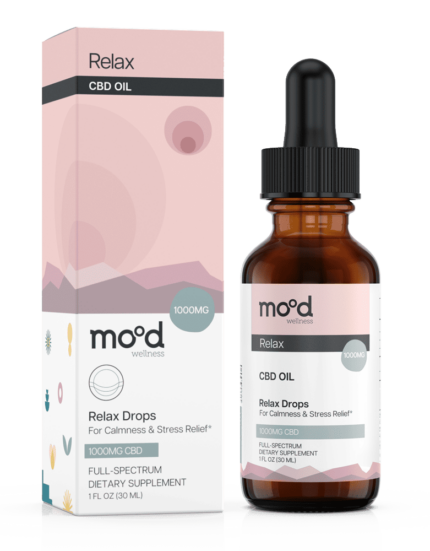
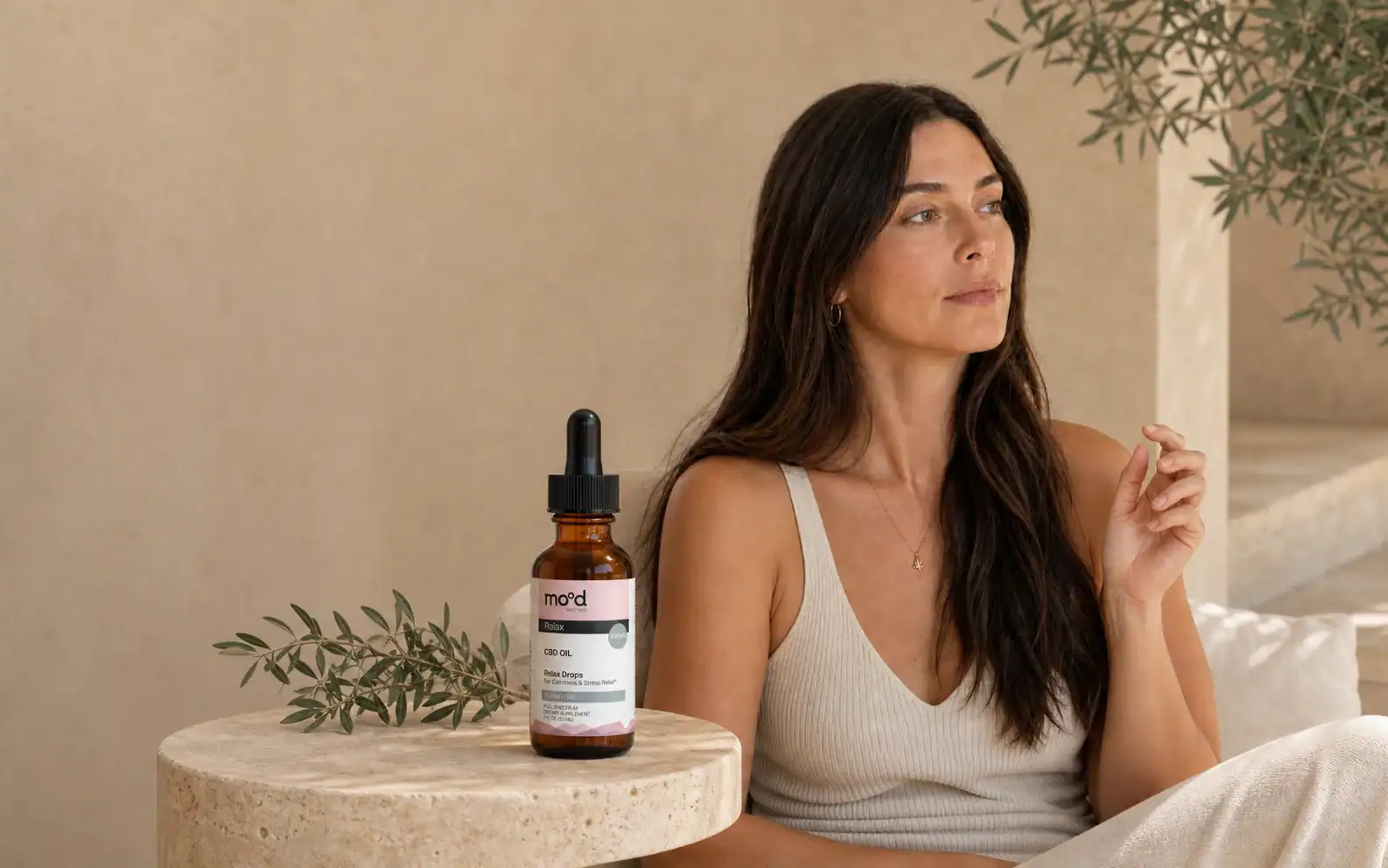
Mood's current Relax Drops page lists two ingredients: full-spectrum hemp extract and USDA organic MCT oil. It describes a 30 mL bottle in 1,000 mg and 2,000 mg CBD strengths.
That supports factual statements about carrier identity and labeled concentration. The page also uses enhanced-absorption language. Without a direct matched trial of the finished Mood formula against otherwise identical hemp-seed- and olive-oil versions, this guide does not treat that seller statement as proof of superiority.
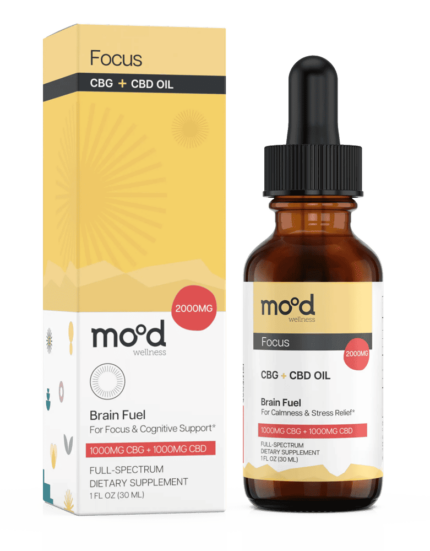
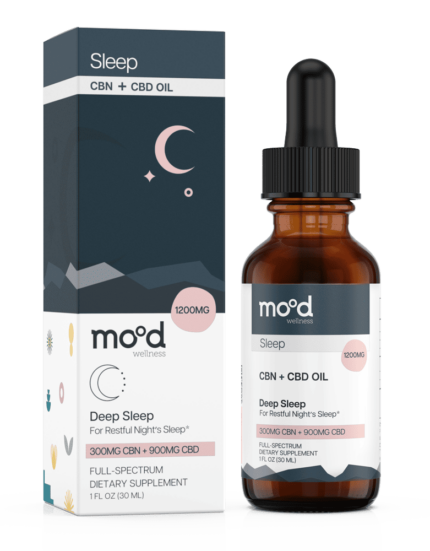
Mood's CBD+CBG Brain Fuel and CBD+CBN Deep Sleep oils address different cannabinoid decisions. Do not attribute their routine positioning to the carrier oil.
Shoppers can compare current availability on the Mood CBD oil collection, then verify the exact physical label and matching report.
Carrier oil is not a COA result
A cannabinoid COA typically measures CBD, THC and related analytes. It may include contaminants depending on the panel. It does not necessarily authenticate the culinary identity or quality grade of the carrier oil.
Use different evidence for different claims:
- ingredient label and supplier documentation for carrier identity;
- stability data for shelf-life claims;
- matched human studies for absorption comparisons;
- lot-linked laboratory reports for cannabinoid potency and available contaminants; and
- personal observation for taste and tolerance.
The CBD COA reading guide explains how to keep measured analytes separate from untested product attributes.
Buyer worksheet
| Field | Product A | Product B |
|---|---|---|
| Exact product/version | ||
| Carrier oil name | ||
| Carrier source disclosed | ||
| Other oils or flavors | ||
| Bottle volume | ||
| Total CBD | ||
| CBD mg/mL | ||
| Other cannabinoids | ||
| Taste/mouthfeel preference | ||
| Allergy or GI question | ||
| Storage instructions | ||
| Expiration/use-by date | ||
| Lot-matched COA | ||
| Comparative absorption evidence |
Leave unsupported fields unknown. A confident product page is not a substitute for the specific evidence type.
Safety Boundaries for Carrier Oil
FDA warns that CBD can interact with medications, affect the liver and increase sedation with alcohol or other substances that slow brain activity. FDA advises against CBD during pregnancy and breastfeeding.
Consult a clinician or pharmacist if you take medication, have liver disease, are preparing for surgery or need predictable exposure for a medical reason. Carrier choice does not remove full-spectrum THC or drug-testing risk.
Stop using a product and seek appropriate help for signs of an allergic reaction. For persistent GI symptoms, review both the carrier quantity and the complete formula rather than assuming CBD alone is responsible.
Keep bottles away from children and pets. Do not share a dropper, and do not let it touch the mouth if the product instructions require clean dispensing.
Bottom Line: Carrier Oil
MCT, hemp seed and olive oil are practical carrier options, not a proven effectiveness ranking. MCT is usually neutral and fluid; hemp seed oil has a greener flavor and must be distinguished from CBD extract; olive oil is familiar but more noticeable in taste.
Choose using the exact ingredient source, sensory fit, tolerance, storage instructions and complete formulation. Normalize CBD in mg/mL and match the batch report. Unless direct matched human evidence compares the finished products, reject universal claims that one named carrier absorbs faster, works better or lasts longer.
Quick answers
Frequently asked questions about CBD Carrier Oils Compared
What is the practical answer about CBD Carrier Oils Compared?
MCT, hemp seed and olive oil are practical carrier options, not a proven effectiveness ranking. MCT is usually neutral and fluid; hemp seed oil has a greener flavor and must be distinguished from CBD extract; olive oil is familiar but more noticeable in taste. Choose using the exact ingredient source, sensory fit, tolerance, storage instructions and complete formulation.
Which Mood product fits this topic?
Relax Drops is the most relevant Mood option for this topic. Mood Relax Drops provide a clearly labeled CBD oil format for shoppers who want flexible serving control and an easy way to build CBD into a daily or evening routine.
What should I compare before choosing a oil?
Compare the cannabinoid amount per measured serving, the complete ingredient list, spectrum or THC information, current product directions and available batch documentation. The best choice is the formula that fits the goal and is easy to use consistently.
How should I start using a new CBD or cannabinoid product?
Follow the current package directions, choose a low-demand first-use window and keep timing and meal context reasonably consistent. Review medication, pregnancy, liver and impairment considerations with a qualified clinician when relevant.
Sources
- Izgelov D, et al. Pharmacokinetic investigation of synthetic cannabidiol oral formulations in healthy volunteers. European Journal of Pharmaceutics and Biopharmaceutics. 2020. PMID: 32634571.
- Williams B, et al. Novel Lipid Formulation Increases Absorption of Oral Cannabidiol. 2024.
- U.S. Food and Drug Administration. Frequently Asked Questions: Food Allergen Labeling Guidance for Industry. Updated March 2025.
- U.S. Food and Drug Administration. Consumer information on cannabis-derived products, including CBD.
- Mood Wellness. Relax Drops, CBD Oils collection and Lab Results pages. Checked September 9, 2026.
- U.S. Food and Drug Administration. What the FDA is Doing to Protect Consumers from Cannabidiol (CBD) in Foods. Accessed September 2026.