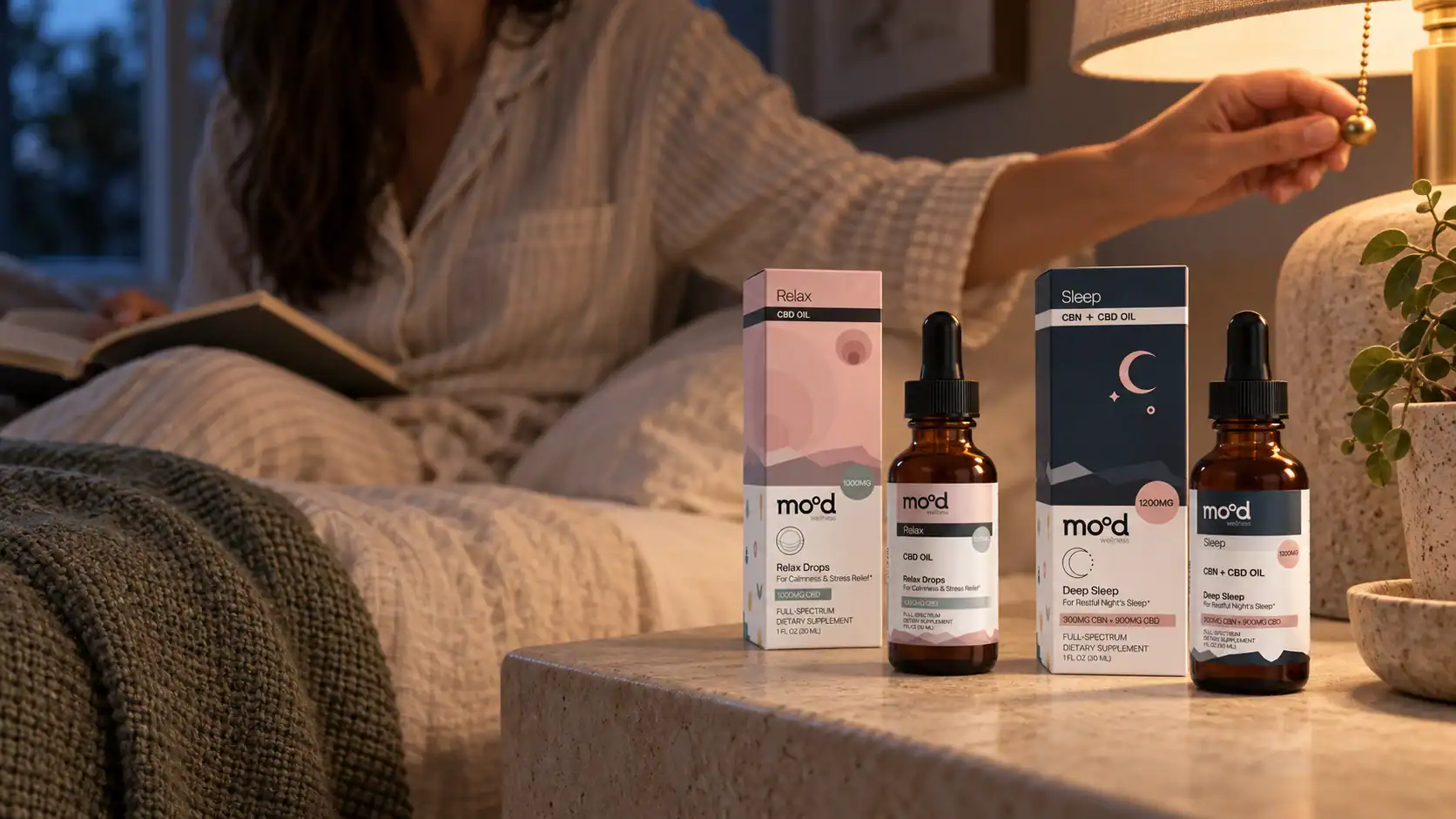
CBD and CBN offer complementary nighttime benefits
CBD
CBD is a non-intoxicating cannabinoid widely used to support calm, relaxation and a smoother transition into an evening routine. It is often the better starting point for people who want broad wellness support rather than a formula focused only on sleep. Individual response varies, so the best product is one with clear milligrams, consistent serving directions and a formula that fits the rest of the routine.
CBN
CBN is a minor cannabinoid selected specifically for nighttime formulas. It is a strong fit for shoppers whose main goal is restful sleep support rather than general daytime calm. Newer human research makes CBN a credible ingredient to consider, while the product label still matters because serving size, CBD ratio, THC content and other actives shape the complete experience.
CBD + CBN
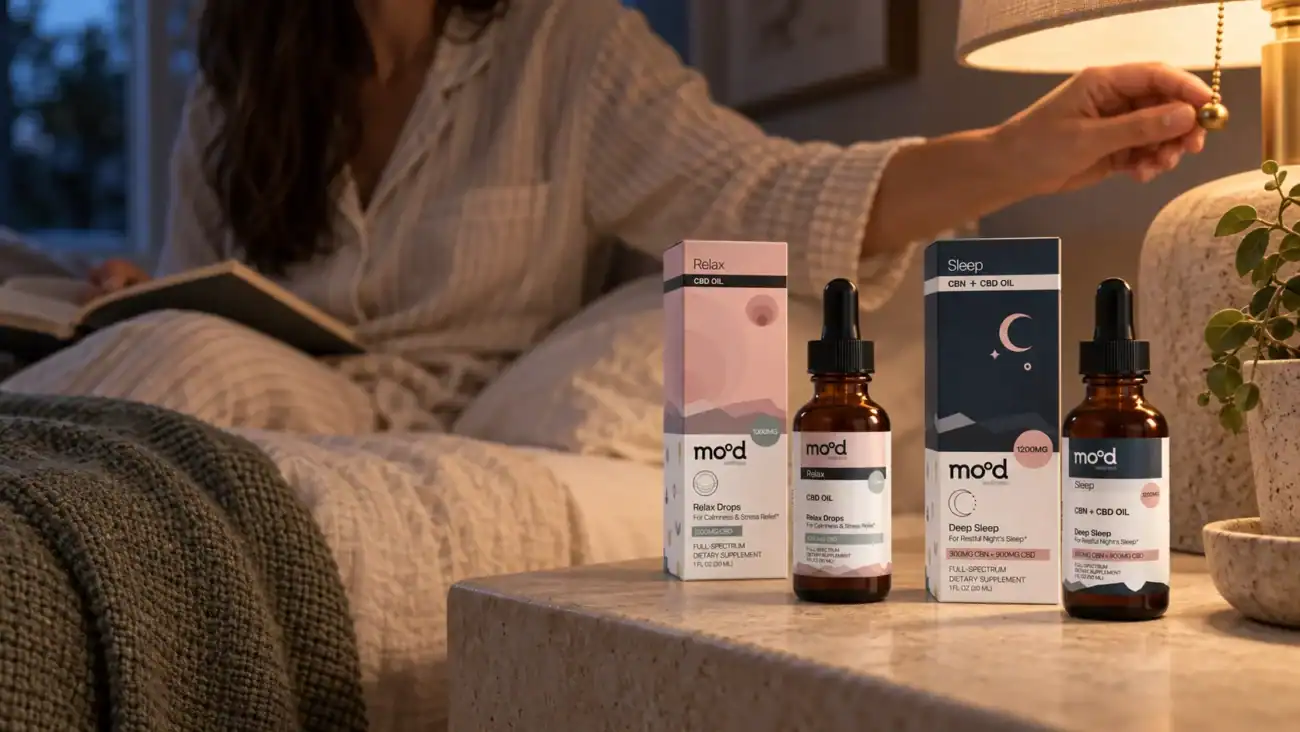
A CBD + CBN formula brings the calming role of CBD and the sleep-focused role of CBN into one routine. The ratio helps show the product’s emphasis: a CBD-forward blend can feel more balanced and versatile, while still adding targeted nighttime support from CBN. Mood Deep Sleep uses a 3:1 CBD-to-CBN ratio for exactly that reason.
For a broader introduction, use Mood's CBD and CBN sleep guide. This comparison focuses narrowly on what current human evidence permits you to say about one versus the other.
Evidence at a glance
| Evidence | Intervention | Main useful finding | Important limit |
|---|---|---|---|
| Bonn-Miller et al., 2024 | 20 mg CBN alone or plus 10/20/100 mg CBD for seven nights | Some awakenings/disturbance outcomes improved with CBN | Primary sleep-quality result nonsignificant; CBD addition did not augment measured effects; industry affiliations |
| Narayan et al., 2024 | 150 mg CBD nightly for two weeks | Some secondary well-being/objective findings changed | Most sleep outcomes, including insomnia severity and subjective latency, did not differ; 15 active participants |
| Kolobaric et al., 2024 | Proprietary 25/50/100 mg CBN formulas | Reported sleep-disturbance improvement versus placebo | Proprietary product; company/funder context; not a CBD comparison |
| 2026 acute crossover | 30 or 300 mg CBN for one night | Some secondary signals at the higher amount | N=20; primary wake-after-sleep-onset endpoint not significantly changed; single-night design |
This is not a dose table. The tested amounts should not be copied into a retail routine without clinical and product-specific guidance.

The 2024 CBN-with-and-without-CBD trial
The clearest direct combination evidence enrolled adults aged 18–55 who rated their sleep quality as poor or very poor. Participants received placebo, 20 mg CBN, or 20 mg CBN combined with 10, 20 or 100 mg CBD for seven nights.
In the modified intent-to-treat analysis of 293 participants, the primary sleep-quality result for 20 mg CBN was nonsignificant. CBN reduced the number of awakenings and overall sleep disturbance relative to placebo. Sleep-onset latency, wake after sleep onset and daytime fatigue did not differ.
Adding CBD did not positively augment the measured CBN effects. That is an important negative combination result. It does not prove that CBD blocks CBN, because the study was not designed to establish every interaction mechanism and used specific combinations, duration and outcomes.
The authors' affiliations included Canopy Growth and Wana Brands. Industry involvement does not invalidate a trial, but it belongs in the evidence appraisal.
What the CBD insomnia pilot found
A 2024 randomized pilot studied 150 mg CBD nightly for two weeks in adults with moderate-to-severe primary insomnia. Fifteen participants received CBD and fifteen received placebo.
CBD did not differ from placebo on insomnia severity, self-reported sleep-onset latency, sleep efficiency or wake after sleep onset across most assessed outcomes. The study reported greater well-being, a temporary change in a morning behavior score and higher objective sleep efficiency after two weeks.
The authors concluded that CBD was similar to placebo for most sleep outcomes and called for larger trials. The product, route and 150 mg amount differ substantially from many retail gummies and oils. Do not turn one small mixed pilot into “CBD works” or “CBD does nothing.”
Newer CBN research supports a more confident nighttime choice
A 2024 decentralized randomized trial compared proprietary CBN formulations at 25, 50 and 100 mg with placebo and included a melatonin arm. It reported improvement in a PROMIS sleep-disturbance measure across CBN groups. Several authors were employed by the company conducting the study, and the intervention was a proprietary ingredient.
A 2026 randomized single-night crossover in 20 adults with insomnia tested 30 and 300 mg CBN. Its primary polysomnographic wake-after-sleep-onset endpoint did not significantly change, although some secondary measures changed at the higher amount.
Together, these studies move CBN well beyond anecdote and support its role in thoughtfully designed nighttime products. They also show why a clearly labeled retail formula matters: shoppers can compare the CBN amount, CBD ratio, supporting ingredients and serving directions instead of relying on a generic sleep claim.
Primary outcomes matter
A trial usually identifies one primary outcome in advance. That outcome drives sample-size planning and reduces the risk of emphasizing whichever result happens to look favorable.
Secondary outcomes can be informative, especially in early research, but they need context. A product page should not present a secondary reduction in awakenings as proof that the intervention improved every aspect of sleep.
When reading a study, record:
- primary outcome and whether it was significant;
- secondary outcomes and multiplicity controls;
- objective versus self-reported measures;
- diagnosed insomnia versus self-rated poor sleep;
- study duration;
- sample size and dropouts;
- intervention and comparator;
- adverse events; and
- funding and author affiliations.
Sleep is not one endpoint
“Better sleep” can mean shorter sleep-onset latency, fewer awakenings, less wake after sleep onset, longer total sleep time, higher sleep efficiency, improved subjective quality or better next-day function. These measures can move in different directions.
A person may report fewer awakenings without falling asleep faster. A wearable may estimate higher efficiency while a questionnaire does not change. Neither result should be expanded beyond its measured endpoint.
Retail reviews and personal anecdotes may describe experience but cannot isolate CBN from expectancy, routine changes, THC, other ingredients or regression to the mean.
Why a CBD + CBN formula can still make sense
One 2024 trial tested a fixed amount of CBN with several CBD amounts. The added CBD did not increase the specific CBN outcomes measured in that short trial, but that does not remove the practical value of a combined formula for shoppers who want CBD’s calming role and CBN’s nighttime focus in the same routine.
The useful takeaway is not that combinations are worse. It is that CBD and CBN should each have a clear job in the formula. Mood Deep Sleep is CBD-forward at 3:1, so it is positioned as a balanced evening oil with added CBN rather than as a CBN-only product.
Individual response still varies by formula, ratio, serving size and routine. A transparent label and consistent use make the product easier to evaluate than a vague “sleep blend” with no cannabinoid breakdown.
Use research as context, then follow the product label
Clinical studies use research-specific amounts and conditions. A retail routine should begin with the product’s own measured serving, cannabinoid ratio and directions. Mood Deep Sleep makes this comparison straightforward by listing 30 mg CBD and 10 mg CBN per mL in a 30 mL bottle.
More milligrams are not automatically better. The most useful amount is the one that fits the product directions, the user’s experience and the rest of the evening routine while preserving next-day alertness.
Medication use, liver disease, pregnancy, breastfeeding, planned surgery and safety-sensitive work require professional guidance.
Normalize the label
For an oil, calculate each cannabinoid separately:
mg/mL = cannabinoid amount in bottle ÷ bottle volume in mL
Then multiply by the labeled measured serving. For gummies, divide a package total only when the piece count and label support it. Keep CBD, CBN and THC in separate columns.
| Field | CBD-only | CBN-only | CBD + CBN |
|---|---|---|---|
| CBD per unit | Record | Usually zero or not listed; verify | Record separately |
| CBN per unit | Usually zero or not listed; verify | Record | Record separately |
| Ratio | Not applicable | Not applicable | CBD:CBN based on named amounts |
| THC | Verify spectrum and lot | Verify spectrum and lot | Verify spectrum and lot |
| Other actives | Record | Record | Record |
Use the CBD oil strength guide for concentration math. A ratio describes formula composition, not clinical potency.
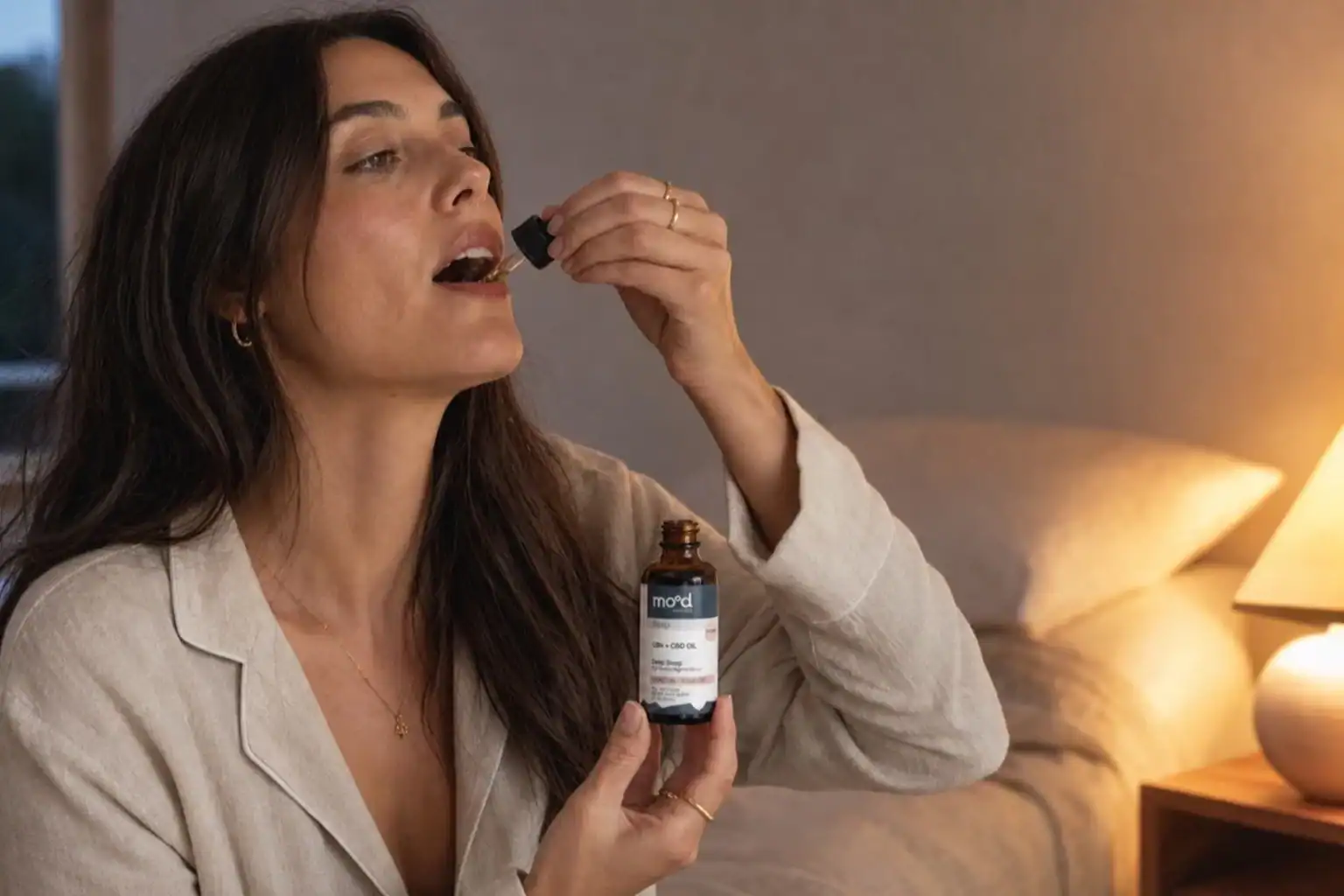
Mood Deep Sleep worked example
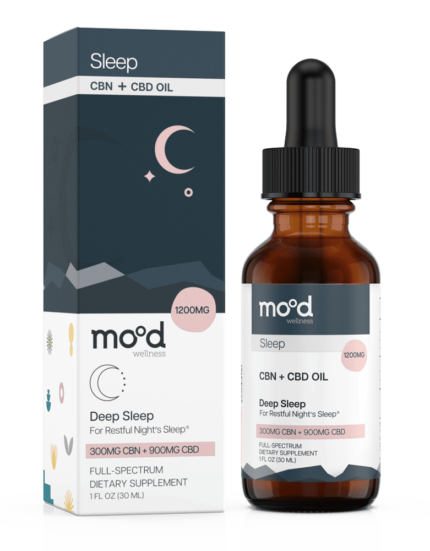
Mood's current Deep Sleep page states a 30 mL bottle with 900 mg CBD and 300 mg CBN, presented as 1,200 mg combined. Label arithmetic gives:
- 30 mg CBD per mL;
- 10 mg CBN per mL; and
- a 3:1 CBD-to-CBN ratio.
Do not call it “1,200 mg CBD.” Do not assume a dropperful equals 1 mL unless the device and label support that volume. The ratio does not prove three times the CBD effect or a specific sleep result.
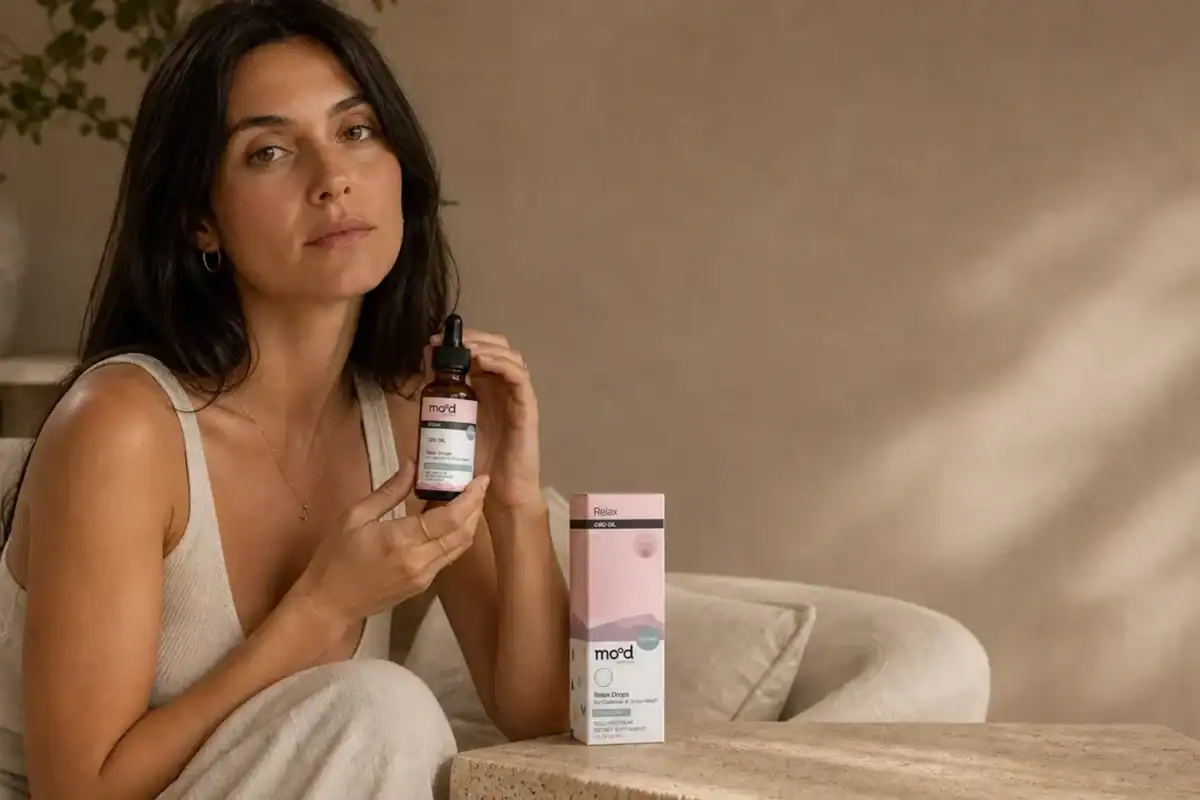
The Deep Sleep product page presents a complete retail formula designed for evening use. Its CBD-forward 3:1 ratio makes it a practical option for shoppers who want broad relaxation support with a targeted amount of CBN.
Check the full formula
Nighttime products may also contain THC, melatonin, mushrooms, herbs, flavors or other compounds. Those additions change both the evidence and safety review.
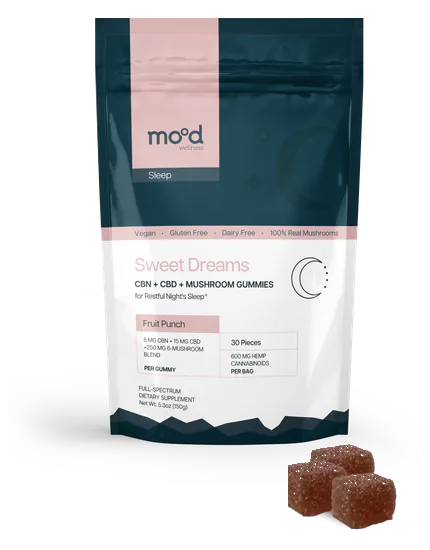
THC may increase impairment and drug-test risk. Melatonin has its own dose, timing and evidence questions; use the CBD gummies without melatonin guide instead of treating “melatonin-free” as proof of effectiveness. Mushroom ingredients require species, material, extraction and amount verification.
Supporting ingredients can make a nighttime formula more complete when each one has a clear purpose and the label states what is included. Compare the finished formula as a whole rather than judging it by cannabinoid milligrams alone.

Product and lot evidence
A certificate of analysis should match product and lot and identify dates, laboratory, sample, units, methods and analytes. Potency is different from pesticides, residual solvents, toxic elements, microbial contaminants and mycotoxins.
Use the CBD COA guide and batch-number matching workflow. A matching potency report cannot prove sleep benefit; it can only address the tested composition.
Mood provides product and laboratory information so shoppers can connect the formula on the page with the cannabinoid amounts on the label. Checking the current bottle and available lot information adds confidence to the purchase decision.
Nighttime routine decision checklist
Before considering a product, record:
- exact CBD and CBN per measured unit;
- CBD:CBN ratio without interpreting it as effect size;
- THC amount or reporting limit;
- formulation and route;
- melatonin, mushrooms, herbs and other actives;
- current product- and lot-matched report;
- medication and alcohol context;
- next-morning driving or safety responsibilities;
- sleep problem and endpoint you are tracking; and
- clinician input when insomnia is persistent or consequences are serious.
Change one routine variable at a time only if qualified guidance permits. Keep timing, food and measurement consistent. Do not redose during the night based on impatience.
When to seek clinical evaluation
Seek care for sleep difficulty that persists, worsens or impairs daytime function. Prompt evaluation matters for loud snoring or gasping, witnessed breathing pauses, severe restless legs, sudden sleep attacks, dangerous drowsy driving, chest symptoms, mood crisis or unusual behavior during sleep.
Insomnia can reflect medication effects, pain, anxiety, depression, sleep apnea, circadian disruption, substance use or other conditions. A cannabinoid product should not delay diagnosis or evidence-based care such as cognitive behavioral therapy for insomnia when appropriate.
Safety and next-day alertness
The FDA warns that CBD can cause liver injury, alter the effects of other drugs and change alertness. Combining CBD with alcohol or other drugs that slow brain activity can increase sedation and drowsiness risk.
CBN safety data are much smaller. Do not infer safety from its minor-cannabinoid status. Full-spectrum products may contain THC and contribute to impairment or a positive drug test.
Do not drive or operate machinery when impaired. Keep all oils and gummies away from children and pets. Stop and seek appropriate help for severe symptoms.

Bottom Line: CBN vs CBD for Sleep
CBD and CBN can both be useful in an evening routine, but they serve different priorities. CBD is the broader option for winding down and supporting calm; CBN is the more sleep-focused cannabinoid. For shoppers who want both roles in one product, Mood Deep Sleep combines 900 mg CBD with 300 mg CBN in a practical 3:1 nighttime formula.
There is no need to choose a universal winner. Choose CBD when calm and relaxation are the main priority, CBN when the goal is more specifically nighttime support, and a CBD + CBN product when both benefits belong in the same routine. Mood Deep Sleep offers the combined approach in a clearly labeled 3:1 formula. Review the serving directions, other actives and current product documentation before use.
Quick answers
Frequently asked questions about CBN vs CBD for Sleep
What is the practical answer about CBN vs CBD for Sleep?
CBD and CBN can both be useful in an evening routine, but they serve different priorities. CBD is the broader option for winding down and supporting calm; CBN is the more sleep-focused cannabinoid. For shoppers who want both roles in one product, Mood Deep Sleep combines 900 mg CBD with 300 mg CBN in a practical 3:1 nighttime formula.
Which Mood product fits this topic?
Deep Sleep is the most relevant Mood option for this topic. Mood Deep Sleep combines 900 mg CBD with 300 mg CBN in a CBD-forward 3:1 formula for shoppers who want broad evening calm and targeted nighttime support together.
What should I compare before choosing a product?
Compare the cannabinoid amount per measured serving, the complete ingredient list, spectrum or THC information, current product directions and available batch documentation. The best choice is the formula that fits the goal and is easy to use consistently.
How should I start using a new CBD or cannabinoid product?
Follow the current package directions, choose a low-demand first-use window and keep timing and meal context reasonably consistent. Review medication, pregnancy, liver and impairment considerations with a qualified clinician when relevant.
Sources
- Bonn-Miller MO, et al. “A double-blind, randomized, placebo-controlled study of the safety and effects of CBN with and without CBD on sleep quality.” PMID: 37796540.
- Narayan AJ, et al. “Cannabidiol for moderate–severe insomnia: a randomized controlled pilot trial of 150 mg of nightly dosing.” PMCID: PMC11063694; PMID: 38174873.
- Kolobaric A, et al. “A Randomized, Double-Blind, Placebo-Controlled Trial to Assess the Effectiveness and Safety of Melatonin and Three Formulations of Floraworks Proprietary TruCBN.” PMCID: PMC11357382.
- “Cannabinol for Acute Treatment of Insomnia Disorder in a Randomized Placebo-Controlled Crossover Trial.” PMID: 41698831.
- U.S. Food and Drug Administration. Consumer information on cannabis-derived compounds including CBD. Accessed September 9, 2026.
- U.S. Food and Drug Administration. What the FDA is Doing to Protect Consumers from Cannabidiol (CBD) in Foods. Accessed September 2026.
Editorial note: Human evidence, current Mood product pages and public laboratory links were checked September 9, 2026. Recheck the exact product, label, lot and evidence before release.