Start with the label, not the glass tube
The bottle label should provide the serving quantity or suggested-use volume. The device should help deliver that stated quantity.
Record these fields separately:
- bottle volume in mL;
- labeled serving volume in mL;
- CBD per serving;
- CBD concentration in mg/mL;
- other cannabinoids per serving or mL;
- number of labeled servings; and
- device graduations.
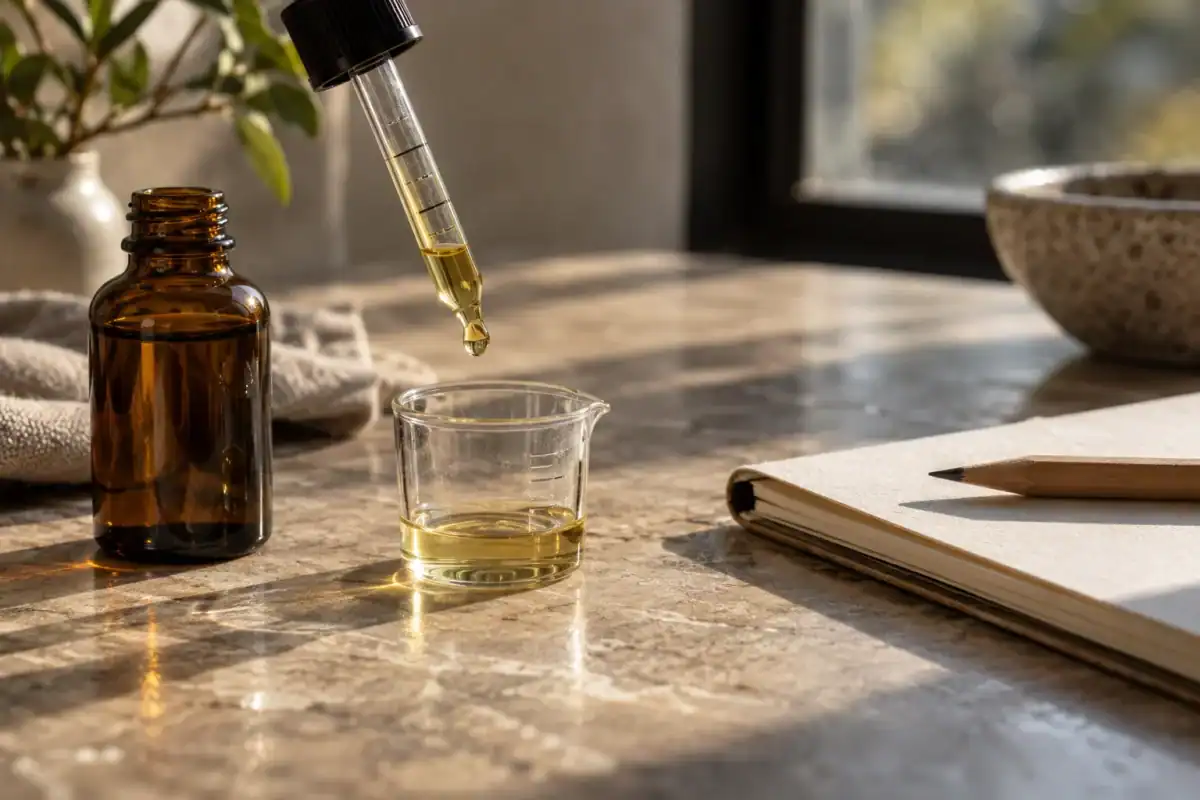
Do not infer the serving from the physical length of the pipette. A tube may not fill completely when the bulb is squeezed once, and the bottle cap can use a pipette longer or shorter than its calibrated volume.
Why mL is the useful unit
Milliliters describe liquid volume. They let you connect a physical device to a label and then to cannabinoid concentration.
FDA guidance for oral liquid OTC drug devices says calibrated units on the device should match units in the labeled directions. That guidance does not make retail CBD an approved OTC drug, but the measurement principle is sensible: a label in mL should be paired with a device readable in mL.
Use a leading zero for an amount below 1 mL, write 0.5 mL, not .5 mL. Avoid trailing zeros that can create confusion: 0.5 mL, not 0.50 mL, unless added precision is genuinely required by the device.
Kitchen teaspoons are too coarse for many small oil volumes. “Half a dropper” is also ambiguous unless the calibrated capacity is known.
A dropperful is not a standard unit
“Dropperful” can mean:
- one full squeeze of the bulb;
- liquid drawn to a marked line;
- liquid filling the visible glass tube;
- the manufacturer's intended serving; or
- an informal amount that varies from use to use.
Those meanings are not interchangeable. A bulb may draw less than the tube's apparent capacity. Residual oil can remain inside. The pipette may look partly empty because of its geometry.
Use the mL mark, not a visual idea of “full.” If the product directions rely on “one dropperful” without defining its volume, request clarification.
Do not assume 20 drops equal 1 mL
Drop counting is appealing because it feels precise. The count is not universally transferable.
Drop volume can vary with:
- tip diameter and shape;
- device angle;
- squeeze pressure and release;
- oil viscosity;
- surface tension;
- temperature;
- how long the drop hangs before release; and
- residue around the tip.
A study of pediatric oral droppers found that manually delivered volumes varied more than vertically clamped delivery. Tilting the dropper toward 45 degrees reduced the dispensed volume and increased variability for the tested products.
That study was not conducted on Mood CBD oils and does not give a universal CBD correction factor. Its relevance is narrower: angle and user technique can defeat a fixed drop-count assumption.
Inspect the device before using it
Units
Look for mL. Do not assume unlabeled lines are milliliters. A device may use fractions, a proprietary serving line or no calibrated scale at all.
Maximum marked capacity
Find the highest actual graduation. The glass tube extending above that line does not necessarily add calibrated capacity.
Smallest graduation
If the markings are 0.25 mL apart, the device does not directly support a precise 0.10 mL reading. Do not invent resolution between wide marks.
Legibility
Oil, glare and curved glass can hide pale printing. Wipe the outside, use good light and rotate the dropper. Replace a worn or damaged device through the manufacturer.
Match to the bottle
Do not swap droppers between products. Cap threads, tube length, bulb behavior, markings and contamination risks differ.

A repeatable measuring technique
1. Follow product preparation directions
If the label says to shake, do so consistently. Shaking may also create bubbles, so allow obvious foam to settle when necessary.
2. Squeeze before entering the liquid
Compressing the bulb first helps avoid blowing air into the bottle. Insert the tip without touching surfaces outside the container.
3. Keep the dropper aligned
Hold it upright when reading a vertical pipette unless the manufacturer specifies another method. Avoid comparing one tilted reading with one upright reading.
4. Draw slowly
Release the bulb gradually. A fast release can create bubbles or an incomplete draw.
5. Resolve significant bubbles
Large bubbles displace liquid. Return the oil to the bottle and redraw rather than pretending the empty space is part of the measured volume.
6. Read the same boundary
Curved glass and viscous oil can make the surface look uneven. Use the manufacturer's instructions for the reference point. In the absence of specific directions, use one consistent visual boundary rather than alternating between the top and bottom of the curve.
7. Dispense completely
Let the intended liquid leave the device. Do not scrape the dropper on teeth or share it. Avoid touching the mouth if clean dispensing is required.
8. Close the bottle
Return the original dropper, tighten the cap and store as directed.
Bubbles, residue and partial fills
A small film on the inside wall is normal for oil, but it can complicate visual reading. The goal is repeatability, not laboratory-grade volumetry.
If a large bubble appears below the measurement line, redraw. If the same problem happens repeatedly:
- let the product reach its allowed storage temperature;
- release the bulb more slowly;
- keep the tip submerged while drawing;
- inspect the bulb and tube for damage; and
- ask the manufacturer about a replacement device.
Never add extra oil “to make up” for invisible residue using guesswork. If the required amount is smaller than the device can reliably show, use a compatible calibrated oral syringe only after confirming suitability with the manufacturer or a pharmacist.
Convert measured mL to CBD
Once you know the volume, use the concentration:
CBD amount = measured volume × CBD concentration
Example: a label states 33 mg CBD per 1 mL. A measured 0.5 mL corresponds to:
0.5 mL × 33 mg/mL = 16.5 mg CBD
This is label arithmetic, not a recommendation to take 16.5 mg.
For a 66 mg/mL oil, the same 0.5 mL corresponds to 33 mg CBD. Equal volume does not mean equal cannabinoid amount when concentrations differ.
The CBD oil strength guide owns full concentration math, including bottle totals and multiple cannabinoids.
When the label gives bottle total only
If a bottle states 1,000 mg CBD in 30 mL:
1,000 mg ÷ 30 mL = 33.33 mg/mL
Manufacturers may round the displayed concentration. Preserve the label's stated value when it is available and note any difference from calculated arithmetic.
Do not calculate “mg per drop” unless you have validated the actual drop volume for that exact device, liquid and technique. Even then, mL measurement is usually easier to reproduce.
The CBD bottle-size comparison explains why equal-looking bottles can have different total CBD and concentration.
Measure other cannabinoids separately
A CBD+CBG or CBD+CBN oil may list a combined bottle total that hides the individual amounts. Record each cannabinoid independently.
For example, a 1:1 formula might contain equal labeled CBD and CBG, but “1,000 mg cannabinoids” does not tell you whether that means 500 mg of each without a supporting label statement.
Full-spectrum products can include measurable THC. Reducing the mL volume reduces all cannabinoids proportionally only if the formulation is uniform and adequately mixed. It does not remove THC or drug-testing risk.
Current Mood measurement examples
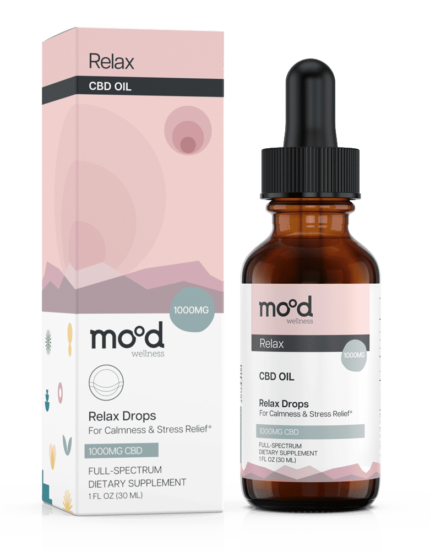
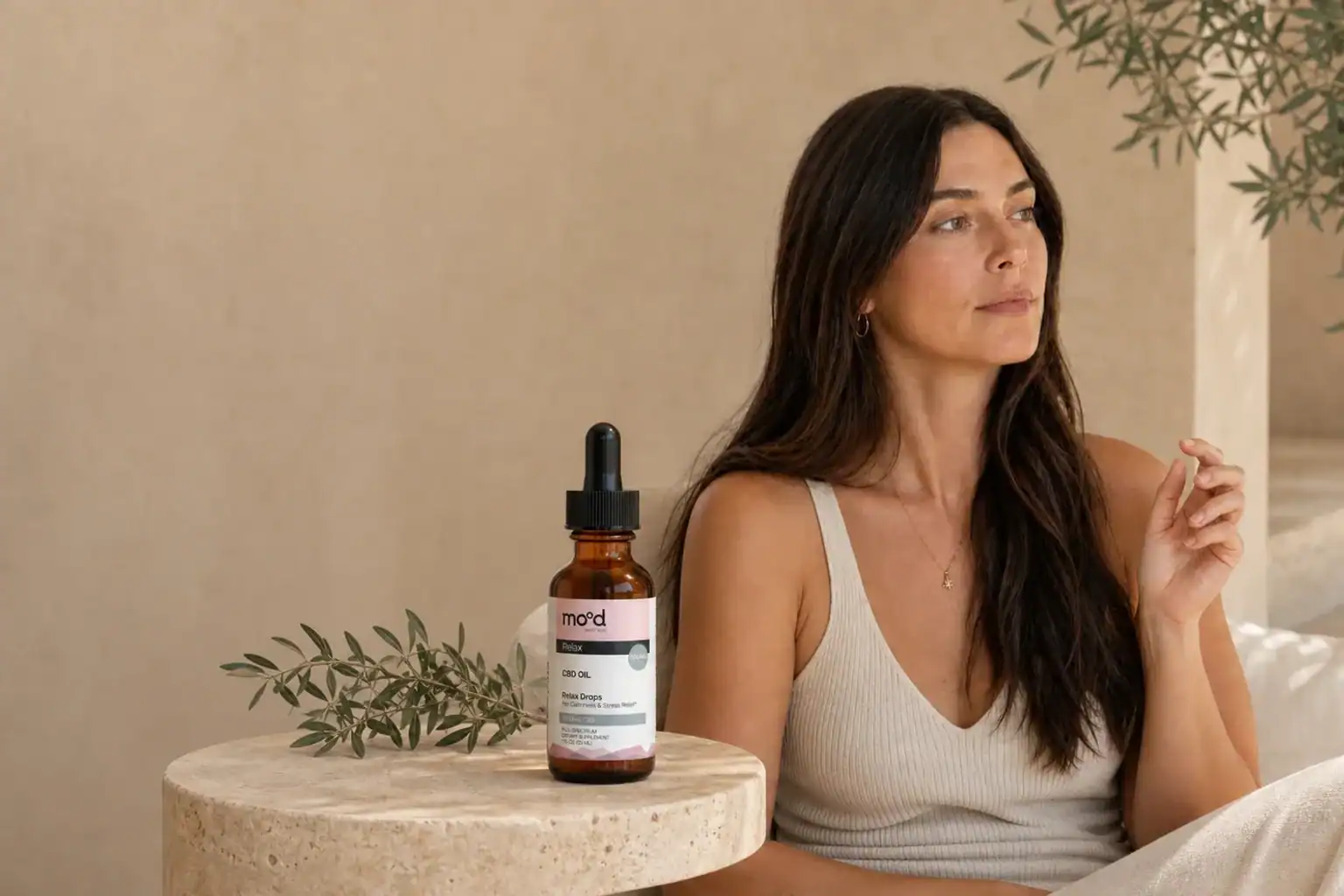
Mood's current Relax Drops page presents a 30 mL bottle and two strengths:
- 1,000 mg CBD per bottle, described as 33 mg CBD per 1 mL; and
- 2,000 mg CBD per bottle, described as 66 mg CBD per 1 mL.
The page instructs users to shake and measure with the dropper. Those statements support worked label examples, but the physical device remains the authority for which graduations are actually available.
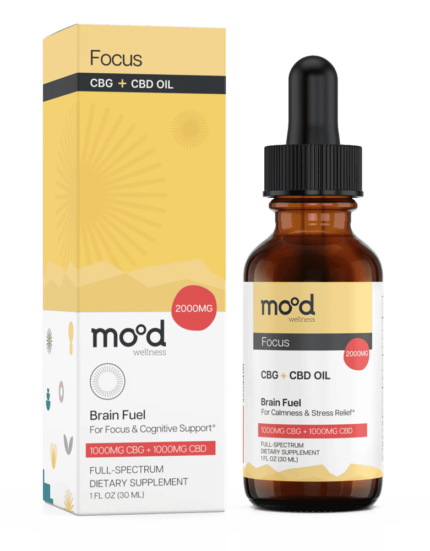
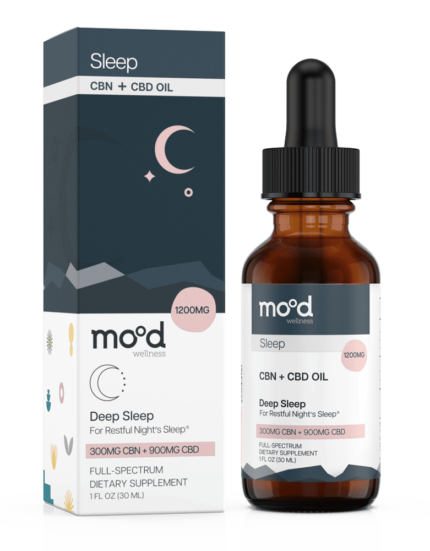
Brain Fuel adds CBG, and Deep Sleep adds CBN. Their cannabinoid ratios cannot be inferred from Relax Drops. Compare the current Mood CBD oil collection and exact package.
Mood's online product copy may change independently of stock already in a customer's possession. When they conflict, pause and ask the manufacturer which version matches the lot.
Check the batch report after measuring
Accurate volume measurement cannot fix an incorrect potency claim. Match the package lot to the report using the batch-number workflow.
Then check:
- product and lot identifiers;
- sample and report dates;
- CBD units;
- THC result and reporting limit;
- whether results are per mL, per gram or another basis; and
- which contaminant panels are actually present.
The CBD COA guide explains unit conversion. Do not multiply a per-gram result by mL without a defensible density conversion.

Repeatability check
If consistent measurement matters, practice with the supplied device before relying on fine distinctions.
Without consuming the product, draw to the same visible mark three times and inspect:
- whether large bubbles recur;
- whether the liquid reaches the same boundary;
- whether the bulb fully rebounds;
- whether the markings remain readable; and
- whether oil leaks around the cap or tip.
This is a handling check, not a laboratory calibration. Do not pour test draws into an unclean vessel and then return them to the bottle.
Contact the manufacturer if the device cannot repeatedly reach its stated capacity or if the label and scale use incompatible units.
Measurement worksheet
| Field | Value |
|---|---|
| Exact product and lot | |
| Bottle volume | |
| Labeled serving volume | |
| Device units | |
| Smallest readable graduation | |
| Highest calibrated mark | |
| CBD concentration | |
| Measured volume | |
| Calculated CBD | |
| Other cannabinoids | |
| THC / drug-test note | |
| Bubble or device problem | |
| Manufacturer clarification |
Write unknown when a field is not available. False precision is less useful than an honest limitation.
Safety Boundaries for CBD Oil Dropper Measurement
This guide explains measurement, not how much CBD a person should take. FDA warns that CBD can interact with medications, affect the liver and increase sedation with alcohol or other substances that slow brain activity. FDA advises against CBD during pregnancy and breastfeeding.
Consult a clinician or pharmacist when you take medication, have liver disease, are preparing for surgery or need individualized advice. Do not change a prescribed treatment based on retail CBD arithmetic.
Keep oil and measuring devices away from children and pets. Clean only as the manufacturer directs; water left inside a dropper can contaminate the bottle.

Bottom Line: CBD Oil Dropper Measurement
Measure CBD oil in milliliters using the exact device supplied or a confirmed compatible calibrated device. Match the dropper units to the label, draw slowly, remove significant bubbles and read the same liquid boundary each time.
Do not assume a dropperful equals 1 mL or that 20 drops equal 1 mL. Once the volume is known, multiply by the labeled mg/mL concentration and keep CBD, CBG, CBN and THC separate. Precise-looking arithmetic cannot rescue an unmarked dropper or mismatched batch report.
Quick answers
Frequently asked questions about CBD Oil Dropper Measurements
What is the practical answer about CBD Oil Dropper Measurements?
Measure CBD oil in milliliters using the exact device supplied or a confirmed compatible calibrated device. Match the dropper units to the label, draw slowly, remove significant bubbles and read the same liquid boundary each time. Do not assume a dropperful equals 1 mL or that 20 drops equal 1 mL.
Which Mood product fits this topic?
Relax Drops is the most relevant Mood option for this topic. Mood Relax Drops provide a clearly labeled CBD oil format for shoppers who want flexible serving control and an easy way to build CBD into a daily or evening routine.
What should I compare before choosing a oil?
Compare the cannabinoid amount per measured serving, the complete ingredient list, spectrum or THC information, current product directions and available batch documentation. The best choice is the formula that fits the goal and is easy to use consistently.
How should I start using a new CBD or cannabinoid product?
Follow the current package directions, choose a low-demand first-use window and keep timing and meal context reasonably consistent. Review medication, pregnancy, liver and impairment considerations with a qualified clinician when relevant.
Sources
- U.S. Food and Drug Administration. Dosage Delivery Devices for Orally Ingested OTC Liquid Drug Products. 2011.
- NCPDP/FDA. Standardize the Dosing Designations on Prescription Container Labels for Oral Liquid Medications.
- Ryu GS, et al. An assessment of dose-uniformity of samples delivered from paediatric oral droppers. Journal of Clinical Pharmacy and Therapeutics. 2004. PMID: 15584940.
- Yin HS, et al. Influence of Viscosity and Consumer Use on Accuracy of Oral Medication Dosing Devices. PMID: 34860900.
- U.S. Food and Drug Administration. Consumer information on cannabis-derived products, including CBD.
- Mood Wellness. Relax Drops, CBD Oils collection and Lab Results pages. Checked September 9, 2026.
- U.S. Food and Drug Administration. What the FDA is Doing to Protect Consumers from Cannabidiol (CBD) in Foods. Accessed September 2026.