
Set expectations
Why two legitimate CBD COAs can look different
Laboratories do not all use the same report template, instrument, analyte list or reporting threshold. One report may state cannabinoids in milligrams per gram while another converts the same type of result into milligrams per serving. One may place total THC beside delta-9 THC and THCA, while another shows the calculation in a footnote. The layout can change without changing the underlying purpose.
State rules, product type and manufacturer specifications also affect which panels appear and what counts as a pass. Do not compare the color of a status badge across brands. Compare the analyte, result, unit, reporting limit and action limit. If a field is unclear, ask the brand or laboratory for an explanation instead of assuming that blank means zero or that a missing panel passed.
This guide therefore teaches a sequence rather than one fixed page layout. Identity comes first, followed by potency, THC, contaminant scope and method limits. The sequence works even when columns move or laboratories use different abbreviations.
Before you start
Download the report and identify what was actually tested
A useful COA review begins with the complete report, not a cropped screenshot, a quality badge or a QR code that stops at the brand homepage. Save the PDF so you can compare its header, pages and authorization details without losing your place.
First determine whether the laboratory received raw hemp, bulk extract, an intermediate mixture or the finished retail product. A potency test on an input ingredient cannot prove that every finished gummy contains the label amount, and a report for one flavor or strength should not be silently applied to another. The sample description should be specific enough to connect the tested material with the package.
Next review the report structure. Multi-page COAs often separate cannabinoids, pesticides, heavy metals, residual solvents, microbiology and mycotoxins. Page one may summarize only the passing status. Continue through every page to see the analyte list, units, reporting limits, action limits and method references. A green “pass” icon is a conclusion inside the laboratory’s stated scope, not evidence that every possible contaminant was tested.
Who submitted the sample?
Many retail reports are based on samples submitted by the manufacturer or brand. That is common, but it is different from a regulator independently selecting a product from a shelf. Look for language such as “client supplied” or “sampled by laboratory.” This distinction does not invalidate the result; it tells you how much the report establishes about chain of custody.
Is the laboratory identifiable?
The report should name the laboratory, facility address, certificate or accreditation details where applicable, analytical methods, authorized signatory and report date. Accreditation does not guarantee that every number is correct, but missing laboratory identity or authorization makes the document difficult to verify. If a PDF looks altered, contact the laboratory using contact information from its own website rather than information printed only on the document.
Does the report cover the finished batch?
Finished-product testing is the most direct way to evaluate the item being sold. For gummies, unit-level variation can occur during mixing, depositing and curing. A composite sample may estimate batch potency but does not prove that every individual gummy is identical. Read the sampling basis and uncertainty statements before treating a precise decimal as a guarantee.
A practical evidence ladder
A batch-matched finished-product report with full pages, clear methods and relevant contaminant panels is more informative than a current generic report. A generic report is more informative than an undated “lab tested” badge. None of them determines whether CBD is personally appropriate for you.
Visual walkthrough
Three checks to see before reading the fine print
Use these illustrations as a map: establish traceability, identify the measurement unit, then confirm that testing goes beyond cannabinoid potency.


The document map
What a CBD COA should tell you
A certificate of analysis is a laboratory report for a particular sample. It can help verify identity, cannabinoid potency and selected contaminants, but only within the scope of the tests shown.

| Layer | Question answered | What to find |
|---|---|---|
| Identity | Is this the right sample? | Product, batch or lot, sample ID, dates, laboratory and client |
| Potency | What cannabinoids were measured? | CBD, acidic cannabinoids, THC values, units and calculation basis |
| Safety screens | What unwanted substances were tested? | Pesticides, metals, solvents, microbes and sometimes mycotoxins |
| Method and limits | How should results be interpreted? | Method, LOQ/LOD, pass limits, accreditation and signatures |
A single-page cannabinoid profile may be useful for potency while remaining incomplete for safety. Likewise, an ingredient COA does not necessarily verify a finished gummy, oil or capsule after manufacturing.
Check 1
Match the report to the product and batch
Before reading any cannabinoid number, compare the report header with the package. The product name, strength, lot number and sample description should make sense together. Scan the QR code on the physical package when available and confirm it opens the matching report rather than a generic lab-results homepage.
1
Product name and format
A tincture report should not be used to verify a gummy, even if both use the same hemp extract.
2
Strength and flavor
Check whether the report identifies the same strength and formulation. Different variants can be separate batches.
3
Lot or batch number
The code on the package should match the code on the report. A missing batch connection weakens traceability.
4
Dates
Review the sample received, tested and reported dates. An old report may not describe current inventory.
5
Laboratory identity
Look for the laboratory name, address, accreditation information and report authorization.
Check 2
Read the units before calculating CBD
Potency can be shown as milligrams per gummy, milligrams per gram, milligrams per milliliter or percent by weight. These units are not interchangeable. Compare the COA with the label only after identifying the product mass or liquid volume used in the calculation.
| Unit | Meaning | Practical calculation |
|---|---|---|
| mg/unit | Milligrams in one gummy, capsule or other unit | Usually the easiest direct label comparison |
| mg/mL | Milligrams in one milliliter of liquid | Multiply by bottle volume for estimated bottle total |
| mg/g | Milligrams in one gram of product | Multiply by the tested unit weight in grams |
| % by weight | Grams per 100 grams | One percent equals roughly 10 mg/g |
Oil example
If a 30 mL oil report shows 33.3 mg CBD per mL, the calculated bottle total is about 999 mg. That is close to a 1,000 mg front-label claim, subject to the report’s uncertainty and sample basis.
Do not calculate from a result marked “as received” without confirming whether the laboratory already converted it to a per-unit amount. Avoid false precision: analytical results include measurement uncertainty and reasonable manufacturing variation.
Check 3
Review the whole THC picture
A cannabinoid table may list delta-9 THC, THCA and a calculated total THC value. Reading one “ND” row while ignoring another detected form can produce the wrong conclusion. The report should explain its total-THC calculation.
Full-spectrum products can contain THC. Broad-spectrum and isolate products are intended to reduce or remove it, but the category name alone does not guarantee a nondetectable result. If workplace or legal consequences matter, there is no COA-based guarantee that use will never lead to a positive drug test.
Hemp compliance is not a personal drug-test guarantee
A product can satisfy a legal or specification threshold while repeated exposure still creates individual testing risk. Review the finished batch and your employer’s policy.
Checks 4 to 7
Confirm which contaminant panels were actually run
| Panel | Examples | Why it matters |
|---|---|---|
| Heavy metals | Lead, arsenic, cadmium, mercury | Hemp and ingredients can accumulate environmental contaminants |
| Pesticides | A laboratory’s target analyte list | A “pass” applies only to compounds and limits in the method |
| Residual solvents | Butane, propane, ethanol and other process solvents | Relevant scope depends on extraction and manufacturing |
| Microbiology | Pathogens, yeast and mold | Finished ingestible products need microbiological control |
| Mycotoxins | Aflatoxins and ochratoxin A | May be a separate panel from yeast and mold |
Look for an analyte list, measured result, reporting limit and action limit. “All passed” without the underlying panel is less informative than a report showing what was measured.
For products with functional mushrooms, the cannabinoid COA may not verify mushroom species, beta-glucans or fruiting-body claims. Those require separate methods and documentation.
Interpretation
What ND, LOD and LOQ mean
ND usually means the analyte was not detected above the laboratory’s stated threshold. It does not prove that exactly zero molecules are present. LOD is the limit of detection, the smallest amount the method can distinguish from background. LOQ is the limit of quantitation, the smallest amount the method can report with defined quantitative confidence.
When comparing two reports, a lower reporting limit can reveal a trace that another method calls ND. That does not automatically make either report deceptive. The methods and thresholds differ.

The result met the stated specification or regulatory action limit used by the report.
The analyte was below the stated detection or reporting threshold, not proven absent in an absolute sense.
Stop and verify
CBD COA red flags

- The brand links only to a homepage or an unrelated PDF.
- The product, strength or batch cannot be matched.
- The report covers raw hemp extract but the label implies finished-product testing.
- Only potency was tested while the page claims comprehensive purity.
- The laboratory, dates, units or method are missing.
- The PDF appears cropped, altered or lacks report authorization.
- The label says THC-free while the finished-batch result detects THC.
- The calculated amount differs materially from the label and the brand provides no explanation.
- A mushroom formula uses the cannabinoid report as proof of mushroom identity or beta-glucans.
Contact the brand or laboratory before purchasing when a mismatch could affect medication, THC exposure or an allergy. A report is a decision aid, not a substitute for professional advice.
Apply the checklist
How to use Mood’s lab-results library
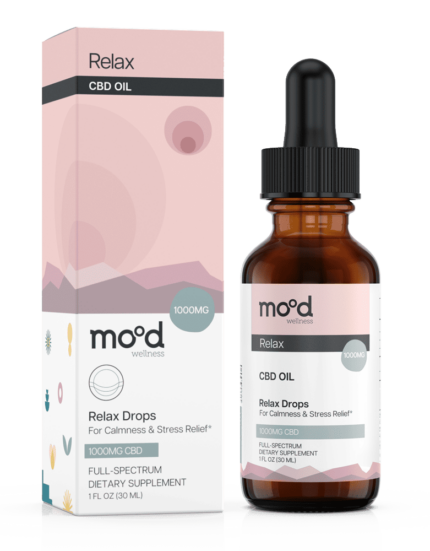
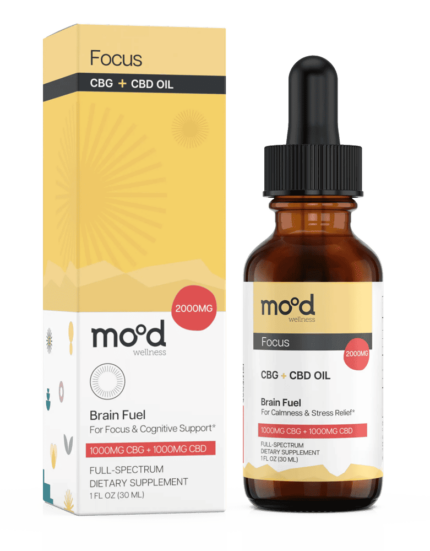
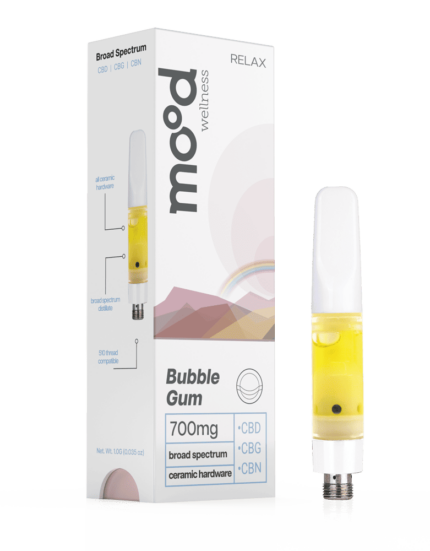
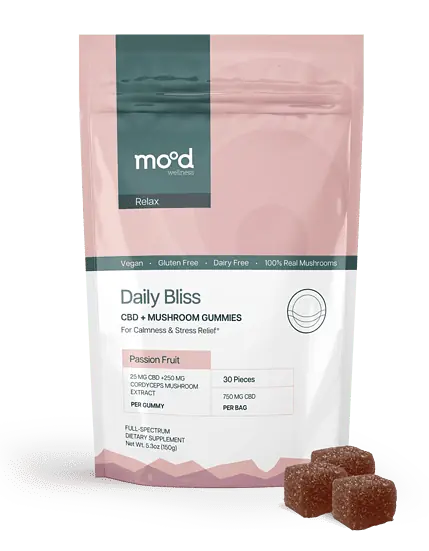
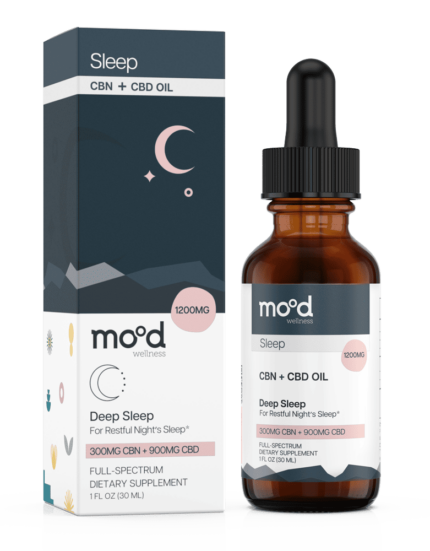
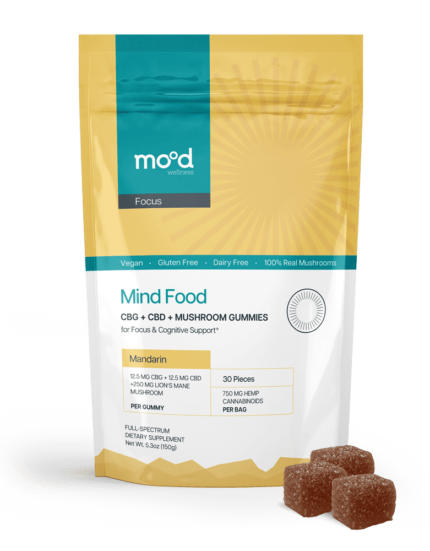
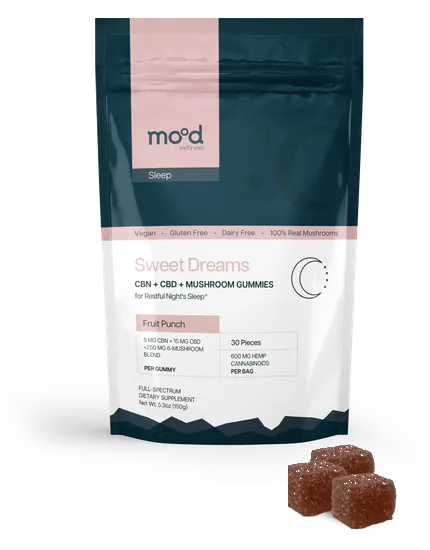
Mood’s lab-results page lists reports for Relax Drops, Brain Fuel, Deep Sleep, Daily Bliss, Mind Food, Sweet Dreams and the broad-spectrum vape cartridge. Start with the product name, then open the report that matches the strength and current package.
The strongest shopper workflow is:
- Find the lot number or QR code on the product.
- Open the corresponding report.
- Match product, strength, batch and dates.
- Calculate CBD and other cannabinoids per serving.
- Review THC and the complete set of listed safety panels.
- Save or screenshot the report if medication or drug testing makes the details important.
Mood sells the products in its library, so the reports should be evaluated with the same skepticism applied to any brand. Transparency means making the underlying data easy to inspect, not asking buyers to trust a badge.
Quick answers
Frequently asked questions about CBD COAs
What does COA stand for?
Certificate of analysis. It is a laboratory report describing the results for a specific sample.
How recent should a CBD COA be?
The decisive question is whether it matches the current batch. A recent generic report is less useful than the correct batch report.
What potency difference is acceptable?
Rules and specifications vary. Review the report’s uncertainty, the applicable jurisdiction and the brand’s stated tolerance instead of inventing a universal percentage.
Does a COA prove a product is safe?
No. It verifies only the sample, tests and limits shown. It cannot establish personal suitability, absence of every contaminant or lack of medication interaction.
Can a COA guarantee zero THC?
No. ND depends on the method’s reporting limit, and product use can still carry drug-test risk.
Who should review a CBD COA before use?
A pharmacist or clinician should review the product and medication list when prescription drugs, liver disease, pregnancy, surgery or other high-risk circumstances are involved.
Evidence and transparency
Sources
- New York Office of Cannabis Management. How to Read a Certificate of Analysis.
- New Jersey Cannabis Regulatory Commission. How to Read a COA.
- U.S. FDA. Consumer information about CBD.
- Mood Wellness. Lab Results.
- Mood Wellness. CBD Buyer’s Guide.
This guide explains how to interpret common report fields. It is not a legal determination, laboratory certification or individualized medical advice.
Written by Dvir Hamami, Mood Editorial TeamEditorially reviewed for product and source accuracy on September 4, 2026. This guide provides general education and is not individualized medical advice.