
Editorial disclosure: Mood publishes this guide and sells CBD oils. The examples below are either hypothetical or clearly identified public product-page examples. Product formulas and prices were checked September 9, 2026 and must be rechecked before release.
What this decision helps you get right
The reader's practical goal is to buy the bottle size that delivers the concentration, supply length and value they need without confusing milliliters with strength. That creates a concrete standard for the rest of the article: every ingredient, amount, comparison and research result must help explain that decision rather than delay it with generic background.
People use this comparison to make a clearer, safer and more economical product decision. The immediate benefit is not a medical promise; it is knowing which numbers, ingredients and documents change the choice.
How the effect or decision works
Normalization turns package claims into comparable units, while batch matching connects a physical product to the evidence produced for it. This process reduces false comparisons caused by different serving sizes, denominators or report scopes.
Label rules, analytical methods and current product documentation provide concrete evidence for these decisions. They cannot predict an individual effect, but they can materially improve the quality of the choice. In practice, the evidence supports a realistic reason to consider the ingredient or format while leaving room for individual response, formulation differences and responsible-use questions.
Where a Mood product fits
For readers ready to compare a current product, Mood CBD oils is the logical Mood destination. It provides a concrete label and format against which to apply this article's specific goal: to buy the bottle size that delivers the concentration, supply length and value they need without confusing milliliters with strength. Recheck the current cannabinoid or mushroom amounts, THC status, other ingredients and batch documentation before deciding whether it fits your routine. This is a product-selection bridge, not a promise that the product will produce a particular health result.
<!-- /mood-value-first-standard -->
Bottle volume, total milligrams and concentration are different
Three numbers are commonly collapsed into the word “strength.” Keeping them separate prevents most comparison errors.
| Label field | What it tells you | What it does not tell you |
|---|---|---|
| Bottle volume, such as 30 mL | Total amount of liquid | How much CBD is in each mL |
| Total CBD, such as 1,000 mg | Labeled CBD across the whole bottle | Bottle concentration without volume |
| CBD mg/mL, such as 33.3 mg/mL | Labeled CBD concentration | The amount in a serving unless serving volume is known |
| Serving size, such as 0.5 mL | Volume used for the label’s serving calculation | A personalized or medically appropriate amount |
| Servings per container | Label-based count using the stated serving volume | Exact real-world yield if filling or measurement varies |
A small bottle can be more concentrated than a large one. A large bottle can contain more total CBD while being less concentrated. A bottle can also contain several cannabinoids, so a large “total cannabinoids” number may not equal CBD alone.
The core CBD bottle-size formula
Use this equation:
Labeled CBD concentration = total CBD milligrams ÷ bottle milliliters
If a label states 1,000 mg CBD in 30 mL:
1,000 ÷ 30 = 33.3 mg CBD per mL
If the formula contains CBD plus CBG or CBN, calculate each cannabinoid separately whenever the label provides separate totals. Do not divide a combined total into an assumed ratio unless the label explicitly supports it.
The calculation reflects the label. It is not an independent laboratory result, a recommended serving or a forecast of effects.

A controlled 15 mL vs 30 mL vs 60 mL comparison
The following examples use the same labeled concentration so bottle size is the only changing variable.
| Example | Bottle volume | Total labeled CBD | CBD concentration | 1 mL label-size portions available | 0.5 mL label-size portions available |
|---|---|---|---|---|---|
| Small | 15 mL | 750 mg | 50 mg/mL | 15 | 30 |
| Standard | 30 mL | 1,500 mg | 50 mg/mL | 30 | 60 |
| Large | 60 mL | 3,000 mg | 50 mg/mL | 60 | 120 |
The three oils have equal labeled concentration. The 60 mL example is not “four times stronger” than the 15 mL example. It contains four times the liquid and four times the total CBD, producing four times as many equal-volume portions.
Those portion counts are arithmetic demonstrations, not directions to consume 0.5 mL or 1 mL. The applicable product label and a qualified clinician should guide individual safety questions.

When the same total milligrams appear in different bottle sizes
Now hold total CBD constant and change volume.
| Example | Bottle volume | Total labeled CBD | Calculated concentration |
|---|---|---|---|
| A | 15 mL | 1,000 mg | 66.7 mg/mL |
| B | 30 mL | 1,000 mg | 33.3 mg/mL |
| C | 60 mL | 1,000 mg | 16.7 mg/mL |
All three bottles contain the same total labeled CBD. The smallest is four times as concentrated as the largest because the same total is distributed through one-quarter of the liquid.
This is why comparing only the bold number on the front can fail. “1,000 mg” may describe equal total content across products with very different per-mL concentrations.
When the same bottle size has different total milligrams
Holding volume constant creates the opposite example.
| Bottle | Volume | Total labeled CBD | Calculated concentration |
|---|---|---|---|
| Lower total | 30 mL | 500 mg | 16.7 mg/mL |
| Middle total | 30 mL | 1,000 mg | 33.3 mg/mL |
| Higher total | 30 mL | 2,000 mg | 66.7 mg/mL |
These bottles occupy the same liquid volume but have different labeled concentrations. The 2,000 mg bottle is four times as concentrated as the 500 mg bottle. It is not necessarily four times the price, nor does the calculation establish that it is more suitable.
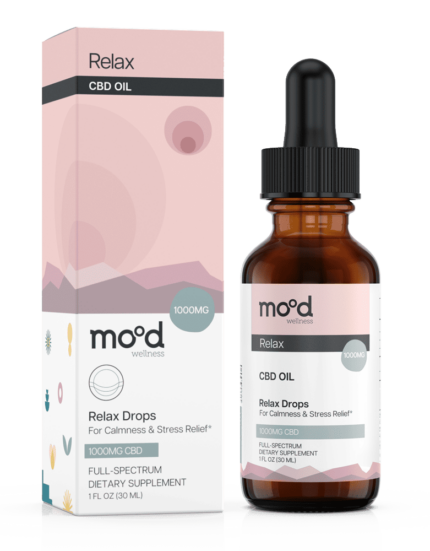
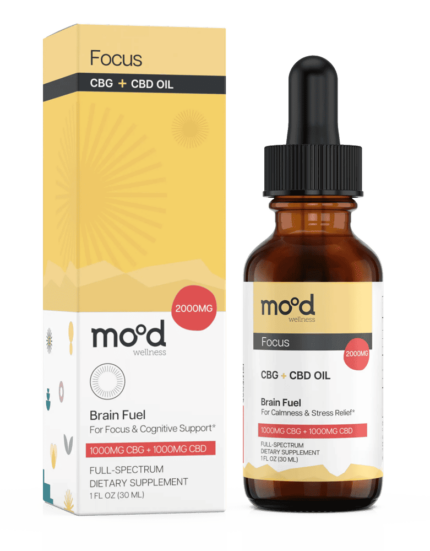
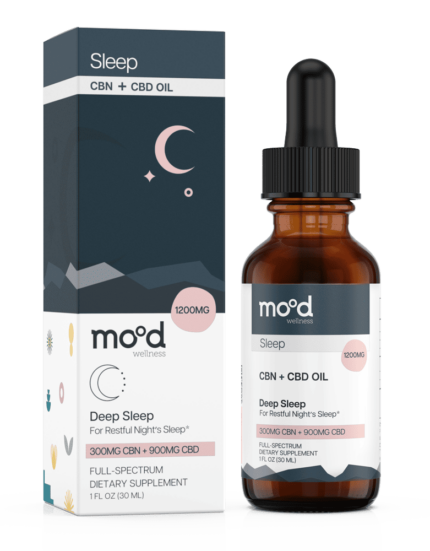
Mood’s current oil category displays different total-strength options across Relax Drops, Brain Fuel and Deep Sleep. Because those products also differ in cannabinoid mix and positioning, compare the selected variant’s current facts rather than treating front-label totals as interchangeable. Start with the current CBD oils collection and open the exact product page.
Do not calculate by “drops” unless the label defines them
Online charts often assume a fixed number of drops per milliliter. Real drop size can vary with dropper tip geometry, liquid viscosity, temperature, angle and technique. A “full dropper” can also mean the glass pipette filled to a mark-not necessarily filled to the rubber bulb.
Prefer a marked dropper and label-defined volume. If the panel states a 0.5 mL serving, use that volume for label math. If it states 1 mL, use 1 mL. If the hardware lacks legible markings or the serving description is unclear, ask the seller rather than estimating a precise cannabinoid amount from a generic drop count.
Mood’s broader CBD oil guide can provide format context, but the selected bottle’s current Supplement Facts panel remains the primary measurement source.
How to estimate label-based bottle yield
Once the serving volume is known, calculate the label-based number of portions:
Bottle portions = bottle mL ÷ labeled serving mL
For a 30 mL bottle whose label defines one serving as 1 mL:
30 ÷ 1 = 30 labeled servings
For the same bottle with a 0.5 mL labeled serving:
30 ÷ 0.5 = 60 labeled servings
Then calculate the labeled CBD per serving:
CBD per labeled serving = CBD mg/mL × serving mL
If the bottle contains 33.3 mg/mL and the label uses 0.5 mL:
33.3 × 0.5 = about 16.7 mg CBD per labeled serving
Rounding can create small differences between front-label totals and serving-table multiplication. Record the figures as labeled, show your math and avoid implying laboratory precision that the label does not provide.

Compare value with two different calculations
Bottle price alone favors the smallest package. Price per milliliter favors liquid quantity. Price per labeled CBD milligram normalizes the named cannabinoid. Use both relevant unit prices.
Price per mL = ordinary bottle price ÷ bottle mL
Price per labeled CBD mg = ordinary bottle price ÷ total labeled CBD mg
Consider three hypothetical products:
| Bottle | Ordinary price | Volume | Labeled CBD | Price/mL | Price/CBD mg |
|---|---|---|---|---|---|
| 15 mL | $30 | 15 mL | 750 mg | $2.00 | $0.040 |
| 30 mL | $50 | 30 mL | 1,500 mg | $1.67 | $0.033 |
| 60 mL | $90 | 60 mL | 3,000 mg | $1.50 | $0.030 |
The large hypothetical bottle has the lowest unit prices, but buying more is not automatically a better decision. Consider whether the formula is already familiar, the package will be used within labeled storage guidance, the upfront price fits, and the concentration and measurement hardware are appropriate for the intended routine.
Use the ordinary one-time price unless a subscription is genuinely intended. Include unavoidable shipping in a checkout-level comparison. Do not mix a coupon price for one bottle with list prices for the others.
What a bottle-size comparison must still verify
Correct arithmetic is only one part of product comparison.
Which milligrams are being counted?
“Hemp extract,” “total cannabinoids,” “CBD,” “CBD + CBG” and “CBD + CBN” are not interchangeable descriptions. Record each named cannabinoid separately. If the marketing headline and Supplement Facts panel appear inconsistent, rely on neither silently-ask for clarification.
Is the spectrum and THC status clear?
Full-spectrum products can contain trace THC. “Less than 0.3% THC” is not the same as THC-free and cannot guarantee a negative drug test. Broad-spectrum and isolate labels should also be checked against the corresponding batch report rather than treated as guarantees.
Does the certificate match the bottle?
Match product name, strength, lot or batch number, report date and sample type. Check whether the document covers the finished oil or a raw ingredient and which panels were actually run. Mood’s guide to reading a CBD COA explains the document workflow, and the public lab-results index shows the reports currently linked by the brand.
What else is in the liquid?
Review the carrier oil, flavors, sweeteners and other actives. MCT, hemp seed and olive oil are not the same ingredient. Allergies, dietary restrictions and personal preferences can matter even when CBD concentration is identical.
Are the bottle and dropper usable?
Check whether markings are legible, the cap is child-resistant where applicable, the product can be stored as directed, and the bottle can be transported without leaking. A lower unit price is less useful if the measurement tool does not support the label instructions.
A practical bottle-size decision matrix
Do not assign a bottle size to a person based only on “beginner” or “experienced” labels. Use observable decision factors.
| Question | Smaller bottle may reduce commitment | Larger bottle may reduce unit cost | What to verify |
|---|---|---|---|
| Is the formula new to the buyer? | Less product and lower typical upfront spend | Not necessarily advantageous | Return policy, ingredients, ordinary price |
| Is the same concentration available in several sizes? | Same mg/mL with fewer total portions | Same mg/mL with more total portions | CBD total ÷ mL |
| Does the larger size change concentration? | May offer a different measurement range | May be more concentrated or simply more liquid | Variant-specific facts |
| Will it be used within storage guidance? | Less time open | More product to finish | Expiration, storage and opening guidance |
| Is travel relevant? | Lower volume may be easier to pack | More supply, but larger container | Current carrier and destination rules |
| Is budget the main constraint? | Often lower checkout total | Often lower unit price | Price/mL and price/mg after shipping |
The result is a buying comparison, not a dosing recommendation. If the decision depends on medication use, pregnancy or breastfeeding, liver disease, surgery or another medical factor, bring the exact product and label to a qualified healthcare professional.
Common CBD bottle-size mistakes
“The 60 mL bottle is twice as strong as the 30 mL bottle”
It is twice the liquid volume. Strength depends on mg/mL. If total milligrams also double, concentration stays the same.
“A 2,000 mg bottle means 2,000 mg per dropper”
Front-label totals commonly describe the whole bottle. Use total milligrams, total volume and labeled serving volume to calculate the per-serving figure.
“One dropper is always 1 mL”
Do not assume. Check the actual markings and serving statement.
“The largest bottle is always the best value”
Calculate price per mL and price per named cannabinoid milligram. Then consider formula fit, freshness, policies and upfront cost.
“A certificate proves the front-label total forever”
A report describes a submitted sample and date. It should be product- and batch-matched; an old or raw-material report does not establish every future finished bottle.
Safety and evidence boundaries
This article teaches label and price arithmetic. It does not establish a safe or effective CBD amount. FDA consumer materials describe unresolved risks including drug interactions, liver effects and concerns for vulnerable populations. Most nonprescription CBD products are not FDA-approved to diagnose, treat, cure or prevent disease.
Ask a qualified healthcare professional before use if you take prescription or over-the-counter medication, have a medical or liver condition, are pregnant or breastfeeding, or are preparing for surgery. Avoid driving or hazardous activity if a product affects alertness.
For a wider pre-purchase framework covering formula, documents and policies, use Mood’s CBD buyer’s guide.

The bottom line
The difference between 15 mL, 30 mL and 60 mL is liquid volume. The useful comparison begins only after you add total cannabinoid milligrams, labeled serving volume, ordinary price and batch documentation.
Calculate mg/mL first. Then calculate price per mL and price per named cannabinoid milligram. Treat serving counts as label-based arithmetic, not personalized advice. Finally, verify the exact variant’s ingredients, spectrum, THC context, dropper markings and current batch report.
A larger bottle can provide more of the same concentration and a lower unit price. A smaller bottle can reduce upfront commitment. Neither characteristic makes a product universally better.
Sources
- U.S. Food and Drug Administration. Consumer information on CBD safety. https://www.fda.gov/food/conversations-experts-food-topics/what-fda-doing-protect-consumers-cannabidiol-cbd-foods
- Gold Naturals. “15 mL vs 30 mL CBD Tincture: Which Bottle Size Should You Buy?” Checked September 9, 2026. https://goldnaturalshemp.com/blogs/news/15-ml-vs-30-ml-cbd-tincture-which-bottle-size-should-you-buy
- The Green Dragon CBD. “CBD Oil Dosage Guide.” Used only for visible bottle-size and concentration examples; dosing recommendations were not adopted. Checked September 9, 2026. https://www.thegreendragoncbd.com/blog/cbd-oil-dosage-guide
- Mood Wellness. CBD Oils category, product pages and lab-results index. Checked September 9, 2026.
Editorial note: Product labels, prices, stock, policies and lab links require commercial fact review immediately before release. This article is educational and is not medical advice.