Avoid comparison errors
Four CBD oil mistakes that make labels harder to compare
Comparing bottle totals without volume is the most common error. A 2,000 mg oil is not automatically twice as concentrated as a 1,000 mg oil if the larger total comes in twice the liquid volume. Convert both products to milligrams per milliliter.
Treating a drop as a fixed measurement creates false precision. Drop size changes with the dropper, oil viscosity and technique. Use marked milliliters whenever the package supports them.
Adding every cannabinoid together as CBD hides formula differences. A product containing 500 mg CBD plus 500 mg CBG is not the same as 1,000 mg CBD. Compare each cannabinoid and its intended role separately.
Ignoring the current batch leaves the most important label claims unverified. Match product, strength and lot to the COA, then review THC and the actual contaminant panels. Mood publishes available reports in its lab-results library so shoppers can connect the buying guide with current product evidence.
A label-first buying workflow
Compare CBD oils in three passes
A useful comparison separates concentration, formulation and verification. Reading only the largest number on the bottle can make two very different oils look equivalent.
Pass 1: calculate CBD concentration

A 1,000 mg bottle containing 30 mL provides about 33.3 mg CBD per mL. A 1,000 mg bottle containing 60 mL provides about 16.7 mg per mL. The front-label total is identical, but one full milliliter delivers roughly twice as much CBD in the first product. Confirm whether the dropper is marked at 0.25, 0.5, 0.75 and 1 mL before assuming that one dropperful equals one milliliter.
Price per bottle can be converted in two useful ways. Cost per milligram compares the amount of CBD purchased. Cost per intended serving estimates the routine cost, but only after choosing a serving rather than copying a competitor’s recommendation. Neither calculation measures product quality or suitability.
Pass 2: read the complete formulation

Identify full-spectrum, broad-spectrum or isolate, then confirm that description in the COA. Review secondary cannabinoids such as CBG or CBN separately instead of treating the total as pure CBD. Check the carrier oil because MCT coconut, hemp-seed and other oils have different allergen, taste and digestive considerations. Added flavoring, sweeteners, melatonin or botanicals can change who should use the product.
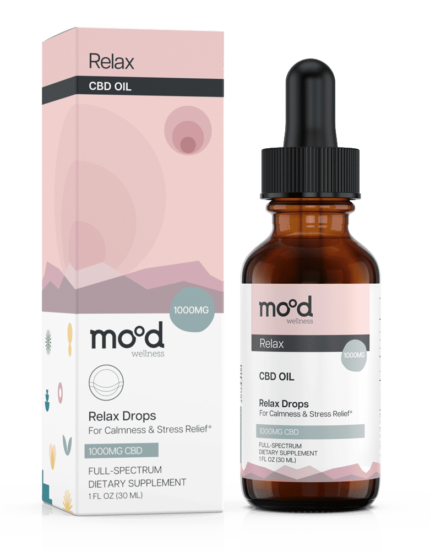
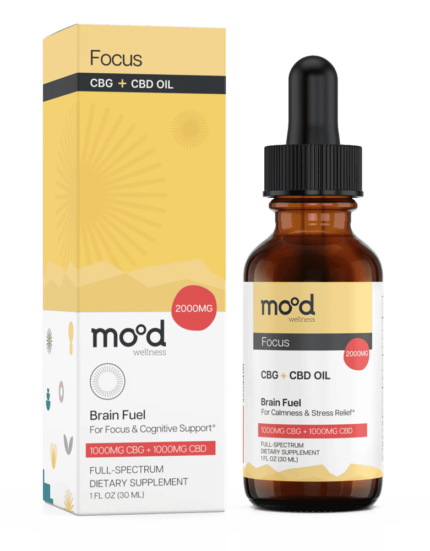
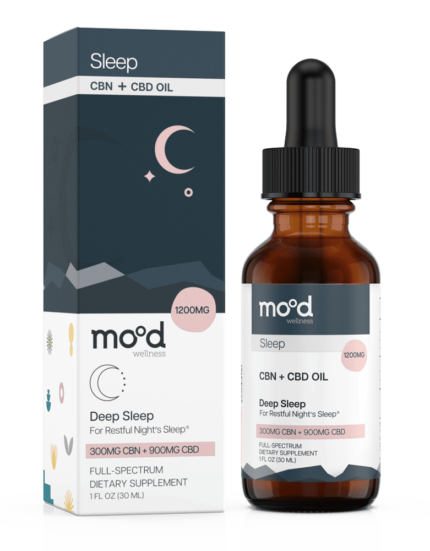
For Mood oils, Relax Drops is a CBD-focused full-spectrum option, Brain Fuel uses a 1:1 CBD-to-CBG formula, and Deep Sleep combines CBD with CBN. Those are different decision paths rather than three strengths of the same oil. Choose by routine and cannabinoid profile first, then choose concentration.
Pass 3: verify the batch and plan cautious use

Open the report that matches the product, strength and lot. Compare CBD and total THC with the label, then confirm which contaminant panels were actually run. A potency-only PDF does not establish pesticides, heavy metals, solvents or microbiology. If the QR code reaches only a generic library, use the lot number to locate the correct report.
CBD exposure can change with food, formulation and individual metabolism. Taking oil with a high-fat meal may increase exposure compared with fasting, which means identical measured servings can feel different under different conditions. Keep timing and food reasonably consistent while evaluating tolerability. Do not drive until you know how the product affects you.
Medication review comes before experimentation. CBD can interact with medicines and has a recognized liver-injury signal. Pregnancy, breastfeeding, liver disease, upcoming surgery and safety-sensitive work all require additional caution. A pharmacist can evaluate the exact label and medication list more reliably than a generic interaction checker.
This guide does not prescribe a dose
Retail labels and online calculators cannot account for diagnosis, medication levels, liver function or personal sensitivity. The goal is to help you read and compare products, not to replace individualized clinical advice.
Label first
What to look for on a CBD oil bottle
A strong label answers six questions: how much CBD is in the bottle, how much is in one milliliter, how the dropper is marked, which extract type is used, what else is in the formula, and where the current batch report can be found.
| Field | Why it matters |
|---|---|
| Total CBD | Describes the amount intended for the entire bottle |
| Bottle volume | Needed to calculate concentration |
| Serving size | Shows how the brand expects the label facts to be read |
| Extract type | Signals potential THC and other cannabinoid exposure |
| Ingredients | Identifies carrier oil, flavors and added cannabinoids |
| Lot and QR code | Connects the bottle to its certificate of analysis |
A front label that says “2,000 mg” can look twice as strong as a 1,000 mg product. That is true only if bottle volumes are equal and both totals refer to CBD rather than a combined hemp or cannabinoid amount.
Make products comparable
Compare CBD oil concentrations with mg/mL
Use this formula:
CBD concentration
Total CBD in milligrams ÷ bottle volume in milliliters = CBD milligrams per milliliter.
| Front-label total | Calculated concentration | CBD in 0.5 mL |
|---|---|---|
| 500 mg | 16.7 mg/mL | About 8.3 mg |
| 1,000 mg | 33.3 mg/mL | About 16.7 mg |
| 2,000 mg | 66.7 mg/mL | About 33.3 mg |
These are arithmetic examples, not serving recommendations. Use the actual bottle and report because fill volume, analytical result and dropper markings can differ. For individualized serving arithmetic and a cautious adjustment framework, continue to the CBD serving calculation guide.
Why “one dropper” can be ambiguous
A dropper may hold one milliliter when filled to a mark, but the glass tube itself can look full at another volume. Counted drops also change with liquid viscosity, dropper geometry and technique. A marked mL line is more reproducible than an assumed number of drops.
Composition summary
Choose an oil type after checking THC priorities
Full-spectrum oils aim to retain a wider hemp profile and can contain THC. Broad-spectrum products aim to retain multiple compounds while reducing or removing THC. CBD isolate centers on highly purified CBD.
No category is automatically best. A finished-batch COA is needed to see the detected cannabinoid profile. Someone concerned about drug testing should not interpret broad-spectrum or isolate as a guarantee of zero risk. Read the complete CBD spectrum comparison before choosing by label language alone.
The rest of the formula
Carrier oils, flavors and added cannabinoids
CBD is lipophilic, so consumer oils commonly dissolve hemp extract in a carrier such as medium-chain triglyceride oil. Other products may use hemp-seed, olive or another food-grade oil. The carrier affects taste, viscosity and ingredient suitability; it does not prove superior outcomes.

Check coconut-derived MCT oil for personal allergy or digestive concerns. Review flavoring, sweeteners and botanicals. Products may also add CBG, CBN or terpenes, which changes the formula and the questions a clinician should review.
Human pharmacokinetic studies show that food and formulation can substantially change CBD exposure. Research on prescription or high-dose formulations cannot be converted into a universal instruction for retail oils. Consistency in how a product is used can make observations more interpretable, but it does not create a proven therapeutic dose.

Proof layer
Confirm the CBD oil with its batch report
Before buying, match the report to the exact oil, strength, lot and test date. Compare the measured CBD and THC with the label, and confirm that any promised pesticide, heavy-metal, solvent and microbiology panels are actually present. A potency-only PDF does not verify contaminant testing.
Interpreting units, detection limits and total-THC calculations belongs in our field-by-field guide to reading a CBD certificate of analysis.
Format checkpoint
Decide whether CBD oil is the right format
| Decision | CBD oil | Gummies |
|---|---|---|
| Serving adjustment | Fine adjustments possible with clear mL markings | Fixed amount per gummy; can sometimes be divided imprecisely |
| Convenience | Requires measuring and storage care | Portable and pre-portioned |
| Taste | Hemp and carrier flavors are noticeable | Flavor and sweetness can mask hemp |
| Onset | Varies by use and swallowing | Requires gastrointestinal digestion |
| Ingredient burden | Can be a short two-ingredient formula | Usually includes sweeteners, gelling agents and flavors |
This is only a format checkpoint. Route, formulation, food, serving and biology create wide variation, so do not rely on a fixed onset promise. Use the dedicated CBD oil versus gummies comparison for the complete format decision.
Mood oil range
Compare Relax Drops, Brain Fuel and Deep Sleep

| Product | Formula | Available bottle total | Routine |
|---|---|---|---|
| Relax Drops | Full-spectrum CBD + organic MCT oil | 1,000 mg or 2,000 mg | Flexible CBD-only formula |
| Brain Fuel | 1:1 CBD and CBG + organic MCT oil | 1,000 mg or 2,000 mg combined | Daytime-positioned formula |
| Deep Sleep | 900 mg CBD + 300 mg CBN + organic MCT oil | 1,200 mg combined | Evening-positioned formula |
The front total for Brain Fuel and Deep Sleep combines cannabinoids, so read the individual amounts before comparing them with a CBD-only oil. All three are described as full-spectrum CBD formulas and therefore can involve THC exposure.
You can shop Mood CBD oils after identifying the appropriate formula and concentration. Mood publishes available reports in its current lab-results library; product pages and current labels remain the source of truth for price, stock, serving information and composition.
Before using CBD oil
Medication, liver, pregnancy and driving cautions
The FDA warns that CBD can cause liver injury, drug interactions, drowsiness, gastrointestinal symptoms and mood changes. Retail CBD serving guidance is not equivalent to the monitored dosing of an approved prescription product.
- Ask a pharmacist or clinician before use with medication, especially sedatives, seizure drugs, blood thinners or medicines with a narrow therapeutic range.
- Avoid CBD during pregnancy and breastfeeding.
- Do not drive or use machinery until you understand the effect.
- Keep the bottle away from children and pets.
- Stop and seek help for severe allergic symptoms, fainting, marked confusion or another serious reaction.
If a clinician agrees that use is reasonable, change one variable at a time, keep timing consistent and record the measured amount rather than relying on “a few drops.”
Quick answers
Frequently asked questions about CBD oil
What strength CBD oil should a beginner buy?
Choose a concentration that makes a small, clearly measurable serving practical. There is no universal beginner strength because medication, goals and sensitivity differ.
How much CBD is in one dropper?
Use the marked mL volume and concentration. If an oil contains 33.3 mg/mL, a measured 0.5 mL contains about 16.7 mg. Do not assume every visually full dropper equals 1 mL.
Is 1,000 mg CBD oil strong?
The answer depends on bottle volume. A 1,000 mg, 30 mL bottle is about 33.3 mg/mL; the same total in 60 mL is about 16.7 mg/mL.
Does CBD oil work faster than gummies?
It may provide a different onset pattern depending on how it is used, but individual and formulation variability is large. Avoid guaranteed timing claims.
Should CBD oil be taken with food?
Food, especially higher-fat meals, can increase CBD exposure in research formulations. That can change both effects and adverse effects. Ask a clinician when consistent exposure matters.
Does full-spectrum CBD oil contain THC?
It can. Review the finished-batch report and do not assume the amount creates zero intoxication or drug-test risk.
Evidence and disclosure
Sources
- U.S. FDA. Consumer information about CBD.
- Perucca E, Bialer M. Critical Aspects Affecting Cannabidiol Oral Bioavailability.
- Silmore LH et al. Food effects on cannabidiol in humans: systematic review.
- Pharmacokinetics of Cannabidiol: systematic review and meta-regression.
- Mood Wellness. CBD Oils.
- Mood Wellness. Lab Results.
Mood Wellness sells the three oils described here. This guide provides label and quality education, not medical dosing or treatment advice.
Written by Dvir Hamami, Mood Editorial TeamEditorially reviewed for research and product accuracy on September 4, 2026. This guide provides general education and is not individualized medical advice.