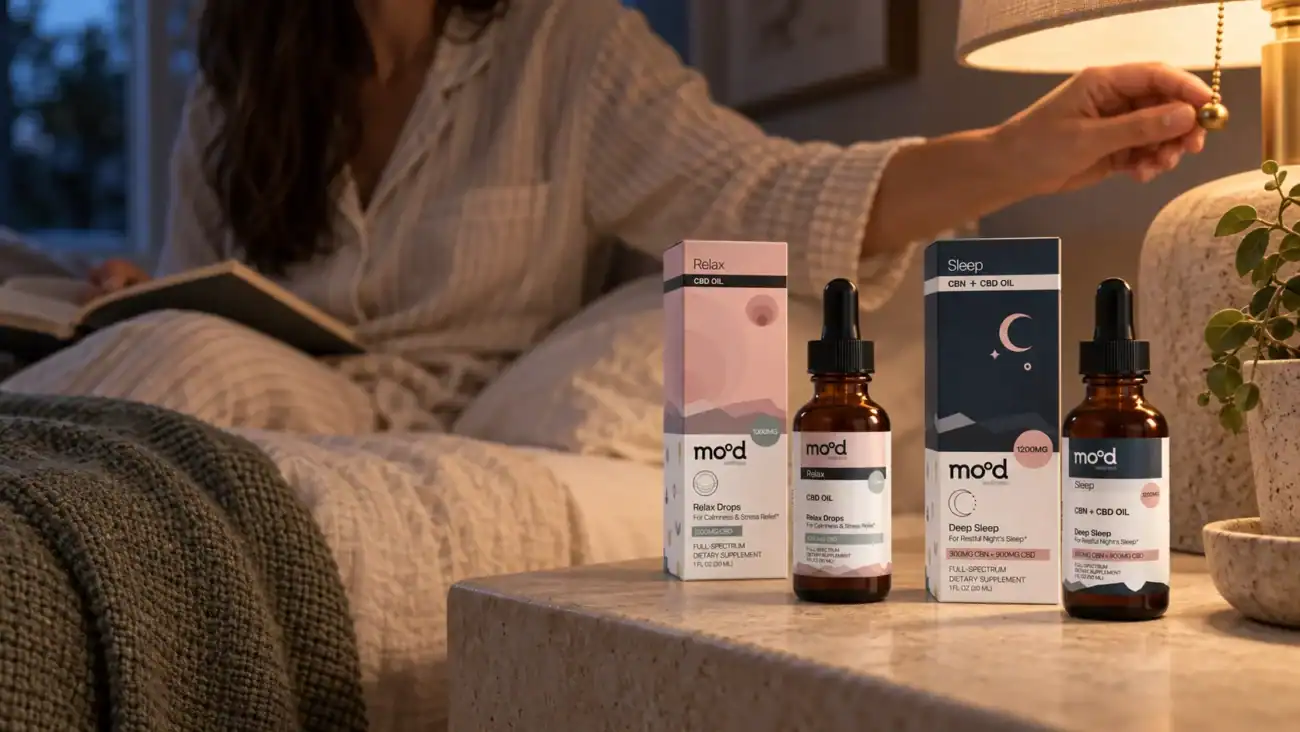
Real shopping scenarios
How the three extract types change a buying decision
A shopper choosing a daytime oil may accept a full-spectrum formula because preserving minor cannabinoids matters more than avoiding trace THC. Another shopper may prefer broad-spectrum because they want a multi-cannabinoid product with reduced THC exposure. A third may choose isolate because a simple CBD-only ingredient profile is easier to understand. These are preference and risk decisions, not proof that one extract will deliver a stronger result.
The decision can change when the format changes. A full-spectrum oil allows flexible measurement, while a full-spectrum gummy provides a fixed serving. A broad-spectrum topical raises different exposure questions than an ingestible. An isolate powder may be easy to formulate, but the finished product can still contain flavors, carriers or botanicals that matter for allergies and tolerability. Always compare the complete product rather than transferring assumptions from the extract name.
Price comparisons also need normalization. Compare CBD per serving, total servings and the concentration of secondary cannabinoids. A less expensive bottle may provide fewer measured servings; a premium formula may charge for ingredients whose amounts are not disclosed. Spectrum language should never replace basic value math.
For Mood shoppers, the practical path is to compare the current CBD oil collection, identify whether CBD alone, CBD with CBG or CBD with CBN fits the intended routine, and then open the corresponding batch report. That order keeps the routine, formula and evidence connected.
The practical difference
CBD spectrum is a processing description, not a quality grade
Full-spectrum, broad-spectrum and isolate describe what a manufacturer intends to retain or remove from a hemp extract. They do not tell you whether the hemp was grown well, whether the finished product matches its label or whether it is appropriate for your medication and testing situation.

A full-spectrum extract generally preserves CBD alongside smaller cannabinoids, terpenes and other hemp constituents, and it can contain THC within the applicable product limit. A broad-spectrum extract is processed to retain multiple compounds while reducing or removing THC. Isolate is highly purified CBD with most other plant compounds removed. These definitions sound tidy, but real products can blur the edges because brands use different methods, specifications and detection limits.
That is why the spectrum name must be checked against the finished-batch COA. A broad-spectrum label should not be treated as a promise that every laboratory will report THC as absolute zero. “Not detected” means below a stated threshold. Likewise, an isolate ingredient can be combined with other cannabinoids later, so the finished formula matters more than the starting material.
Choose around a constraint, not a trend

Full-spectrum may fit an adult who accepts trace THC and prefers a wider range of hemp compounds. Broad-spectrum may fit someone who wants multiple cannabinoids but is trying to reduce THC exposure. Isolate may be the simplest choice for someone who wants CBD without intentionally included secondary cannabinoids. None of these categories creates a zero-risk drug-test guarantee, and none is automatically more effective.
Flavor and formulation also change the experience. Full-spectrum extracts can have a stronger hemp taste, while isolate may be easier to formulate neutrally. Oils allow more serving flexibility than gummies, but the extract category can be used in either format. Carrier oils, sweeteners, emulsifiers and added botanicals can matter as much as the spectrum label for allergies, digestion and routine fit.
Why the COA still decides what is in the bottle

Read the cannabinoid table across every relevant row, including delta-9 THC, THCA and any calculated total. Confirm the units and serving conversion. Then check whether the report belongs to the product and lot in your hand. A report for raw isolate or bulk extract does not necessarily verify the final oil or gummy after manufacturing.
Drug tests are a separate system with their own analytes and thresholds. A compliant hemp product can still create personal testing risk, particularly with repeated full-spectrum use. Broad-spectrum and isolate can reduce that risk only when the finished product is accurately manufactured and independently verified. If a positive result could affect employment, licensing or competition, avoidance is more reliable than relying on front-label terminology.
The shortest useful rule
Choose the spectrum that fits your THC constraint, then verify the finished batch. Do not use “full,” “broad” or “isolate” as a substitute for reading the complete formula and COA.
At a glance
Full-spectrum, broad-spectrum and isolate compared
| Feature | Full-spectrum | Broad-spectrum | CBD isolate |
|---|---|---|---|
| CBD | Yes | Yes | Yes |
| Other cannabinoids | Expected | Expected, but profile varies | Not intentionally retained |
| THC | Can be present | Intended to be removed or reduced | Not intentionally present |
| Terpenes | May be retained or added | May be retained or added | Usually absent unless added |
| Drug-test risk | Highest of the three | Lower is plausible, not zero | Lower is plausible, not zero |
| Best verification | Finished-product, batch-matched COA with suitable reporting limits | ||
The words on the front label describe the intended extract category. They do not prove how much CBD, THC or any other cannabinoid is in the product. Formulation can also add terpenes or cannabinoids after extraction, so two products with the same category can have different chemical profiles.
Definitions
What each CBD spectrum term is trying to communicate

Full-spectrum CBD
A full-spectrum extract aims to retain CBD alongside other naturally occurring hemp constituents. It can include minor cannabinoids, terpenes, flavonoids and THC. The precise profile depends on the plant material, extraction, processing and finished formula.
Broad-spectrum CBD
A broad-spectrum extract aims to preserve more than CBD while removing or reducing THC. “THC-free” should be checked against the laboratory method and reporting limit. A product can also combine separately prepared cannabinoids and still be marketed within a broad-spectrum concept.
CBD isolate
CBD isolate is highly purified cannabidiol with other plant constituents largely removed. It provides a simpler cannabinoid profile, but purity is never absolute in a philosophical sense. The COA and method determine what was detected.
Important vocabulary limit
These consumer terms are not a complete chemical specification. The batch report, ingredient list and product formulation are more precise than the category name alone.
Evidence boundary
Does full-spectrum CBD work better?
The “entourage effect” proposes that cannabinoids, terpenes and other plant compounds can influence one another. The idea is biologically plausible and supported by some preclinical work, but direct human trials comparing well-characterized full-spectrum, broad-spectrum and isolate retail products remain limited.
Evidence from a specific prescription formulation, disease population, animal model or high-dose research setting cannot establish that one consumer gummy or oil is superior. Full-spectrum may suit a person who intentionally wants a broader hemp profile and accepts THC exposure. That preference is different from proof of better clinical effect.
Extracts can contain measurably different cannabinoid and terpene profiles.
Multiple compounds may alter pharmacology or subjective experience.
Every full-spectrum product works better than every isolate or broad-spectrum product.
Verify the batch
The COA matters most when THC matters
Open the certificate of analysis and match the product name, strength, batch and date. Review CBD, delta-9 THC, THCA and any calculated total-THC field. An ND result means below a stated reporting limit, not absolute zero.

Someone subject to workplace, athletic, legal or safety-sensitive testing should not treat broad-spectrum or isolate as a guarantee. Cross-contamination, labeling error, reporting limits, repeated exposure and test sensitivity can all affect risk.
1
Match the product
Confirm format, flavor or variant, strength, lot and report dates.
2
Read every cannabinoid row
Do not stop at a marketing summary or one THC line.
3
Check units and limits
Understand mg/g, mg/mL, percent, LOD and LOQ before comparing.
4
Review contaminant scope
Potency-only testing does not prove pesticides, metals, solvents and microbes were evaluated.
Use the dedicated guide on how to read a CBD COA for a field-by-field check.
Decision framework
Which CBD type may fit your constraints?

| Your priority | Reasonable starting point | What still needs checking |
|---|---|---|
| Widest hemp-compound profile | Full-spectrum | THC amount, serving, interactions and batch result |
| Multiple cannabinoids with less intended THC | Broad-spectrum | Actual THC reporting limit and cannabinoid profile |
| Simplest cannabinoid profile | CBD isolate | Purity, contaminants, added ingredients and batch match |
| Drug-tested work or sport | No CBD type guarantees zero risk | Policy, report limits and consequences |
| Medication or liver condition | No type removes CBD interaction concerns | Clinician review of exact product and serving |
Taste, format, carrier oil, serving control, cost and availability may be more important than spectrum for some shoppers. A transparent isolate can be a better decision than a poorly documented full-spectrum product, and the reverse can also be true.
Mood product map
How Mood’s current formulas fit the spectrum decision
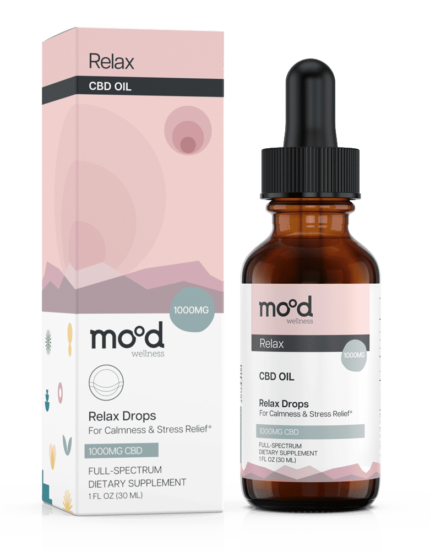
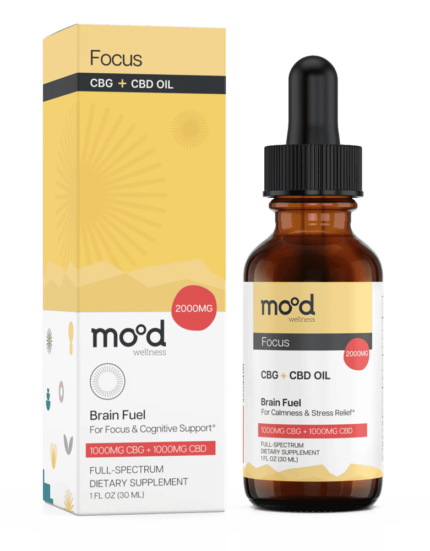
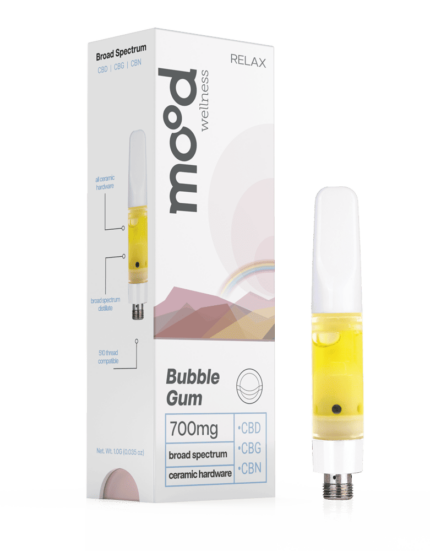
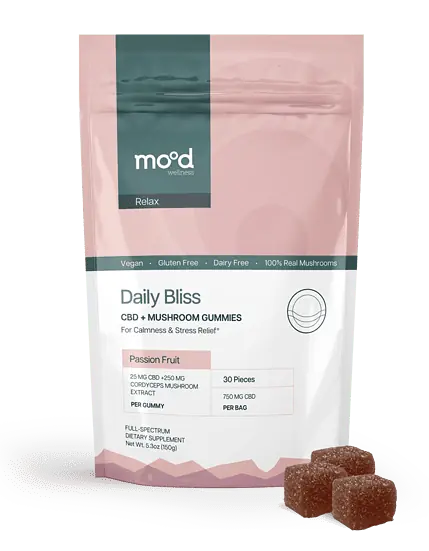
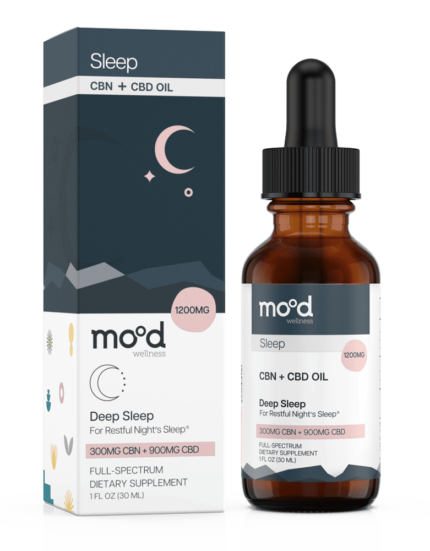
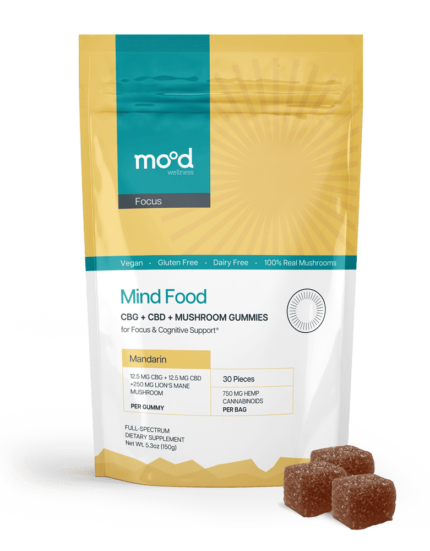
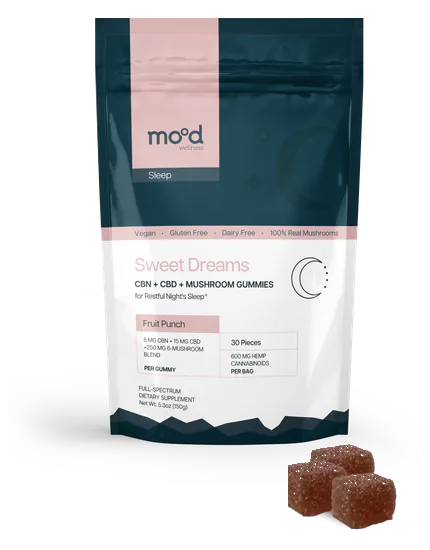
Mood currently describes Relax Drops, Brain Fuel, Deep Sleep and its three mushroom gummy formulas as using full-spectrum hemp. Deep Sleep also includes CBN isolate. The Mood vape cartridge is listed as broad-spectrum in the lab-results library.
This creates a straightforward tradeoff. The oils and gummies are designed for shoppers who accept a broader cannabinoid profile and potential THC exposure. The vape uses a different extract category, delivery route and risk profile; “broad-spectrum” does not make inhalation equivalent to oral use or appropriate for every person.
Review the current product page and the corresponding entry in Mood’s lab-results library. Prices, formulas and reports can change. Mood’s ownership of these products is not evidence that full-spectrum is universally superior.
Safety
Extract type does not remove CBD’s known risks
The FDA warns that CBD can cause changes in alertness, gastrointestinal symptoms, mood changes, liver injury and drug interactions. Full-spectrum adds THC exposure, but broad-spectrum and isolate still contain CBD and therefore do not eliminate CBD-related cautions.
- Ask a clinician before use with prescription medication or liver disease.
- Avoid CBD during pregnancy or breastfeeding.
- Keep products away from children and pets.
- Do not drive until you understand the product’s effect.
- Do not use an extract label to self-treat pain, anxiety, insomnia or another condition.
Quick answers
Frequently asked questions
Is full-spectrum CBD stronger than isolate?
Not inherently. Strength depends on CBD amount, other compounds, formulation and individual response. “Full-spectrum” describes composition, not a guaranteed effect.
Can full-spectrum CBD make you high?
It can contain THC. Whether intoxication occurs depends on the measured amount, serving and individual sensitivity. Do not assume a hemp product is incapable of affecting you.
Is broad-spectrum CBD THC-free?
It is intended to remove or reduce THC, but only a sufficiently sensitive finished-batch test can show what was detected.
Will CBD isolate pass a drug test?
No product can guarantee that outcome. Isolate may reduce intended THC exposure, but contamination, reporting limits and testing policies still matter.
Which type is best for beginners?
A beginner may value a simple formula and low, clearly labeled serving. Choose after considering THC, medication, format and verified quality rather than selecting by category alone.
Evidence
Sources and editorial review
- U.S. FDA. Consumer information about CBD.
- Cannabidiol in Rheumatic Diseases: review of clinical evidence and spectrum controversy.
- Mood Wellness. Lab Results.
- Mood Wellness. CBD Oils.
- Mood Wellness. CBD and Drug Tests.
Educational information, not a guarantee of product composition, drug-test outcome or medical suitability. Check current labels and batch reports.
Written by Dvir Hamami, Mood Editorial TeamEditorially reviewed for research and product accuracy on September 4, 2026. This guide provides general education and is not individualized medical advice.