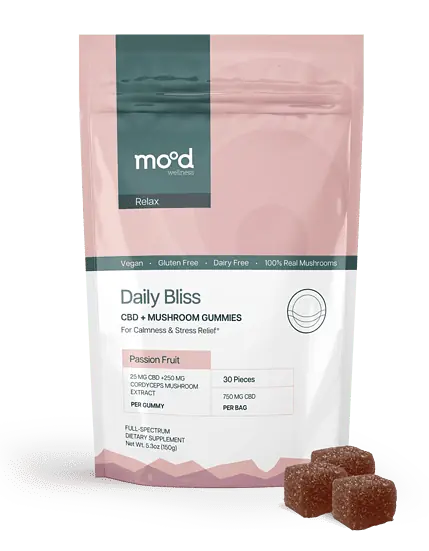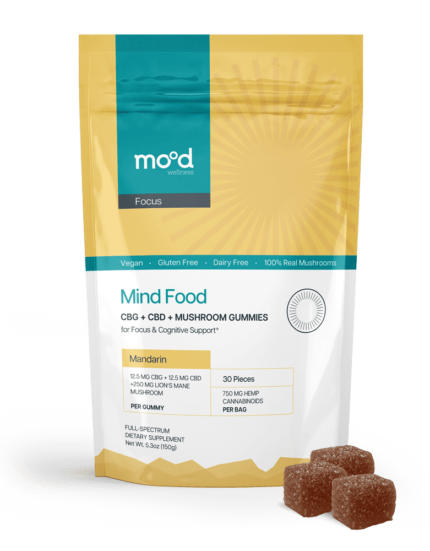

Editorial disclosure: Mood publishes this guide and sells CBD + CBN products. Product facts are included only to show how a shopper can compare a retail label with a study. Mood did not sponsor the two trials discussed below.
What people want from a calmer nighttime routine
The reader's practical goal is to understand whether CBD, CBN or their combination may support a calmer wind-down and fewer sleep disruptions. That creates a concrete standard for the rest of the article: every ingredient, amount, comparison and research result must help explain that decision rather than delay it with generic background.
People explore cannabinoid nighttime products mainly to settle mental or physical arousal, make the wind-down routine easier and support more continuous sleep without automatically relying on a strongly sedating ingredient.
How the effect or decision works
CBD may influence stress-related signaling, including endocannabinoid and serotonin-associated pathways, while CBN has been studied directly for selected sleep outcomes. Those pathways make a calmer evening plausible, but they do not turn a mechanism into a guaranteed treatment result.
Human cannabinoid sleep trials have produced useful positive signals in selected outcomes, including fewer reported awakenings or lower sleep-disturbance scores in some CBN protocols. The results vary by ingredient, amount, population and endpoint. In practice, the evidence supports a realistic reason to consider the ingredient or format while leaving room for individual response, formulation differences and responsible-use questions.
Where a Mood product fits
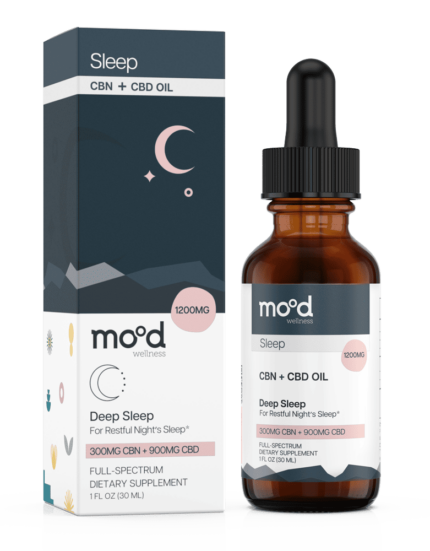
For readers ready to compare a current product, Deep Sleep is the logical Mood destination. It provides a concrete label and format against which to apply this article's specific goal: to understand whether CBD, CBN or their combination may support a calmer wind-down and fewer sleep disruptions. Recheck the current cannabinoid or mushroom amounts, THC status, other ingredients and batch documentation before deciding whether it fits your routine. This is a product-selection bridge, not a promise that the product will produce a particular health result.
<!-- /mood-value-first-standard -->
First separate CBD, CBN and the combination
CBD, or cannabidiol, and CBN, or cannabinol, are different cannabinoids. Evidence about one cannot automatically be applied to the other. Evidence about a purified study ingredient also cannot automatically be applied to a full-spectrum extract.
Four distinct evidence questions often get blended together:
- Does isolated CBD change a specific sleep outcome in a defined population?
- Does isolated CBN change that outcome?
- Does CBD + CBN outperform placebo?
- Does the combination outperform the same amount of CBN alone?
The fourth question is the one needed to support a claim that CBD adds something to CBN. A study showing improvement after a combination, without a matching CBN-only group, cannot isolate CBD’s contribution.
Mood’s CBD, CBG and CBN comparison explains the cannabinoid categories. For this article, the critical distinction is evidentiary: “contains both” is a formula fact, while “the combination works better” is an efficacy claim requiring comparative human data.

Evidence map at a glance
| Study | Population and duration | Interventions | Primary outcome | Main boundary |
|---|---|---|---|---|
| Bonn-Miller et al., published 2024 | Adults 18–55 with self-rated poor or very poor sleep; seven nights; modified intention-to-treat N=293 | Placebo; 20 mg CBN; or 20 mg CBN + 10, 20 or 100 mg CBD | Self-reported sleep quality | Directly tests the combination, but industry-employed authors and short duration require disclosure |
| Lavender et al., published 2026 | 20 adults with physician-diagnosed insomnia; three single laboratory nights with two-week washouts | Placebo; 30 mg CBN; 300 mg CBN | Polysomnographic wake after sleep onset | Diagnosed population and objective measurement, but CBN only, small sample and acute dosing |
These studies answer different questions. The first provides the clearest direct comparison of CBN alone and CBN + CBD. The second provides objective laboratory data on two CBN doses in diagnosed insomnia, but says nothing direct about whether CBD improves CBN.
The 2024 CBN-with-and-without-CBD trial
What the researchers tested
The double-blind randomized placebo-controlled trial ran between May and November 2022. Participants aged 18 to 55 described their sleep quality as poor or very poor. They were assigned to one of five groups for seven consecutive nights:
- placebo;
- 20 mg CBN;
- 20 mg CBN plus 10 mg CBD;
- 20 mg CBN plus 20 mg CBD; or
- 20 mg CBN plus 100 mg CBD.
The primary endpoint was sleep quality. Secondary endpoints included sleep-onset latency, number of awakenings, wake after sleep onset, overall sleep disturbance and daytime fatigue.
What the study found
The modified intention-to-treat analysis included 293 participants. Compared with placebo, the 20 mg CBN group had fewer reported awakenings and lower overall sleep-disturbance scores. The sleep-quality result had an odds ratio of 2.26 with a 95% confidence interval from 0.93 to 5.52 and p=.082. Because the interval crossed the null and the p-value exceeded .05, the declared primary comparison was not statistically significant under the conventional threshold.
No group differed from placebo for sleep-onset latency, wake after sleep onset or daytime fatigue. Most important for the combination question, adding 10, 20 or 100 mg CBD did not positively augment the effects attributed to 20 mg CBN.
That does not prove CBD can never matter in any population, ratio or duration. It does directly challenge a blanket assumption that more CBD automatically makes a CBN sleep formula more effective.
What readers should know about funding and affiliation
PubMed lists the study authors’ affiliations as Canopy Growth Corporation and Wana Brands. That fact does not invalidate the experiment. It is material context for evaluating a cannabinoid product study and should appear alongside the methods and results.
The trial also relied on adults who self-rated poor sleep, not necessarily people with a clinician-confirmed insomnia disorder. It lasted seven nights. Self-reported outcomes are meaningful, but they are different from polysomnography in a sleep laboratory.
The 2026 CBN insomnia crossover trial
What the researchers tested
This randomized, double-blind, placebo-controlled crossover trial enrolled 20 adults aged 25 to 65 with physician-diagnosed insomnia. Seventeen were women and three were men; the mean age was 42. Each participant received a single 2 mL oral dose of placebo, 30 mg CBN and 300 mg CBN on separate laboratory nights, with two-week washouts.
The crossover design allowed every participant to receive every condition. The primary endpoint was wake after sleep onset measured by overnight polysomnography-a defined objective measure rather than a general impression of sleep.
What the study found
Neither dose significantly changed the primary endpoint compared with placebo. The estimated change was minus 4.0 minutes for 30 mg and minus 6.3 minutes for 300 mg, with confidence intervals spanning no difference.
At 300 mg, several secondary measures changed: reported sleep quality improved, sleep-onset latency and electroencephalographic arousal indices decreased, and stage N2 sleep increased. The paper reported 247 mild-to-moderate adverse events across the study arms and called for larger, longer trials.
The appropriate reading is mixed. A missed primary endpoint cannot be converted into a positive trial by highlighting only favorable secondary outcomes. At the same time, prespecified secondary signals can help researchers decide what a larger study should test next.
Why this study does not validate CBD + CBN products
The trial contained no CBD arm and no CBD + CBN arm. Its CBN amounts-especially 300 mg-also differ substantially from many retail serving labels. It tested a single exposure in a controlled laboratory, not nightly consumer use over weeks or months.
The study is useful CBN evidence. It is not direct combination evidence and it does not establish that a retail product with much lower CBN, CBD, THC, terpenes or other ingredients will reproduce the findings.

Primary endpoints, secondary endpoints and statistical uncertainty
A primary endpoint is the main result a trial is designed and powered to evaluate. Researchers may measure many secondary outcomes, but the probability of finding at least one favorable result can increase as the number of comparisons grows.
This does not mean every secondary finding is false. It means a responsible summary should report:
- the declared primary endpoint;
- whether it met the prespecified statistical test;
- the secondary outcomes that changed and those that did not;
- confidence intervals, not only direction;
- sample size and duration;
- population and exclusion criteria;
- dose and formulation; and
- funding, affiliations and competing interests.
Marketing summaries often compress this into “clinically studied for sleep.” That phrase hides which cannabinoid was studied, which endpoint moved, whether the combination was tested, and how closely the retail product resembles the study material.
Does CBD add to CBN?
The best direct evidence in this map does not show a positive added effect from CBD. In the 2024 trial, three different CBD amounts were paired with the same 20 mg CBN amount, and none improved the CBN treatment effects as measured in that study.
That result is narrower than “CBD is bad for sleep” and stronger than “we know nothing.” It means the tested additions of 10, 20 and 100 mg CBD did not provide measured augmentation over the seven-night design.
Future trials could test different populations, formulations, timing, durations or ratios. Until then, a CBD + CBN ratio on a label should be described as composition-not proof of synergy.
Why evidence about sleep is especially easy to overstate
“Sleep” contains multiple outcomes:
- time taken to fall asleep;
- number of awakenings;
- total wake time after sleep begins;
- total sleep time;
- sleep-stage distribution;
- next-day fatigue or alertness;
- subjective sleep quality; and
- overall sleep disturbance.
A product or study can change one without changing the others. A person may report better sleep even if an objective measure is unchanged, or an electroencephalographic measure may change without a meaningful next-day benefit.
Population matters too. Self-identified poor sleepers, adults with diagnosed insomnia, healthy volunteers and people whose sleep difficulty comes from pain or another condition are not interchangeable groups.

How a retail CBD + CBN label compares with a trial
Use a structured translation rather than claiming a “study-backed” match.
| Field | Trial question | Retail-label question |
|---|---|---|
| CBD amount | Was CBD included, and at what exact amount? | How much CBD is stated per serving? |
| CBN amount | Was CBN 20, 30, 300 mg or another amount? | How much CBN is stated per serving? |
| Formulation | Purified ingredient, carrier and administration route? | Is it isolate, broad-spectrum or full-spectrum? |
| Duration | One night, seven nights or longer? | Does marketing imply immediate or ongoing effects? |
| Population | Poor sleepers or diagnosed insomnia? | Is the claim improperly generalized to everyone? |
| Outcomes | Primary and secondary results? | Does the product promise “deep sleep” without specifying evidence? |
| Other actives | Were THC, melatonin or mushrooms absent? | What else is in the retail formula? |
| Quality | What study-grade controls applied? | Does the batch certificate match the current product? |
Mood’s current Deep Sleep page states 900 mg CBD and 300 mg CBN per bottle in a 3:1 ratio, full-spectrum hemp with less than 0.3% THC, and MCT oil. Those are product-label facts. They do not mean the bottle replicates a 20 mg CBN trial arm or that its 3:1 ratio has been clinically proven.
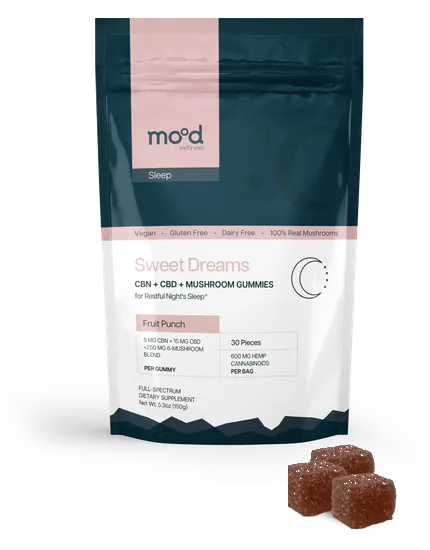
The current Sweet Dreams page states 15 mg CBD and 5 mg CBN per gummy plus a six-mushroom blend. That is also a 3:1 labeled ratio, but it introduces additional ingredients and a different format. It cannot be treated as equivalent to the isolated study combinations.
Product verification matters independently of clinical evidence
Even a promising ingredient study would not prove that every bottle or gummy contains what its label states. A shopper should open the certificate and match:
- product name and strength;
- batch or lot number;
- report date;
- laboratory identity;
- sample type, such as finished product or concentrate;
- measured CBD, CBN and THC; and
- the contaminant panels actually performed.
Mood’s public lab-results page links product reports, but the locally audited Sweet Dreams report is dated February 22, 2023 and uses the older name “Deep Sleep Fruit Punch Mushroom Gummies.” It is a potency report, not a full contaminant panel. Its measured CBN amount also should not be presented as proof of the current 5 mg label without a current batch-matched finished-product document.
Use Mood’s CBD COA reading guide to evaluate the report structure and the current lab-results index to find the files the brand presently links.
Safety, interactions and next-day function
CBD can interact with medications and has unresolved liver-safety concerns. FDA materials also identify risks for vulnerable populations. CBN has a much smaller human evidence base, and combining ingredients does not cancel the risks of either one.
Full-spectrum products can contain trace THC. “Less than 0.3% THC” does not mean THC-free and cannot guarantee a negative drug test. Other active ingredients-including melatonin, mushrooms, botanicals or additional cannabinoids-create separate evidence and interaction questions.
Ask a qualified healthcare professional before using a cannabinoid product if you take prescription or over-the-counter medication, have a liver or other medical condition, are pregnant or breastfeeding, or are preparing for surgery. Do not drive or perform hazardous work if a product affects alertness. Mood’s CBD interaction guide provides questions to take to a pharmacist or clinician.
Persistent difficulty falling asleep, staying asleep or functioning during the day may warrant medical evaluation. Sleep apnea, restless legs, medication effects, mood disorders, substance use, pain and schedule disorders require different responses. A supplement should not delay appropriate assessment.
A responsible reader checklist
Before treating a CBD + CBN product as evidence-based, ask:
- Does the cited study test CBD, CBN, or the exact combination?
- Is the population similar to the people targeted by the claim?
- What was the primary endpoint, and did it change?
- Which secondary outcomes changed-and which did not?
- Are the amounts and formulation comparable with the retail serving?
- Was the exposure one night, seven nights or longer?
- Are funding and industry affiliations disclosed?
- Does a current batch report match the product and label?
- Does the formula contain THC or other actives absent from the study?
- Is the product page making a treatment claim that the evidence cannot support?
If evaluating Mood’s oil, start with the current Deep Sleep CBD + CBN product page, then verify the selected label and batch report. The product can be described as a CBD + CBN nighttime formula. It should not be described as a proven insomnia treatment.

The bottom line
Human evidence for CBN and sleep is emerging, mixed and easy to oversimplify. The 2024 randomized study found fewer awakenings and less overall sleep disturbance with 20 mg CBN, while its primary sleep-quality result was not statistically significant. Adding CBD at three tested amounts did not improve the CBN findings. The 2026 insomnia crossover trial missed its primary objective endpoint for both 30 mg and 300 mg CBN, although several secondary outcomes changed at 300 mg.
Together, these results justify more research. They do not establish that CBD + CBN is superior to CBN alone, identify an ideal consumer ratio, or prove that a retail oil or gummy treats insomnia.
Read “CBD + CBN” as a formula description. Evaluate any sleep claim by the exact population, dose, duration, comparator and endpoint-and evaluate the product separately through its current label and batch documentation.
Sources
- Bonn-Miller MO, et al. “A double-blind, randomized, placebo-controlled study of the safety and effects of CBN with and without CBD on sleep quality.” Experimental and Clinical Psychopharmacology. 2024;32(3):277–284. https://pubmed.ncbi.nlm.nih.gov/37796540/
- Lavender IG, et al. “Cannabinol for Acute Treatment of Insomnia Disorder in a Randomized Placebo-Controlled Crossover Trial.” Journal of Sleep Research. 2026;35(4):e70284. https://pubmed.ncbi.nlm.nih.gov/41698831/
- U.S. Food and Drug Administration. Consumer CBD safety information. https://www.fda.gov/food/conversations-experts-food-topics/what-fda-doing-protect-consumers-cannabidiol-cbd-foods
- Mood Wellness. Deep Sleep product page, Sweet Dreams product page and public lab-results index. Checked September 9, 2026.
Editorial note: Medical, legal and commercial fact review is required before release. This article is educational and is not medical advice.