What changed in the bottle?
The word “cloudy” is useful as a starting point, but it is not a diagnosis. Describe the change before trying to explain it.
| What you observe | What it may look like | Safe next check | When to escalate |
|---|---|---|---|
| Uniform haze | The whole liquid appears less transparent | Compare with product photos, carrier and labeled storage range | Haze is new, persistent or paired with odor, leakage or damaged packaging |
| Distinct crystals | Grains, needles or flakes on the glass or dropper | Note recent cold exposure and allow a sealed bottle to return naturally to labeled storage conditions | Solids persist, product directions conflict, or the maker cannot confirm expected behavior |
| Bottom sediment | Particles collect below clearer oil | Check whether the formula is described as filtered, full-spectrum or containing suspended ingredients | Material looks foreign, fuzzy, stringy or otherwise unlike normal product variation |
| Layers or droplets | Two phases remain visibly separate | Follow only the package's mixing directions, if any | Separation is new, will not resolve as directed or affects measured serving consistency |
| Darkening or yellowing | Color changes without necessarily becoming cloudy | Use the dedicated color-change checklist and review light, heat and air exposure | Change is substantial, rapid or paired with rancid odor |
These categories can overlap. A cold carrier may become hazy while solids form; an aging oil may also change color and viscosity. That is why one visual cue cannot prove one cause.
Why cold can change an oil's appearance
Oils are mixtures, not visually inert liquids. Their fatty components and dissolved compounds can behave differently as temperature changes. Some carrier oils thicken or become less transparent when chilled. Dissolved material can also become less soluble and form visible crystals when a formulation moves outside its intended temperature range.
That does not justify a universal rule that every cloudy bottle is merely cold. Formulas differ in carrier, cannabinoid concentration, minor compounds, flavor ingredients and processing. A temporary change that reverses within the manufacturer's stated conditions is different from persistent debris or separation in a bottle with an unknown storage history.
The useful question is therefore not “Does CBD always crystallize?” It is: “Is this appearance expected for this exact formula, after this storage history, according to the company responsible for the batch?”
Carrier oil matters
CBD is commonly dispersed in a carrier such as medium-chain triglyceride (MCT), hemp seed oil or olive oil. Each carrier has its own fatty-acid composition, flavor, color and response to cold. Full-spectrum extracts may also begin with more native color and suspended material than a highly purified isolate formula.
Carrier identity can narrow the explanation, but it cannot prove it. Even two MCT-based products may use different cannabinoid concentrations or additional ingredients. Our carrier-oil comparison explains those differences as formulation choices, not as a universal quality ranking.
What research can and cannot show
Controlled stability research supports a cautious principle: formulation, light, temperature and oxygen can affect CBD oils, and results from one test system should not be treated as a prediction for every retail bottle.
A 2021 study examined CBD as a powder and in sunflower oil under defined laboratory conditions. Temperature, oxygen exposure and time affected stability, with pronounced degradation under high-temperature, open-vial conditions. Those stress conditions do not establish an ordinary household shelf life, and they do not tell you whether a particular speck in a consumer bottle is contamination.
A 2026 study tested a defined CBD-isolate preparation in MCT oil across controlled light, air and temperature conditions. Light combined with elevated temperature produced notable color change and CBD loss in that formulation. The authors also cautioned that visible change could not directly quantify CBD degradation or identify specific degradation products.
Another study of consumer cannabis oils found heat-aging effects that varied by carrier. Together, these findings support label-directed storage and avoidance of improvised heating. They do not support declaring a cloudy bottle safe, or unsafe, by sight alone.
Cloudiness is not a potency test
A clear bottle can be mislabeled, under-strength, over-strength or contaminated. A cloudy bottle can reflect a reversible physical change. Neither appearance is a certificate of analysis.
Potency requires a quantitative method applied to a defined sample. Contaminant panels require their own methods and reporting limits. A batch report can narrow uncertainty only when the product name, matrix and lot correspond to the bottle in hand. See how to read a CBD COA and how to match a batch number to a COA before relying on a document.
Even a matching report represents the tested sample at a specific time. It does not prove that every bottle was stored correctly after testing, and it cannot identify a new visual change without further investigation.

A safe observation workflow
Use this workflow to collect information, not to repair or certify the product.
1. Pause before using it
If the appearance is unexpected, do not take another serving merely to see whether the product “still works.” Subjective effects cannot verify composition or safety.
2. Photograph before moving the bottle
Take a clear photo in ordinary neutral light. Capture the whole bottle, the bottom, the dropper and the changed area. Avoid filters that alter color. A photo gives customer support a more useful starting point.
3. Record the storage history
Note whether the bottle was delivered in freezing or hot weather, left in a vehicle, refrigerated, placed near a window or stored with the cap loose. Record approximate timing without pretending that memory is exact.
4. Inspect the package
Check for a cracked dropper, loose cap, leaking neck, damaged tamper evidence or residue outside the bottle. Confirm the labeled carrier, storage statement, batch or lot code and date marks.
5. Let cold resolve naturally
If the bottle is intact and was recently cold, keep it sealed and upright and let it return naturally to the storage range printed on the label. Do not use boiling water, a microwave, stovetop, hair dryer or direct sunlight. Those methods create uneven heat and move the product farther from known storage conditions.
6. Observe before mixing
Look again before shaking. Note whether the haze, crystals or layers changed. If the label instructs “shake well,” follow that package instruction only after documenting the original appearance. Do not assume shaking fixes a formulation problem.
7. Contact the manufacturer
Send the product name, bottle size, lot code, date marks, purchase source, storage history and photographs. Ask whether the appearance is expected for that exact batch and what disposition the company recommends. Preserve the bottle until the issue is resolved.
Why Is My CBD Oil Cloudy or Crystallized Mistakes to Avoid
- Do not microwave or directly heat the bottle.
- Do not add MCT, olive oil, water, alcohol or another product.
- Do not scrape crystals with a utensil or transfer the liquid to an unverified container.
- Do not filter out sediment and continue using the remainder.
- Do not use smell or taste as the only safety test.
- Do not assume a social-media photo identifies the cause.
Adding liquid changes concentration and invalidates label math. Heating may accelerate degradation or damage the dropper and closure. Home filtering can introduce contamination while removing evidence the manufacturer needs to assess the complaint.
When to stop and contact support
Stop using the bottle while you seek product-specific guidance if you see any of the following:
- a broken seal, cracked bottle, leaking closure or damaged dropper;
- unexpected pressure, bubbling or gas release;
- fuzzy, stringy or foreign-looking material;
- an unusual rancid, fermented or chemical odor;
- persistent layers, solids or haze not addressed by the label;
- a dramatic texture or color change;
- an expired date or unknown purchase and storage history;
- symptoms after use.
For concerning symptoms, contact an appropriate healthcare professional or poison-control service rather than waiting for a brand response. The FDA also notes that CBD can involve drug-interaction, liver and vulnerable-population risks independent of how clear the oil looks.

Checking a Mood CBD oil
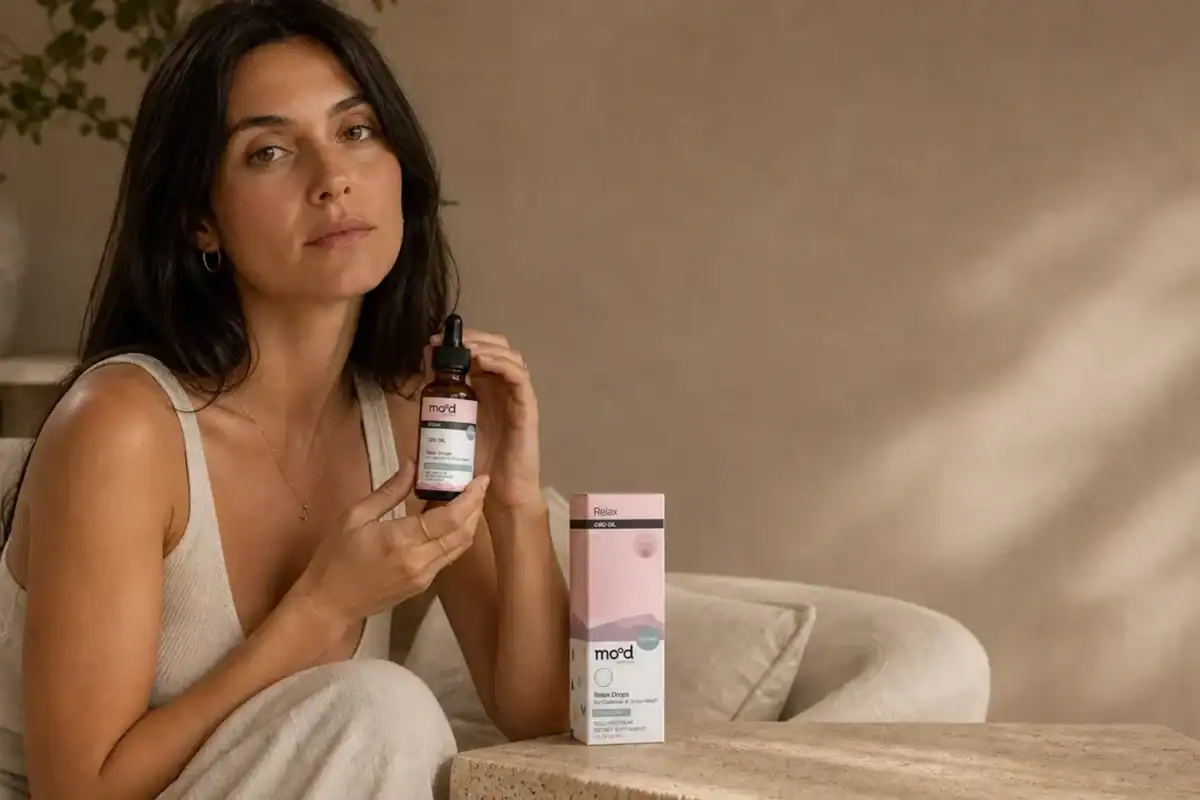
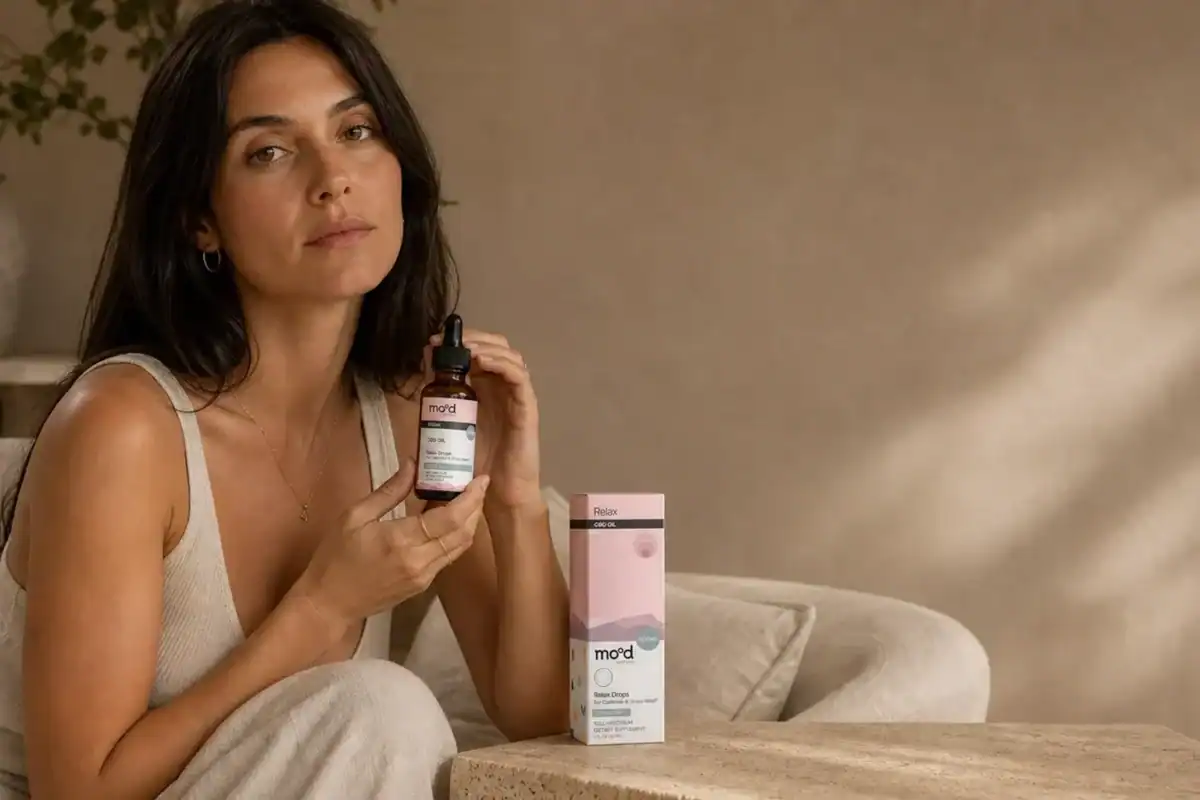
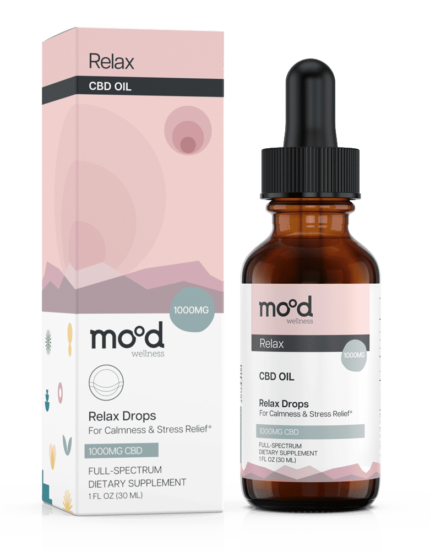
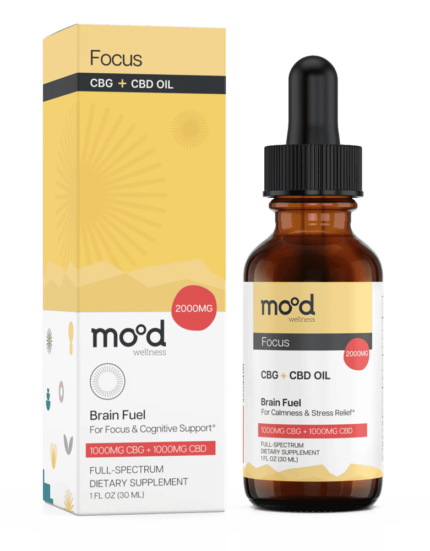
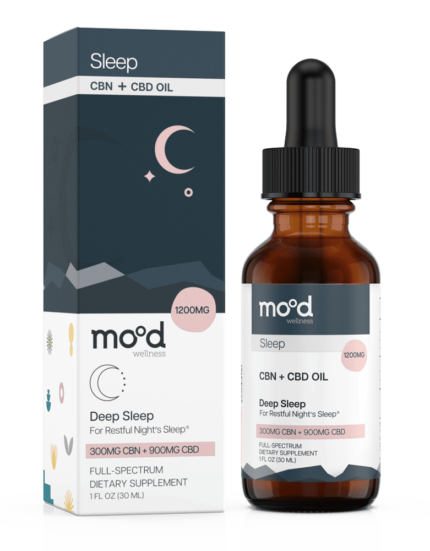
For a Mood bottle, start with the exact product label rather than a generic CBD-storage rule. Confirm the carrier, cannabinoid formula, bottle size, labeled storage directions and batch code. Then use Mood's lab-results directory to look for a report that actually matches the product and lot.
Do not substitute an older report from a different batch. During our September 2026 editorial review, several publicly linked Mood reports were older potency-only documents. They may describe the named tested sample, but they should not be called current-batch or full-panel evidence unless the document itself supports those claims.
When contacting support, include:
- the product name and bottle size;
- the batch or lot code exactly as printed;
- the purchase date and seller;
- whether the seal was intact;
- where and how the bottle was stored;
- when the visual change appeared;
- unedited photographs in neutral light.
If you need a replacement, compare current options in Mood's CBD oils collection only after the original bottle's issue has been resolved. A new purchase should not be used to diagnose the old one.
Storage habits that reduce uncertainty
Follow the package, keep the cap fully closed, avoid prolonged light and heat, and store the bottle upright where children and pets cannot reach it. Use the supplied dropper without touching it to the mouth or other surfaces. These habits reduce avoidable exposure and make later troubleshooting easier.
For preventive guidance, use the dedicated CBD oil guide. If the bottle was actually frozen, follow the narrower CBD oil freezing guide. If the primary issue is a new brown, red or yellow tone rather than haze or particles, use the separate color-change guide.

Bottom Line: Why Is My CBD Oil Cloudy or Crystallized
Cloudy CBD oil is a symptom, not a verdict. Cold and formulation behavior can create reversible haze or crystals, while persistent sediment, separation, odor, packaging damage or an unexplained change deserves manufacturer review. Keep the bottle sealed, document what you see, follow only the labeled storage directions and avoid improvised heating or dilution.
Appearance cannot prove potency, contamination or safety. The most defensible answer comes from the exact label, storage history, matching batch documentation and the company responsible for that product.
Quick answers
Frequently asked questions about Why Is My CBD Oil Cloudy or Crystallized? A Safe Troubleshooting Guide
What is the practical answer about Why Is My CBD Oil Cloudy or Crystallized? A Safe Troubleshooting Guide?
Cloudy CBD oil is a symptom, not a verdict. Cold and formulation behavior can create reversible haze or crystals, while persistent sediment, separation, odor, packaging damage or an unexplained change deserves manufacturer review. Keep the bottle sealed, document what you see, follow only the labeled storage directions and avoid improvised heating or dilution.
Which Mood product fits this topic?
Relax Drops is the most relevant Mood option for this topic. Mood Relax Drops provide a clearly labeled CBD oil format for shoppers who want flexible serving control and an easy way to build CBD into a daily or evening routine.
What should I compare before choosing a oil?
Compare the cannabinoid amount per measured serving, the complete ingredient list, spectrum or THC information, current product directions and available batch documentation. The best choice is the formula that fits the goal and is easy to use consistently.
How should I start using a new CBD or cannabinoid product?
Follow the current package directions, choose a low-demand first-use window and keep timing and meal context reasonably consistent. Review medication, pregnancy, liver and impairment considerations with a qualified clinician when relevant.
Sources
- Ryu B-R, Kinney CA, Gim G-J, Kwon T-H, Park S-H. “Storage-induced color change as an indicator of Cannabidiol degradation in MCT oil.” Industrial Crops and Products. 2026;247:123456. DOI: 10.1016/j.indcrop.2026.123456.
- Kosović E, et al. “Stability Study of Cannabidiol in the Form of Solid Powder and Sunflower Oil Solution.” Pharmaceutics. 2021. PMCID: PMC8003596.
- “Heating of consumer cannabis oils can lead to free radical initiated degradation, causing CBD and THC depletion.” PubMed PMID: 36113706.
- U.S. Food and Drug Administration. Consumer information on cannabis-derived compounds including CBD. Accessed September 9, 2026.
- U.S. Food and Drug Administration. What the FDA is Doing to Protect Consumers from Cannabidiol (CBD) in Foods. Accessed September 2026.