Why CBD contaminant panels matter
Contaminants can enter at different points. Agricultural inputs and soil may contribute pesticides or toxic elements. Extraction and processing can introduce or leave solvents. Water activity, handling and storage can affect microbial risk. Packaging or manufacturing equipment can add other impurities.
FDA has said it is investigating reports of CBD products containing potentially unsafe levels of pesticides, heavy metals and THC. Its pregnancy and breastfeeding guidance also mentions bacteria and fungus among contamination concerns.
Those statements identify real quality questions. They do not supply one national contaminant panel or one set of limits for every retail CBD product. Applicable requirements can vary by state, route and product category.

The contaminant-panel map
| Panel | Typical question | Evidence required |
|---|---|---|
| Pesticides | Were named agricultural chemicals detected above stated limits? | Individual analytes, method, result, reporting limit and action limit |
| Toxic elements | Were named metals/elements measured in the sample? | Element-specific results, units and exposure-relevant benchmark |
| Residual solvents | Did named extraction or processing solvents remain? | Solvent list, method, result and product-relevant limits |
| Microbiology | Were named organisms or microbial counts measured? | Organism/count, sample basis and acceptance limit |
| Mycotoxins | Were named fungal toxins tested? | Specific toxin result and limit |
| Foreign matter/other | Did the program include other physical or chemical hazards? | Defined test and product-specific specification |
One green “PASS” at the top of a page cannot substitute for these rows.
Pesticides: the analyte list is the claim
A pesticide panel tests only the compounds it names. A report covering dozens of analytes may still omit a compound included in another jurisdiction’s program. “Pesticide free” is therefore broader than most test evidence can support.
Read each row for:
- exact analyte name;
- measured result or non-detect notation;
- limit of detection or quantitation;
- regulatory/action limit;
- unit, often a mass-per-mass expression; and
- pass/fail interpretation.
Do not compare two laboratories by row count alone. Some panels group related compounds, use different reporting conventions or include analytes irrelevant to the production process. Coverage, sensitivity and applicable limits matter together.
EPA pesticide registration and state cannabis-testing programs are distinct systems. The absence of a pesticide from one state list does not prove it is safe at any level, and a laboratory’s ability to measure a compound does not establish a legal tolerance for a particular CBD food or supplement.
Heavy metals and toxic elements
Consumer-facing panels often emphasize arsenic, cadmium, lead and mercury. Some programs or research panels include additional elements.
NIST’s Cannabis Laboratory Quality Assurance Program has studied toxic elements in cannabis plant material and emphasizes accurate, comparable measurement across laboratories. NIST notes that hemp can accumulate elements from soil, which makes cultivation and raw-material controls relevant.
Interpretation still depends on exposure. A result in micrograms per gram describes concentration. Risk or compliance may depend on the amount consumed per day, route, product category and the benchmark used.
If a gummy contains a measured concentration per gram, a daily-exposure calculation needs the mass of gummies consumed:
concentration × product mass consumed = estimated amount per day
Do not perform that calculation with a guessed gummy weight. Do not treat an oral benchmark as automatically applicable to an inhaled or topical product.
“Heavy-metals pass” should therefore reveal which elements, which limits and which serving or exposure assumption support the conclusion.
Residual solvents follow the process
Solvent testing is most interpretable when connected to manufacturing. Ethanol, hydrocarbons and other solvents may be used during extraction, purification or formulation. The relevant panel should include solvents reasonably connected to the process and any required jurisdictional list.
A product described as CO2 extracted may still include ingredients or later processing steps that deserve review. Conversely, the presence of a solvent name on a panel does not mean it was used; the test may be a broad screen.
Check whether results are expressed in parts per million or another unit, whether “ND” has a stated reporting threshold, and whether the pass limit comes from a cited source. A low detection threshold and a high action limit are different numbers with different functions.
AOAC’s Cannabis Analytical Science Program develops consensus standards and methods addressing public-safety questions including residual solvents, pathogens and heavy metals. A recognized method strengthens analytical context, but it does not prove that a particular finished product or lot underwent that method.
Microbes and mycotoxins are not interchangeable
Microbiology panels may measure total aerobic count, yeast and mold, or named pathogens. Mycotoxins are chemical toxins produced by certain fungi and require their own analytes and methods.
A product may pass a yeast-and-mold count while lacking mycotoxin results. It may test negative for one pathogen while other organisms were not included. Read the actual panel.
For shelf-stable gummies and oils, finished-product testing matters because formulation, water activity, handling and packaging differ from the raw hemp ingredient. A supplier report cannot characterize every post-processing risk.

“ND” does not mean absolute zero
“ND” generally means not detected at or above the method’s stated detection or reporting threshold. It does not prove the analyte is mathematically absent.
Keep these fields separate:
| Field | Meaning |
|---|---|
| Result | What the method reported for the tested sample |
| LOD | Lowest level the method can distinguish from background under defined conditions |
| LOQ/reporting limit | Lowest level the method reports quantitatively with stated performance |
| Action limit | Benchmark used for a compliance or release decision |
| Measurement uncertainty | Range associated with the quantitative measurement |
Suppose a report shows ND with a reporting limit below the action limit. That supports “not detected above the reporting limit in this sample.” It does not support “contains zero” or “free from” every trace.
If the reporting limit is higher than the applicable action limit, an ND may be inadequate for the decision. The method was not shown to see low enough.
Matrix and sample preparation matter
An analytical method that works for a simple oil may not perform identically in a gummy containing sugars, colors, pectin and botanical extracts. Matrix components can interfere with extraction or detection.
Look for the finished matrix on the report and a method validated or verified for that type of sample. Recovery studies, blanks, spikes, calibration checks and reference materials help the laboratory evaluate performance.
NIST and AOAC work on reference materials and consensus methods because reliable measurement requires more than an instrument readout. A laboratory accreditation badge does not erase matrix-specific limitations.
The potency-variance guide covers measurement uncertainty and sampling in more detail. Those same concepts apply to contaminant results near an action limit.
Match the report to the finished lot
Confirm product name, format, strength, flavor or variant, lot code and sample dates. A hemp-extract supplier report may help qualify an ingredient, but it cannot show what happened after shipping, formulation, cooking, filling or storage.
Finished-product evidence is especially important when:
- the formula contains several agricultural ingredients;
- heat or water is introduced;
- solvents or processing aids are used;
- multiple suppliers contribute materials;
- products are held for extended periods; or
- the packaging or storage environment changes.
The guide to what third-party tested CBD should mean explains the complete product–lot–sample–lab chain. The CBD COA reading guide covers document fields and pages.
How to audit a “full-panel” report
Use a blank matrix rather than accepting the phrase:
| Check | Evidence found | Missing/unclear |
|---|---|---|
| Product and lot match | ||
| Finished-product matrix | ||
| Pesticide analyte list | ||
| Toxic-element list | ||
| Residual-solvent list | ||
| Microbial organisms/counts | ||
| Mycotoxin analytes | ||
| Results and units | ||
| LOD/LOQ or reporting limits | ||
| Action limits and source | ||
| Method references | ||
| Accreditation scope |
Record “not shown” instead of “pass” whenever a panel or field is absent.
Current Mood evidence boundary
Mood’s public Lab Results page states that products are third-party tested through ISO-accredited laboratories and provides links for multiple products.
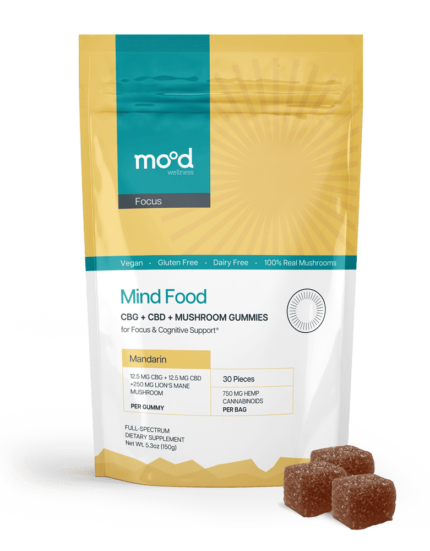
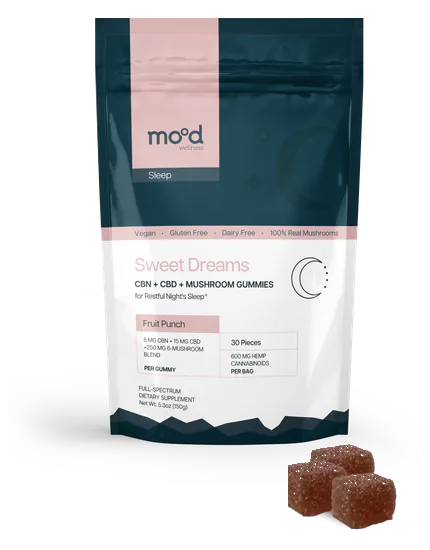
The sampled public Mind Food and Sweet Dreams documents reviewed for this project were cannabinoid-potency reports dated February 2023. The sampled Brain Fuel report was a cannabinoid-potency report dated October 2022. Those files do not visibly establish current-lot pesticide, toxic-element, residual-solvent, microbial or mycotoxin coverage.
The correct response is not to assume failure or infer unseen testing. It is to request the current, lot-matched contaminant documents and verify each panel. Publishing those reports with clear lot and panel filters would make the current claim easier to audit.
Red flags
Pause when:
- “full panel” appears without an analyte list;
- a pass badge replaces the report;
- every contaminant row says ND but no reporting limits appear;
- limits are shown without their jurisdiction or specification source;
- units change across pages without explanation;
- the tested matrix is raw extract rather than the finished product;
- report dates predate a formulation change;
- a cropped document hides lab, lot, method or page count;
- only potency is available; or
- a brand claims “zero contaminants” from ordinary non-detect results.
Missing information is not proof of contamination. It is proof that the public evidence does not answer the question.
Safety and regulatory boundaries
Contaminant testing does not determine whether CBD itself is appropriate for you. FDA warns that CBD can cause liver injury, interact with medications and increase sedation with alcohol or other substances that slow brain activity. FDA advises against CBD during pregnancy and breastfeeding.
Consult a clinician or pharmacist when medications, liver disease, surgery or other relevant conditions are involved. Report a suspected adverse event through appropriate medical and regulatory channels.
A contaminant pass also does not establish effectiveness, FDA approval, dose suitability or freedom from unexpected THC. Review cannabinoid potency and THC separately.
Bottom Line: CBD COA Contaminants
A useful CBD contaminant COA names what was tested, how low the method could reliably see, what limit was applied and which finished-product lot the sample represents.
Pesticides, metals, solvents, microbes and mycotoxins are separate panels. “ND” is threshold-bound, “pass” is benchmark-bound, and “full panel” is undefined until the analyte list is visible. When a current lot-matched panel is missing, keep the result unknown and ask for the document.
Quick answers
Frequently asked questions about CBD COA Contaminants
What is the practical answer about CBD COA Contaminants?
A useful CBD contaminant COA names what was tested, how low the method could reliably see, what limit was applied and which finished-product lot the sample represents. Pesticides, metals, solvents, microbes and mycotoxins are separate panels. “ND” is threshold-bound, “pass” is benchmark-bound, and “full panel” is undefined until the analyte list is visible.
Which Mood product fits this topic?
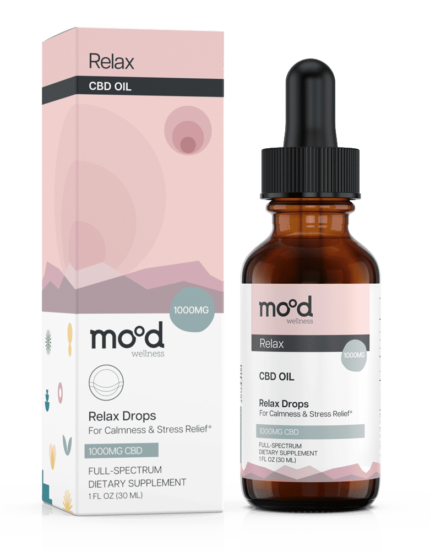
Relax Drops is the most relevant Mood option for this topic. Mood Relax Drops provide a clearly labeled CBD oil format for shoppers who want flexible serving control and an easy way to build CBD into a daily or evening routine.
What should I compare before choosing a product?
Compare the cannabinoid amount per measured serving, the complete ingredient list, spectrum or THC information, current product directions and available batch documentation. The best choice is the formula that fits the goal and is easy to use consistently.
How should I start using a new CBD or cannabinoid product?
Follow the current package directions, choose a low-demand first-use window and keep timing and meal context reasonably consistent. Review medication, pregnancy, liver and impairment considerations with a qualified clinician when relevant.
Sources
- U.S. Food and Drug Administration. What You Need to Know About Products Containing Cannabis or Cannabis-Derived Compounds, Including CBD.
- U.S. Food and Drug Administration. What You Should Know About Using Cannabis, Including CBD, When Pregnant or Breastfeeding.
- National Institute of Standards and Technology. Tools for Cannabis Laboratory Quality Assurance; CannaQAP Exercise 2 Toxic Elements materials.
- AOAC INTERNATIONAL. Cannabis Analytical Science Program.
- Mood Wellness. Lab Results page and linked product reports. Checked September 9, 2026.
- U.S. Food and Drug Administration. What the FDA is Doing to Protect Consumers from Cannabidiol (CBD) in Foods. Accessed September 2026.