What “third party” should mean
The clearest arrangement is an external laboratory that is organizationally independent of the brand and contract manufacturer. The brand submits a sample; the laboratory performs the requested analyses and reports the data.
Independence reduces one obvious conflict, but it does not prove that the sample represents the entire batch, that the right panel was ordered or that the method fits the product matrix. A laboratory can accurately report the sample it received while leaving unanswered whether every retail unit is consistent.
Ask who selected and collected the sample. Manufacturer-selected samples are common, but randomized or independently collected samples provide a different level of assurance. The document should not blur those systems together.
“In-house tested” and “third-party tested” are not synonyms. In-house checks may be valuable for process control. They simply do not supply the same degree of organizational separation.
A badge is not the evidence
A testing badge on a product page is a claim about a process. The report is the evidence artifact. A useful testing program lets a buyer reach a legible document without requesting access through an opaque sales funnel.
The document should identify:
- the laboratory and contact details;
- the client or submitting company;
- the sample name and matrix, such as oil or gummy;
- a batch, lot or sample identifier;
- received, tested and reported dates;
- methods or method references;
- analytes, units and reporting limits; and
- authorized review or sign-off.
None of these fields alone proves the whole product is good. Together, they make the result traceable and challengeable.
The companion guide to reading a CBD COA explains the document line by line. This page owns the earlier buying decision: whether the words “third-party tested” are supported by enough accessible, matched evidence to deserve weight.
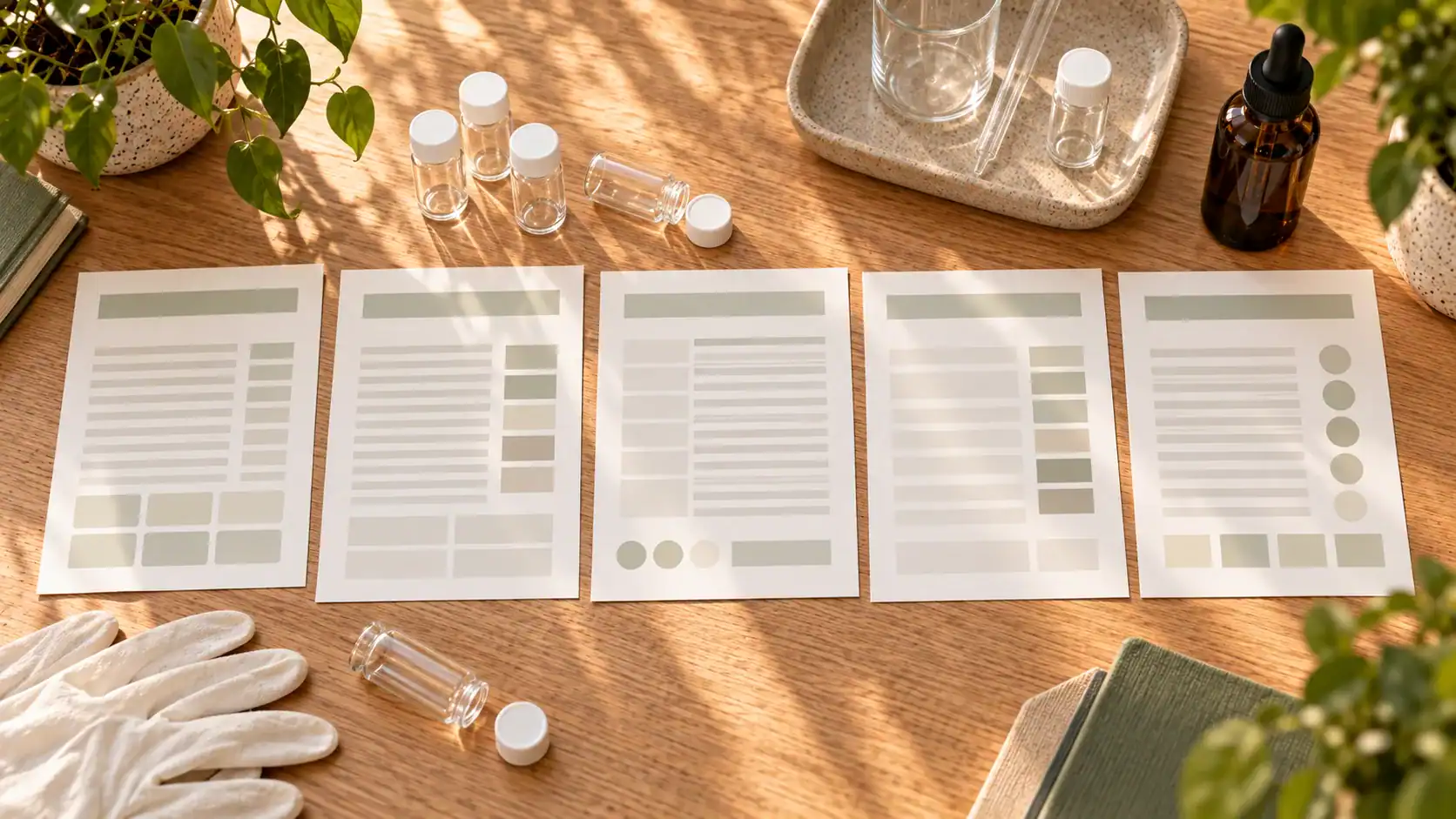
Potency and contaminants are separate test jobs
One report may contain several panels, or a brand may publish separate reports. Read the table of analytes rather than assuming “full panel” has a universal definition.
| Testing question | What a relevant panel may show | What it does not establish |
|---|---|---|
| Cannabinoid potency | Measured CBD, THC and other listed cannabinoids in stated units | Pesticides, metals, microbes, solvents or clinical effect |
| Pesticides | Results for the pesticides named in that panel | Compounds not included in the analyte list |
| Heavy metals | Measured elements such as lead, arsenic, cadmium or mercury when listed | Microbial or solvent safety |
| Residual solvents | Named solvents and reporting limits | Agricultural contaminants or potency accuracy |
| Microbiology and mycotoxins | Named organisms, counts or toxins when included | Chemical contaminants outside that panel |
A “pass” applies to the analytes, thresholds and sample shown. It is not a universal safety certificate. Standards and action limits may also vary by jurisdiction, product category and laboratory.
For a gummy, confirm whether the reported unit is per gram, per piece or per package. For oil, distinguish milligrams per milliliter from total milligrams in the bottle. The CBD gummy potency guide and CBD oil strength guide cover that label math.
What ISO/IEC 17025 adds
ISO describes ISO/IEC 17025 as the international standard for the competence, impartiality and consistent operation of testing and calibration laboratories. Accreditation bodies use it when assessing laboratories.
That matters because laboratory quality is more than owning an instrument. It includes validated procedures, trained personnel, calibration, quality controls, handling of uncertainty and consistent reporting.
But an ISO/IEC 17025 claim needs boundaries:
- accreditation belongs to the laboratory, not automatically to the CBD brand;
- the scope should cover the relevant test or method;
- accreditation does not mean FDA approval;
- it does not prove that every product or every lot was tested; and
- it does not turn an untested analyte into a passing result.
When the claim matters, look for the laboratory’s accreditation certificate and scope from the relevant accreditation body. Confirm the laboratory identity and dates, then find the applicable field or method. A logo copied onto a COA is less informative than a verifiable scope.
NIST’s cannabis laboratory quality-assurance work reinforces why method quality and comparability matter. Its program uses reference materials, fit-for-purpose methods and interlaboratory exercises to help laboratories evaluate measurements. The existence of such programs is a reminder that two laboratories can produce different results, especially near reporting limits or when matrix preparation differs.

Match the package to the report
Start with the package, not the brand name. Photograph or transcribe the product name, flavor or formula, concentration, package size and lot code exactly as shown.
Then compare the report:
| Match point | Acceptable evidence | Reason to pause |
|---|---|---|
| Product | Same name, format and formulation | Generic “CBD oil” or a different strength |
| Lot | Exact lot or defensible linked identifier | No lot, hidden lot or mismatch |
| Timing | Dates consistent with production and release | Report predates the product formula or packaging by years |
| Sample | Finished product in the relevant matrix | Raw CBD ingredient used to imply finished-product results |
| Panels | Analytes and methods are visible | “Passed all tests” with no analyte list |
Imagine a bottle marked lot A and a report for lot B. Even if the product names match, the report is evidence for B. It may show that the company has used testing, but it does not establish the composition of A.
An ingredient supplier’s CBD isolate report has a similar limit. It can characterize that ingredient sample; it cannot verify the finished oil after blending, flavoring, filling and storage.
Read units, reporting limits and “ND” carefully
Laboratory documents often use milligrams per gram, milligrams per milliliter, percentages or parts per million. These units are not interchangeable without density, serving size or other conversion information.
“ND,” commonly used for not detected, does not mean mathematical zero. It generally means the laboratory did not detect the analyte at or above the stated method threshold under that test. Look for an LOD, the limit of detection, and an LOQ or reporting limit, the level at which the laboratory reports a quantitative value with its method.
A result below the LOQ may be present but too low for reliable quantification. Do not translate it into “none,” and do not compare numbers from two reports until their units and reporting conventions match.
Also distinguish a measured value from an action limit. The measured value is the result for the sample. The limit is the benchmark used for comparison. A “pass” without both the result context and the applicable limit hides useful information.
What the current Mood lab page shows
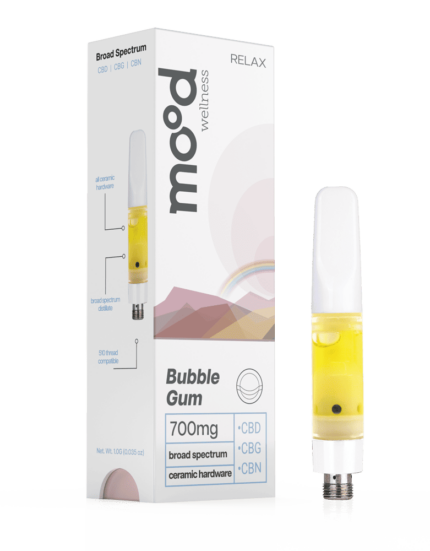
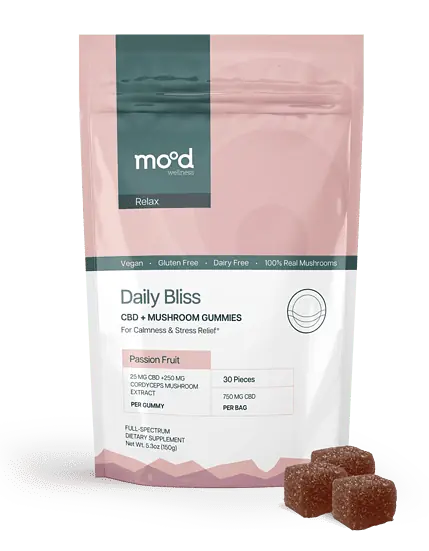
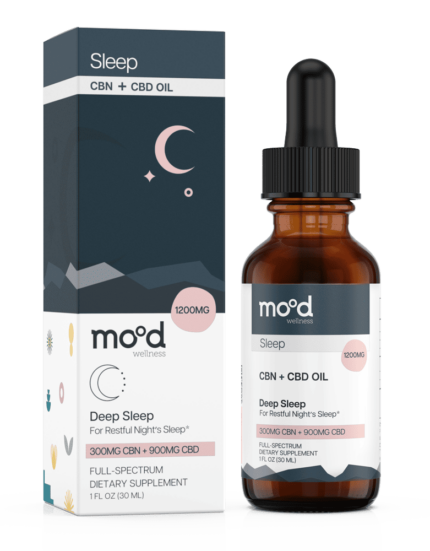
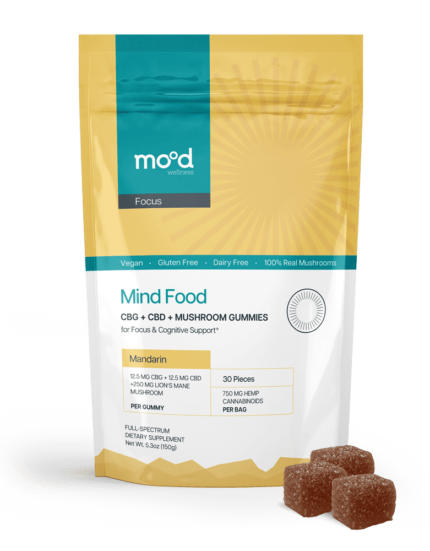
Mood’s public Lab Results page states that its products are tested by third-party, ISO-accredited laboratories and provides links for multiple products, including CBD oils and gummies.
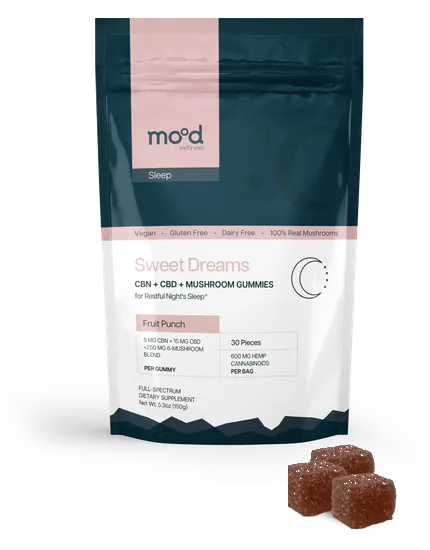
That access is more useful than an unsupported badge. However, in the sampled public documents reviewed for this editorial project, the visible reports for Mind Food, Sweet Dreams and Brain Fuel were older cannabinoid-potency reports. Those sampled files should not be described as current, lot-matched full contaminant panels.
The fair conclusion is narrow: Mood publishes testing documents and identifies third-party laboratory testing, while a buyer should still match the current package lot and confirm the panels needed for that product. If the current lot or a contaminant panel is not visible, request it before treating the question as resolved.
This limitation is also an operational opportunity: one current landing page per product, with lot-filtered reports and clear panel labels, would make verification faster and reduce ambiguity when formulations change.
Red flags in a testing claim
Pause when you find:
- a testing seal with no clickable or requestable report;
- a report that omits product and lot identity;
- only a raw-ingredient document for a finished product;
- an old report presented beside a newly reformulated label;
- a potency-only report described as comprehensive safety testing;
- cropped pages that hide laboratory, dates, units or methods;
- a laboratory name that cannot be independently verified;
- “ND” translated into “zero” without a reporting limit;
- a QR code that redirects to a generic brand page; or
- health, disease or FDA-approval claims inferred from ordinary laboratory data.
One missing field does not prove fraud. It does mean the evidence chain is incomplete.
A buyer’s third-party-testing checklist
Use this worksheet for any CBD product:
| Field | What you found |
|---|---|
| Exact product and variant | |
| Package size and labeled strength | |
| Package lot or batch | |
| Report lot or sample ID | |
| Sample, test and report dates | |
| Finished product or raw ingredient | |
| Cannabinoid potency panel | |
| Pesticide panel and analyte list | |
| Heavy-metal panel and elements | |
| Residual-solvent panel | |
| Microbiology/mycotoxin panel | |
| Units, LOD/LOQ and action limits | |
| Laboratory identity | |
| Accreditation body, dates and relevant scope | |
| Remaining unknowns |
Leave a field blank when it is not disclosed. That blank is a finding, not an invitation to infer.
The broader CBD buyer’s guide places testing beside formulation, labeled amount, price, intended use and safety questions. Testing is a necessary product-quality signal, but it does not select the right serving or predict a personal outcome.
Safety and regulatory boundaries
The FDA has approved one prescription CBD drug for specific seizure disorders; ordinary retail CBD products are not therefore FDA approved. FDA also warns that nonprescription CBD products may be of unknown quality and that CBD can involve liver injury, medication interactions and increased sedation with alcohol or other substances that slow brain activity.
Talk with a clinician or pharmacist before CBD use if you take prescription medicines, have liver disease, are preparing for surgery, or have another condition that changes risk. FDA advises against CBD during pregnancy and breastfeeding.
A COA cannot determine a safe personal amount, rule out every interaction or guarantee that you will not test positive for THC. Even broad-spectrum or “THC-free” wording should be checked against the specific batch report and the reporting limit; workplace drug testing and individual exposure add uncertainty.
Bottom Line: Third-party Tested CBD
“Third-party tested CBD” deserves weight only when the third party is identifiable and the evidence follows the product. Match the exact formula and lot, check the dates and sample type, list the panels actually performed, read the units and reporting limits, and verify that any accreditation claim covers relevant work.
Potency is not contaminants. Accreditation is not FDA approval. A report for one lot is not proof for every lot. The strongest testing claim is therefore not the largest badge, it is a current, accessible and product-specific evidence chain that leaves its limits visible.
Quick answers
Frequently asked questions about Third-Party Tested CBD
What is the practical answer about Third-Party Tested CBD?
“Third-party tested CBD” deserves weight only when the third party is identifiable and the evidence follows the product. Match the exact formula and lot, check the dates and sample type, list the panels actually performed, read the units and reporting limits, and verify that any accreditation claim covers relevant work.
Which Mood product fits this topic?
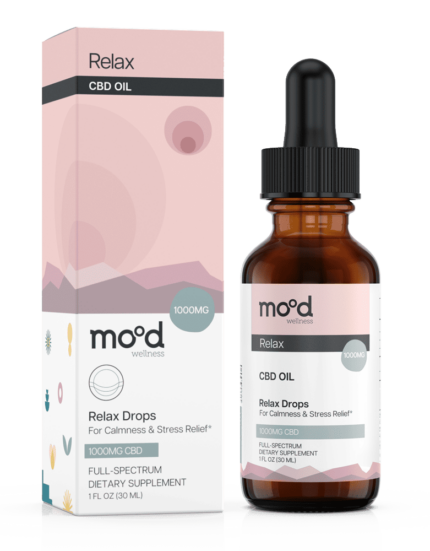
Relax Drops is the most relevant Mood option for this topic. Mood Relax Drops provide a clearly labeled CBD oil format for shoppers who want flexible serving control and an easy way to build CBD into a daily or evening routine.
What should I compare before choosing a product?
Compare the cannabinoid amount per measured serving, the complete ingredient list, spectrum or THC information, current product directions and available batch documentation. The best choice is the formula that fits the goal and is easy to use consistently.
How should I start using a new CBD or cannabinoid product?
Follow the current package directions, choose a low-demand first-use window and keep timing and meal context reasonably consistent. Review medication, pregnancy, liver and impairment considerations with a qualified clinician when relevant.
Sources
- International Organization for Standardization. ISO/IEC 17025:2017: General requirements for the competence of testing and calibration laboratories. Confirmed current in 2023.
- National Institute of Standards and Technology. Tools for Cannabis Laboratory Quality Assurance and CannaQAP materials.
- U.S. Food and Drug Administration. What You Need to Know About Products Containing Cannabis or Cannabis-Derived Compounds, Including CBD.
- U.S. Food and Drug Administration. What You Should Know About Using Cannabis, Including CBD, When Pregnant or Breastfeeding.
- Mood Wellness. Lab Results page and linked product reports. Checked September 9, 2026.
- U.S. Food and Drug Administration. What the FDA is Doing to Protect Consumers from Cannabidiol (CBD) in Foods. Accessed September 2026.