What potency variance means
Potency variance is the difference between a declared amount and a measured amount. It can be expressed as an absolute difference or as a percentage of the label claim.
Signed variance (%) = (measured amount − labeled amount) ÷ labeled amount × 100
A positive result means the measured amount is above the label claim. A negative result means it is below. Use the absolute value only when you need the size of the difference without its direction.
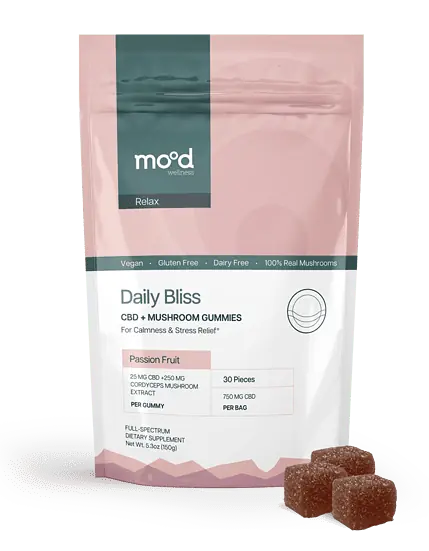
Suppose a gummy label claims 25 mg CBD per gummy and a matched finished-product COA reports 23.5 mg per gummy:
(23.5 − 25) ÷ 25 × 100 = −6%
The measured result is 6% below the label claim. That arithmetic describes the difference; it does not by itself determine legal compliance, laboratory error, batch uniformity or clinical significance.

First make the units comparable
Many apparent discrepancies are denominator errors. A bottle may claim total CBD while the COA reports concentration. A gummy report may use milligrams per gram while the label uses milligrams per piece.
| Label basis | COA basis | Information needed before comparison |
|---|---|---|
| mg per bottle | mg/mL | Verified bottle volume in mL |
| mg per mL | mg/g | Product density or validated conversion |
| mg per gummy | mg/g | Actual or report-defined gummy mass |
| mg per serving | mg per unit | Units in the labeled serving |
| percent by weight | mg/g | Consistent mass basis and conversion |
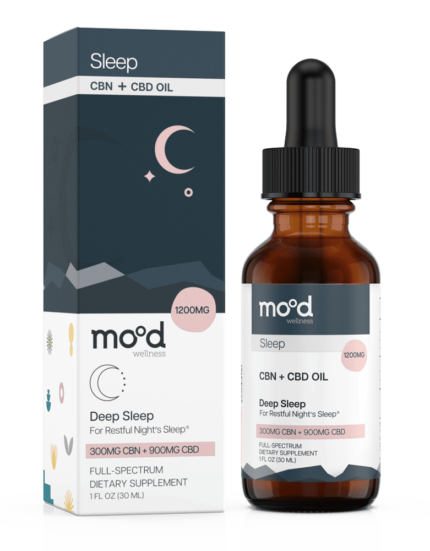
For a 30 mL oil labeled 1,000 mg CBD total, the nominal concentration is approximately 33.33 mg/mL. If the COA gives 32 mg/mL, compare 32 with 33.33, not with 1,000.
For gummies, never multiply mg/g by a guessed gummy weight. Use the sample weight or unit conversion stated by the laboratory. If neither is disclosed, a per-piece comparison is not supported.
The CBD oil strength guide covers bottle-total and mg/mL conversions. The CBD gummy potency guide separates per-gummy, per-serving and per-package amounts.
Four benchmarks that should not be merged
“Acceptable” can refer to four different things.
Label accuracy
This asks how closely the measured finished product matches its declared CBD amount. It is the comparison most shoppers mean, but the legal framework depends on product category and jurisdiction.
Manufacturing specification
A company may set an internal release range around a target. That range is a quality-control decision, not automatically a government tolerance. Ask whether the published result is inside the specification and whether the specification is disclosed.
Regulatory tolerance
State cannabis or hemp programs may establish their own testing, rounding, labeling or variance rules. Product categories also matter. A rule for regulated adult-use cannabis, a hemp crop compliance sample or a prescription drug cannot be silently applied to an interstate retail CBD gummy.
Measurement uncertainty
Every quantitative result has uncertainty. This describes the range reasonably attributable to the measurement process under stated conditions. It is not permission for a manufacturer to miss a target, and it is not the same as product variation within a batch.
The answer to “how much is acceptable?” therefore starts with “acceptable under which benchmark?”

Why the laboratory result is not an exact truth
Laboratory numbers depend on sampling, extraction, calibration, reference materials, instrument performance, matrix effects, calculations and rounding. Oils, gummies and creams behave differently during sample preparation.
NIST’s cannabis quality-assurance work exists partly because measurement comparability is not automatic. It supports laboratories with reference materials, analytical methods and interlaboratory studies. NIST’s hemp reference material includes assigned cannabinoid values with uncertainty estimates so laboratories can compare their measurements and identify calibration or method problems.
A COA may show a result such as 24.0 mg per unit and an expanded uncertainty, or the uncertainty may be available in the method documentation rather than the consumer-facing report. If no uncertainty is visible, ask the laboratory or brand; do not invent one.
Consider a label target of 25 mg and a reported result of 24 mg with stated expanded uncertainty of ±1 mg. The interval reaches the label target. That does not change the central result to 25 mg or prove every gummy contains 24–25 mg. It only changes how confidently the measured difference can be interpreted.

Sampling variation and measurement uncertainty differ
Measurement uncertainty concerns the test result for the analyzed portion. Batch variation concerns differences among units or locations in the production lot.
If a laboratory combines several gummies into one composite sample, the result may estimate their average. It may not reveal whether individual gummies vary widely. Testing one unit also cannot characterize thousands of units without a defensible sampling plan.
Ask:
- how many retail units were sampled;
- whether the sample was composite or individual;
- who selected the units;
- whether locations across the batch were represented;
- whether replicate measurements were performed; and
- whether a homogeneity or uniformity test exists.
A precise result from an unrepresentative sample can still be a weak statement about the whole batch.
Rounding can create a false mismatch
A label may use whole milligrams while a COA reports multiple decimal places. Compare the unrounded values when available and follow the applicable rounding convention.
For example, a label displaying 25 mg may represent a target or rounded declaration, while the laboratory reports 24.6 mg. The raw difference is −0.4 mg, or −1.6% relative to 25 mg. Reporting it as “one milligram low” after rounding exaggerates the discrepancy.
Extra decimal places do not guarantee extra accuracy. A result of 24.637 mg may still have meaningful uncertainty and may have been calculated from a sample mass with its own uncertainty.
Total CBD may be calculated differently
Some reports list neutral CBD and acidic CBDA separately. “Total CBD” may be calculated using a decarboxylation conversion, commonly accounting for molecular-weight change when CBDA converts to CBD.
Do not compare a label’s total CBD claim with the CBD-only row unless the label and report define the same quantity. Check the laboratory’s formula and whether the product is expected to contain appreciable acidic cannabinoids.
Also avoid adding CBD, CBG and CBN together and calling the result CBD potency. Mixed formulas should keep each cannabinoid in its own field. A combined-cannabinoid number answers a different question.
A repeatable comparison worksheet
| Field | Record before calculating |
|---|---|
| Exact product and strength | Name, format, flavor and labeled concentration |
| Package lot | Exact code from the retail unit |
| COA lot/sample ID | Must map defensibly to package lot |
| Sample type | Finished oil, finished gummy or raw ingredient |
| Label CBD claim | Number plus basis and unit |
| COA CBD result | Number plus basis and unit |
| Conversion inputs | Volume, density, unit mass or serving count |
| Signed variance | Direction and percentage |
| Measurement uncertainty | Stated value, coverage factor if supplied |
| Sampling design | Units, composite/individual and selector |
| Acceptance benchmark | Company specification or cited rule |
| Remaining unknowns | Leave visible |
Keep the source numbers beside every conversion. A calculator result without its denominator is not auditable.
The full CBD COA reading workflow explains sample identity, analyte tables, limits and laboratory fields. The preceding guide on what third-party tested CBD should mean explains how to verify the broader evidence chain.
What FDA evidence can and cannot show
FDA has published cannabinoid results connected to warning letters and has stated that some products it tested did not contain the CBD levels claimed. An FDA-hosted presentation about a small Mississippi retail sample also reported marked variability, including products with no detected CBD and others above their claims.
These findings establish that label mismatch has occurred and that independent verification matters. They do not provide a current failure rate for the entire US CBD market, and they do not establish one acceptable percentage for all products.
FDA has approved one prescription CBD product for specific seizure disorders. Ordinary retail CBD oils and gummies are not therefore FDA approved, and a COA does not transform them into approved drugs.
Current Mood documentation boundary
Mood’s public Lab Results page links reports for several oils and gummies and states that products are tested through third-party ISO-accredited laboratories.
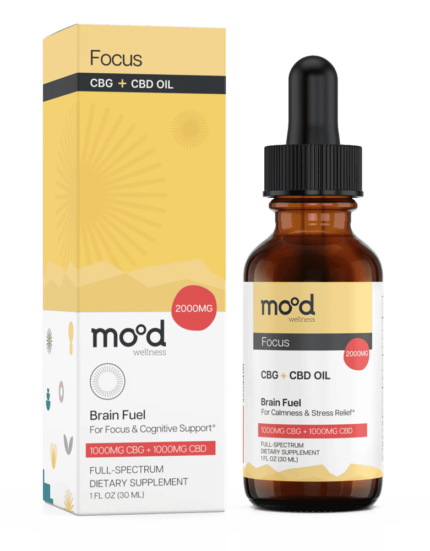
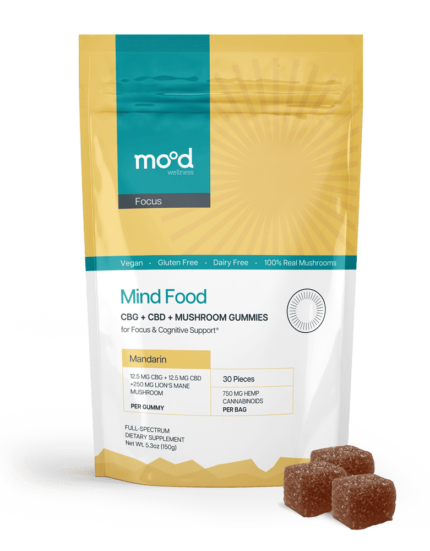
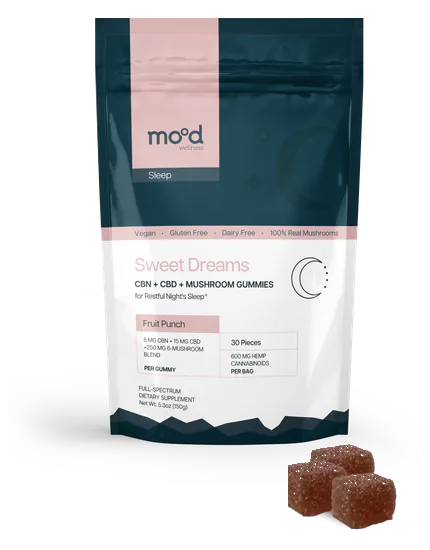
For this project, sampled public Mind Food and Sweet Dreams reports were dated February 2023, and the sampled Brain Fuel report was dated October 2022. They were cannabinoid-potency reports. They can be evaluated as historical documents for the samples shown, but they should not be described as current-lot proof or as full contaminant panels.
To calculate current Mood label-to-COA variance, use the product now in hand and obtain the report that matches its lot. Preserve the exact units, sample type and uncertainty information. If the current report is absent, the current variance remains unknown.
When to question a result
A result deserves follow-up when:
- the label and COA use different units with no supported conversion;
- the report is for a different lot, strength or product matrix;
- the finished-product claim is supported only by a raw-ingredient COA;
- the variance calculation omits its direction or denominator;
- the company invokes “industry standard” without naming a source;
- a laboratory result is reported without uncertainty where the difference is close to a decision limit;
- a composite average hides unit-to-unit variation relevant to serving claims; or
- the brand changes the formula but continues linking an old report.
First request the complete report and calculation. If the mismatch remains material, ask the brand and laboratory to explain sample identity, method, uncertainty and release specification.
Safety is not a potency percentage
A close CBD potency match does not establish contaminant safety, absence of THC, effectiveness or suitability for you. Those require separate evidence and decisions.
FDA warns that CBD can cause liver injury, interact with medications and increase sedation with alcohol or other substances that slow brain activity. Consult a clinician or pharmacist if you take medication, have liver disease, are preparing for surgery or have another relevant condition. FDA advises against CBD during pregnancy and breastfeeding.
THC deserves its own review. A product can be close to its CBD label claim while containing unexpected THC, and a low or non-detect result does not guarantee a negative workplace drug test.

Bottom Line: CBD COA Potency Variance
Calculate CBD COA potency variance only after the product, lot, sample and units match. Report both direction and percentage, then interpret the result alongside measurement uncertainty, sampling design and the correct acceptance benchmark.
There is no defensible universal ±10% shortcut for every US CBD product. A transparent answer names the governing specification or rule, preserves laboratory uncertainty and admits when current lot evidence is missing.
Quick answers
Frequently asked questions about CBD COA Potency Variance
What is the practical answer about CBD COA Potency Variance?
Calculate CBD COA potency variance only after the product, lot, sample and units match. Report both direction and percentage, then interpret the result alongside measurement uncertainty, sampling design and the correct acceptance benchmark. There is no defensible universal ±10% shortcut for every US CBD product.
Which Mood product fits this topic?
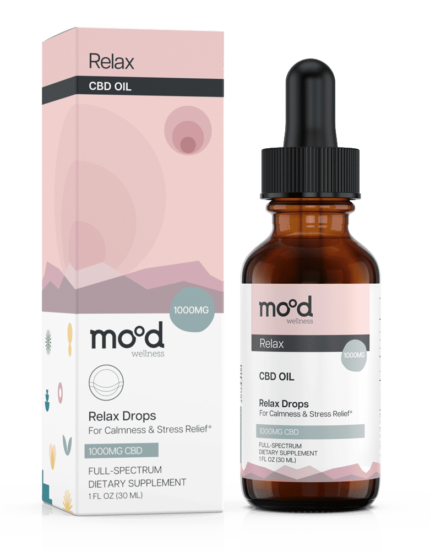
Relax Drops is the most relevant Mood option for this topic. Mood Relax Drops provide a clearly labeled CBD oil format for shoppers who want flexible serving control and an easy way to build CBD into a daily or evening routine.
What should I compare before choosing a product?
Compare the cannabinoid amount per measured serving, the complete ingredient list, spectrum or THC information, current product directions and available batch documentation. The best choice is the formula that fits the goal and is easy to use consistently.
How should I start using a new CBD or cannabinoid product?
Follow the current package directions, choose a low-demand first-use window and keep timing and meal context reasonably consistent. Review medication, pregnancy, liver and impairment considerations with a qualified clinician when relevant.
Sources
- National Institute of Standards and Technology. Tools for Cannabis Laboratory Quality Assurance.
- National Institute of Standards and Technology. NIST’s New Hemp Reference Material Will Help Ensure Accurate Cannabis Measurements. July 2024.
- U.S. Food and Drug Administration. Warning Letters for Cannabis-Derived Products and associated analytical results.
- U.S. Food and Drug Administration. What You Need to Know About Products Containing Cannabis or Cannabis-Derived Compounds, Including CBD.
- Mood Wellness. Lab Results page and linked product reports. Checked September 9, 2026.
- U.S. Food and Drug Administration. What the FDA is Doing to Protect Consumers from Cannabidiol (CBD) in Foods. Accessed September 2026.