The CBD cost-per-mg formula
Use this equation:
CBD cost per mg = product price ÷ total labeled CBD mg in the package
For a $60 package labeled as containing 1,200 mg CBD:
$60 ÷ 1,200 mg = $0.05 per mg CBD, or 5 cents per labeled CBD milligram.
Do not divide total milligrams by price. That produces milligrams per dollar, a valid but different metric. Also do not use bottle volume, package weight or the number on the front unless the label clearly identifies that number as total CBD.

Start with the denominator
The denominator is the quantity after the division sign. It controls what the result means.
| Denominator | Result answers | Common mistake |
|---|---|---|
| Total CBD mg | What one labeled CBD mg costs | Using total cannabinoids instead |
| Total CBG mg | What one labeled CBG mg costs | Treating a 1:1 blend as all CBD |
| Total CBN mg | What one labeled CBN mg costs | Using the larger front-panel blend total |
| Total named cannabinoids | What one combined cannabinoid mg costs | Presenting it as CBD cost per mg |
| Number of servings | What one labeled serving costs | Assuming servings are equivalent doses |
| Package count | What one gummy/capsule costs | Ignoring CBD amount per unit |
CBD, CBG, CBN and THC are not interchangeable accounting units. Adding them can be useful when you explicitly want combined cannabinoid cost, but the result must retain that name.
A four-step calculator
1. Record the real product price
Use the ordinary one-time price for the exact size and strength. If you qualify for a sale, record both list and checkout price. Include mandatory shipping or fees when comparing delivered cost.
Do not automatically use a subscription price. A subscription has renewal timing, cancellation terms and possibly future price changes. It should be a separate scenario.
2. Find total CBD in the package
Prefer an explicit package total. If the label gives CBD per unit, multiply:
CBD per gummy × gummies in package = total labeled CBD
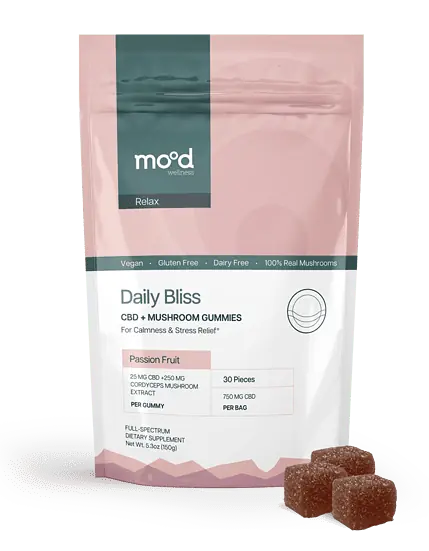
If a 30-count pouch states 12.5 mg CBD per gummy:
12.5 mg × 30 = 375 mg CBD in the pouch
For oil, do not confuse mg/mL with total mg. If a 30 mL bottle states 33.3 mg CBD per mL, the calculated total is approximately 999 mg; the small difference from a rounded 1,000 mg front-panel statement may be label rounding.
3. Divide price by total CBD
Keep currency units visible:
$59.99 ÷ 375 mg CBD = $0.15997 per mg CBD
Rounded for shopping, that is about $0.16 per labeled CBD mg.
4. Repeat with the same rules
Use the same price basis, cannabinoid and rounding for every candidate. A comparison that uses sale price for one product, list price for another and combined cannabinoids for a third is not normalized.

Worked Mood examples
These calculations teach the method; they are not recommendations. Check the current product page and cart before relying on them.
| Product snapshot | Price used | CBD denominator | CBD cost per labeled mg |
|---|---|---|---|
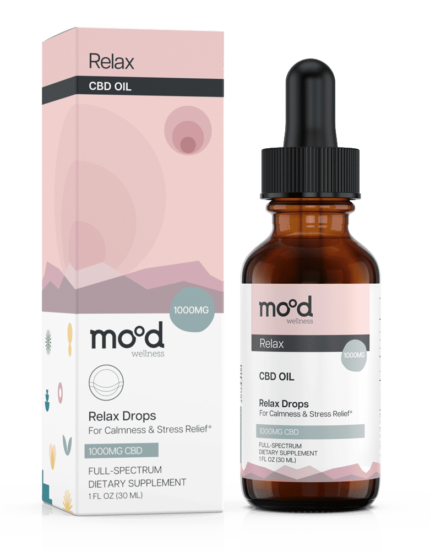
| Relax Drops 1,000 mg | $70.00 | 1,000 mg CBD | $0.0700 |
| Relax Drops 2,000 mg | $105.00 | 2,000 mg CBD | $0.0525 |
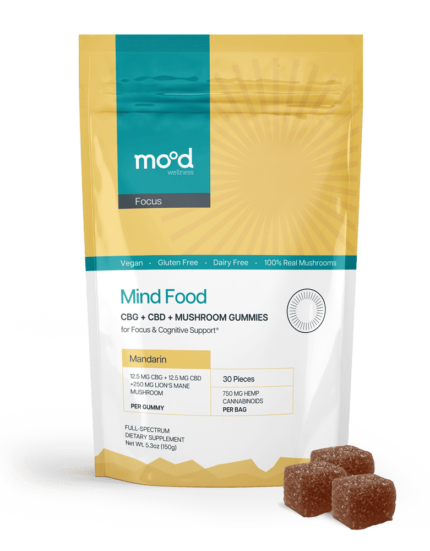
| Mind Food, 30 × 12.5 mg CBD | $59.99 | 375 mg CBD | about $0.1600 |
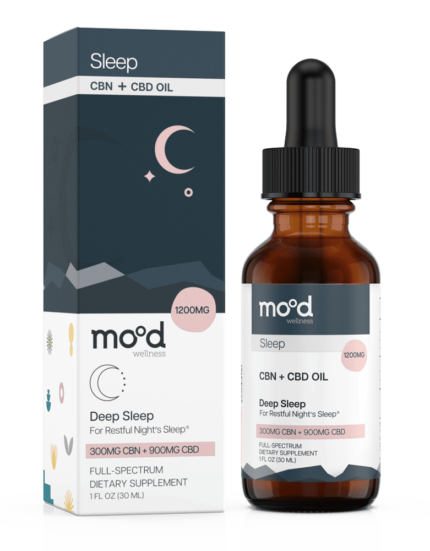
| Deep Sleep, 900 mg CBD + 300 mg CBN | $124.99 | 900 mg CBD | about $0.1389 |
The current Relax Drops product page lists 1,000 mg and 2,000 mg strengths and a $70–$105 range. The shop archive currently shows a different $54.99–$84.99 range. Because those first-party pages conflict, the table uses the product page snapshot and should not be treated as a live quote.
The stronger Relax Drops bottle has a higher package price but a lower calculated price per labeled CBD mg. That does not make it the right purchase for someone who wants a lower-strength bottle, uses CBD infrequently or may not finish it before its storage life becomes relevant.
Multi-cannabinoid formulas need more than one calculation
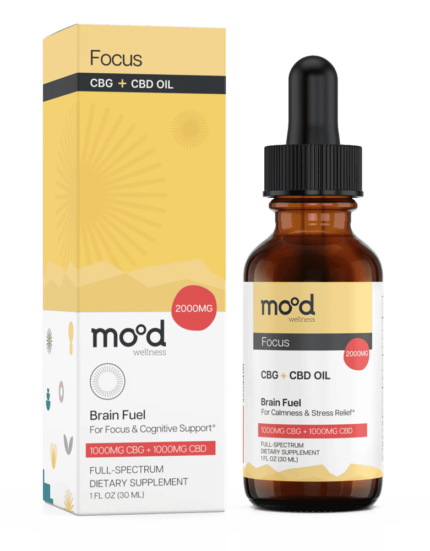
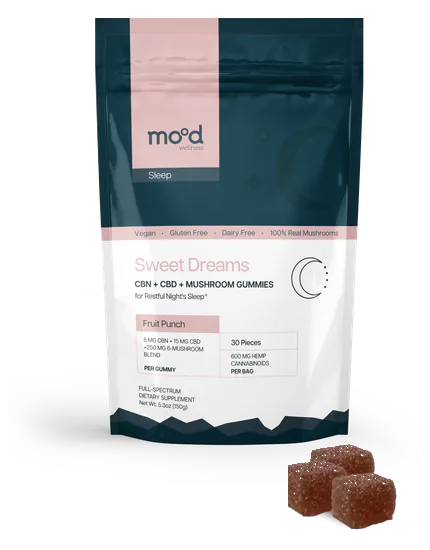
Mind Food currently states 12.5 mg CBD and 12.5 mg CBG per gummy. With 30 gummies, that is 375 mg CBD plus 375 mg CBG, or 750 mg of those two named cannabinoids combined.
At the displayed $59.99 sale price:
- CBD-only cost: $59.99 ÷ 375 mg CBD ≈ $0.16 per CBD mg.
- CBG-only cost: $59.99 ÷ 375 mg CBG ≈ $0.16 per CBG mg.
- combined CBD+CBG cost: $59.99 ÷ 750 mg ≈ $0.08 per combined cannabinoid mg.
The 8-cent figure is not CBD cost per mg. Relabeling it that way would double the CBD denominator and make the product appear cheaper on the wrong metric.
Deep Sleep provides a second example. Its current page states 900 mg CBD plus 300 mg CBN for $124.99:
- $124.99 ÷ 900 mg CBD ≈ $0.139 per CBD mg.
- $124.99 ÷ 300 mg CBN ≈ $0.417 per CBN mg.
- $124.99 ÷ 1,200 combined mg ≈ $0.104 per combined cannabinoid mg.
These figures describe the same bottle from three accounting perspectives. None says what clinical value each cannabinoid delivers.
Cost per mg versus cost per serving
Cost per mg compares concentration value. Cost per serving estimates routine expense:
Cost per labeled serving = package price ÷ labeled servings
If a $70 oil lists 30 servings, its price is about $2.33 per labeled serving. If that serving contains about 33 mg CBD, $2.33 ÷ 33 mg returns approximately the same 7-cent CBD cost per mg, apart from rounding.
But serving comparisons can mislead. One company's serving may be one gummy, another's two gummies, and an oil serving may be one milliliter. A labeled serving is a manufacturer-defined unit, not proof of a clinically equivalent dose.
Use cost per mg for concentration comparison and cost per intended serving for personal budget planning. Keep both visible.
Include shipping and discounts carefully
For delivered cost, use:
(product price − actual discount + mandatory shipping + mandatory fees) ÷ total CBD mg
Suppose a 1,000 mg bottle is listed at $70, receives a $7 discount and incurs $6 shipping:
($70 − $7 + $6) ÷ 1,000 = $0.069 per mg CBD
The nominal 10% discount barely changes delivered cost because shipping offsets most of it. Taxes vary by location and may be added separately if the goal is an exact checkout comparison.
Do not assign a cash value to loyalty points until they are redeemable under terms you understand. Free gifts also should not reduce CBD cost per mg unless you genuinely would have purchased the same item.

Labeled milligrams versus verified milligrams
A label calculation assumes the package contains the stated CBD. A matching certificate of analysis can support a second calculation using the lab-reported amount.
For gummies:
lab-reported CBD per unit × package count = estimated tested-package CBD
For oils, first confirm whether the report uses mg/mL, mg/g, percentage by mass or total container content. These units are not interchangeable without density, fill volume and sampling context.
Before using a report, verify:
- the package lot matches the report batch;
- the product and strength match;
- the report date is plausible for the package;
- the result is per unit, per mL, per gram or total container;
- the sample was a finished product; and
- the report is complete and issued by the named laboratory.
Mood's public lab-results page provides product report links, but the prospective package still needs to match the certificate. A historical or unmatched report should not silently replace the label denominator.
A useful sensitivity check
Do not present a single lab sample as the exact content of every future unit. Instead, calculate a range.
Imagine a $60 package labeled 1,000 mg CBD. A matching report, interpreted in compatible units, implies 950 mg for the tested package:
- labeled basis: $60 ÷ 1,000 = $0.060 per mg;
- tested-sample basis: $60 ÷ 950 ≈ $0.063 per mg.
The difference is useful for evaluating sensitivity, not for claiming that every package contains precisely 950 mg. Manufacturing variation, analytical uncertainty and unit conversion still matter.
The guide to reading a CBD COA explains batch matching, units and detection limits.
What cost per mg cannot tell you
The metric does not establish:
- identity of hemp extract or other ingredients;
- THC amount or drug-testing risk;
- contaminant coverage;
- formulation stability or shelf life;
- absorption or bioavailability;
- tolerability and medication interactions;
- manufacturing quality; or
- effectiveness for any symptom or condition.
Do not create an “effective cost per mg” by dividing price by an assumed bioavailability percentage unless comparable human pharmacokinetic evidence supports the exact products, routes and conditions. Such precision is usually false for retail comparisons.
The CBD buyer’s guide covers spectrum, ingredients, testing and format questions that belong beside price.
Safety still outranks the cheapest number
FDA states that CBD can cause liver injury, affect how other medications work and change alertness. Combining CBD with alcohol or other drugs that slow brain activity may increase sedation and drowsiness. The agency has approved one prescription CBD drug for specific seizure disorders; that approval does not extend to ordinary retail CBD products.
Discuss CBD with a clinician or pharmacist if you take medications, have liver disease, are pregnant or breastfeeding, or have other safety concerns. Check THC per unit and serving if impairment, workplace testing, athletic rules or legal exposure matters.
A large bottle with the lowest cost per mg can be poor value if the strength is unsuitable, the lot evidence is missing, the formula conflicts with medications or the product expires before use.
CBD comparison worksheet
For each product, record:
| Field | Product A | Product B |
|---|---|---|
| Exact product and variant | ||
| One-time price | ||
| Discount actually available | ||
| Mandatory shipping/fees | ||
| Total labeled CBD | ||
| Other cannabinoid totals | ||
| Package count or volume | ||
| Labeled servings | ||
| Cost per CBD mg | ||
| Cost per combined cannabinoid mg | ||
| Cost per serving | ||
| Lot-matched report found? | ||
| THC per intended serving | ||
| Other active ingredients |
Keep screenshots or note the date because product pages and checkout prices change.

Bottom Line: How to Calculate CBD Cost Per Milligram
To calculate CBD cost per milligram, divide the price you would actually pay by total labeled CBD in the package. Use consistent prices, exact variants and the same cannabinoid denominator. For mixed formulas, calculate CBD, other named cannabinoids and combined cannabinoids separately, and label each result honestly.
Then put the price metric back into context. Verify the lot, units, THC, contaminant panels, other ingredients, serving fit and safety. A lower cost per labeled CBD mg is a useful shopping fact, not a quality score or health outcome.
You can apply the worksheet to the current Mood shop or any other seller, while rechecking the exact product page and cart before purchase.
Quick answers
Frequently asked questions about How to Calculate CBD Cost per Milligram
What is the practical answer about How to Calculate CBD Cost per Milligram?
To calculate CBD cost per milligram, divide the price you would actually pay by total labeled CBD in the package. Use consistent prices, exact variants and the same cannabinoid denominator. For mixed formulas, calculate CBD, other named cannabinoids and combined cannabinoids separately, and label each result honestly.
Which Mood product fits this topic?
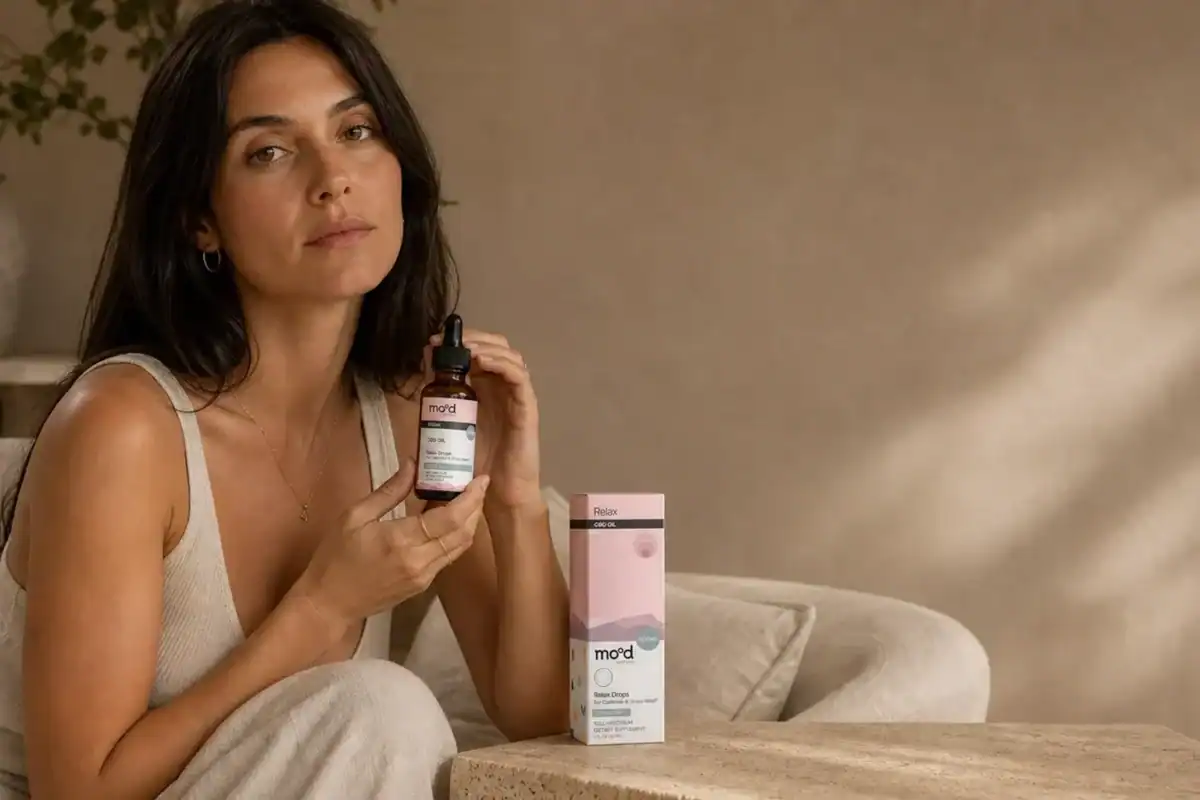
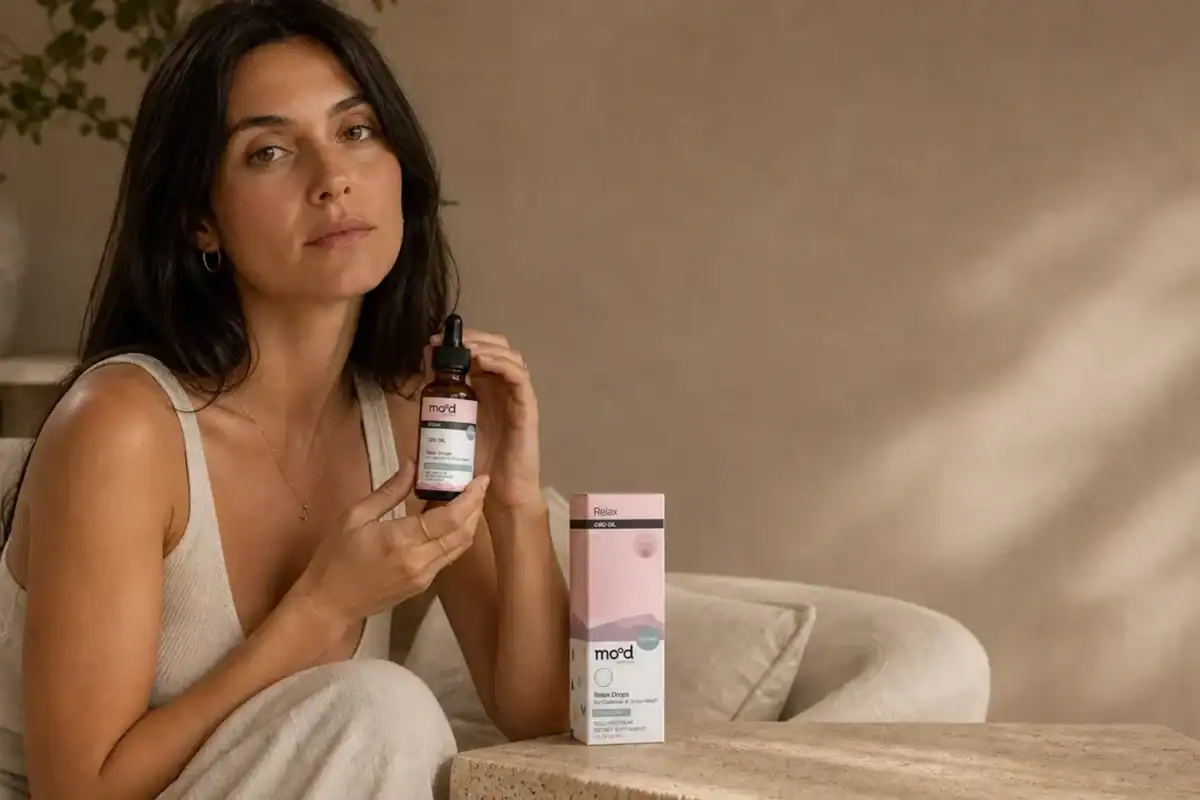
Relax Drops is the most relevant Mood option for this topic. Mood Relax Drops provide a clearly labeled CBD oil format for shoppers who want flexible serving control and an easy way to build CBD into a daily or evening routine.
What should I compare before choosing a product?
Compare the cannabinoid amount per measured serving, the complete ingredient list, spectrum or THC information, current product directions and available batch documentation. The best choice is the formula that fits the goal and is easy to use consistently.
How should I start using a new CBD or cannabinoid product?
Follow the current package directions, choose a low-demand first-use window and keep timing and meal context reasonably consistent. Review medication, pregnancy, liver and impairment considerations with a qualified clinician when relevant.
Sources
- U.S. Food and Drug Administration. Consumer guidance on products containing CBD. Accessed September 9, 2026.
- Mood Wellness. Relax Drops, Mind Food and Deep Sleep product pages. Checked September 9, 2026.
- Mood Wellness. Shop and Lab Results pages. Checked September 9, 2026.
- U.S. Food and Drug Administration. What the FDA is Doing to Protect Consumers from Cannabidiol (CBD) in Foods. Accessed September 2026.