What ergothioneine is
L-ergothioneine is a naturally occurring thione derived from histidine metabolism in certain microorganisms and accumulated in foods including mushrooms. Humans obtain it through diet and express a transporter that can concentrate it in tissues. Those biological facts help explain research interest, but they are not themselves evidence that any specific supplement contains a meaningful dose.
For label review, treat ergothioneine as a named analyte. The immediate questions are chemical identity, quantity and sample basis. Health-outcome questions come later and require evidence tied to a defined material, dose, population and endpoint.

Why mushrooms can differ so much
Different mushroom species do not have one shared ergothioneine concentration. Studies analyzing multiple culinary species have found substantial variation. Even mushrooms carrying the same species name may differ because strain, substrate, cultivation conditions, maturity, tissue, postharvest handling and moisture can change composition.
That means a value copied from a food-composition paper is not a specification for a supplier's extract. It can establish plausibility and help select an analytical range. It cannot replace testing of the material being sold.
What composition studies actually show
Sapozhnikova and colleagues analyzed powders made from white, brown, oyster and shiitake mushrooms and reported ergothioneine on a dry-weight basis. The sampled powders spanned a range rather than one universal number, and UV-B treatment did not appreciably change ergothioneine in that experiment. Those findings describe those materials and conditions.
More recent metabolomics work has also measured ergothioneine across multiple mushroom varieties while showing broader chemical differences between varieties. This supports a central interpretation: a species can be a useful composition clue, but a numerical product claim still needs product-relevant measurement.
Species name is not an assay result
A label that names Hericium erinaceus, Ganoderma lingzhi or Cordyceps militaris provides identity information. If the identity is authentic, it narrows what material should be present. It does not quantify ergothioneine.
Conversely, detecting ergothioneine does not prove which mushroom species supplied it. Compound testing and species authentication answer complementary questions. The mushroom DNA testing guide explains why ITS or PCR evidence also has method and processing limits.
Powder, extract and finished product are different samples
An intact dried mushroom powder includes the ground biological material. An extract powder reflects solvent selection, extraction yield, concentration, drying and any carrier. A finished gummy or capsule adds other ingredients and introduces a new denominator.
Ergothioneine may partition differently from other compounds during extraction. A concentrated extract could have more ergothioneine per gram than its input, or less, depending on process and yield. A carrier can dilute the percentage in total powder. The product label therefore cannot infer ergothioneine from an extract ratio alone.

How laboratories measure ergothioneine
A typical compound-specific workflow extracts the analyte from the sample, separates components by liquid chromatography and detects ergothioneine using mass spectrometry, ultraviolet detection or another validated system. Calibration uses standards over an appropriate range. Sample preparation, recovery, selectivity and matrix effects must be evaluated.
Kour and colleagues compared analytical approaches in selected mushroom samples and found that developed LC-MS methods offered higher resolution, while UV-Vis measurements were hindered by co-absorbance from other constituents. The lesson is not that every UV-based method is invalid. It is that non-specific absorbance can confuse a named-compound result unless the method demonstrates selectivity in the actual matrix.
Why method specificity matters
Mushroom powders contain many compounds that can absorb light, react with colorimetric reagents or co-elute. A total antioxidant-capacity assay may respond to multiple substances. It should not be relabeled as an ergothioneine assay.
A useful laboratory report names the procedure and analyte, describes sample preparation and provides evidence that the ergothioneine signal is distinguishable from interferences. Chromatographic retention plus a suitable spectral or mass signature can increase confidence. A decorative chromatogram without standards, axes or method context does not.
What validation fields to look for
Consumers may not receive a full method-validation package, but a supplier or manufacturer should be able to identify important performance fields:
- analyte and reference standard;
- sample matrix and preparation;
- calibration range and model;
- selectivity or specificity;
- accuracy or spike recovery;
- precision;
- limit of detection and limit of quantitation;
- dilution and moisture corrections;
- quality-control samples and acceptance rules.
The method should fit the material. A validated food-mushroom method may need verification or modification for a gummy containing sweeteners, cannabinoids and multiple extracts.

Units and basis can change the apparent number
Common reports may use milligrams per gram, micrograms per gram, milligrams per 100 grams, parts per million or milligrams per serving. A percentage is another mass ratio. Convert only when the same sample basis is preserved.
One milligram per gram equals one thousand micrograms per gram and corresponds to 0.1 percent by mass. It also corresponds to 1,000 parts per million by mass when those definitions apply. But none of those conversions tells you milligrams per gummy until you know how many grams of the tested material are present in that gummy.
Dry weight versus as-is reporting
Moisture changes the denominator. A dry-weight result mathematically removes water from the basis; an as-is result describes the sample as tested. Two laboratories can report different-looking concentrations from the same material if one corrects to dry weight and the other does not.
The report should state moisture treatment or reporting basis. For a stable dried extract the difference may be modest, but it should not be assumed. For fresh mushrooms it can be large. Never compare a fresh-food wet-weight value with a dry extract value without adjustment and context.
Ingredient percentage versus milligrams per serving
Suppose an extract report lists 2 milligrams of ergothioneine per gram of extract. If a serving contains 500 milligrams, or 0.5 gram, of that exact extract, the arithmetic estimate is 1 milligram per serving. That estimate is defensible only if the ingredient amount is known, the tested extract matches the formula lot and no basis correction is missing.
If the label lists a proprietary mushroom blend, you may not know how much of the tested ingredient is present. If the report tests the finished gummy directly, it can avoid some allocation assumptions but introduces a more complex matrix. Keep calculated and measured serving values clearly labeled.
Extraction ratio does not predict ergothioneine
An 8:1 or 10:1 ratio describes a relationship between input material and resulting extract under a stated convention. It is not an ergothioneine concentration. Extraction yield, solvent, input moisture and carrier can change what the ratio represents.
Use the Lion's Mane extract-ratio guide for native-versus-total ratio interpretation, and the maltodextrin guide for carrier denominators. A marker assay remains the direct evidence for a marker claim.
What a COA can verify
A strong certificate or analytical report includes:
- Exact ingredient or finished-product identity.
- Lot or batch number.
- Sample form and preparation basis.
- Laboratory and dates.
- Named ergothioneine method.
- Numerical result and unit.
- Detection or quantitation limit.
- Specification, if a pass/fail claim is made.
- Authorized report status and complete pages.
A report for raw oyster-mushroom powder cannot verify a later multi-mushroom gummy without traceability and serving arithmetic. A generic specification is not a lot result. A result from last year's supplier lot does not automatically apply to the current one.
What human bioavailability research shows
A small randomized crossover pilot in 10 healthy men served meals containing mushroom powder and observed post-meal uptake of ergothioneine into red blood cells. That supports bioavailability from the studied Agaricus bisporus meal. It does not establish an effective supplement dose or prove an outcome for Lion's Mane, Reishi or a gummy blend.
A separate small study administered pure L-ergothioneine to healthy volunteers and found absorption and retention. Most reported changes in oxidative-damage and inflammation biomarkers were not statistically significant. Pure-compound pharmacokinetics should not be presented as clinical proof for an untested mushroom product.
Antioxidant language needs restraint
Ergothioneine can participate in redox chemistry and is often described in antioxidant terms. That biochemical description is not equivalent to a demonstrated consumer outcome. “Contains a measured amount of ergothioneine” is a composition statement. “Supports brain health,” “slows aging” or “protects cells” requires separate substantiation appropriate to the exact claim.
Avoid using an in vitro radical-scavenging assay as a human benefit. Avoid turning tissue accumulation into evidence that more is always better. And do not assume a higher marker concentration makes one whole mushroom product universally superior.
Ergothioneine is not a universal quality score
A verified result can be useful when ergothioneine is part of the product specification. It does not replace beta-glucan measurement, species identity, fungal-material declaration, extraction documentation or contaminant panels. Different products may intentionally standardize different attributes.
The right quality question is whether claims are defined and supported. A product with no ergothioneine claim is not automatically poor quality; a product with a large ergothioneine number is not automatically effective. Compare evidence to the product's actual promise.
How Mood's current evidence fits
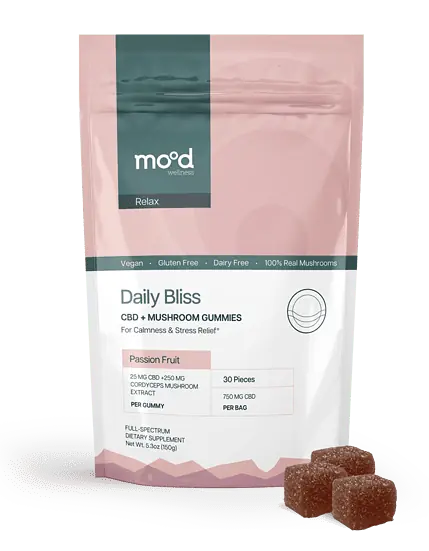
Mood's current mushroom pages describe species, extract amounts and selected formula attributes. In the public pages and reports reviewed for this project, we did not locate a current, lot-matched ergothioneine assay for the mushroom ingredients or finished gummies.
That absence means content should not estimate ergothioneine from a species table or external paper. It does not prove that the products contain none. Shoppers can review the functional mushroom collection and ask support whether a supplier specification or lot result includes ergothioneine, the method, reporting basis and sample linkage.
A practical verification checklist
Before comparing two claims, record:
- the scientific name and fungal material;
- powder, extract or finished-product sample;
- sample and retail lot relationship;
- analytical method and reference standard;
- result, unit and dry/as-is basis;
- ingredient mass per serving;
- whether the serving amount is measured or calculated;
- specification and reporting limit;
- separate identity, beta-glucan and contaminant evidence;
- the exact health wording, if any, and evidence supporting it.
If any denominator is unknown, preserve the unknown rather than manufacturing a per-serving number.

Bottom Line: Ergothioneine in Mushroom Supplements
Ergothioneine is a real, measurable mushroom constituent, but the label needs more than a species name or antioxidant story. The strongest claim ties a compound-specific method to a defined sample and lot, reports a numerical value with units and basis, and shows how that value maps to the serving.
Keep composition and outcomes separate. LC-MS evidence can strengthen an ergothioneine content claim; it cannot by itself prove cognitive, immune, antioxidant or longevity benefits. Pair the result with identity, process, other composition markers, contaminants and traceability for a complete quality picture.
Quick answers
Frequently asked questions about Ergothioneine in Mushroom Supplements
What is the practical answer about Ergothioneine in Mushroom Supplements?
Ergothioneine is a real, measurable mushroom constituent, but the label needs more than a species name or antioxidant story. The strongest claim ties a compound-specific method to a defined sample and lot, reports a numerical value with units and basis, and shows how that value maps to the serving.
Which Mood product fits this topic?
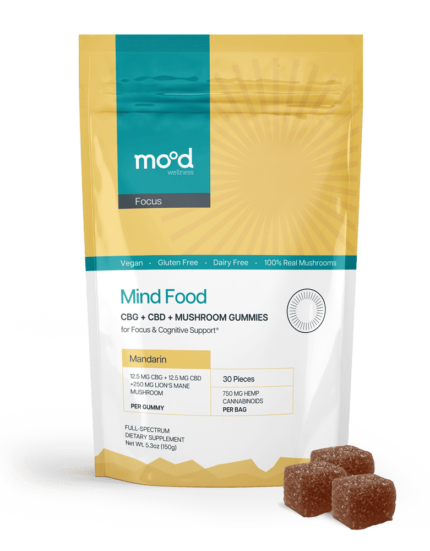
Mind Food is the most relevant Mood option for this topic. Mood Mind Food combines CBD, CBG and Lion’s Mane in a stimulant-free gummy designed for a calm, focused daytime routine.
What should I compare before choosing a product?
Compare the cannabinoid amount per measured serving, the complete ingredient list, spectrum or THC information, current product directions and available batch documentation. The best choice is the formula that fits the goal and is easy to use consistently.
How should I start using a new CBD or cannabinoid product?
Follow the current package directions, choose a low-demand first-use window and keep timing and meal context reasonably consistent. Review medication, pregnancy, liver and impairment considerations with a qualified clinician when relevant.
References
- Kalaras MD, Richie JP, Calcagnotto A, Beelman RB. Mushrooms: A rich source of the antioxidants ergothioneine and glutathione. Food Chemistry. 2017. PubMed.
- Sapozhnikova Y, et al. Effects of UV-B radiation levels on concentrations of phytosterols, ergothioneine, and polyphenolic compounds in mushroom powders used as dietary supplements. J Agric Food Chem. 2014. PubMed.
- Kour H, et al. Identification and quantification of ergothioneine and lovastatin in mushroom species: analytical approaches. 2021. PubMed.
- Weigand-Heller AJ, Kris-Etherton PM, Beelman RB. The bioavailability of ergothioneine from mushrooms. Preventive Medicine. 2012. PubMed.
- Cheah IK, et al. Administration of pure ergothioneine to healthy human subjects. 2017. PubMed.