Why mushroom supplement DNA testing gets harder after processing
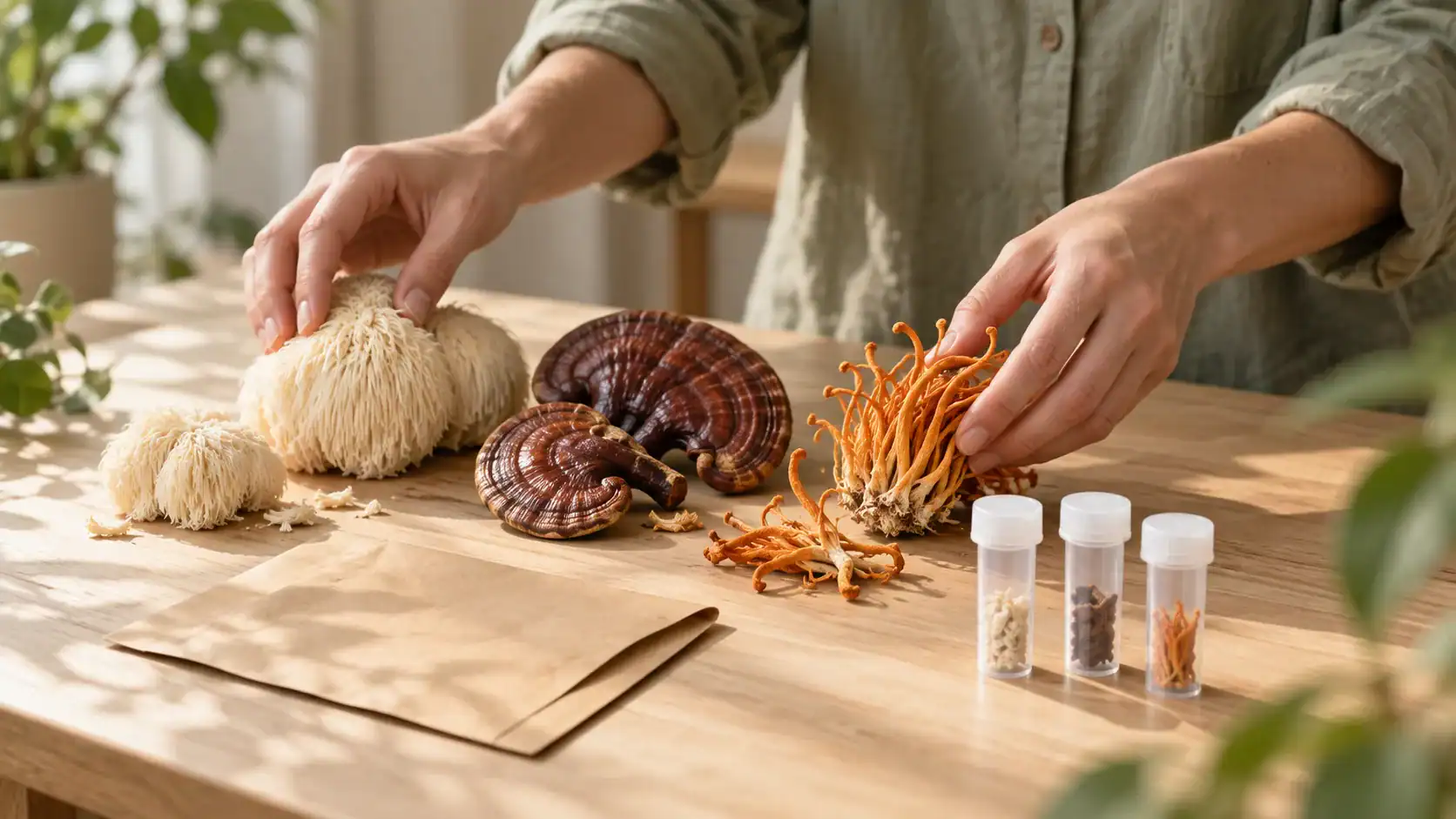
An intact Lion's Mane fruiting body has visible structures that a trained specialist can examine. Once it is milled into a beige powder, morphology largely disappears. Extraction, concentration and drying remove still more visible evidence. Mycelium can be especially difficult to distinguish by appearance. A supply chain may also pass material through growers, processors, extract manufacturers, formulators and packers before a consumer sees it.
That is the practical appeal of DNA: genetic markers can remain informative when visual identification is no longer possible. Raja and colleagues generated fungal ITS barcodes for 33 consumer-relevant samples and recovered usable sequences from many powdered mycelium samples, grocery mushrooms and commercial capsules. The paper's own title calls barcoding a “partial solution,” which is the right frame. It demonstrated utility, not universal success or automatic product certification.
How ITS DNA barcoding identifies mushroom species
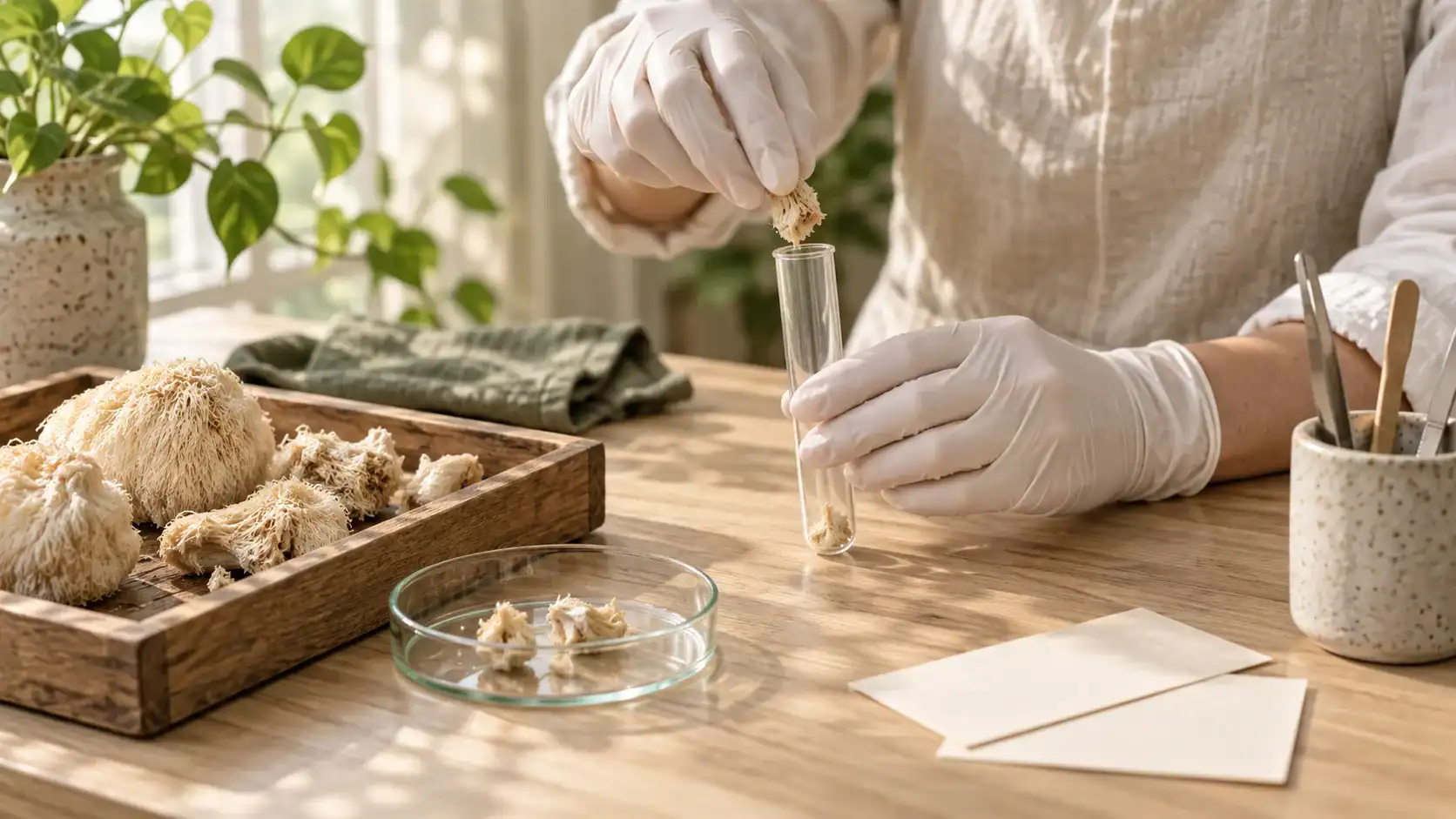
The internal transcribed spacer, or ITS, region of ribosomal DNA is commonly used for fungal identification because it can vary between species while conserved flanking regions provide places for primers to bind. A simplified workflow is:
- Define and document the sample.
- Extract DNA from that material.
- Amplify a target region using PCR and suitable primers.
- Sequence the amplified material.
- Compare the sequence with authenticated references.
- Evaluate match quality and its taxonomic resolution.
- Report controls, limitations and the conclusion that the data actually support.
Every step matters. “DNA tested” without a named sample, method and result is not enough to reproduce or interpret the claim.
Mushroom DNA barcoding vs targeted PCR vs metabarcoding
Conventional barcoding often aims to recover a sequence and identify the closest reference. It works most cleanly when one organism dominates the sample. A species-specific PCR assay instead asks whether a particular genetic target is detectable. It can be useful for confirming a named species when specificity and detection limits are established.
Metabarcoding uses high-throughput sequencing to characterize DNA from mixtures. That sounds ideal for multi-mushroom blends, but read counts are not automatically ingredient percentages. Primer bias, genome copy number, DNA extraction efficiency and degradation can cause one species to produce more reads than another. The result can support presence evidence without becoming a quantitative formula reconstruction.
| Question | Potentially useful method | Important boundary |
|---|---|---|
| What is this single raw fungal material? | ITS barcode plus phylogenetic analysis | Requires suitable DNA and reliable references. |
| Is a named species detectable? | Validated species-specific PCR | A non-detect needs controls and a known detection limit. |
| Which fungal DNAs occur in a blend? | Metabarcoding | Read share is not automatically mass share. |
| How much beta-glucan is present? | Chemical/compositional assay | DNA does not answer this. |
| Is the lot free of metals or microbes? | Contaminant-specific panels | Identity testing is not a contaminant panel. |
What a positive mushroom DNA test can prove
A positive result is strongest when the report identifies the actual lot, describes sampling, names the assay and target, provides appropriate positive and negative controls and states the reference comparison. The conclusion should use the resolution the method achieved. A sequence may resolve confidently to species, only to genus or to a closely related species group.
One study of products sold as Ganoderma lucidum used ITS amplification and phylogenetic analysis and placed its seven tested samples with Ganoderma lingzhi. That is evidence about those samples and illustrates why taxonomy matters. It does not prove that every Reishi supplement is correctly identified, and it does not convert species identity into a ganoderic-acid or health claim.
A detection also does not reveal where the DNA originated. In a complex facility or formula, trace DNA can reflect an intended ingredient, another biological ingredient or environmental carryover. Sampling design, relative signal and orthogonal evidence determine how confidently the finding maps to the label.
What “not detected” means on a mushroom DNA report
“Not detected” is not the same statement as “proved absent.” Ask whether the assay could recover amplifiable fungal DNA from this type of matrix. A proper internal amplification control helps reveal inhibition. A positive extraction control shows that the workflow can recover target material. The report should also state the method's detection capability.
Processing creates a central limitation. Heat, pressure, solvents, purification and time can fragment DNA or remove it from an extract even while non-DNA constituents remain. Ivanova and colleagues found poor target-DNA recovery in many processed botanical extracts and concluded that DNA and chemical methods should be used together. That study was not a survey of mushroom products, but its analytical lesson applies: failure to recover DNA from a processed matrix cannot, by itself, prove ingredient fraud.

Why the DNA reference database affects species identification
Sequence comparison is not a magical lookup. Public databases may contain outdated names, misidentified deposits, incomplete species coverage or records lacking voucher support. Closely related fungi may share very similar regions. A defensible report should disclose the database, search date, match statistics and how the laboratory handled current taxonomy.
Phylogenetic analysis can be more informative than accepting the first database hit. Authenticated voucher specimens and curated reference libraries improve confidence. If the result resolves only to genus level, the report should not silently upgrade it to a species confirmation.
Can DNA testing distinguish fruiting body from mycelium?
Fruiting body and mycelium from the same organism generally share the same species genome. A species-level barcode therefore does not automatically identify which fungal structure supplied the tested material. It also cannot determine whether mycelium was grown on grain or how completely substrate was separated.
Those questions need manufacturing records, microscopy where appropriate and chemical or compositional evidence. The label should identify the material, while documentation should connect that declaration to the supplier specification and lot. See the broader mushroom supplement label guide for the fields that belong beside identity.

Mushroom DNA testing vs beta-glucan and contaminant testing
Identity testing asks who is there. Chemistry asks what measurable constituents are there and, when validated quantitatively, how much. Neither substitutes for the other.
A beta-glucan assay can support a carbohydrate-composition claim but usually cannot establish species identity. Targeted LC-MS may measure a named compound but needs a suitable reference standard and cannot alone reconstruct the entire organism. DNA can support a species claim while saying nothing about extraction ratio, carrier fraction or marker concentration.
This is why an evidence stack is stronger than a single badge:
- authenticated raw-material identity;
- declared species and fungal material;
- supplier and processing traceability;
- relevant compositional assays;
- finished-lot cannabinoid and contaminant panels when applicable;
- label and batch matching.
For compositional interpretation, use the beta-glucan label guide. For a finished gummy's report chain, use the mushroom gummy COA guide.
Raw-material vs finished-supplement DNA testing
Testing early in the supply chain can provide higher-quality DNA and a simpler matrix. It also occurs before later handling and formulation. Finished-product testing is closer to what the consumer receives but may involve degraded DNA, multiple fungi, sweeteners, cannabinoids and other ingredients.
The useful question is not “which stage is always better?” It is whether the documentation forms an unbroken chain. A raw-material identity result should identify its lot and supplier. Batch records should show where that input went. The finished product should have its own relevant tests and a batch identifier. One undated PDF from an unspecified powder cannot authenticate every future retail lot.
10 questions to ask about a “DNA-verified” mushroom supplement
Ask for precise, answerable fields:
- Was the tested sample raw mushroom, mycelium, extract powder or finished product?
- Which lot or batch was sampled?
- Which method and genetic target were used?
- Was the assay a barcode, targeted PCR or metabarcoding workflow?
- What positive, negative and inhibition controls passed?
- Which reference database and taxonomic framework were used?
- Did the result resolve to species, genus or a species complex?
- What does the laboratory say a non-detect means for this matrix?
- Which separate tests address composition and contaminants?
- How is the tested input connected to the retail lot?
Specific answers are more valuable than a seal graphic. If the report is confidential, a brand may still be able to disclose the laboratory, method, sample stage, lot linkage and conclusion boundaries.
Are Mood mushroom supplements DNA verified?
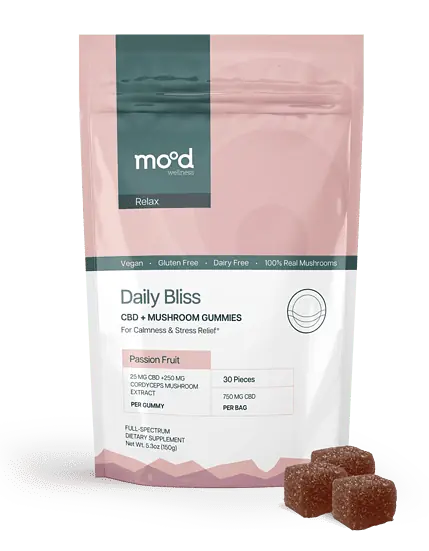
Mood's current mushroom product pages name particular mushrooms and describe extract amounts or fruiting-body material in some formulas. Those are label and product-page declarations. In the public materials reviewed for this project, we did not locate a current, lot-matched DNA identity report that independently verifies each mushroom input or finished gummy.
That absence should remain an absence, not be filled with inference. Public cannabinoid potency reports do not authenticate fungal species. A “no grain/fillers” statement does not establish a DNA method. Shoppers can compare the current functional mushroom collection while asking support which supplier identity records and compositional tests apply to the lot they would receive.
Mushroom supplement DNA testing checklist
Before treating a DNA claim as meaningful, confirm four links:
- Claim: the label uses a scientific name and identifies the material clearly.
- Sample: the report names the input or finished lot actually tested.
- Method: the genetic target, controls and detection limits fit the matrix.
- Boundary: the conclusion stays within identity and does not imply potency, purity or efficacy.
Then look for the complementary evidence the DNA result cannot provide. Verify extract mass and serving units. Check whether marker percentages use an as-is or dry basis. Review separate contaminant panels. Match every report to the relevant lot. A well-documented product may use several modest tests rather than one test asked to prove everything.
Bottom line: DNA verifies mushroom identity, not supplement quality
DNA testing can materially strengthen a mushroom species claim, especially when morphology has disappeared. Its value is highest when the sample is defined, controls work, reference sequences are trustworthy and the report uses appropriately narrow language. It becomes misleading when “DNA verified” is treated as proof of fruiting-body content, extract strength, purity, safety or health effect.
Read DNA evidence as one part of a traceable quality system. Pair identity with manufacturing records, chemistry, contaminant testing and finished-lot matching. If the brand cannot explain what was tested and what the result does not prove, the badge is doing more work than the evidence.
Quick answers
Frequently asked questions about Mushroom Supplement DNA Testing
What is the practical answer about Mushroom Supplement DNA Testing?
DNA testing can materially strengthen a mushroom species claim, especially when morphology has disappeared. Its value is highest when the sample is defined, controls work, reference sequences are trustworthy and the report uses appropriately narrow language. It becomes misleading when “DNA verified” is treated as proof of fruiting-body content, extract strength, purity, safety or health effect.
Which Mood product fits this topic?
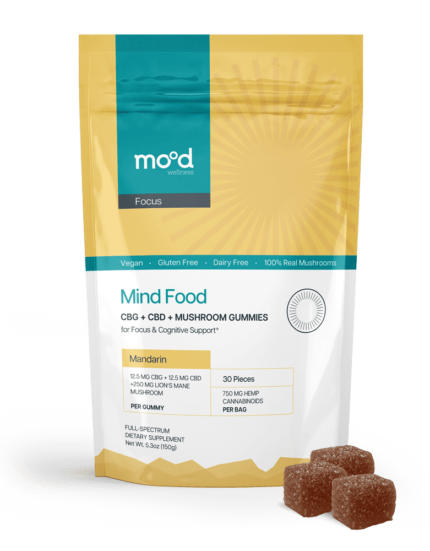
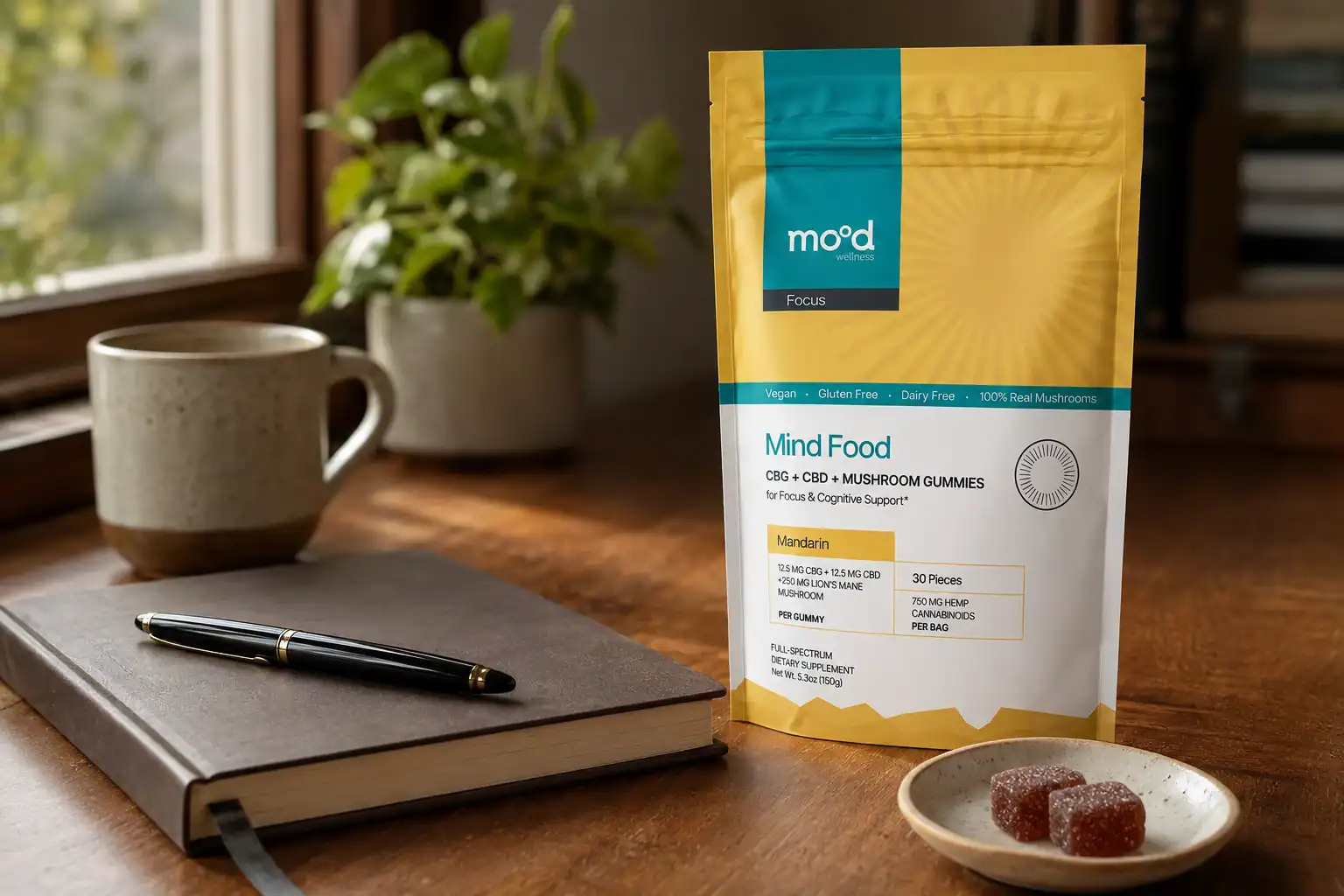
Mind Food is the most relevant Mood option for this topic. Mood Mind Food combines CBD, CBG and Lion’s Mane in a stimulant-free gummy designed for a calm, focused daytime routine.
What should I compare before choosing a product?
Compare the cannabinoid amount per measured serving, the complete ingredient list, spectrum or THC information, current product directions and available batch documentation. The best choice is the formula that fits the goal and is easy to use consistently.
How should I start using a new CBD or cannabinoid product?
Follow the current package directions, choose a low-demand first-use window and keep timing and meal context reasonably consistent. Review medication, pregnancy, liver and impairment considerations with a qualified clinician when relevant.
References
- Raja HA, Baker TR, Little JG, Oberlies NH. DNA barcoding for identification of consumer-relevant mushrooms: A partial solution for product certification? Food Chemistry. 2017;214:383–392. PubMed.
- Loy EH, et al. The ITS region provides a reliable DNA barcode for identifying Reishi/Lingzhi (Ganoderma) from herbal supplements. PLOS ONE. 2020;15:e0236774. PubMed.
- Ivanova NV, et al. Authentication of herbal supplements using next-generation sequencing. PLOS ONE. 2016;11:e0156426. PubMed.
- National Center for Biotechnology Information. Taxonomy resources.