Start with the corrected names
The comparison is often written “Cordyceps militaris vs Cordyceps sinensis” because the older name remains familiar. Modern phylogenetic work reorganized the broad historical concept of Cordyceps. The species formerly called Cordyceps sinensis was transferred to Ophiocordyceps, while C. militaris remains in Cordyceps sensu stricto.
This is more than spelling. A scientific name is the key that connects a product to identification methods, chemistry and research. Searching only the shared common name can blend evidence from different species and commercial materials.
| Field | Cordyceps militaris | Ophiocordyceps sinensis |
|---|---|---|
| Current name | Cordyceps militaris | Ophiocordyceps sinensis |
| Common label wording | Cordyceps militaris, cultivated Cordyceps | Cordyceps sinensis, Ophiocordyceps sinensis, caterpillar fungus |
| Typical commercial material | Cultivated fruiting body, mycelium or extract | Wild fungus-host complex or cultured mycelial products |
| Visual identity alone sufficient? | No | No |
| Chemistry transferable across species? | No | No |
| Human evidence transferable? | Only with a close preparation match | Only with a close preparation match |
If a Supplement Facts panel lists only “Cordyceps mushroom,” ask the manufacturer for the scientific binomial. A common name cannot support a species-specific research claim.

Wild sinensis is not the same as cultured sinensis material
Wild O. sinensis has a specialized lifecycle involving an insect host and is collected from high-altitude habitats. Its scarcity and value have driven research into artificial cultivation and fermented mycelial alternatives. Those alternatives may be useful commercial ingredients, but they should not be represented as identical to the intact wild fungus-host material without evidence.
A “sinensis” label can therefore refer to several things:
- authenticated wild O. sinensis material;
- artificially cultivated O. sinensis;
- fermented or cultured mycelium attributed to O. sinensis;
- a proprietary cultured strain historically marketed using a Cordyceps name; or
- an inadequately identified commercial powder.
Analytical researchers have used mass spectrometry, chemometrics and molecular methods to distinguish wild material from several cultured mycelial materials and related fungi. That work demonstrates why a marketing name is not enough. It does not provide a home test for consumers, and it does not mean every difference is clinically important.
Avoid using rarity as a quality shortcut. Wild origin can create authenticity, sustainability, contamination and traceability questions. A higher price is not proof of identity. A cultivated ingredient can offer a more controlled supply, but cultivation alone does not prove composition or benefit.

Cultivated militaris needs its own material description
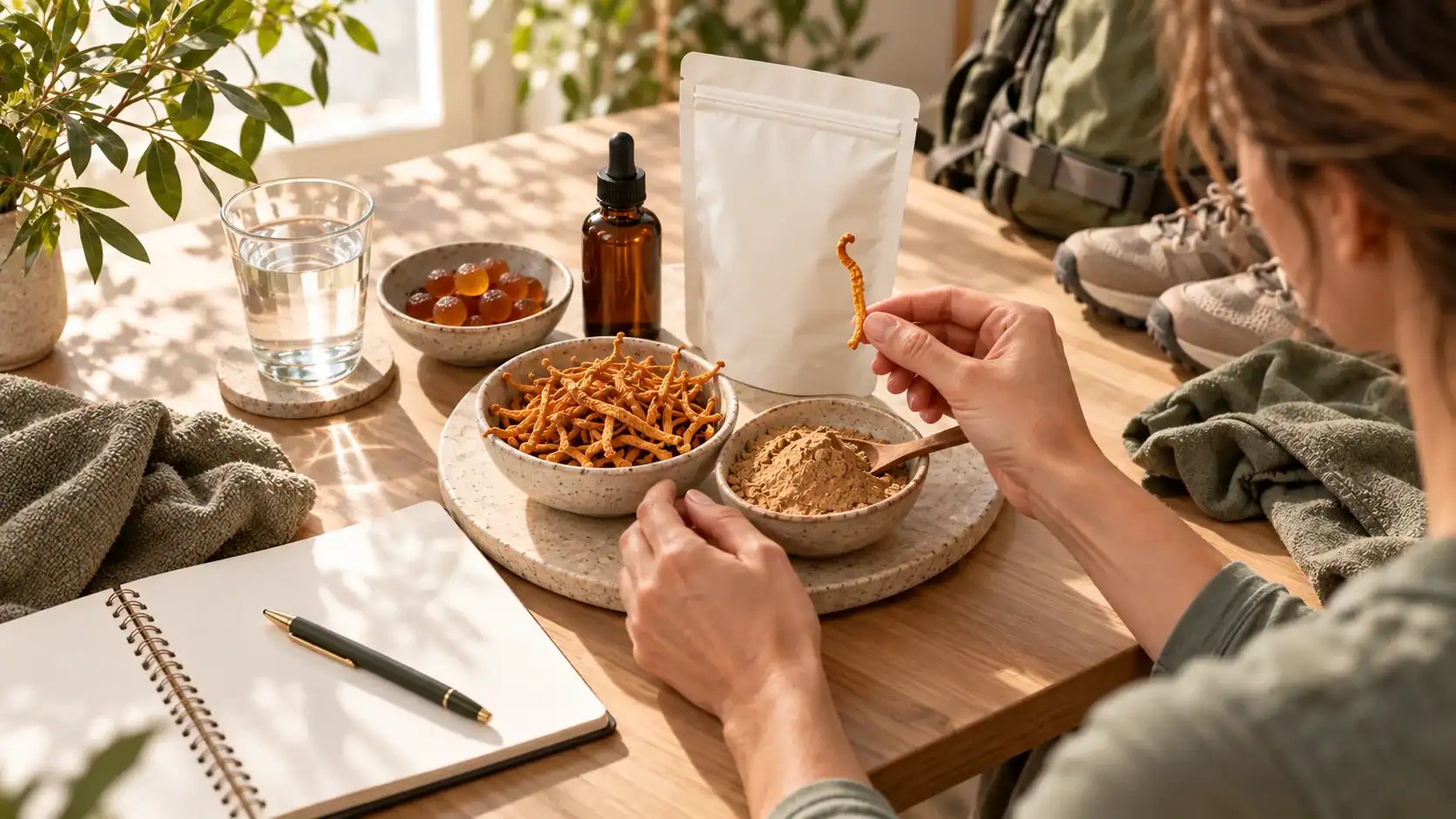
C. militaris can be cultivated to form orange fruiting bodies. Those structures are visually distinctive, but a finished brown powder or gummy cannot be authenticated by color. The label should still state whether the ingredient came from fruiting bodies, mycelium, substrate or a defined mixture.
Cultivation variables matter. Strain, substrate, temperature, light, harvest stage and extraction can change biomass and metabolite production. A photograph of orange fruiting bodies on a brand page does not prove that the tested lot used the photographed crop or retained a specified amount of cordycepin.
For either species, separate these stages:
- Organism identity: Which species or authenticated strain?
- Cultivated material: Fruiting body, mycelium, host complex, substrate or mixture?
- Ingredient processing: Whole powder, concentrated extract or enriched fraction?
- Finished format: Capsule, powder, liquid or multi-ingredient gummy?
- Evidence connection: Which sample and lot were tested?
Mood’s mushroom supplement label guide covers the broader field-by-field workflow. This comparison stays with the species decision.
The chemistry overlaps, but is not equivalent
Comparative metabolomic research has found distinguishable profiles between wild O. sinensis and cultivated C. militaris. Both can contain broad categories such as nucleosides, sterols, carbohydrates and other metabolites, but category overlap does not make the whole materials chemically interchangeable.
A single marker also cannot stand in for the complete metabolome. If one sample contains more cordycepin under one method, that does not prove it is higher in every relevant constituent or produces a better human outcome. Extraction can enrich some components while reducing others.
When a comparison table claims one species has “more actives,” ask:
- Which compounds are included in “actives”?
- Were the samples fruiting bodies, mycelia, wild complexes or extracts?
- Were results reported on dry weight, as-is weight or extract weight?
- Were both samples analyzed by the same method and laboratory?
- How many strains and lots were tested?
- Is the result composition data or human-outcome data?
Without aligned samples and methods, a percentage advantage may be an artifact of mismatched denominators.
Cordycepin is a marker, not a verdict
Cordycepin, or 3′-deoxyadenosine, is widely studied in connection with C. militaris. Production research shows that cultivation conditions can materially affect cordycepin yield. That makes a measured value informative for a specified ingredient, not guaranteed by the species name.
“Contains cordycepin” can mean detected at a low level, quantified in a raw ingredient or standardized to a target. These are different statements. A useful report identifies the analyte, method, unit, reporting basis and sample.
Do not infer:
- a cordycepin amount from an extract ratio;
- a finished-serving amount from a raw-material percentage without matching formulation records;
- superior endurance from a higher laboratory value;
- equivalent composition across all C. militaris strains; or
- absence from O. sinensis based on a simplified marketing chart.
Cordycepin is chemically related to adenosine but is not the same compound. Combining them into one “nucleoside potency” number hides the actual analytes.
Beta-glucan and extract ratio answer other questions
Beta-glucans are polysaccharides, not substitutes for species authentication or cordycepin testing. A beta-glucan result can help characterize a mushroom ingredient when the method, alpha-glucan subtraction and reporting basis are clear. It does not prove C. militaris rather than O. sinensis.
An extract ratio such as 8:1 or 10:1 describes input and output mass under a manufacturing convention. It does not identify retained nucleosides or prove that a serving is eight or ten times stronger. The mushroom extraction-method guide explains process choices; keep them separate from species and marker evidence.
Use four independent columns:
| Evidence column | Example question |
|---|---|
| Identity | Is the species authenticated? |
| Material/process | Fruiting body or mycelium; powder or extract? |
| Composition | What beta-glucan, cordycepin or adenosine was measured? |
| Outcomes | Has this matched preparation been studied in humans? |
A strong result in one column cannot fill blanks in the others.
Human studies do not crown a species winner
Human Cordyceps research includes different species, proprietary cultured materials, blends, doses and endpoints. Reviews that pool them under “Cordyceps” can be useful for mapping a field, but a shopper needs the individual intervention details before applying a finding to a product.
A 2016 randomized double-blind placebo-controlled study enrolled 28 young adults and tested four grams per day of a mushroom blend containing C. militaris. It evaluated high-intensity exercise outcomes after acute and repeated supplementation. Because the intervention was a blend and the sample was small, it cannot establish that all C. militaris extracts work the same way, that C. militaris is superior to O. sinensis, or that a 250 mg gummy reproduces the intervention.
Studies labeled “C. sinensis” require extra scrutiny. Determine whether researchers used wild O. sinensis, a cultured mycelial fermentation product or a proprietary strain. Historical naming and commercial strain terminology can otherwise create a false species match.
For each citation, compare:
- current scientific identity;
- strain or proprietary material;
- fruiting body, mycelium or wild fungus-host complex;
- powder, extract, fermentation product or blend;
- physical amount and measured markers;
- participant population;
- duration and endpoint; and
- funding and conflicts of interest.
If those fields do not align, present the study as background, not product validation or serving guidance.
A label-first comparison worksheet
Build one row from the package and a second from supporting documents. Do not fill missing cells with assumptions.
| Field | Product A | Product B |
|---|---|---|
| Exact scientific species | ||
| Current or historical name | ||
| Strain/source | ||
| Wild or cultivated | ||
| Fruiting body/mycelium/other | ||
| Powder or extract | ||
| Physical amount per serving | ||
| Extraction method and ratio | ||
| Cordycepin result | ||
| Adenosine result | ||
| Beta-glucan method/result | ||
| Ingredient or finished-product sample | ||
| Product lot matched | ||
| Relevant human-study match |
If Product A says C. militaris fruiting-body extract and Product B says cultured O. sinensis mycelium, they differ in both species and fungal material. Comparing only milligrams may be misleading because the ingredients are not compositionally normalized.
What a COA can verify
A certificate of analysis can verify only the panels actually performed on the identified sample. A contaminant report does not automatically authenticate species. A cannabinoid panel for a combined CBD–Cordyceps gummy does not measure mushroom markers unless those analytes appear in the scope.
For a species-specific claim, look for identity evidence suited to the processed material. Molecular methods can be informative, but highly processed extracts may present different analytical challenges than raw tissue. Chemical fingerprinting can distinguish samples under a validated model, but a single peak is not necessarily exclusive to one species.
For a cordycepin claim, require the named analyte, analytical method, value, units and reporting basis. Then verify whether the sample was the incoming ingredient or finished product. The mushroom gummy COA guide explains the product–lot–sample–panel chain.
“Third-party tested” is not a universal panel. Record untested fields as not shown, rather than passing or failing them by inference.
How Daily Bliss fits
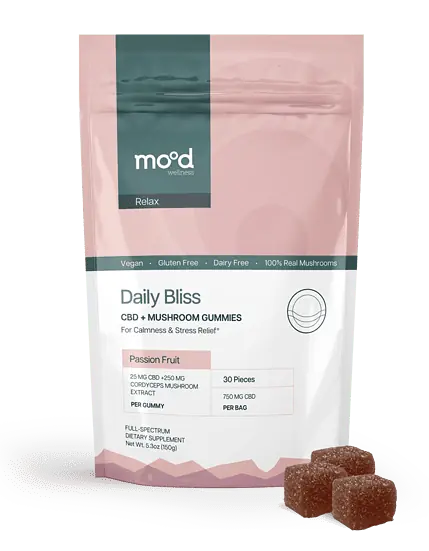
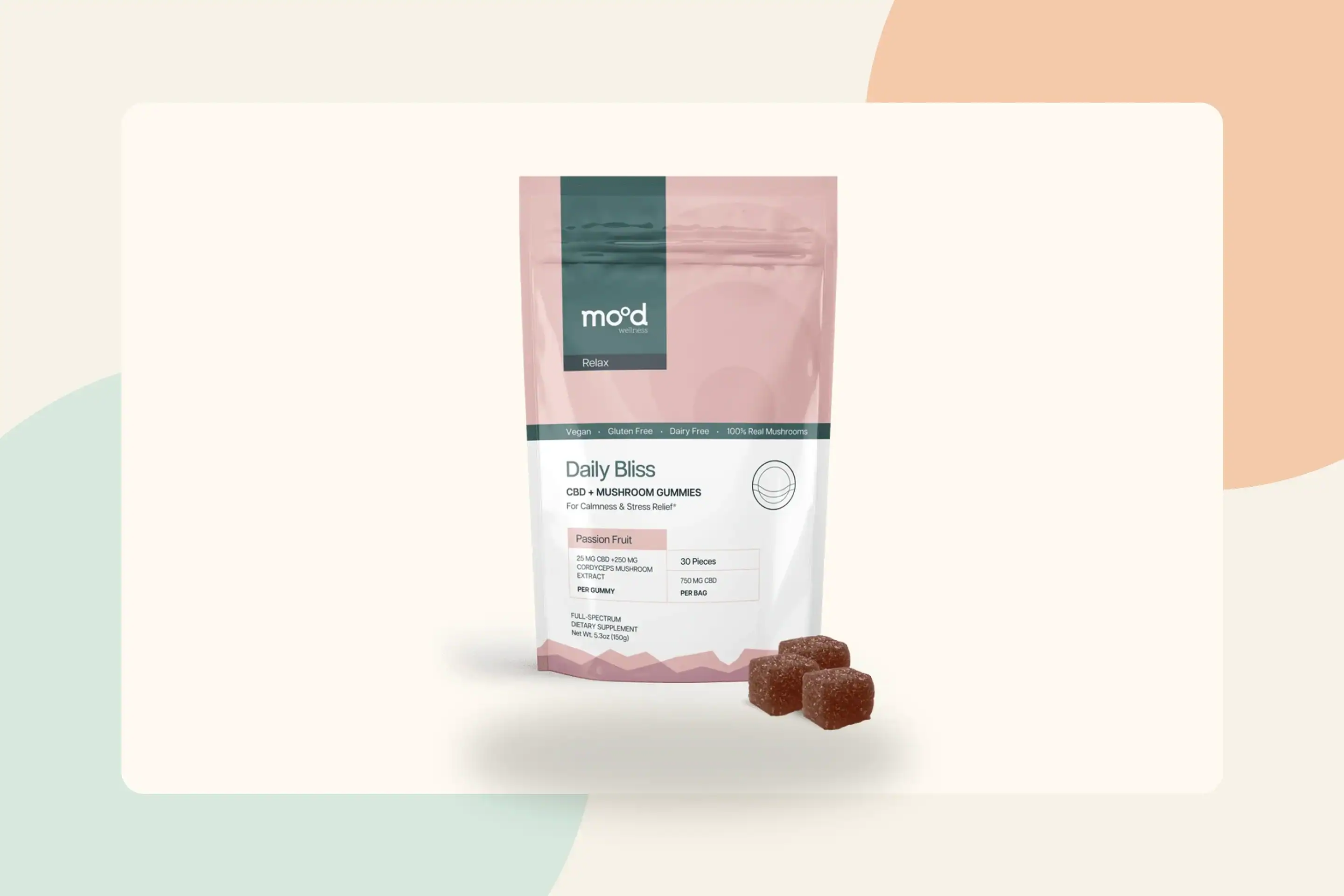
Mood’s current Daily Bliss product page identifies the mushroom as Cordyceps militaris and describes 250 mg fruiting-body extract per gummy. It also states 25 mg CBD per gummy and no mycelium, grain or starch fillers for the Cordyceps material.
Those statements make Daily Bliss a C. militaris combination product, not an O. sinensis product. Its comparison row should read:
- species: C. militaris, according to the current seller page;
- fungal material: fruiting-body extract, according to the page;
- physical amount: 250 mg per gummy;
- other active: 25 mg CBD in a full-spectrum hemp formula;
- cordycepin amount: not verified in the public materials reviewed;
- beta-glucan amount and method: not verified here;
- species-identity result for finished gummy: not verified here; and
- equivalence to a human Cordyceps trial: not established.
Daily Bliss therefore fits a shopper deliberately seeking a labeled C. militaris fruiting-body extract combined with CBD. It is not evidence that C. militaris is universally better, and its 250 mg amount should not be compared directly with grams of another Cordyceps material as though composition were identical.
Mood’s Cordyceps with CBD guide owns the combined-formula evidence and cannabinoid considerations. The gummies-versus-powder guide owns format choice.
Bottom Line: Cordyceps Militaris vs Sinensis
The first difference between C. militaris and O. sinensis is identity. The next differences are material and production: cultivated fruiting body, cultured mycelium, wild fungus-host complex, powder, extract or enriched fraction. Only after those fields align does a marker comparison become meaningful.
Do not buy “Cordyceps” as an unnamed category. Ask for the scientific species, fungal material, cultivation/source, ingredient form, physical amount, named analytical results and lot connection. Treat cordycepin as one measured constituent, not a species-wide potency or clinical score. Match human research to the exact intervention instead of transferring conclusions through a common name.
For Daily Bliss, the reviewed seller evidence supports C. militaris fruiting-body extract at 250 mg per gummy with 25 mg CBD. Species-level identity testing, cordycepin and beta-glucan results were not verified in the public materials reviewed. Keeping those cells blank is the accurate comparison.
Quick answers
Frequently asked questions about Cordyceps militaris vs sinensis
What is the practical answer about Cordyceps militaris vs sinensis?
The first difference between C. militaris and O. sinensis is identity. The next differences are material and production: cultivated fruiting body, cultured mycelium, wild fungus-host complex, powder, extract or enriched fraction. Only after those fields align does a marker comparison become meaningful. Do not buy “Cordyceps” as an unnamed category.
Which Mood product fits this topic?
Daily Bliss is the most relevant Mood option for this topic. Mood Daily Bliss offers a premeasured CBD gummy with functional mushrooms for shoppers who prefer a convenient, positive daily wellness routine.
What should I compare before choosing a product?
Compare the cannabinoid amount per measured serving, the complete ingredient list, spectrum or THC information, current product directions and available batch documentation. The best choice is the formula that fits the goal and is easy to use consistently.
How should I start using a new CBD or cannabinoid product?
Follow the current package directions, choose a low-demand first-use window and keep timing and meal context reasonably consistent. Review medication, pregnancy, liver and impairment considerations with a qualified clinician when relevant.
References
- Sung GH, et al. Phylogenetic classification of Cordyceps and the clavicipitaceous fungi. Studies in Mycology. 2007.
- Hyde KD, et al. Current nomenclatural changes in Cordyceps sensu lato and multidisciplinary impacts. 2018.
- Dong CH, et al. Metabolomic comparison between wild Ophiocordyceps sinensis and artificially cultured Cordyceps militaris. 2018.
- Liu Y, et al. Identification of Ophiocordyceps sinensis and cultured mycelia by mass spectrometry and chemometrics. 2018.
- Gregori A. Artificial cultivation of Ophiocordyceps sinensis: a review. 2013.
- Hirsch KR, et al. Cordyceps militaris and tolerance to high-intensity exercise. Randomized controlled study, 2016.
- Mood Wellness. Daily Bliss CBD + Cordyceps Gummies. Current first-party information reviewed September 10, 2026.
Evidence boundary: Taxonomy and analytical differences do not prove a health advantage. Composition research, preclinical experiments and small trials on specific preparations do not establish that one species is universally superior or validate an unmatched retail product.