
What does “work” mean?
A timing answer is only as good as its endpoint. Before looking at a clock, separate four questions.
First detectable blood concentration
This is a laboratory measurement. It can show that CBD or a metabolite appeared in plasma, but it does not tell a person exactly when a meaningful subjective change began.
Time to maximum concentration
Researchers call this Tmax. It describes when the highest measured blood concentration occurred within a study’s sampling schedule. Tmax can differ across formulations and participants. It is not automatically the moment of strongest felt effect.
First noticeable subjective change
This depends on what the participant is asked to notice and how the outcome is measured. CBD is not expected to create a consistent intoxicating cue. Subtle or absent subjective effects make self-timing imprecise.
A therapeutic outcome
A claim about anxiety, pain, insomnia or another condition requires condition-specific clinical evidence. A retail gummy’s absorption timeline cannot prove efficacy. If a product page says “works in” a fixed number of minutes, ask which outcome, population and study support that statement.

Why gummies do not behave like a stopwatch
After swallowing, the gummy must disintegrate and release its ingredients. CBD then passes through the gastrointestinal system, enters circulation to a variable extent and undergoes metabolism. Each step can introduce variability.
| Variable | What may change | What cannot be concluded |
|---|---|---|
| Meal timing and composition | Measured CBD exposure and variability | That a particular meal guarantees faster or stronger effects |
| Gummy matrix | Ingredient release and absorption conditions | That all gummies behave alike |
| Labeled CBD amount | Potential exposure | A proportional felt effect or clinical benefit |
| Other cannabinoids | Formula and safety context | A predictable entourage or synergy effect |
| Individual physiology | Absorption, distribution and metabolism | A universal onset for age, weight or sex |
| Medications | Exposure or adverse-effect risk | That spacing doses without clinical advice removes interactions |
| Expected outcome | Ability to recognize a change | That lack of sensation means lack of absorption |
The practical result is a distribution of timelines, not a single answer. Even the same person may experience different timing on different days when meals, schedule, product lot or other factors change.
What the CBD pharmacokinetic research actually says
A 2024 systematic review and meta-regression analyzed 112 trial arms from 39 human studies. Oral study doses ranged widely, and the authors identified route, dose, formulation, diet status, sex ratio and study duration as factors associated with pharmacokinetic outcomes. The review provides a broad map of CBD exposure, not a validated timer for commercial gummies.
An earlier systematic review focused on food effects in human CBD studies. It evaluated 44 data sets and found much greater bioavailability in fed participants after dose and weight normalization. Much of the relevant evidence involved Epidiolex, a purified prescription CBD oral solution with refined sesame oil, or other controlled formulations. A candy-like gummy with different ingredients cannot be assumed to match those results.
These reviews support three defensible statements:
- Oral CBD pharmacokinetics are variable.
- Food and formulation can materially affect measured exposure.
- A study’s concentration curve should not be converted into a universal subjective-onset promise.
They do not support a precise “CBD gummies work in X minutes” claim for every product and person.

Peak concentration is not felt onset
Suppose a study reports a median Tmax several hours after an oral CBD solution. That number is often copied into consumer content as if it were a felt-effect clock. The translation fails for several reasons.
First, Tmax is the highest sampled plasma concentration, not necessarily the first detectable concentration. Second, a participant can report a change before, near or after Tmax, or report no noticeable change. Third, clinical and subjective outcomes can follow different time courses than plasma CBD. Fourth, study sampling occurs at scheduled intervals, so the exact peak may fall between measurements.
Finally, a pharmaceutical oral solution is not a gummy. The carrier, excipients, dissolution and manufacturing controls differ. A responsible article can use pharmacokinetics to explain variability but should not imply that a retail gummy reproduces a drug-study curve.
The food question
CBD is lipophilic, meaning it interacts with fats. Controlled oral-formulation studies have reported higher CBD exposure in fed conditions, particularly with higher-fat meals. That makes meal context a plausible source of within-person timing and exposure differences.
It does not create a universal instruction to take a retail gummy with a specific meal. Food-effect magnitude depends on the formulation and study conditions, and greater exposure can also affect safety and interaction risk. Consistency with the current product label is more defensible than improvising meal strategies from a pharmaceutical study.
When tracking a product for discussion with a clinician, record whether it was taken fasting, with food or after a meal. Treat that as context, not as a promise of a better result.
A safer reassessment framework
The goal is not to calculate a dose. It is to prevent an uncertain timeline from turning into unplanned stacking.
Before taking the gummy
- Read the serving size and directions on the current package.
- Record CBD per serving, not only per container.
- Identify CBN, CBG, THC, melatonin, mushrooms or other added actives.
- Check whether the formula is full-spectrum, broad-spectrum or isolate.
- Open the batch report and match the product and lot where possible.
- Review medication and health questions with a qualified professional.
- Avoid starting before driving, work at height or another safety-sensitive activity.
At the time of use
Record the clock time, labeled serving used, meal context and other relevant substances. Do not estimate the amount from package color, gummy size or a previous formula.
During the waiting period
Do not treat an online onset range as a redosing instruction. Follow the label’s repeat-use directions. If none are clear, pause rather than layering another serving onto an uncertain first exposure.
If the product contains THC or other potentially sedating ingredients, delayed stacking can increase impairment. Alcohol and medications can add separate risks.
Afterward
Record what was observed without forcing a conclusion: no clear change, possible change, unwanted effect, or an outcome worth discussing with a clinician. One experience cannot establish product efficacy, and a highly variable pattern may signal that the formula, context or expectation is not well defined.
How to read a CBD gummy label for timing questions
Timing begins with identity. A package should let the reader answer:
| Label question | Why it matters |
|---|---|
| How many gummies equal one serving? | One piece and one serving may not be the same |
| How much CBD is in that serving? | Container totals can mislead |
| Is the amount CBD or total hemp extract? | The terms are not interchangeable |
| What other cannabinoids are present? | CBN, CBG and THC change the formula question |
| Are there additional actives? | Melatonin, mushrooms and botanicals have separate evidence and safety issues |
| What does the label say about repeat use? | It is the first source for the product-specific interval |
| Is a batch number visible? | It connects the package to testing documentation |
| Does the certificate match? | A different product or old batch cannot verify this package |
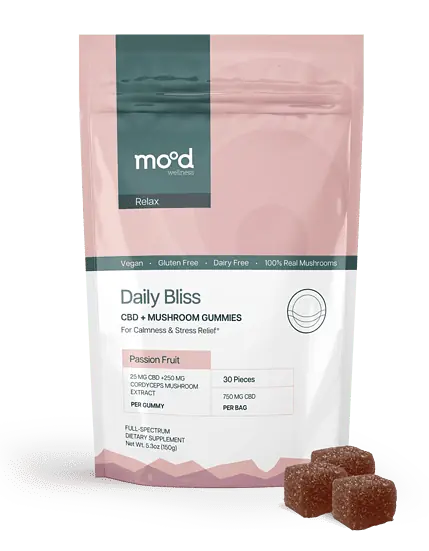
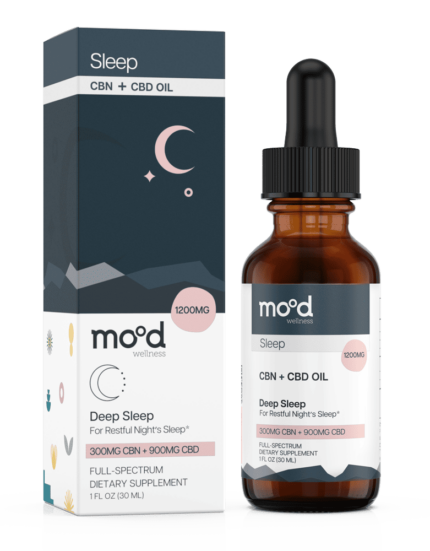
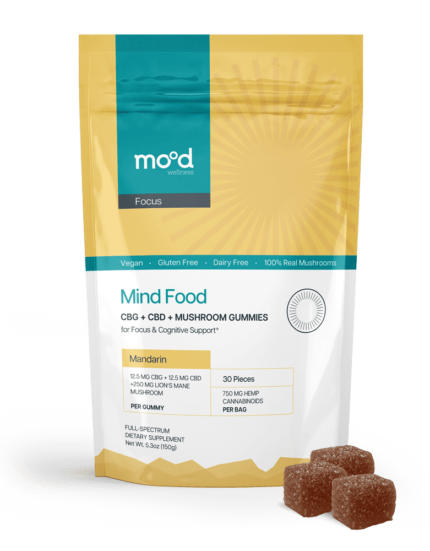
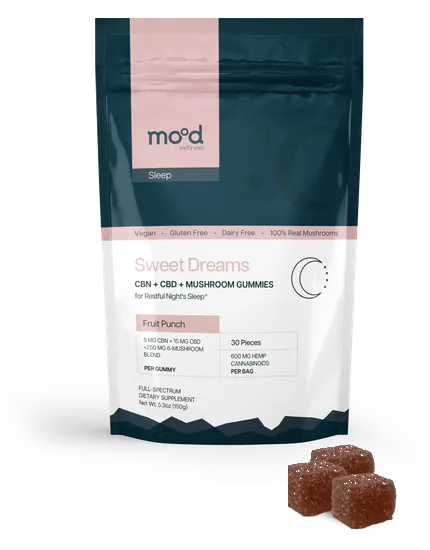
Mood’s current gummy category lists formulas with different cannabinoid and mushroom combinations. A Daily Bliss, Mind Food or Sweet Dreams gummy should not inherit another formula’s timing claim merely because all three contain CBD. Check the current CBD gummy collection and then open the selected product’s label.
Full-spectrum, broad-spectrum and isolate timing claims
These terms describe composition, not a validated onset hierarchy.
Full-spectrum products contain a wider range of hemp compounds and may contain trace THC. Broad-spectrum products are positioned without measurable THC or with THC removed, but the batch report is needed to evaluate that claim. Isolate products use a more purified single cannabinoid.
No label category automatically means “faster.” Formulation science, serving matrix and product-specific evidence matter. Mood’s full-spectrum, broad-spectrum and isolate guide explains the compositional distinction.
For full-spectrum gummies, remember that “less than 0.3% THC” does not mean THC-free and cannot guarantee a negative drug test. A delayed intoxicating effect is more safety-relevant than a delayed subtle CBD effect, so avoid stacking and safety-sensitive tasks.
What if nothing feels noticeable?
CBD does not provide a reliable sensory marker. Lack of euphoria, sedation or a dramatic shift is not proof that the label amount was inactive. It may also mean the expected outcome was vague or unsupported.
Do not answer uncertainty by escalating repeatedly within the same session. Instead:
- Check that the correct product and serving were used.
- Review the current directions and warnings.
- Confirm whether other active ingredients or THC are present.
- Record timing and meal context.
- Contact the manufacturer about unclear label instructions.
- Ask a clinician or pharmacist about repeated use, interactions or a health outcome.
If the goal is treatment of a symptom or condition, the right question is not merely when the gummy “kicks in.” It is whether that product and use have appropriate evidence and are safe in the person’s context.
When an unwanted effect appears
Stop and assess safety. Do not drive. Move away from heat, water, machinery or other hazards. If severe or concerning symptoms occur, seek urgent medical advice or contact the appropriate poison-control or emergency service.
Keep the package available so a professional can see the ingredients, labeled amount and lot number. Note other substances taken, including alcohol, prescriptions, over-the-counter products and supplements.
Product complaints should include the batch, purchase source, use time and observed issue. A report such as “it worked too fast” is less useful than a factual chronology.
Product quality can imitate a timing problem
If labeled content varies or a serving is not uniform, perceived timing may vary for reasons unrelated to normal physiology. A certificate of analysis can help verify identity and potency, but only when it matches the product and batch.
Check product name, batch or lot, report date, sample type, measured CBD and THC, and which contaminant panels were actually run. A potency-only report does not establish pesticide, solvent, metal or microbial testing. Mood’s CBD COA guide explains the workflow.
Public reports can also be old. Treat a dated report as evidence about the tested sample, not every future package.
How this page differs from a fastest-format comparison
Mood already has a guide comparing the relative speed of oils, vapes and gummies. That page owns the cross-format question: what form of CBD works fastest.
This page owns a narrower job. It helps someone who has already chosen a gummy understand why a precise onset prediction is weak, how to distinguish pharmacokinetic and subjective endpoints, and how to avoid redosing based on a generic timer. Keeping those jobs separate prevents two pages from competing for the same search intent.
Safety and interaction boundaries
FDA materials identify unresolved CBD risks, including possible liver effects, medication interactions and concerns for vulnerable populations. Most nonprescription CBD gummies are not FDA-approved to diagnose, treat, cure or prevent disease.
Ask a qualified healthcare professional before use if you take prescription or over-the-counter medication, have a liver or other medical condition, are pregnant or breastfeeding, or are preparing for surgery. Mood’s CBD drug-interaction guide provides questions to take to a pharmacist or clinician.
Children and pets require separate medical and veterinary guidance. Keep gummies away from them; candy-like presentation increases accidental-ingestion risk.
A concise timing checklist
Before relying on any onset statement, ask:
- Is the statement about blood concentration, a subjective effect or a clinical outcome?
- Was the exact gummy studied in humans?
- Were the dose, food condition and formulation reported?
- Does the current label define serving size and repeat-use instructions?
- Does the batch report match the package?
- Are THC, CBN, CBG, melatonin or mushroom extracts present?
- Could medication, alcohol or another product change risk?
- Would waiting or seeking advice be safer than taking more?
For a broader first-purchase workflow, see Mood’s CBD beginner’s guide.

Bottom Line: How Long Do CBD Gummies Take to Work
CBD gummies are a convenient, premeasured format that works best when the routine allows time for digestion. Onset varies with food, formulation, serving size and individual response, so use the labeled serving consistently and avoid judging the product too early. Most shoppers should plan ahead rather than expect an immediate effect, especially when taking a gummy with a meal.
Use the current product label, not an internet countdown. Record the serving, time, food context and other ingredients. Do not take another serving simply because a predicted window has passed. If the label is unclear or the question involves medication, a health condition or repeated use, ask the manufacturer and a qualified healthcare professional.
The most responsible answer to “how long?” is a framework: verify the product, define the outcome, expect variability and avoid turning uncertainty into accidental stacking.
Quick answers
Frequently asked questions about How Long Do CBD Gummies Take to Work? A Safer Timing Guide
What is the practical answer about How Long Do CBD Gummies Take to Work? A Safer Timing Guide?
CBD gummies are a convenient, premeasured format that works best when the routine allows time for digestion. Onset varies with food, formulation, serving size and individual response, so use the labeled serving consistently and avoid judging the product too early. Most shoppers should plan ahead rather than expect an immediate effect, especially when taking a gummy with a meal.
Which Mood product fits this topic?
Daily Bliss is the most relevant Mood option for this topic. Mood Daily Bliss offers a premeasured CBD gummy with functional mushrooms for shoppers who prefer a convenient, positive daily wellness routine.
What should I compare before choosing a gummy?
Compare the cannabinoid amount per measured serving, the complete ingredient list, spectrum or THC information, current product directions and available batch documentation. The best choice is the formula that fits the goal and is easy to use consistently.
How should I start using a new CBD or cannabinoid product?
Follow the current package directions, choose a low-demand first-use window and keep timing and meal context reasonably consistent. Review medication, pregnancy, liver and impairment considerations with a qualified clinician when relevant.
Sources
- Moazen-Zadeh E, et al. “Pharmacokinetics of Cannabidiol: A Systematic Review and Meta-Regression Analysis.” Cannabis and Cannabinoid Research. 2024. View source
- Silmore LH, et al. “Food Effects on the Formulation, Dosing, and Administration of Cannabidiol (CBD) in Humans: A Systematic Review of Clinical Studies.” Pharmacotherapy. 2021;41(4):405–420. View source
- U.S. Food and Drug Administration. Consumer CBD safety information. View source
- Mood Wellness. Current CBD gummy category, product pages and lab-results index. Checked September 9, 2026.