Start with the definition
What the comparison really means
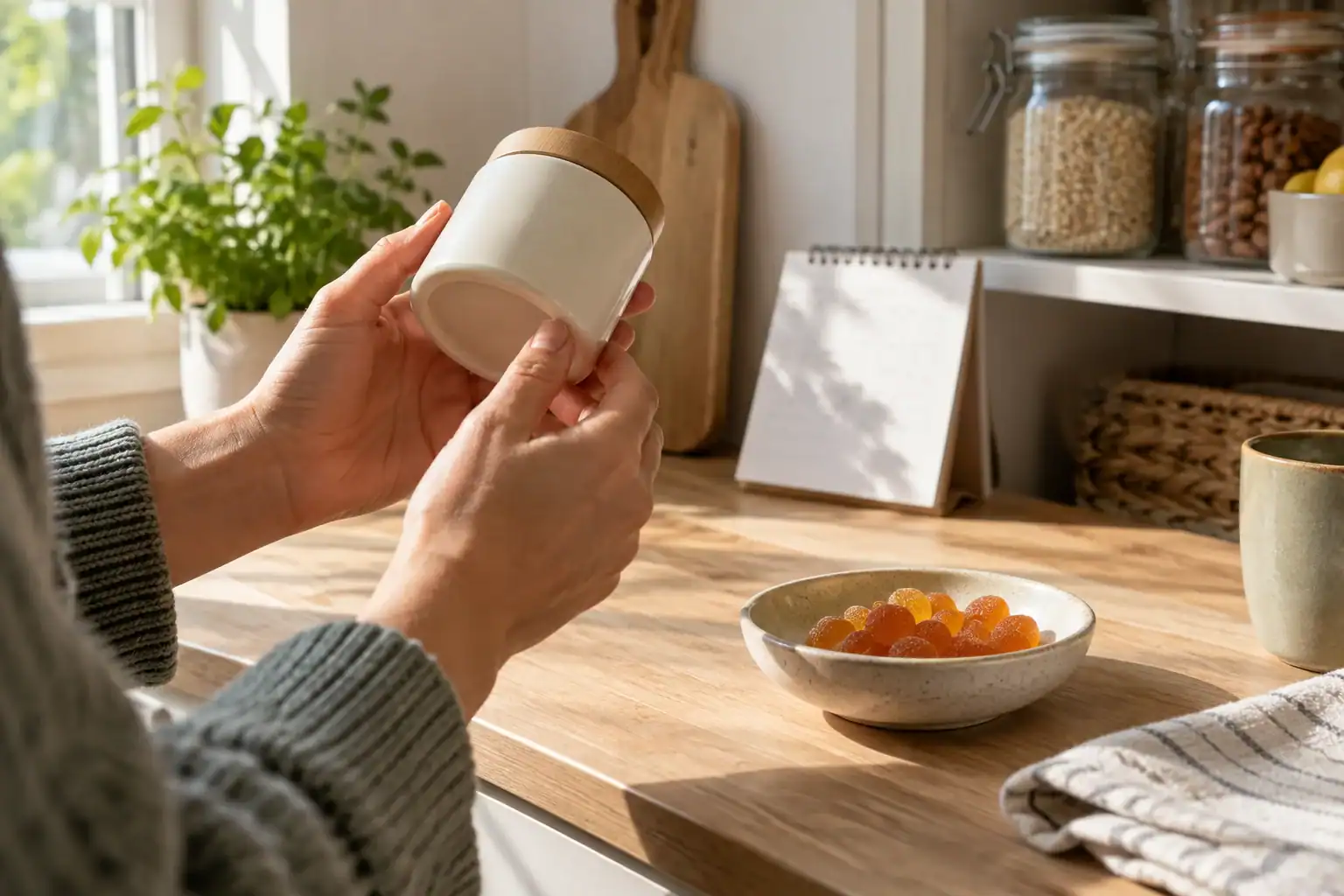
Yes. CBD gummies can expire or move past their best-quality period. Heat, light, oxygen, humidity and repeated handling can affect cannabinoids, flavor, texture and microbial stability. Follow the manufacturer’s date and storage directions, and discard gummies with a damaged seal, unusual odor, visible growth or unexplained changes.
A search for CBD gummy expiration and freshness often begins with a format name or a claim on the front panel. A sound comparison instead follows the printed date, package condition and storage history together. That shift matters because two products that look similar at first glance can disclose different ingredients, serving definitions and verification records.
This page has a deliberately narrow role in Mood’s content architecture. It helps readers compare likely acceptable quality with replace or discard; it does not replace the broader ingredient guides linked below. Keeping that boundary prevents several articles from competing for the same search intent.
Side-by-side decision
Likely acceptable quality vs. Replace or discard
| Question | Likely acceptable quality | Replace or discard |
|---|---|---|
| Package | Seal intact; date and lot readable | Seal damaged or container compromised |
| Appearance | Expected color and dry surface | Growth, unexplained spotting or melting |
| Odor | Normal product aroma | Rancid, sour or unfamiliar odor |
| History | Stored as directed | Left in heat, moisture or unknown conditions |
Use this table to organize a properly stored gummy and one exposed to heat, air or moisture, then verify best-by or expiration date, lot number, serving potency, seal condition and storage directions on the current package. The columns describe practical differences, not a universal winner; formulation and batch evidence can outweigh the format category.
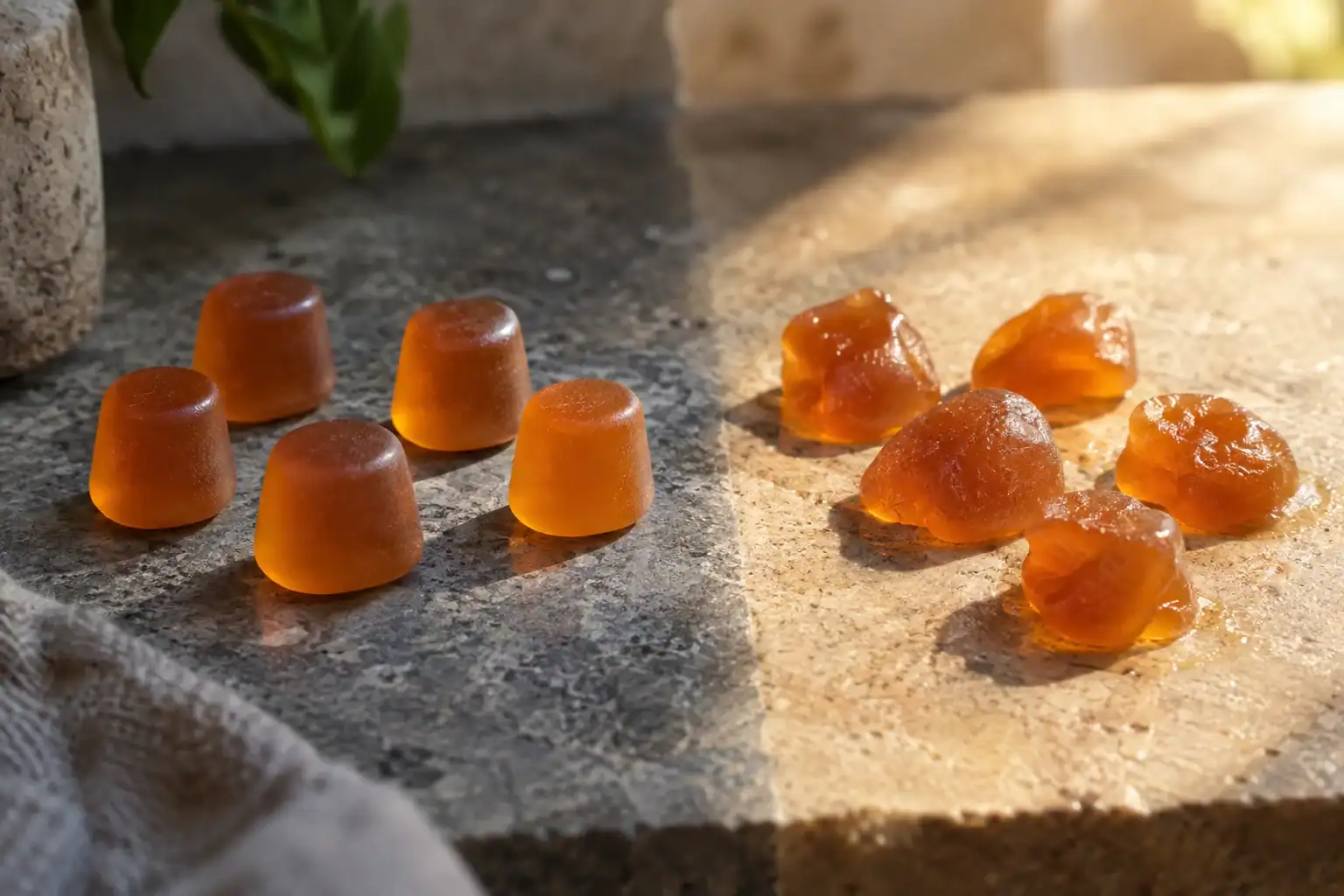
From search query to purchase
A practical decision path for do CBD gummies expire
Define the purchase question before opening product tabs. For CBD gummy expiration and freshness, decide whether the priority is the printed date, package condition and storage history together. Write that priority in one sentence and reject any candidate whose label cannot answer it. This creates a reproducible comparison and prevents a familiar format or bold front-label phrase from deciding the purchase by default.
Begin with two candidates, one representing likely acceptable quality and one representing replace or discard. Copy the serving size, named active material and every disclosed amount into the same worksheet. Then record the source or extract description, additional actives, THC when applicable, allergens, sweeteners and storage directions. Empty fields are evidence too: they show which questions the label does not answer.
Use the first quality check, “Distinguish dates,” before comparing price. A best-by date usually addresses expected quality under stated storage, while an expiration instruction may carry a firmer manufacturer boundary. Wording varies. The next check, “Limit light and air,” prevents a common shortcut. Light and oxygen can contribute to cannabinoid and flavor degradation. Repeatedly opening or transferring gummies increases exposure. These two checks remove many weak options before subjective preferences such as flavor, packaging or online reviews enter the decision.
Compare cost only after normalizing the serving. For CBD gummy expiration and freshness, record purchase date, lot, printed date, opening date, storage location and any change in smell, texture, color or package integrity, then calculate price per complete labeled serving. A lower package price is not better value when the relevant amount is hidden, the serving requires multiple pieces, or documentation cannot be tied to the current lot.
Finally, identify the next-best alternative. Someone choosing likely acceptable quality for flexibility may still prefer replace or discard for travel; someone prioritizing a short ingredient list may make the opposite choice. Recording the tradeoff makes the decision reversible and reduces the urge to defend a purchase after the fact. It also gives a clear reason to stop using a product when it does not meet the original goal.
Keep a dated record of purchase date, lot, printed date, opening date, storage location and any change in smell, texture, color or package integrity. Save the label and matching batch document used on purchase day because formulas, serving directions and laboratory links can change. Recheck the current version before reordering; the product name alone does not prove that a later lot is identical.
Decision rule:
For CBD gummy expiration and freshness, prefer the option that discloses best-by or expiration date, lot number, serving potency, seal condition and storage directions and supports the intended routine with the fewest assumptions. Treat missing fields as unresolved questions, not as evidence of quality.
Ten checks that change the decision
How to compare products without guessing
1. Distinguish dates
A best-by date usually addresses expected quality under stated storage, while an expiration instruction may carry a firmer manufacturer boundary. Wording varies.
What to do: Follow the label rather than applying a universal shelf-life number from another brand.
2. Expect potency drift
Cannabinoids can degrade with environmental exposure even when a gummy still looks edible. Appearance cannot verify the remaining CBD amount.
What to do: Do not use color or taste as a potency test.
3. Control heat
Cars, windowsills and hot delivery areas can soften or melt gummies and accelerate chemical change. Cooling a melted product does not reverse its history.
What to do: Replace a product after substantial heat exposure when quality cannot be verified.
4. Control humidity
Moisture can make gummies sticky, dissolve surface coatings and support microbial problems after packaging is opened.
What to do: Close the container fully and keep wet hands or utensils out.
5. Limit light and air
Light and oxygen can contribute to cannabinoid and flavor degradation. Repeatedly opening or transferring gummies increases exposure.
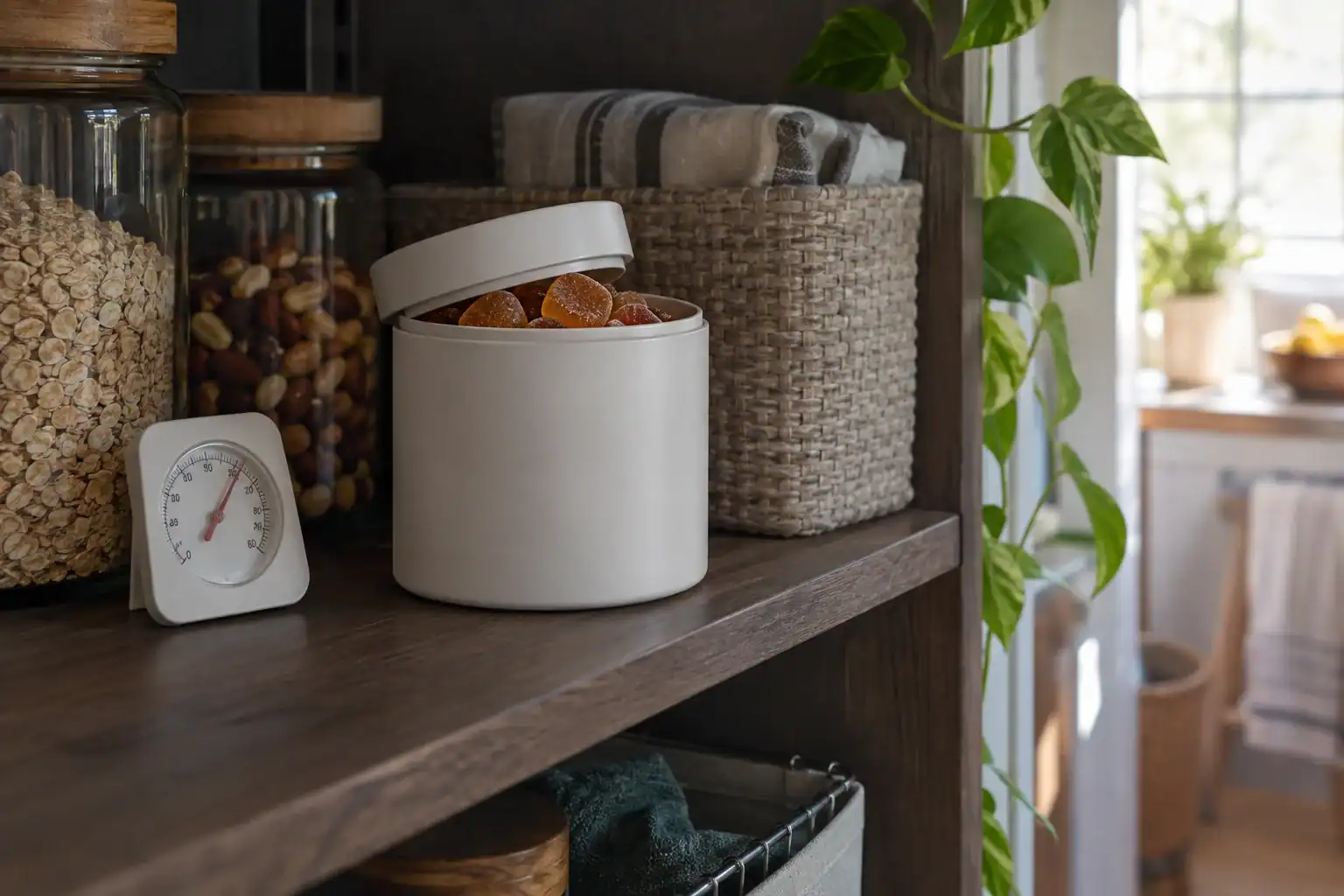
What to do: Keep the original package closed in a dark cabinet unless the label directs otherwise.
6. Use a sensory check
Unexpected odor, discoloration, visible growth, leaking, extreme hardening or an unfamiliar surface change are reasons not to consume the gummy.
What to do: Do not taste a product to investigate suspected spoilage.
7. Keep batch information
The lot number helps a manufacturer answer stability questions and communicate recalls. Loose gummies lose that context.
What to do: Retain the labeled package until the product is finished.
8. Protect children and pets
CBD gummies can resemble ordinary candy, and full-spectrum products may contain THC. Casual pantry storage creates an avoidable ingestion risk.
What to do: Use the original child-resistant package in a locked or inaccessible place.
9. Handle travel carefully
A daily pill organizer may be convenient but removes labeling and child resistance and can expose gummies to heat.
What to do: Transport only the needed amount where lawful and preserve identifying information.
10. Know when not to guess
Unknown age, broken seals, marketplace resellers and missing lot data make freshness difficult to assess.
What to do: Contact the manufacturer or replace the product rather than relying on an internet smell test.
Evidence boundary
What research can and cannot tell you
A printed date is a manufacturer quality marker, not proof that every gummy changes at the same moment; stability depends on formulation and storage. Read each study by preparation, amount, population, duration and measured outcome before applying it to a retail product. A shared ingredient name does not establish that the products are clinically equivalent.
The most defensible use of evidence here is to narrow the decision: verify best-by or expiration date, lot number, serving potency, seal condition and storage directions, identify uncertainty and avoid claims the finished product has not earned. Mechanism, animal data and marketing language cannot substitute for a relevant human outcome or a matching batch record.
Mood evidence rule:
Use the evidence to test the assumptions behind CBD gummy expiration and freshness. It can support better label questions, but it cannot promise a personal result or turn a consumer product into a treatment.
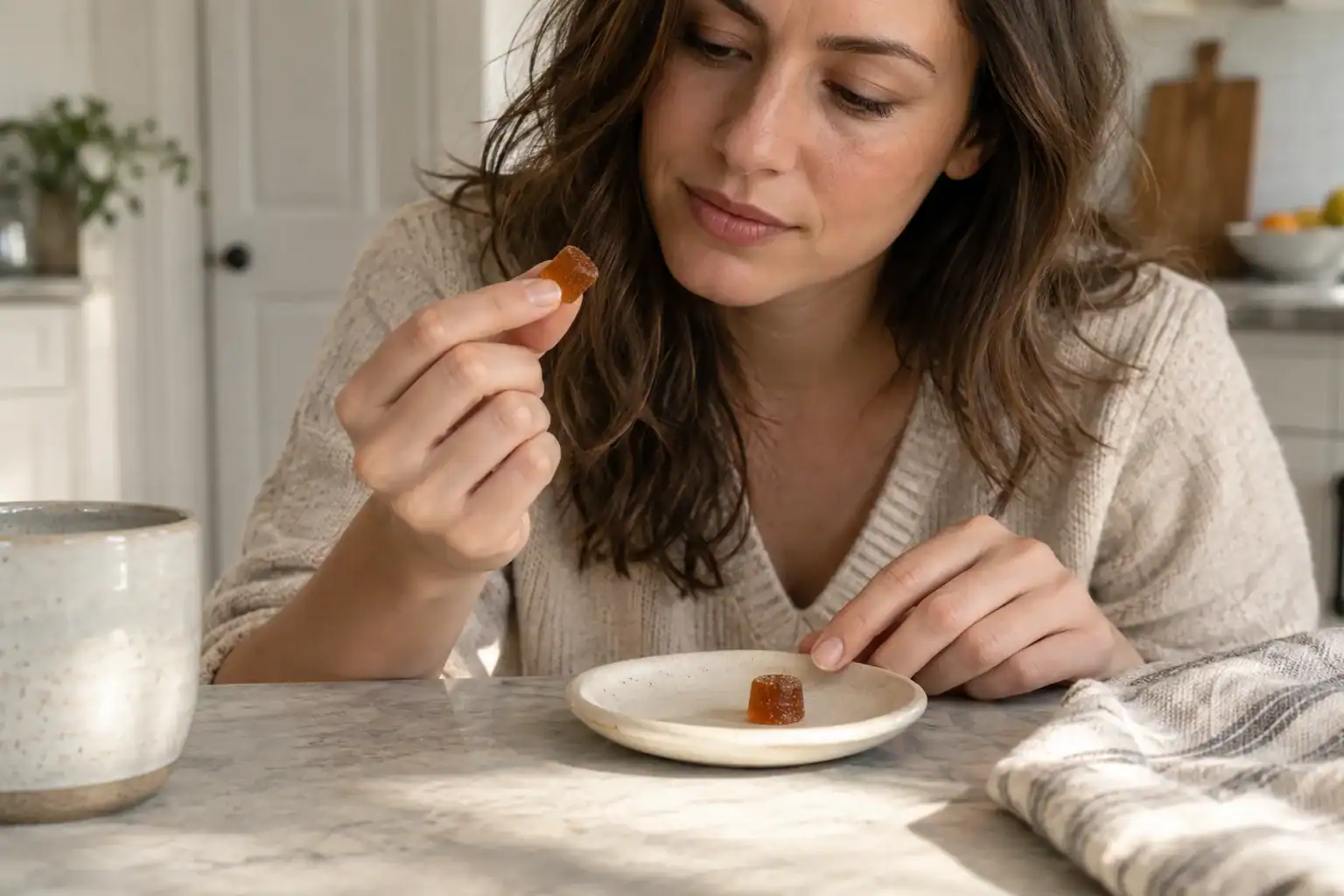
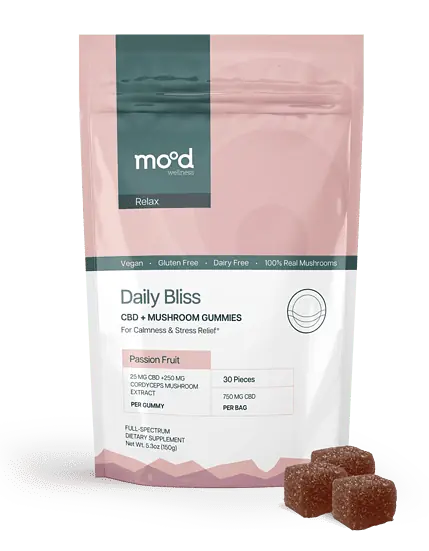
Shop with the framework: If replacement is appropriate, start with Mood’s CBD gummies collection and compare the current package date, serving, storage directions and lab report before ordering. A fresh purchase does not correct unsafe storage after delivery.
Label and batch check
Read the finished product, not just the headline ingredient
Start with the complete serving and transcribe best-by or expiration date, lot number, serving potency, seal condition and storage directions. Do not mix bottle totals, per-piece amounts and per-serving amounts in the same comparison. If an active blend hides individual quantities, record the disclosure as incomplete rather than estimating it.
Match the exact product and lot to its current documentation. For CBD gummy expiration and freshness, the most relevant checks include purchase date, lot, printed date, opening date, storage location and any change in smell, texture, color or package integrity. Potency or composition and contaminant screening answer different questions, so confirm what each report actually tested.
For CBD gummy expiration and freshness, compare the document with the package line by line: product name, lot, dates, units and relevant measurements should agree. A PDF link by itself is not verification. Mood’s certificate-of-analysis guide provides the complete checking workflow.
Make the choice observable
Use a simple personal evaluation
- Define one goal. Choose a practical outcome that can be observed without diagnosing a condition.
- Keep the product constant. Do not alternate formulas during the first comparison.
- Follow the label. Do not copy a research dose or another person’s routine.
- Keep context stable. Food, caffeine, bedtime and activity can change the experience.
- Record unwanted effects. More is not the solution to dizziness, excessive drowsiness, nausea or discomfort.
Make the comparison observable by recording purchase date, lot, printed date, opening date, storage location and any change in smell, texture, color or package integrity. Keep other variables as stable as practical and judge the result against package integrity and sensory changes without taste-testing a suspicious product. Stop rather than escalating when an unwanted effect or a quality concern appears.

Safety and limits
When comparison becomes a health question
Move beyond ordinary shopping advice when CBD gummy expiration and freshness intersects with pregnancy, breastfeeding, childhood use, surgery, liver disease, a significant symptom or prescription medication. A clinician or pharmacist can evaluate the individual risks that a general label guide cannot.
The topic-specific cautions are child access, moisture, heat damage, mold indicators and uncertain potency. Do not drive or perform safety-sensitive work until the effect of a cannabinoid-containing formula is known, and do not assume a hemp label guarantees a negative drug test.
Keep CBD gummies in their original labeled container, secure the closure and follow the product-specific directions. Store them away from children and pets. In the United States, call Poison Control at 1-800-222-1222 after a suspected accidental ingestion and use emergency services for severe symptoms.
Quick answers
Do CBD Gummies Expire? Storage and Freshness Guide questions
Is do CBD gummies expire a medical recommendation?
No. The comparison of CBD gummy expiration and freshness is an educational label and format guide, not a diagnosis, treatment recommendation or personalized serving instruction.
What should I compare first?
Start with best-by or expiration date, lot number, serving potency, seal condition and storage directions. Those fields reveal whether two candidates can be compared fairly before price, flavor or marketing claims enter the decision.
Does a higher number mean a better product?
No single number decides quality. Interpret it alongside the printed date, package condition and storage history together, the complete serving and the documentation for the current lot.
How can I verify quality?
Verify purchase date, lot, printed date, opening date, storage location and any change in smell, texture, color or package integrity. The product name, lot, units and report scope should connect the package in hand to the evidence being reviewed.
When should I ask a professional?
Ask a qualified clinician or pharmacist when child access, moisture, heat damage, mold indicators and uncertain potency or another personal health factor changes the risk. Seek urgent care for severe symptoms.
Evidence and transparency
Sources and editorial review
- CBD beginner information
- How to read a CBD COA
- FDA CBD consumer update
- CDC cannabis poisoning information
Commercial disclosure: Mood Wellness publishes this guide and sells cannabinoid and functional-mushroom products. Product examples are identified as Mood products and are not evidence of a medical outcome.
Educational information only. This article is not medical advice and does not recommend changing a prescription or treating a health condition.
Written by Mood MagazineEvidence and product information checked September 9, 2026.