
Kosher and vegan compared
| Question | Vegan | Kosher |
|---|---|---|
| Main concern | Animal-derived ingredients under the stated vegan standard | Ingredients and production under Jewish dietary law and the certifier's standard |
| Government definition in US food rules | FDA regulations do not currently define the term | Not a single federal food-composition standard; private kosher agencies certify products |
| Typical evidence | Ingredient list, manufacturer policy or vegan certification | Recognizable supervision mark, certificate or certifier directory entry |
| Equipment/process review | Depends on the vegan standard or manufacturer policy | Commonly part of product- and facility-specific certification |
| May allow animal-derived material? | Ordinarily no | Some animal-derived materials may be kosher when they meet applicable rules |
| Does it prove CBD potency? | No | No |
| Does it prove allergen-free status? | No | No |
The simplest mental model is two separate checkboxes. Do not put kosher and vegan on a single “strictness” ladder. They ask different questions and can reach different answers about the same formula.
What vegan tells you
FDA's draft guidance on plant-based food labeling states that federal regulations do not currently define “vegan.” It describes the term's common use as communicating that a food contains no animal-derived products.
Because there is no single federal vegan composition standard, scope matters. A company may focus on intentionally added ingredients. A private certifier may also address processing aids, supplier documentation, shared equipment or animal testing. Shoppers with strict preferences should read the actual standard rather than assuming every vegan mark follows identical rules.
For gummies, the obvious first check is gelatin. A fuller review also considers:
- beeswax or shellac-based glaze;
- carmine or cochineal color;
- dairy or egg derivatives;
- flavor constituents and carriers;
- vitamin sources;
- sugar-processing policy; and
- cross-contact controls.
Those details belong to the dedicated vegan CBD gummy ingredient checklist. For this comparison, the essential point is that vegan status addresses animal-derived sourcing, not kosher supervision.
What kosher tells you
Kosher certification evaluates more than whether the obvious ingredients come from plants. A certifier may review raw materials, suppliers, production lines, equipment, cleaning procedures, labels and ongoing changes.
EarthKosher describes certification as a product- and facility-specific process covering ingredients, suppliers, equipment, production controls and labeling. The exact certificate therefore matters more than a loose brand-level statement.
For a CBD gummy, kosher review may need to address:
- hemp extract and carrier ingredients;
- sweeteners, acids and gelling agents;
- colors and flavors;
- mushroom or botanical extracts;
- release agents and processing aids;
- shared equipment; and
- the manufacturing facility.
This does not make a kosher certificate a cannabinoid laboratory report. The certificate answers a religious-dietary compliance question. A certificate of analysis answers a separate analytical question about the tested sample.
Mood's kosher CBD guide and certificate directory owns the broader product-by-product kosher workflow.
Why kosher does not automatically mean vegan
Kosher rules can permit animal-derived ingredients when their source and processing meet the relevant requirements. The clearest gummy example is gelatin.
Some kosher gummies may use certified fish or bovine gelatin. OU Kosher separately explains why a particular certified beef gelatin can be classified as pareve under its rulings. That example should not be generalized to every gelatin or certifier, but it demonstrates the category distinction: animal-derived and kosher are not mutually exclusive.
Therefore:
- “kosher gelatin” can still be non-vegan;
- “pareve” does not necessarily mean free of every animal-derived ingredient;
- a kosher symbol alone does not answer a vegan shopper's sourcing boundary; and
- the complete vegan claim or standard still needs review.
Do not try to identify gelatin from texture. Pectin gummies can be firm; gelatin gummies can be soft. Read the ingredient declaration and request clarification when the gelling system is unnamed.

Why vegan does not automatically mean kosher
A vegan formula may contain only plant- and mineral-derived ingredients yet lack kosher certification. The issue is not that plants are presumed unacceptable. The missing evidence may concern suppliers, flavor systems, processing aids, shared equipment or rabbinic supervision.
For example, “natural flavor” may be compatible with a brand's vegan policy, while a kosher consumer still needs the flavor supplier and production process to fall within an accepted kosher program. A vegan gummy could also be produced on equipment whose status has not been reviewed by a kosher certifier.
“Made in a vegan facility” and “certified kosher” therefore are not interchangeable manufacturing claims. If kosher observance matters, ask whether the exact flavor and package size appear on a current certificate from a certifier you accept.
Pareve is a separate status
OU Kosher defines pareve as neither meat nor dairy. In ordinary kosher meal planning, pareve foods can generally be eaten with either category, subject to the applicable rules and equipment status.
Pareve should not be translated as vegan. The terms overlap around dairy and meat exclusion but have different foundations and edge cases. A pareve item may still be incompatible with a vegan standard, as the gelatin example illustrates.
Also distinguish:
- Dairy-free: addresses dairy ingredients or a stated dairy policy, not all animal ingredients and not kosher supervision.
- Gelatin-free: removes one common animal-derived gummy ingredient, not every vegan or kosher question.
- Vegetarian: may permit eggs, dairy or honey depending on the stated standard.
- Plant-based: may describe ingredient emphasis without functioning as a strict exclusion claim.
- Pareve: a kosher status, not a federal allergen-free or vegan claim.
When a package stacks several terms together, verify each one on its own evidence.
Kosher for Passover is not implied
Year-round kosher status does not automatically establish Kosher for Passover status. Pareve also does not establish it.
If Passover suitability matters, rely on a current certificate or package marking that explicitly covers Passover for the exact product. Ingredients such as sweeteners, flavors, alcohol-derived processing inputs and shared equipment may require separate seasonal review.
Do not infer Passover status from a regular kosher symbol, a plant-based formula or a product's absence of wheat. Consult your rabbinic authority for the standard you follow.
Organic is a third, independent axis
USDA Organic labeling concerns agricultural production, handling and product composition. A product labeled “organic” generally must contain at least 95% certified organic ingredients, excluding water and salt, while “made with organic” follows a different threshold and labeling rule.
Those rules do not define vegan or kosher status. An organic gummy could use an animal-derived organic ingredient. A kosher and vegan gummy could use ingredients that are not certified organic.
Treat organic, vegan and kosher as three separate fields:
| Field | Evidence to seek | Does not establish |
|---|---|---|
| Vegan | Defined claim, full ingredients, manufacturer policy or private certification | Kosher supervision or organic production |
| Kosher | Exact product certificate or accepted certifier listing | Vegan sourcing, Passover status or CBD potency |
| Organic | USDA-compliant label and certifier statement | Kosher, vegan or cannabinoid accuracy |
More labels do not necessarily mean a stronger CBD product. They describe different attributes.

Use a two-file verification method
When both vegan and kosher status matter, build two evidence files rather than trying to make one badge do all the work.
File 1: vegan evidence
Record:
- exact product, flavor and version;
- complete current ingredient list;
- front-panel or manufacturer vegan statement;
- definition or private certification standard;
- unresolved flavors, coatings or processing aids; and
- relevant shared-equipment information.
An ingredient list can disprove a vegan claim when it names gelatin, beeswax or another excluded ingredient. But a short list may not resolve collectively declared flavors or upstream processing questions.
File 2: kosher evidence
Record:
- certifier name and symbol;
- exact product and flavor listed;
- company or manufacturing entity;
- status such as pareve or dairy;
- certificate validity or expiration information;
- restrictions or notes; and
- explicit Passover status only if required.
Do not reuse a certificate from another flavor, strength or product. Do not assume a company certificate covers every current SKU.
Reconcile the identifiers
The package, product page and certificate should describe the same item. A renamed formula, changed flavor or new manufacturer can break that match even if the brand remains the same.
Save a dated copy or screenshot when the decision has ongoing importance. Online directories and product pages change.
The four-outcome decision matrix
Both kosher and vegan
Use this outcome only when the exact product has adequate evidence on both axes. This is the appropriate target for a shopper who keeps kosher and excludes animal-derived ingredients.
Kosher, not vegan
This can occur when an accepted kosher product contains a kosher animal-derived ingredient. It may fit kosher practice while failing a vegan preference.
Vegan, not verified kosher
The formula may exclude animal-derived ingredients but lack acceptable kosher supervision. It may fit a vegan preference while leaving the kosher process question unresolved.
Neither or unknown
Absence of evidence is not always proof that a product fails a standard. Mark it “unknown” when documentation is missing, mismatched or expired. Choose another product if your requirement cannot tolerate that uncertainty.
CBD evidence remains separate
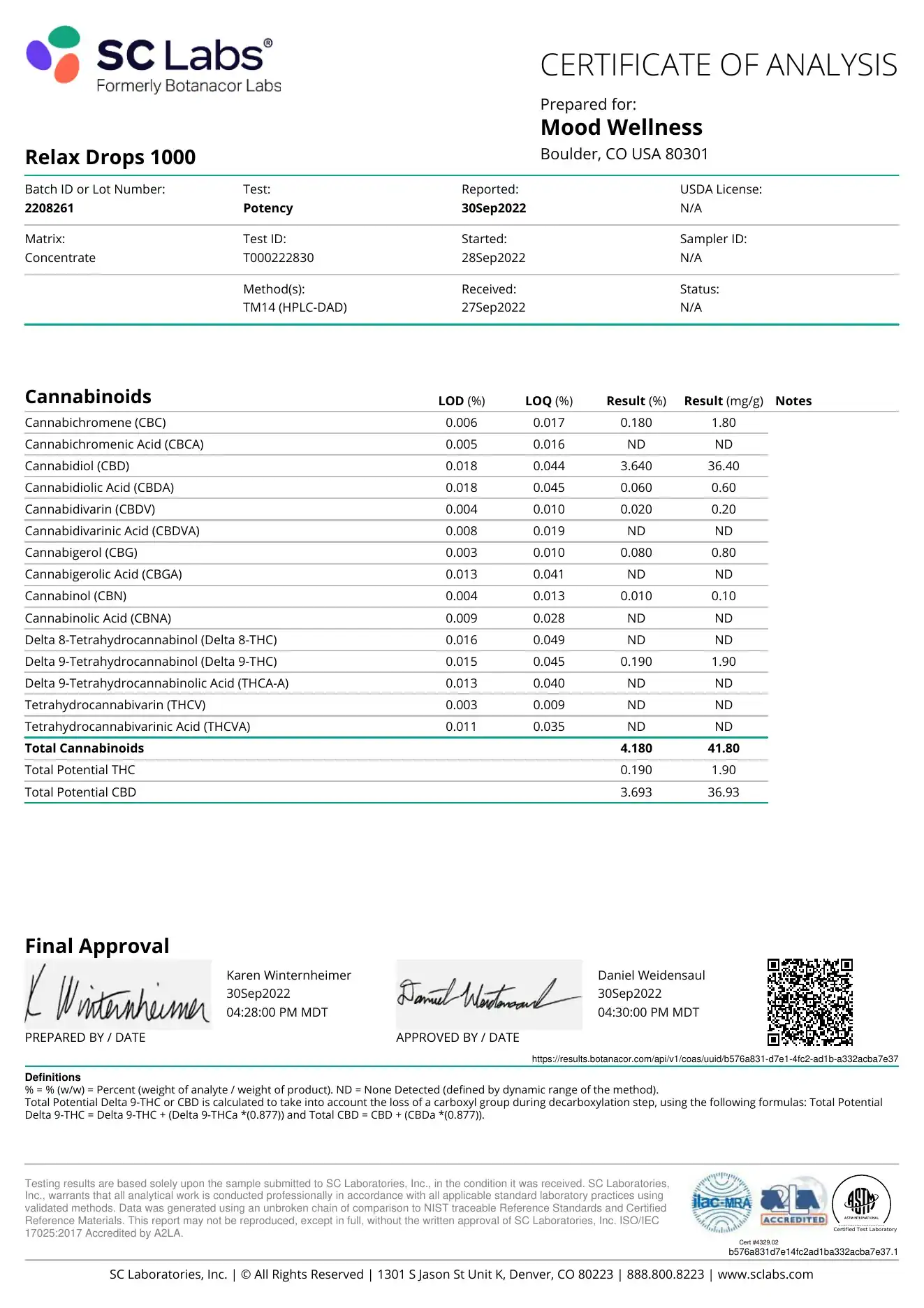
Neither certification tells you how much CBD was measured in a batch. After resolving dietary fit, check:
- CBD per gummy and serving;
- other cannabinoids such as CBG or CBN;
- full-spectrum, broad-spectrum or isolate wording;
- measured THC and reporting limits;
- batch and product identifiers;
- potency results; and
- available contaminant panels.
Match the package code using the batch-to-COA workflow and interpret the laboratory fields with the CBD COA guide.
A product can be kosher and vegan while having weak or outdated laboratory evidence. Conversely, a detailed COA does not verify dietary status.
Current Mood gummy example
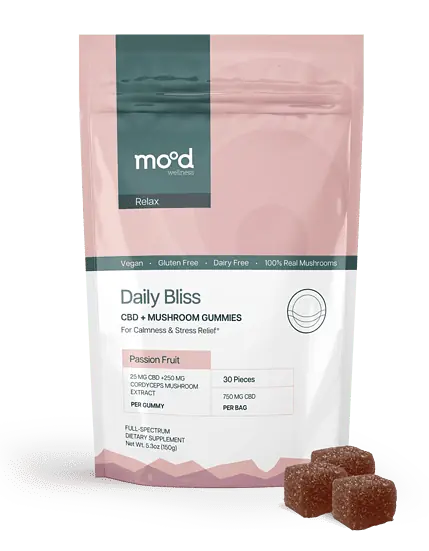
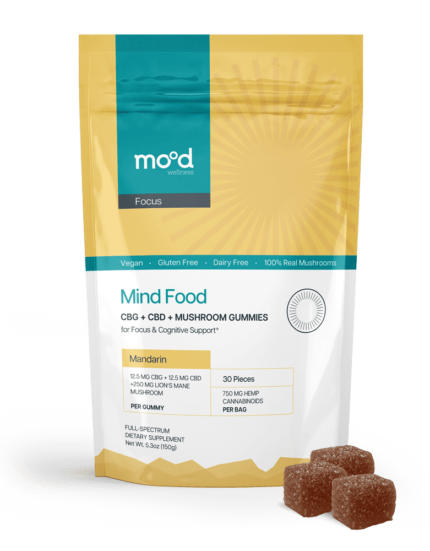
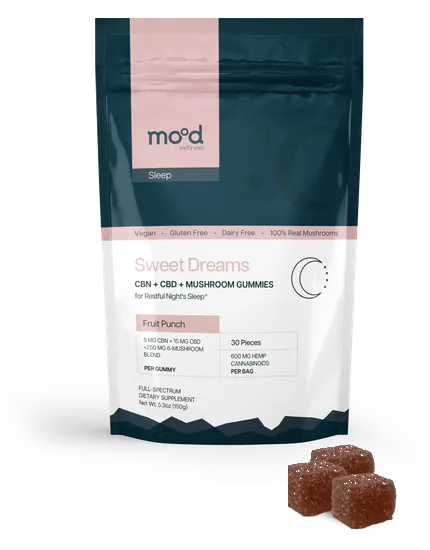
As of the snapshot date, Mood's current CBD gummy collection presents Daily Bliss, Mind Food and Sweet Dreams as vegan, gelatin-free, gluten-free, dairy-free and EarthKosher certified. Mood's kosher page presents each as pareve and links product-specific certificates.
That combination supports a “both” conclusion only for the exact products and certificate versions reviewed. Before purchase:
- open the current Mood CBD gummy collection;
- match the exact gummy formula to the kosher certificate;
- confirm the vegan statement and current ingredient list;
- do not transfer one product's ingredients or certificate to another; and
- review the current batch report separately.
Mood's seller statements are not independent vegan certification. The EarthKosher certificate addresses kosher status, not a universal vegan standard. Presenting both pieces separately is more accurate than calling one proof of the other.
Shopper worksheet
| Check | Evidence found | Result: yes/no/unknown |
|---|---|---|
| Exact product and flavor identified | ||
| Complete current ingredient list | ||
| Vegan claim or standard located | ||
| Gelatin and coatings reviewed | ||
| Vegan cross-contact policy reviewed if needed | ||
| Kosher certifier identified | ||
| Exact product appears on current certificate | ||
| Pareve/dairy status recorded | ||
| Passover status explicitly shown if needed | ||
| Package lot matches COA | ||
| CBD and THC results reviewed | ||
| Allergy questions resolved separately |
Write “unknown” instead of filling gaps with assumptions. If necessary, send the manufacturer the product name, flavor, package photo and lot code, then ask one precise question at a time.
Safety Boundaries for Kosher vs Vegan CBD Gummies
Kosher and vegan labels do not make CBD medically appropriate for everyone. FDA warns that CBD can interact with medications, affect the liver and increase sedation when combined with alcohol or other substances that slow brain activity. FDA advises against CBD use during pregnancy or breastfeeding.
Ask a clinician or pharmacist before use if you take medication, have liver disease, are preparing for surgery or manage another relevant condition. Full-spectrum gummies may contain trace THC and can create drug-testing risk.
For food allergies, use the allergen declaration, facility controls and professional advice. Vegan does not mean free from milk or egg cross-contact. Pareve is not a substitute for an allergen-free claim.
Keep gummies secured away from children and pets. Their candy-like format can increase accidental-ingestion risk.

Bottom Line: Kosher vs Vegan CBD Gummies
Kosher and vegan CBD gummies sit on two different axes. Vegan commonly addresses animal-derived ingredients. Kosher certification evaluates ingredients and manufacturing under a certifier's religious standard. Neither label automatically proves the other.
If both matter, verify both: use the complete formula and defined vegan claim for animal-derived sourcing, and a current product-specific certificate for kosher status. Record pareve and Passover status only as explicitly shown. Then perform a separate CBD audit for potency, THC, batch matching and contaminant evidence.
Quick answers
Frequently asked questions about Kosher vs Vegan CBD Gummies
What is the practical answer about Kosher vs Vegan CBD Gummies?
Kosher and vegan CBD gummies sit on two different axes. Vegan commonly addresses animal-derived ingredients. Kosher certification evaluates ingredients and manufacturing under a certifier's religious standard. Neither label automatically proves the other. If both matter, verify both: use the complete formula and defined vegan claim for animal-derived sourcing, and a current product-specific certificate for kosher status.
Which Mood product fits this topic?
Daily Bliss is the most relevant Mood option for this topic. Mood Daily Bliss offers a premeasured CBD gummy with functional mushrooms for shoppers who prefer a convenient, positive daily wellness routine.
What should I compare before choosing a gummy?
Compare the cannabinoid amount per measured serving, the complete ingredient list, spectrum or THC information, current product directions and available batch documentation. The best choice is the formula that fits the goal and is easy to use consistently.
How should I start using a new CBD or cannabinoid product?
Follow the current package directions, choose a low-demand first-use window and keep timing and meal context reasonably consistent. Review medication, pregnancy, liver and impairment considerations with a qualified clinician when relevant.
Sources
- U.S. Food and Drug Administration. Draft Guidance for Industry: Labeling of Plant-Based Alternatives to Animal-Derived Foods.
- OU Kosher. Glossary of Kosher Certification Terms; guidance on certified beef gelatin and pareve status.
- EarthKosher. Kosher Certification for Food Startups and Emerging Brands.
- U.S. Department of Agriculture, Agricultural Marketing Service. Labeling Organic Products.
- U.S. Food and Drug Administration. What You Need to Know About Products Containing Cannabis or Cannabis-Derived Compounds, Including CBD.
- Mood Wellness. Kosher CBD page, CBD Gummies collection and product-specific certificates. Checked September 9, 2026.
- U.S. Food and Drug Administration. What the FDA is Doing to Protect Consumers from Cannabidiol (CBD) in Foods. Accessed September 2026.