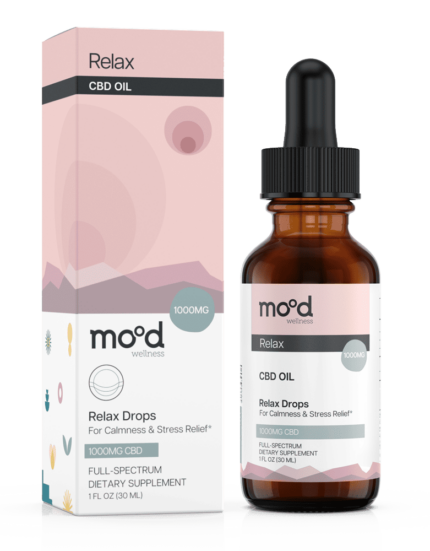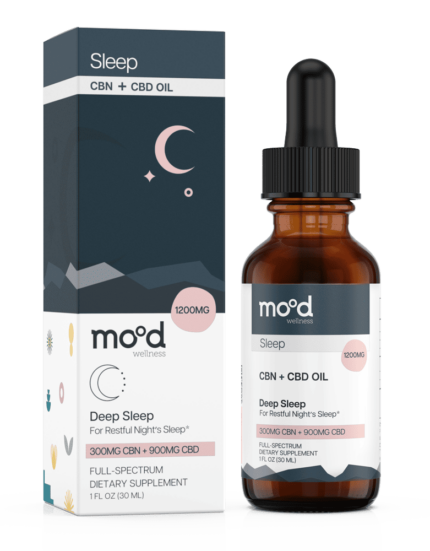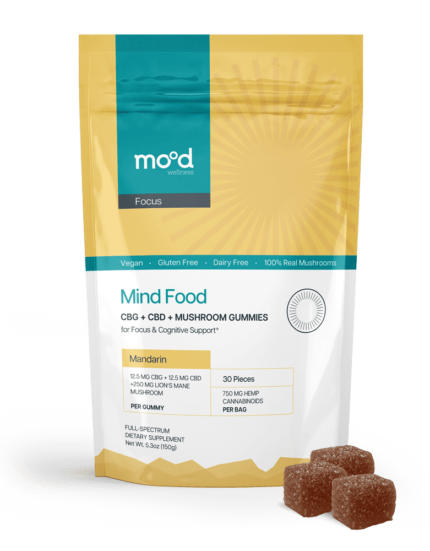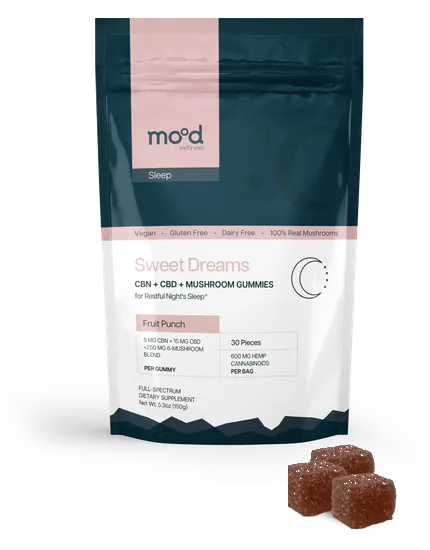

Editorial disclosure: Mood publishes this guide and sells CBD + CBG products. Mood product information is used as a label-reading example, not as evidence that a product improves focus, energy, mood or another health outcome.
What “best time” can mean
People asking this question often want one of four different answers.
| Meaning | Practical question | Evidence boundary |
|---|---|---|
| Best absorption time | Should CBG be taken with a particular meal? | Food affected exposure in one small oral study, but that is not a universal meal instruction. |
| Best felt time | When might a noticeable effect occur? | Blood timing and felt onset are not the same endpoint. |
| Best outcome time | Does morning or evening improve a specific result? | Direct comparative evidence is missing for most retail claims. |
| Best routine time | When can directions be followed consistently and safely? | This is a practical choice, not proof of benefit. |
This article owns the fourth decision. For the narrower question of measured onset and peak concentration, use Mood’s guide to how long CBG takes to work.
Morning, afternoon or evening?
The right answer is conditional rather than universal.
Morning can be practical when
- the product is explicitly positioned and labeled for daytime use;
- you can observe your response without driving or performing safety-sensitive work;
- the meal context can be repeated;
- other ingredients do not create a separate evening-use question; and
- a clinician has addressed relevant medication or health concerns.
“Daytime” is still a positioning term unless supported by product-specific comparative research. It should not be translated into guaranteed energy, focus or productivity.
Afternoon can be practical when
- it is easier to separate the routine from morning medications;
- an initial observation period is possible;
- the label allows that timing; and
- the schedule does not encourage closely stacked servings.
Separation from medication is not a proven way to eliminate an interaction. A pharmacist should decide whether timing changes are relevant to a specific medicine.
Evening can be practical when
- the label allows it and the formula does not contain an ingredient the user intentionally reserves for daytime;
- no driving, alcohol use or hazardous activity follows;
- the person is not assuming that CBG is a sleep treatment; and
- unwanted alertness, sleepiness or other changes can be recorded without escalating use.
An evening routine does not make CBG a sedative. Likewise, a daytime routine does not make it a stimulant.

A decision matrix for choosing a routine
Use this order instead of starting with the clock.
| Decision factor | What to verify | How it changes the routine |
|---|---|---|
| Label directions | Serving, frequency, route and warnings | Defines the permitted boundaries. |
| Product format | Oil, gummy or other oral form | Changes measurement, portability and meal context. |
| Whole formula | CBD, THC, mushrooms, caffeine, melatonin or botanicals | May add separate evidence, interaction and timing questions. |
| Meal context | Fasted, light meal or higher-fat meal | Should remain reasonably consistent when observing an oral product. |
| Daily obligations | Driving, machinery, caregiving or high-stakes work | Initial use should not overlap with safety-sensitive activity. |
| Medication schedule | Prescription, OTC drugs and supplements | Requires pharmacist or clinician review; do not self-engineer around an interaction. |
| Batch evidence | Product, lot, date, potency and relevant panels | Confirms what was actually tested, not when it should be taken. |
| Observation plan | One defined outcome and neutral notes | Reduces retrospective guessing and expectation bias. |
If any foundational item is unknown, the next step is verification, not choosing 8 a.m. or 8 p.m.

What human CBG evidence can show
Human research is still small and does not compare morning with evening use.
The oral gummy pharmacokinetic study
A 2024 randomized double-crossover pilot studied a single 25 mg CBG dose in specially manufactured gummies. Nineteen adults completed the study. Researchers compared an emulsified and non-emulsified preparation under low-fat and high-fat meal conditions.
Meal condition materially changed measured exposure. When results were grouped by meal, the high-fat condition produced a higher maximum concentration, greater overall exposure and a shorter time to maximum concentration than the low-fat condition. Dietary fat had a larger aggregate effect than the tested delivery system.
That finding supports consistency in meal context when interpreting an oral routine. It does not prove that every shopper should take CBG with a high-fat meal. Greater exposure is not automatically a better outcome, and a different retail formulation may behave differently.
The study’s mean time to maximum concentration ranged from approximately 0.75 to 1.88 hours across its four conditions. Those are Tmax values, not first felt effects, redosing intervals or recommendations for a clock time.
The acute CBG-in-oil study
A 2026 single-ascending-dose laboratory study enrolled 12 healthy adults. Participants received placebo and 25, 50, 100 and 200 mg of CBG isolate suspended in MCT oil. Researchers collected plasma, subjective, cognitive and physiological measures for eight hours.
The authors reported dose-orderly pharmacokinetics with substantial individual variability and few robust pharmacodynamic effects. No drug-related adverse events occurred during the acute study, but the investigators called for chronic-dosing research.
This is important for routine design: a person may have no obvious sensation that confirms exposure. The absence of a feeling should not trigger repeated servings. The study also cannot establish long-term safety, an ideal daily schedule or the performance of a CBD + CBG retail oil.
What a small anxiety study does not settle
A 2024 double-blind crossover field trial examined an acute 20 mg dose of hemp-derived CBG in 34 healthy adults and reported changes in some self-reported anxiety and stress measures. It did not compare morning with evening use, establish chronic benefit or test Mood’s formula.
One acute study should not become a rule to take CBG before every stressful event. The population, formulation, endpoint, setting and replication all matter. This article therefore does not use that trial to choose a time of day.
Format changes the routine question
Oil
An oil may allow a measured liquid serving when the bottle volume, cannabinoid totals and dropper markings are clear. Verify milligrams per milliliter rather than assuming that “1,000 mg” describes one serving. Shaking, measuring and holding instructions must come from the current label.
Gummies
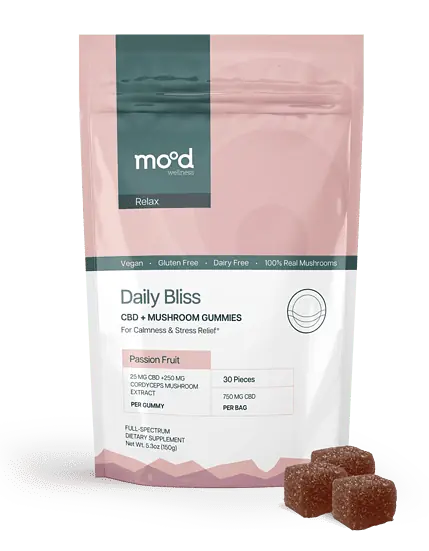
Gummies provide fixed pieces, but “per gummy” and “per serving” may differ. Record CBG per piece, pieces per serving, other cannabinoids, added functional ingredients and sweeteners. A CBD + CBG + mushroom gummy is not simply CBG in a portable form.
Mood’s CBG oil versus gummies guide covers the mechanical format choice in more detail. Format evidence should not be stretched into a promise that one option works better at a particular hour.
A controlled routine experiment without an efficacy promise
This framework is for observation and label adherence, not self-prescribed treatment.
- Record the exact product name, format and lot.
- Copy the labeled serving and frequency without altering them.
- List CBD, CBG, THC status and every added active ingredient.
- Choose a non-driving, low-risk observation window.
- Keep meal context and timing reasonably consistent.
- Define one neutral observation in advance.
- Note unwanted effects as carefully as desired changes.
- Do not change amount, meal and time simultaneously.
- Stop and seek qualified guidance if a concerning effect occurs.
A routine log can help identify inconsistency. It cannot diagnose a condition, prove that CBG caused a change or establish that continued use is appropriate.

Reading Brain Fuel as a worked example
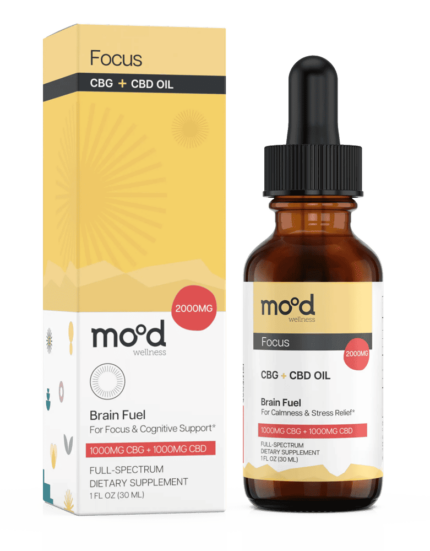
Mood currently presents Brain Fuel as a full-spectrum 1:1 CBD + CBG oil available in 1,000 mg and 2,000 mg total-strength variants. The product page positions it for daytime focus and says to measure with the dropper, hold under the tongue and make use part of a daily routine.
Those are current first-party product statements. They are not proof that morning is clinically superior or that the oil improves focus. Brain Fuel contains both CBD and CBG, uses MCT oil and is full spectrum, so its safety and timing questions cannot be assigned to CBG alone.
The page’s 1,000 mg variant is described as 500 mg CBD plus 500 mg CBG, while the 2,000 mg variant is described as 1,000 mg of each. A 1:1 ratio does not state milligrams per milliliter or per marked dropper. Confirm the selected bottle’s current volume and serving panel before doing that calculation.
Mood’s public lab-results page links Brain Fuel reports. The previously captured 2,000 mg certificate is for batch 2208303 and was reported October 3, 2022. It describes a tested sample; it does not prove every current finished bottle or every contaminant panel. Match the lot on the package and request a current report when the public file is not a clear match.
Review the current Brain Fuel product page together with Mood’s lab-results index and COA-reading guide. Do not infer a best time from a certificate: a COA verifies tested composition, not a daily outcome schedule.
Safety comes before timing
The FDA has not approved ordinary retail CBG products to diagnose, treat, cure or prevent disease. Human CBG evidence remains early, especially for repeated use, diverse medical conditions and combinations with other ingredients.
Many CBG products also contain CBD. FDA consumer guidance identifies potential CBD concerns including liver injury, drug interactions and changes in alertness. FDA strongly advises against CBD, THC and marijuana use during pregnancy or breastfeeding. Full-spectrum products may contain trace THC; “less than 0.3% THC” does not mean THC-free and cannot guarantee a negative drug test.
Ask a pharmacist or qualified clinician before use when you take prescription or OTC medicines, use other supplements, have a liver or other medical condition, are pregnant or breastfeeding, or are preparing for surgery. Do not drive or use machinery if impaired. Keep gummies and oils secured from children and pets.
Questions to ask before settling on a time
- Is the product CBG alone or a multi-active formula?
- What is the labeled amount per milliliter, piece and serving?
- Does the current label specify food or time-of-day directions?
- Is the format identical to the evidence being cited?
- Does the batch report match the package lot?
- Which potency and contaminant panels were actually run?
- Could CBD, THC, mushrooms or another ingredient drive the experience?
- Does the proposed time overlap with driving, work or caregiving?
- Have medication and health questions been reviewed professionally?
- Is “best” tied to a defined, evidence-appropriate outcome?

Bottom Line: Best Time to Take CBG
The best time to take CBG is the time that matches the product’s intended role and your daily routine. CBD + CBG formulas are commonly chosen for daytime focus and balance, making morning or early afternoon a practical starting point. Follow the current label, keep meal timing reasonably consistent and evaluate the complete formula rather than CBG in isolation.
Small human studies show that food and formulation can change measured CBG exposure and that individual variability is substantial. They do not establish a morning advantage, an evening advantage or a reliable subjective signal. Consistency improves the quality of your observations; it does not convert them into proof of efficacy.
Verify the serving, other active ingredients and matching batch evidence first. When medication, pregnancy, liver health, impairment or persistent symptoms are involved, timing advice from a product page is not enough, ask a qualified healthcare professional.
Quick answers
Frequently asked questions about Best Time to Take CBG
What is the practical answer about Best Time to Take CBG?
The best time to take CBG is the time that matches the product’s intended role and your daily routine. CBD + CBG formulas are commonly chosen for daytime focus and balance, making morning or early afternoon a practical starting point. Follow the current label, keep meal timing reasonably consistent and evaluate the complete formula rather than CBG in isolation.
Which Mood product fits this topic?
Brain Fuel is the most relevant Mood option for this topic. Mood Brain Fuel combines CBD and CBG in a clearly labeled full-spectrum oil designed for shoppers building a focused, balanced daytime routine.
What should I compare before choosing a product?
Compare the cannabinoid amount per measured serving, the complete ingredient list, spectrum or THC information, current product directions and available batch documentation. The best choice is the formula that fits the goal and is easy to use consistently.
How should I start using a new CBD or cannabinoid product?
Follow the current package directions, choose a low-demand first-use window and keep timing and meal context reasonably consistent. Review medication, pregnancy, liver and impairment considerations with a qualified clinician when relevant.
Sources
- Story G, et al. “Impact of Dietary Fat and Oral Delivery System on Cannabigerol Pharmacokinetics in Adults.” Cannabis and Cannabinoid Research. 2024;9(6):1543–1555. View source
- Wolinsky D, et al. “Safety, pharmacodynamics, and pharmacokinetics of oral cannabigerol in healthy adults.” Journal of Pharmacology and Experimental Therapeutics. Published online July 11, 2026. View source
- Cuttler C, et al. “Acute effects of cannabigerol on anxiety, stress, and mood: a double-blind, placebo-controlled, crossover, field trial.” Scientific Reports. 2024;14:16163. View source
- U.S. Food and Drug Administration. Consumer information on cannabis-derived products and CBD safety. View source
- Mood Wellness. Brain Fuel product and lab-results pages. Checked September 9, 2026.
Editorial note: Medical, legal and commercial fact review is required before release. This article is educational and is not medical advice.