Before testing a supplement
Rule out common causes of “brain fog”
Difficulty concentrating is not one diagnosis. Short sleep, sleep apnea, high stress, depression, medication effects, thyroid disease, anemia, vitamin deficiency, alcohol, dehydration and an unrealistic workload can all affect attention or memory. A supplement trial can make the picture harder to interpret if a treatable cause is changing at the same time.
Track sleep, symptoms, caffeine, medication changes and the situations where performance drops. Sudden confusion, a new neurological symptom, rapidly worsening memory or difficulty completing routine tasks needs prompt clinical assessment. For ordinary performance goals, regular sleep, physical activity, adequate nutrition and structured work breaks have a broader evidence base than a combined gummy. This sets a fair baseline so a product is not credited for recovery from sleep debt or used to postpone needed care.
Direct answer
Can you take lion's mane and CBD together?
Products that combine lion's mane with CBD are sold to adults, and no well-established direct interaction between the two was identified. That does not mean the combination is proven safe for every person or effective for cognition.
The key evidence gap is simple: human studies generally evaluate lion's mane or CBD separately. A mechanism, ingredient study or customer experience cannot establish that a finished combination improves memory, focus, mood or long-term brain health.
| Question | Current answer |
|---|---|
| Has lion's mane been studied in people? | Yes, in several small trials using different materials, populations and cognitive outcomes. |
| Is CBD a proven cognitive enhancer? | No. Human cognition findings are mixed and context dependent. |
| Has lion's mane plus CBD been clinically tested for brain health? | No direct human combination trial was identified for memory, focus or prevention. |
| Does “synergy” prove better results? | No. Synergy is a hypothesis until the finished combination beats an appropriate comparison. |
| Can everyone use the combination? | No. CBD, THC, mushroom allergy, medication and health status create individual risks. |
Do not use a supplement to self-treat cognitive decline.
New memory loss, confusion, personality change or difficulty managing normal tasks needs medical evaluation. Products cannot be marketed as cures or prevention for Alzheimer's disease or dementia.
Human evidence
What lion's-mane cognition studies found
Lion's mane is the culinary and supplement mushroom Hericium erinaceus. Human research is larger than many product pages imply, but still small and heterogeneous compared with the confidence of common marketing claims.
| Study or review | Population and intervention | Relevant result | Why it does not prove every product |
|---|---|---|---|
| Mori et al., 2009 | 30 adults with mild cognitive impairment; lion's-mane material for 16 weeks | Scores improved during treatment and declined after stopping | Small study, specific powder and population; not a CBD combination |
| Saitsu et al., 2019 | Randomized 12-week trial in adults using fruiting-body supplements | Selected cognitive measures improved | Product, amount and tests must match before transferring the result |
| Acute crossover trial, 2023 | Healthy adults received a single 1 g Nordic lion's-mane extract | Selected task reaction-time or attempt measures changed | Not a universal focus effect and no CBD was included |
| Mushroom cognition review, 2024 | 34 human studies across mushrooms and ages | Intervention findings were mixed; some lion's-mane signals | Called for larger studies and standardized products |
| Hericium systematic review, 2025 | Five RCTs, pilot trials and extensive laboratory work | Reported possible cognitive and mood benefits | Different populations and heavy reliance on preclinical evidence limit broad claims |
The pattern supports further research, not a claim that lion's mane regenerates nerves or prevents dementia. Small positive trials can overestimate effects, and cognitive tests do not all measure the same domain.
For a commercial product, the question is not merely whether the species appears on the label. The material, extraction, amount and duration must be close enough to the study to make comparison reasonable.
Product identity
Fruiting body, mycelium and extracts are not interchangeable
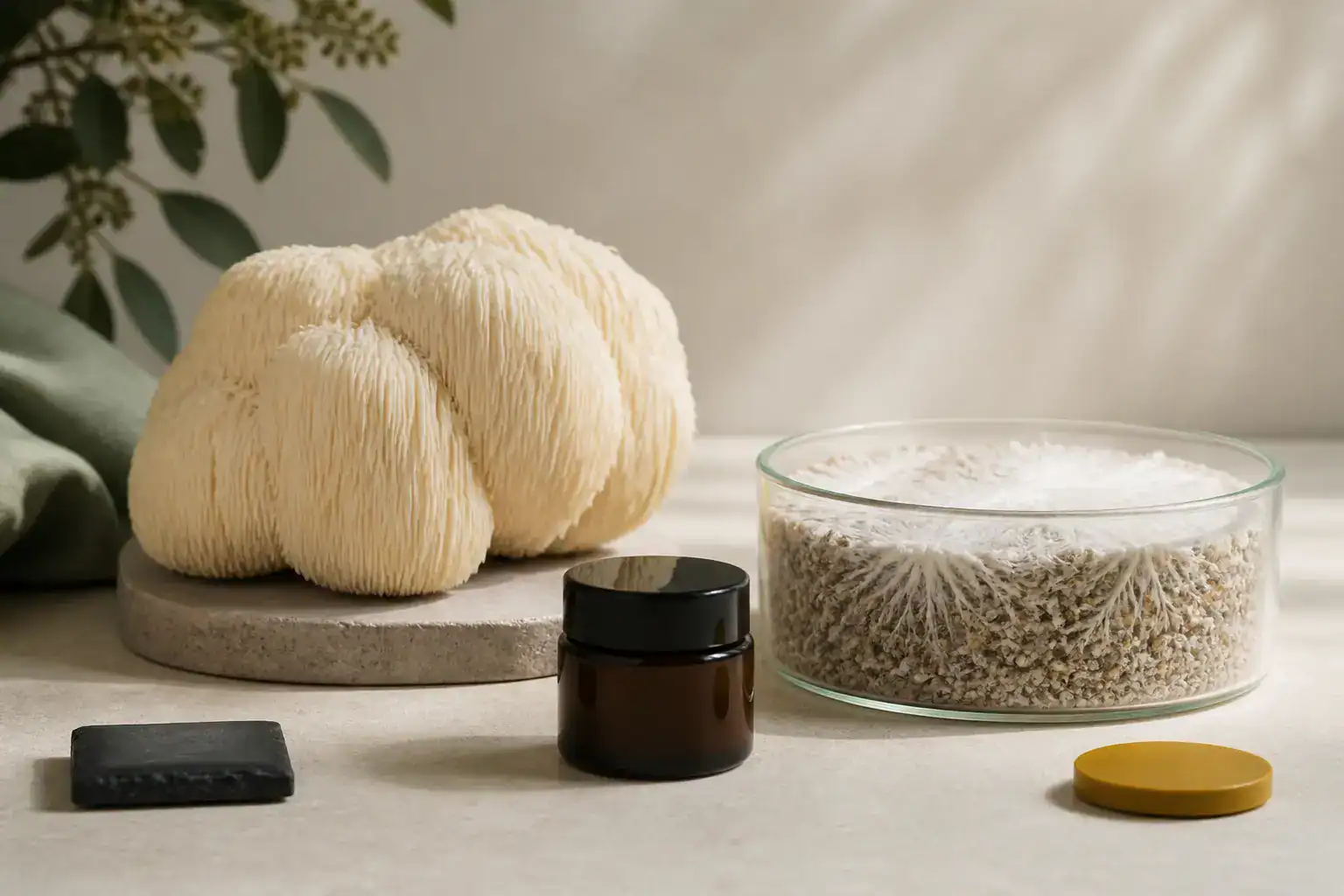
The fruiting body is the visible mushroom. Mycelium is the network of fungal tissue that grows through a substrate. Both can be legitimate materials, but they have different compositions and are often studied for different compounds.
| Label detail | Why it matters |
|---|---|
| Latin species | Confirms Hericium erinaceus rather than a generic “mushroom blend.” |
| Fruiting body or mycelium | Human and laboratory research may use different fungal material. |
| Growth substrate | Mycelium grown on grain can add starch and complicate composition. |
| Extract ratio or standardization | “10:1” and beta-glucan percentages need context and testing. |
| Amount per serving | A front-label blend total can hide the lion's-mane amount. |
| Finished-product testing | Identity, microbes, heavy metals and other quality checks are distinct from cannabinoid COAs. |
Hericenones are discussed mainly in fruiting-body research, while erinacines are associated with some mycelial materials. Claims that these compounds cross the blood-brain barrier or stimulate nerve growth factor often come from laboratory or animal work. Those mechanisms do not prove a consumer gummy changes cognition.
Cannabinoid evidence
CBD is not established as a brain-performance ingredient
CBD has been studied in neurological and psychiatric contexts, but that does not make a retail CBD gummy a nootropic. A systematic review of acute and chronic CBD effects on cognition found varied results across humans and animals, doses and clinical contexts.
CBD may reduce symptoms that interfere with concentration for some people, such as perceived anxiety, but an indirect subjective improvement is different from better memory or executive function. CBD can also cause drowsiness, fatigue, diarrhea or medication interactions that work against performance.
No consistent evidence shows that consumer-dose CBD improves cognition in healthy adults.
Cell and animal mechanisms do not establish prevention of human neurodegenerative disease.
Selected anxiety findings use specific purified products and often do not match retail gummies.
Liver, medication, pregnancy, drowsiness and THC exposure must be considered.
CBD's approved medical use is a prescription drug for specific seizure disorders. That approval does not extend to over-the-counter brain-health products.
The missing trial
Does lion's mane work better with CBD?
No direct human evidence identified for this guide shows that lion's mane and CBD work better together for focus, memory or brain health. To prove synergy, a study would need to compare the combination with lion's mane alone, CBD alone and placebo using the same amounts and predefined cognitive outcomes.
Product pages often join two narratives: lion's mane may affect growth-factor pathways in preclinical models, while CBD may influence endocannabinoid or stress pathways. Two plausible mechanisms do not demonstrate a superior clinical outcome when combined.
| Evidence level | What it supports | What it cannot prove |
|---|---|---|
| Cell or animal mechanism | Biological plausibility and research questions | Human cognitive benefit or safe serving |
| Human study of lion's mane alone | Possible effect of the studied mushroom product | Added benefit from CBD |
| Human study of CBD alone | Possible effect of the studied CBD product | Added benefit from lion's mane |
| Uncontrolled customer report | What one person noticed | Causation, placebo control or which ingredient mattered |
| Randomized finished-product trial | Effect of the exact combination under study | Every dose, population or competing product |
Until a direct trial exists, “complementary ingredients” is a formula description. “Perfect synergy” is an efficacy claim that outruns the evidence.
A third active ingredient
Where CBG fits in brain-health gummies
CBG, or cannabigerol, is another cannabinoid that appears in some focus formulas. Human research is much smaller than the CBD evidence base. Preclinical studies of inflammation, neurotransmission or neurodegeneration should not be presented as proof that CBG improves memory.
Adding CBG creates another variable. If a user notices a change from a CBD, CBG and lion's-mane gummy, the experience cannot reveal which component mattered. It also increases the importance of a cannabinoid batch report that measures CBD, CBG and THC.
CBG may have medication or side-effect considerations that are not yet fully characterized. “Non-intoxicating” does not mean risk-free, cognitively enhancing or safe during pregnancy.
Product verification
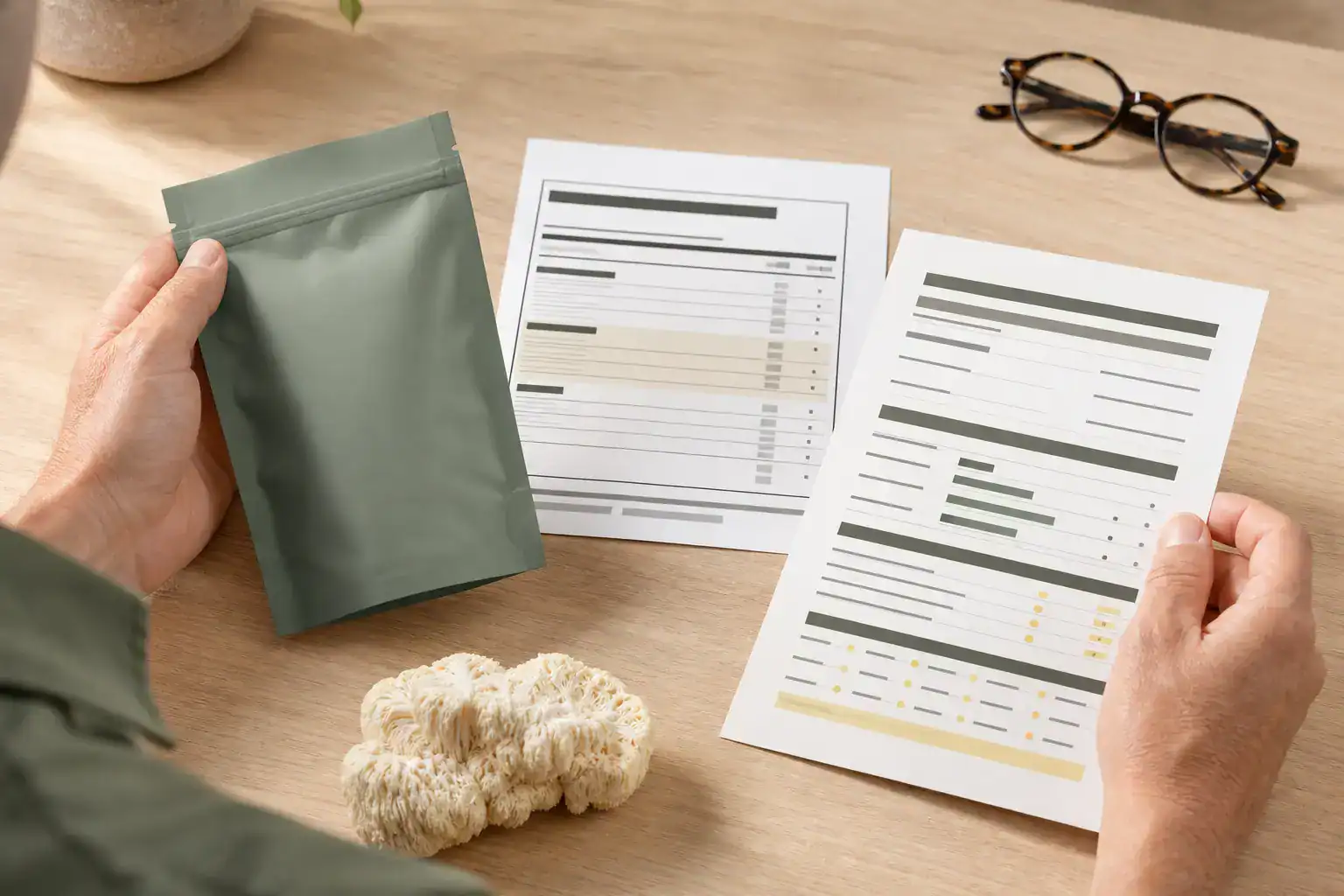
How to evaluate a lion's-mane and CBD gummy
1
Confirm the full serving
Calculate amounts for the labeled serving, not one gummy if the serving is two.
2
Identify the mushroom material
Look for species, fruiting body or mycelium, extract information and amount.
3
Verify cannabinoids by batch
Match lot number and inspect CBD, CBG, delta-9 THC and other measured cannabinoids.
4
Check contaminant panels
Review pesticides, heavy metals, microbes and solvents applicable to the ingredients.
5
Reject disease claims
Do not buy a product that claims to prevent dementia, reverse cognitive decline or repair nerves.
6
Review medication and THC risk
Bring the complete formula to a pharmacist and consider workplace testing.
The brain-health gummy buyer guide compares finished formulas, while the CBD buyer's guide explains hemp testing in more detail.
Mood product assessment
Mind Food: CBD, CBG and lion's mane in one gummy
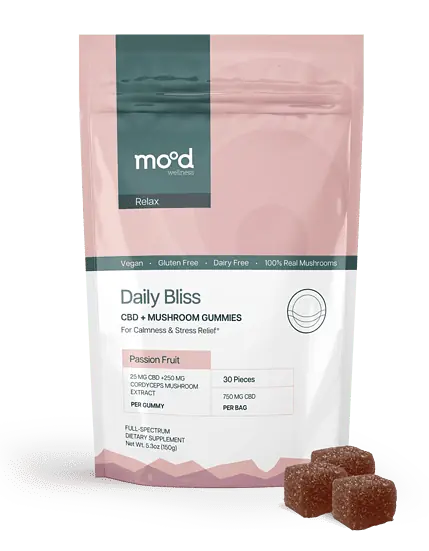
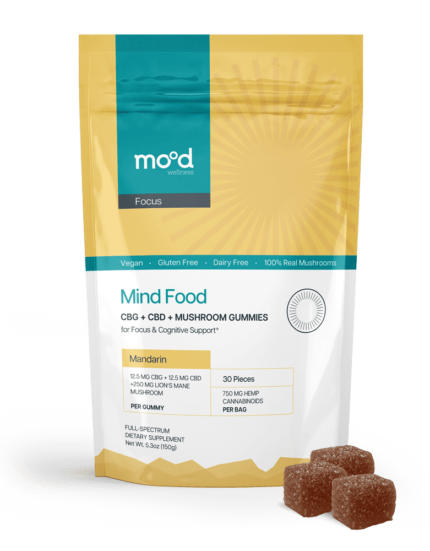
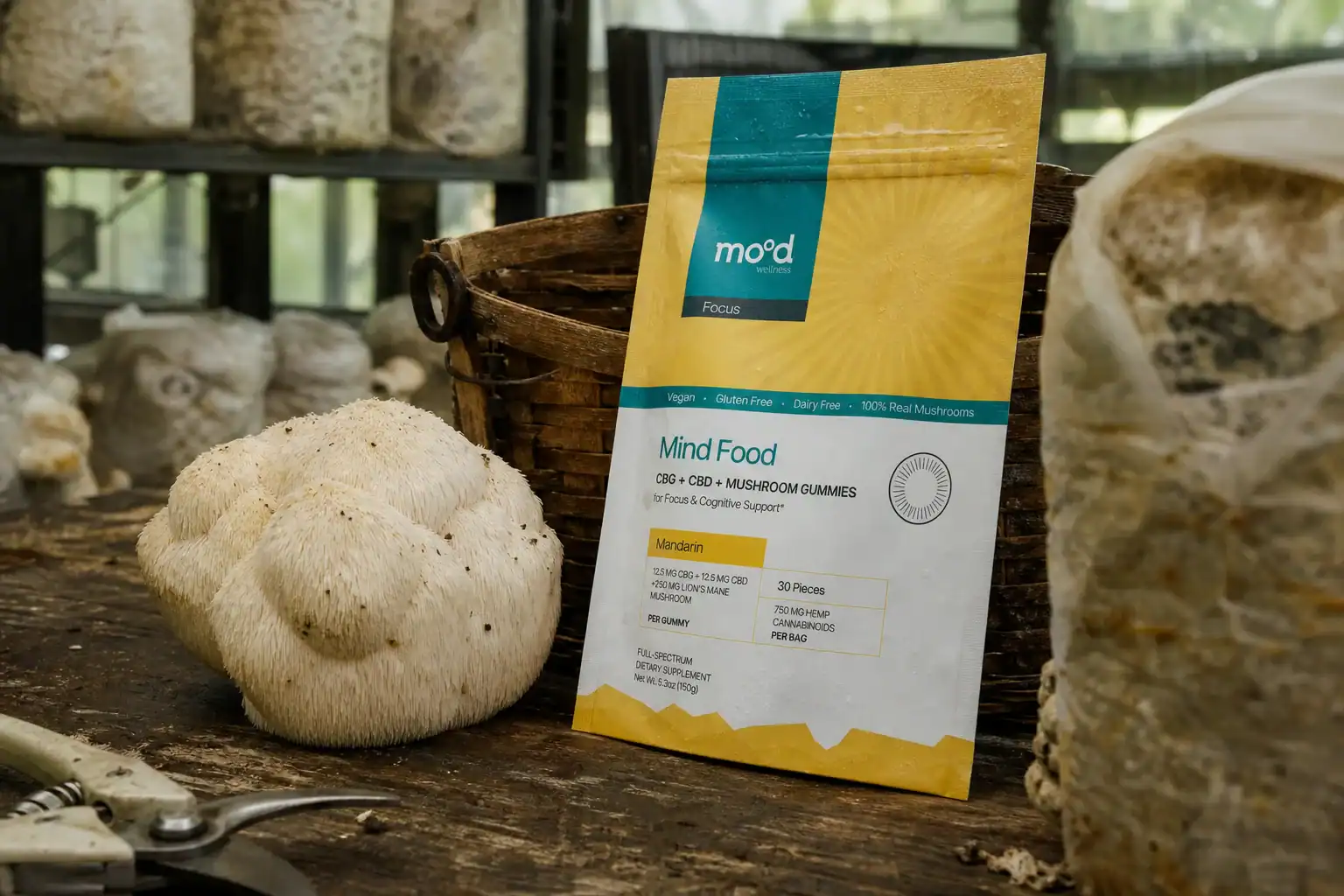
Mood Mind Food currently lists 12.5 mg CBD, 12.5 mg CBG and 250 mg lion's mane per gummy. The official page describes fruiting-body lion's mane, full-spectrum hemp, vegan ingredients and kosher certification. Mood provides a public cannabinoid lab-results hub.
The three-in-one format makes Mind Food a convenient choice for adults who want lion's mane, CBD and CBG without building a multi-product stack. Its fruiting-body mushroom ingredient and clearly stated cannabinoid amounts also make the formula easier to evaluate. Research uses varied lion's-mane materials and amounts, so the best comparison starts with the exact label and your preferred daily routine.
Because Mind Food uses full-spectrum hemp, it can offer the broader cannabinoid profile some shoppers prefer. Anyone who must avoid THC for a drug test or who uses prescription medication should check the current label and compatibility before use.
Why Mood is included
Mood created Mind Food for a clear use case: a convenient, stimulant-free daily formula combining CBD, CBG and fruiting-body lion's mane. We show its exact formula so readers can decide whether it matches their goals.
Before combining supplements
Liver, medication, allergy and THC risks
| Situation | Why it matters |
|---|---|
| Mushroom or mold allergy | Lion's mane can cause allergic reactions, including rash or breathing symptoms. |
| Anticoagulants or bleeding disorders | Preclinical concerns and supplement uncertainty warrant professional review. |
| Diabetes treatment | Mushroom supplements may affect glucose; combination effects are uncertain. |
| Antiseizure, psychiatric, sedative or multiple medicines | CBD can affect enzymes, medication levels and alertness. |
| Liver disease or abnormal liver tests | Oral CBD and multi-ingredient supplements require added caution. |
| Pregnancy, breastfeeding or under age 18 | Combination safety is not established; FDA advises against CBD in pregnancy and breastfeeding. |
| Driving or workplace drug testing | CBD can cause drowsiness and full-spectrum hemp may contain THC. |
Stop use and seek urgent help for facial swelling, trouble breathing, fainting, severe confusion, chest pain or another rapidly worsening reaction. A new supplement should not be started immediately before driving, an examination or another safety-critical task.
Reduce guesswork
A cautious way to evaluate the combination
If a qualified professional considers the ingredients appropriate, do not start lion's mane, CBD, CBG and several other supplements on the same day. A multi-ingredient product prevents attribution from the beginning, so define one observable goal and keep the rest of the routine stable.
1
Record a baseline
Track sleep, caffeine, stress and one cognitive task for a week before changing the routine.
2
Use the labeled starting serving
Do not increase rapidly to chase an immediate focus sensation.
3
Match the timeline
Lion's-mane trials often involve weeks, while cannabinoid effects may be noticed sooner.
4
Track unwanted effects
Include drowsiness, stomach symptoms, headache, rash, mood change and next-day function.
5
Stop if the value is unclear
A personal trial does not prove efficacy, but it can prevent indefinite use without a defined benefit.
Memory concerns or functional decline should bypass this experiment and go directly to medical evaluation.
Bottom line
Lion’s mane and cannabinoids offer a complementary wellness format
Human lion’s-mane research provides encouraging cognitive signals in selected small studies, while CBD and CBG bring a different cannabinoid profile that many adults prefer in a calm, stimulant-free routine.
Mind Food combines fruiting-body lion’s mane, CBD and CBG with every active amount stated per gummy. For shoppers who want these ingredients in one convenient format, it offers a clear formula and public cannabinoid testing.
Quick answers
Frequently asked questions about lion's mane and CBD
Can you take lion's mane and CBD at the same time?
Combination products are sold, but direct safety and efficacy data are limited. Ask a pharmacist or clinician if you take medication or have a health condition.
Do lion's mane and CBD improve focus?
Small lion's-mane studies report selected cognitive signals, but CBD is not a proven focus enhancer and the combination has not been shown to improve focus in a direct human trial.
Does CBD make lion's mane work better?
No direct human evidence identified here establishes that CBD improves lion's-mane cognitive effects.
How long does lion's mane take to work?
Many studies evaluate repeated use over weeks. An acute study found selected task changes after one dose, but this does not establish an instant effect for every product.
Is fruiting-body lion's mane better than mycelium?
They are different materials rather than universally better or worse. Match the material and extract to the human study relevant to the claim.
Can lion's mane and CBD prevent dementia?
No. Neither a consumer supplement nor the combination is established to prevent or treat dementia.
Will a lion's-mane CBD gummy affect a drug test?
Full-spectrum hemp may contain THC and can create drug-test risk. Check the current batch report, but no product can guarantee a negative result.
Can I combine lion's mane, CBD and CBG?
That adds another active ingredient with limited human cognition evidence. Review the entire formula, medication risks and THC before use.
Transparency
Sources and disclosure
Why Mood is included: Mood Wellness created Mind Food as a convenient CBD, CBG and lion's-mane gummy. Its product attributes are checked with the same evidence and label standards used throughout this guide. Product attributes were checked against the official page and lab-results hub on August 31, 2026.
- Benefits, side effects and uses of Hericium erinaceus: systematic review. 2025.
- Mushrooms, mood and neurocognitive health across the lifespan: review. 2024.
- Improvement of cognitive functions by Hericium erinaceus. 2019.
- Hericium erinaceus in mild cognitive impairment: randomized trial.
- Acute lion's-mane extract effects on cognitive performance. 2023.
- Acute and chronic CBD effects on cognition: systematic review.
- U.S. FDA. False promises about Alzheimer's cures.
- Mood Wellness. Mind Food official product page.
- Mood Wellness. Public lab-results hub.
Use this guide to compare ingredient quality and choose a daily wellness formula that fits your routine. If you use prescription medication, review the complete label with a qualified professional.
Written by Mood Editorial TeamResearch and product information checked August 31, 2026.