Evidence-led verdict
Does Cordyceps improve athletic performance?
Possibly for selected outcomes in some people, but the human evidence is mixed and too limited for a universal performance claim.
The broad phrase “athletic performance” hides several distinct measurements. A supplement might affect ventilatory threshold without changing VO2max, or time to exhaustion without improving a race time. It might feel useful to a recreational participant while adding nothing measurable in a trained cyclist. When a study uses a blend, any result cannot be assigned to Cordyceps alone.
Memorial Sloan Kettering Cancer Center summarizes the exercise literature in healthy people as mixed. That is the most defensible conclusion: there are signals worth studying, not proof that Cordyceps reliably improves endurance, strength, power or recovery.
The practical answer:
Do not expect a mushroom supplement to replace training, nutrition, sleep, hydration or medical evaluation. If you test a product, define one outcome in advance and keep the rest of the routine stable enough to interpret what happens.
Outcome matrix
What have Cordyceps trials measured?
| Outcome | What it means | Evidence pattern |
|---|---|---|
| VO2max | Maximum oxygen use during intense exercise | Often unchanged in small trials |
| Ventilatory threshold | Point where breathing rises disproportionately during increasing work | Improved in one small older-adult Cs-4 trial |
| Metabolic/lactate threshold | Transition associated with greater lactate accumulation | Selected signal in the same pilot study |
| Time to exhaustion | How long a controlled test can continue | Some positive findings with specific formulations; not consistent |
| Anaerobic power | Short, high-intensity output | No reliable benefit established |
| Recovery or soreness | Return of function and subjective symptoms after effort | Insufficient direct Cordyceps-only evidence |
These outcomes should not be substituted for one another. A higher threshold on a stationary-bike protocol does not guarantee a faster 5K, stronger squat or better match performance. Trials also need enough participants, appropriate blinding, a credible placebo and prespecified outcomes to reduce the chance that a single positive number is emphasized while null results are ignored.

Identity matters
Cordyceps species and formulations are not interchangeable
“Cordyceps” is used commercially for several different fungal materials. Wild Ophiocordyceps sinensis is scarce and biologically distinct from cultivated Cordyceps militaris. Cs-4 is a cultured mycelial fermentation product historically marketed under the older Cordyceps sinensis name. Multi-ingredient supplements may add Rhodiola, Reishi, caffeine or other actives.
| Label | What it may refer to | Interpretation |
|---|---|---|
| C. militaris | Cultivated fruiting body or extract | Do not assume equivalence to Cs-4 trials |
| O. sinensis | Wild fungus-insect complex or a product using the historical name | Identity and sourcing require scrutiny |
| Cs-4 | Specific cultured mycelial fermentation material | Results apply to that preparation and dose |
| Proprietary blend | Cordyceps plus other fungi, herbs or nutrients | Cannot isolate which ingredient caused an outcome |
| Full-spectrum gummy | Cordyceps combined with CBD and trace cannabinoids | Different safety and anti-doping context |
Species name alone is still not enough. Fruiting body, cultured mycelium, residual substrate, extraction solvent, standardization and amount per serving can all change composition. A label that says only “mushroom complex” prevents a meaningful comparison with research.
Human trial review
What the main exercise studies found
Older adults: thresholds improved, VO2max did not
A double-blind placebo-controlled pilot enrolled 20 healthy adults aged 50–75. Participants took Cs-4 at 333 mg three times daily or placebo for 12 weeks. The published trial reported increases in metabolic and ventilatory thresholds in the Cs-4 group, while VO2max did not change in either group.
This is a genuine positive signal, but it is narrow. The sample was small, the preparation was Cs-4 and the population was older adults. It does not prove that every Cordyceps powder improves endurance or that a younger trained athlete will respond the same way.
Recreational adults: duration may matter, but replication is needed
A small trial of a mushroom blend containing C. militaris reported no clear effect after one week but selected improvements after three weeks in time to exhaustion and related measures. Because the intervention contained multiple mushrooms, it cannot isolate Cordyceps, and the small sample limits confidence.
Trained cyclists: null findings
A study in male cyclists tested a supplement based on Cordyceps and Rhodiola and found no performance enhancement on the measured cycling outcomes. Another endurance study of a Cs-4 product also reported no improvement in endurance exercise performance. Training status may leave less room for a small supplement effect, but the null results remain important rather than being dismissed.
Healthy young participants: multi-ingredient product did not improve maximal exercise responses
A 2018 study evaluated a commercial product containing O. sinensis and Reishi in healthy young adults. The reported physiological responses did not support a simple claim that the blend improved maximal exercise performance. Again, a blend cannot establish Cordyceps-specific efficacy.
Across this literature, statistical significance and practical significance also need separation. A small shift in a laboratory threshold may be real without being large enough to change training decisions, finish times or competition outcomes. Confidence is higher when an effect repeats across independent laboratories, appears in prespecified primary outcomes and remains meaningful outside a controlled test. Cordyceps exercise research has not yet reached that level of consistency.
Selected thresholds or exhaustion outcomes improved in some small studies.
VO2max, endurance, power or maximal-exercise outcomes were unchanged in others.
Materials, doses, durations and participant training levels differ.
Promising but inconsistent; no guaranteed performance benefit.
Descriptive, not prescriptive
What doses and durations were used?
Human studies have used very different interventions: roughly 1 gram per day of Cs-4 for 12 weeks in the older-adult pilot, multi-gram doses in some endurance work, and proprietary blends over periods from days to weeks. These are descriptions of experiments;not a universal dose recommendation.
An extract ratio does not allow a clean conversion across products because starting material, yield, solvent and standardization differ. A 250 mg fruiting-body extract in a gummy cannot automatically be equated with 1 gram of cultured Cs-4 or several grams of powder. More is not necessarily better, and no official Cordyceps dose has been established for athletic performance.
Should Cordyceps be taken before a workout?
Evidence does not establish a reliable acute pre-workout window. Positive trials generally involved repeated daily use rather than a single serving minutes before exercise. If a product feels immediately stimulating, inspect the full formula for caffeine, cannabinoids, sugar or other ingredients rather than assuming Cordyceps caused the sensation.
Timing also depends on tolerability. Testing an unfamiliar supplement immediately before a long run, race or remote workout is a poor experiment because digestive symptoms or an allergic reaction can be harder to manage.
Recovery claims
Does Cordyceps reduce fatigue or speed recovery?
Fatigue can mean central tiredness, local muscle fatigue, low motivation, sleep debt, illness, iron deficiency or the normal result of training. A supplement cannot be assessed responsibly without defining which kind of fatigue and when it occurs.
Direct human evidence that Cordyceps reliably reduces post-exercise soreness, restores strength or speeds tissue recovery is insufficient. Laboratory discussions of ATP, oxygen delivery, antioxidants or inflammation do not establish faster recovery in athletes. Multi-ingredient recovery products create an additional attribution problem.
Persistent or disproportionate fatigue, shortness of breath, chest discomfort, dizziness or declining performance deserves medical assessment. Do not use a supplement to mask symptoms that could reflect under-fueling, overtraining, anemia, infection, cardiovascular disease or another health problem.

Anti-doping warning
Important: drug-tested athletes and cannabinoid formulas
Full-spectrum CBD products add an anti-doping risk that a Cordyceps-only supplement does not.
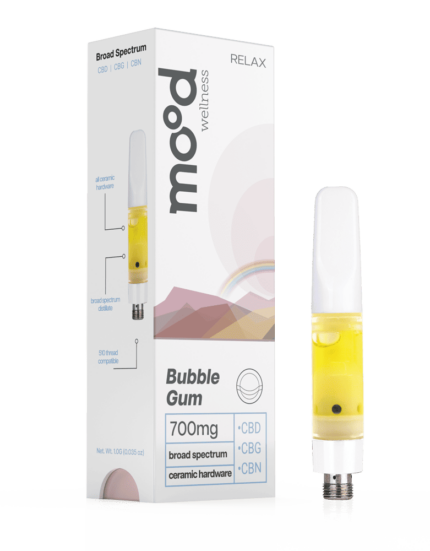
WADA exempts cannabidiol itself, but other cannabinoids remain prohibited in competition. A product may contain THC, CBG, CBN or contamination even when marketed around CBD.
USADA advises that athletes are strictly liable for prohibited substances found in their samples and that certification reduces but does not eliminate risk. Full-spectrum products are especially unsuitable for anyone seeking zero cannabinoid exposure.
Check the current rules that govern your sport, not a blog summary or an old prohibited list. Review every active ingredient, obtain batch-specific documentation and understand that cannabinoid clearance cannot be predicted precisely. The lowest-risk choice for a drug-tested athlete is to avoid cannabinoid products.
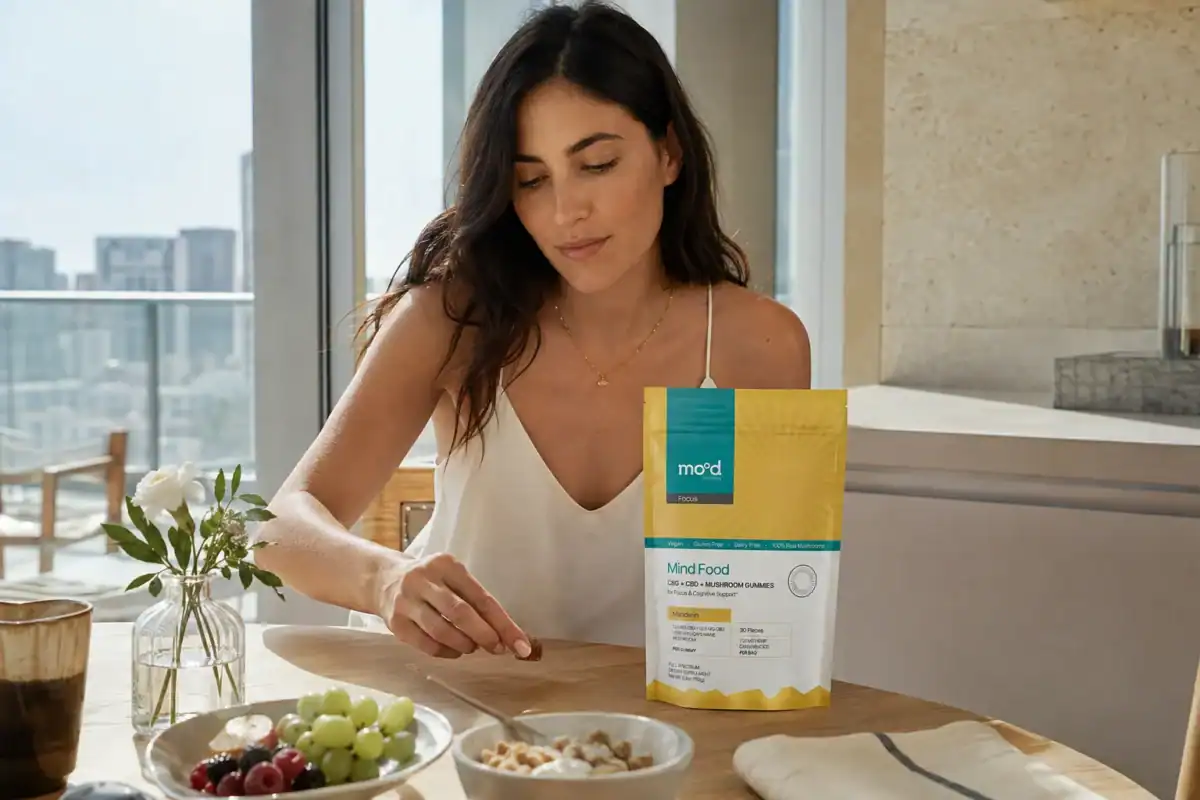
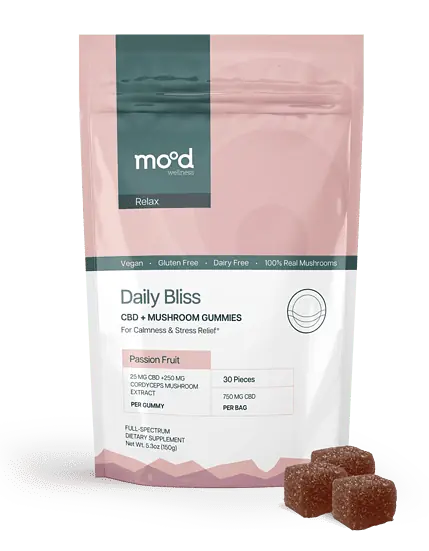
This warning is directly relevant to Daily Bliss because it combines Cordyceps with full-spectrum CBD. Its label transparency does not make it risk-free under anti-doping rules.
Buying checklist
How to evaluate a Cordyceps supplement
| Check | Useful disclosure | Why it matters |
|---|---|---|
| Species/material | C. militaris, Cs-4 or another clearly identified material | Prevents false equivalence |
| Part and cultivation | Fruiting body, mycelium, fermentation product or blend | Clarifies what is actually present |
| Preparation | Powder or extract; solvent/standardization when relevant | Supports research matching |
| Amount | Milligrams for each active per serving | A proprietary blend can hide the dose |
| Other actives | Caffeine, CBD, THC, herbs and vitamins | Changes effects, interactions and anti-doping risk |
| Testing | Current lot-specific identity, potency and contaminant report | Supports quality control |
| Claims | No guaranteed endurance, ATP or recovery promises | Marketing should not outrun evidence |
A third-party seal may improve confidence that a product met a defined testing program, but it does not validate an athletic-performance claim. Likewise, a batch COA can support identity, potency and contaminant checks only for the analytes and limits shown. It cannot reveal every possible substance or prove that the formula works.
For cannabinoid combinations, match the lot number to the certificate of analysis and examine cannabinoid potency and contaminant panels. Mood’s CBD COA guide explains the process. A COA verifies selected batch measurements; it does not prove athletic benefit.
Risk context
Cordyceps side effects and interactions
Small trials may miss uncommon or long-term harms. Reported or plausible reactions include digestive discomfort, dry mouth, nausea or allergic response. Product quality and additional ingredients can change the risk profile.
MSKCC advises caution with insulin or other glucose-lowering medication because additive effects may be possible, and with anticoagulant or antiplatelet medication because of a potential bleeding risk. A case report linked daily Cordyceps use with excessive bleeding after dental extraction, although case reports cannot establish frequency.
Ask a clinician or pharmacist before use if you are pregnant or breastfeeding, have a mushroom allergy, bleeding disorder, diabetes, immune-related condition, planned surgery, or take prescription medication. Stop use and seek urgent help for trouble breathing, facial or throat swelling, fainting or another severe reaction.
Supplements should not be used to self-treat persistent fatigue, reduced exercise tolerance or another medical symptom. Bring the full label and batch report to a clinician rather than only the marketing name.
A controlled personal experiment
How to test usefulness without fooling yourself
1
Choose one outcome
Examples include a repeatable submaximal pace at a fixed perceived effort or recovery of performance;not a vague feeling of “more energy.”
2
Create a baseline
Record several comparable sessions before changing anything. Note sleep, training load, heat, hydration and fueling.
3
Keep the formula identifiable
Avoid changing caffeine, multiple supplements and training structure at the same time. Reverify the label and batch.
4
Set stop rules
Stop for adverse effects and reassess if no consistent, meaningful change appears within a reasonable period.
This approach cannot turn a personal response into clinical proof, but it reduces obvious attribution errors. The NIH Office of Dietary Supplements emphasizes that performance supplements do not substitute for a nutritionally adequate diet, fluids, fitness and proper training.
Quick answers
Cordyceps workout questions
Is Cordyceps good before a workout?
No reliable acute pre-workout effect has been established. Most positive signals followed repeated use, and mixed formulas may contain ingredients that change how they feel.
Does Cordyceps increase VO2max?
Not consistently. The small older-adult Cs-4 trial reported threshold changes but no VO2max improvement, and other trials were null or mixed.
Does Cordyceps improve endurance?
Some small studies report selected endurance-related signals, while others in trained or healthy participants do not. No universal benefit is established.
Can Cordyceps help muscle recovery?
Direct human evidence for faster recovery, reduced soreness or restored strength is insufficient.
How much Cordyceps should an athlete take?
No universal evidence-based athletic dose exists. Study preparations and amounts vary and cannot be converted reliably across products.
Can drug-tested athletes use Cordyceps?
Cordyceps itself is a separate issue from cannabinoid formulas. Athletes should verify all ingredients and sport rules; full-spectrum CBD products can contain cannabinoids prohibited in competition.
Is Cordyceps a stimulant?
It is not caffeine or a conventional stimulant. Any immediate buzz may reflect other formula ingredients or individual expectation.
Evidence and disclosure
Sources and editorial review
- Memorial Sloan Kettering Cancer Center. Cordyceps monograph.
- Chen S, et al. Cs-4 and exercise performance in healthy older adults.
- Hirsch KR, et al. Cordyceps-containing mushroom blend and high-intensity exercise.
- Colson SN, et al. Cordyceps/Rhodiola supplement in male cyclists.
- Tsuk S, et al. Commercial Cordyceps/Reishi supplement and maximal exercise.
- NIH Office of Dietary Supplements. Exercise and Athletic Performance fact sheet.
- USADA. Six things athletes should know about cannabidiol.
Product disclosure: Mood Wellness sells Daily Bliss. The formula is included for transparent context, not as proof of improved athletic performance.
This article is educational and is not medical or anti-doping advice. Rules and product batches change; athletes are responsible for current governing-body requirements.
Written and reviewed by Mood MagazineMaterially researched and updated September 6, 2026. Clinical review is recommended before publication; no clinician review is claimed here.