
Start with identity
“Mushroom gummies” can mean three different product categories
Online listings often place very different products under one convenient label. That is a serious problem for comparison. A person shopping for a non-intoxicating wellness supplement may encounter packaging that hints at a psychedelic experience. Another product may say “magic” while listing no psilocybin at all. A third may contain familiar functional mushroom extracts alongside cannabinoids such as CBD, CBG or CBN.
The first category is a product represented as containing psilocybin or psilocin. Psilocybin is converted in the body to psilocin and can produce substantial changes in perception, emotion, cognition and time. Under current US federal law, psilocybin is a Schedule I controlled substance. State and local policies vary, and some supervised research or regulated programs operate under specific rules, but those exceptions do not make an ordinary online gummy an approved treatment or a generally lawful dietary supplement.
The second category includes products represented as containing Amanita muscaria, muscimol or “mushroom microdose” blends. Amanita is not a psilocybin mushroom. Its principal neuroactive compounds and risk profile are different. Ambiguous products may also contain synthetic or undisclosed ingredients. The marketing can deliberately blur those distinctions, so the front panel is not enough.
The third category is a functional mushroom supplement. These products commonly use non-psychedelic species such as Lion’s Mane, Reishi, Cordyceps, Turkey Tail, Maitake or Shiitake. They are sold as foods or dietary supplements rather than as psychedelic drugs. Evidence varies by species, preparation, population and outcome. They should not cause a psychedelic trip, but they can still cause side effects, allergies or medication concerns.
Different ingredients, different decisions
Magic, Amanita and functional gummies at a glance
| Question | Psilocybin product | Amanita or ambiguous psychoactive product | Functional mushroom supplement |
|---|---|---|---|
| What may be active? | Psilocybin/psilocin | Muscimol, ibotenic acid or another stated or undisclosed compound | Named non-psychedelic mushroom powder or extract; sometimes cannabinoids |
| Psychedelic or intoxicating? | Yes, potentially profound psychedelic effects | May be psychoactive or impairing, but not through psilocybin | Not intended to be psychedelic; cannabinoids may add separate impairment or THC exposure considerations |
| US federal context | Psilocybin is Schedule I | Depends on the actual ingredient and jurisdiction; “sold online” is not proof of compliance | May be marketed as a dietary supplement if it meets applicable requirements |
| Evidence question | Clinical research uses controlled compounds, screening and supervision | Retail evidence and product identity may be especially uncertain | Must be evaluated species by species, extract by extract and outcome by outcome |
| Key consumer check | Do not equate retail claims with clinical therapy | Avoid vague blends and implied effects without clear identity | Check species, part used, extract amount, serving and lot-linked testing |

This table describes broad categories, not a safety certificate for an individual product. The FDA investigation into Diamond Shruumz-branded edibles demonstrated why that distinction matters: tested products contained varying compounds, and reported illnesses included severe outcomes. A familiar flavor or gummy shape does not make an uncertain psychoactive formulation predictable.
Research is not retail therapy
What to understand about psilocybin gummies
Psilocybin research has attracted legitimate scientific interest, including trials involving carefully selected participants and structured psychological support. Those studies do not establish that an online or smoke-shop gummy contains a reliable amount, is suitable for a particular person or can be used to self-treat depression, anxiety, trauma or addiction. Clinical protocols may exclude people based on psychiatric, cardiovascular, medication and other risks, and they include safeguards that a retail package cannot reproduce.
The current live version of this article previously suggested that a consumer might choose magic gummies to address mental-health conditions, enhance creativity or pursue spiritual experiences. That framing is not responsible. A potential research finding in a controlled setting is not a recommendation, and an altered experience is not evidence that a condition has been treated.
Psilocybin can produce anxiety, panic, confusion, impaired judgment, nausea and dangerous behavior. People with certain psychiatric histories may face additional risk. Interactions and individual vulnerability cannot be resolved by “starting low,” so this guide provides no dosing instructions. Anyone experiencing severe agitation, seizures, loss of consciousness, difficulty breathing, chest symptoms or other acute illness after a mushroom edible should seek emergency help. In the United States, Poison Control is available at 1-800-222-1222.
Legal status also requires precision. Federal scheduling is one layer; state, tribal and local rules may differ, and regulated services in a particular jurisdiction may have narrow eligibility and location requirements. Readers should consult current official sources rather than a marketing page or an undated blog summary. Mood does not sell psilocybin products.
A separate risk category
Amanita, muscimol and vague “microdose” gummies are not psilocybin
Amanita muscaria contains compounds including muscimol and ibotenic acid. Its effects, toxicology and preparation differ from psilocybin mushrooms. Yet retail packaging may use red-and-white mushroom art, “legal magic” language or a microdose theme that encourages shoppers to treat all psychoactive mushroom products as equivalent. They are not.
The Diamond Shruumz investigation provides a concrete warning about uncertain identity. FDA testing found that samples did not all contain the same substances. Reported findings across products included muscimol, psilocin, acetylpsilocin, kavalactones and pregabalin. CDC reported 180 moderate or major illnesses across 34 states in the national investigation, with hospitalizations, intensive-care admissions and deaths among the reported outcomes. Those findings concern specific investigated products; they should not be used to claim that every mushroom gummy causes the same outcome. They do show why vague labels and assumed ingredients are unacceptable.
Red-flag language:
Be cautious when a product promises a trip or “microdose” experience but does not clearly identify the active ingredient and amount, hides ingredients inside a proprietary blend, lacks a readable lot number, or provides a test report that does not match the package.
Do not use a QR code as a substitute for reading the result. A useful report identifies the sample and lot, testing laboratory, date, method and analytes. It should not be treated as complete if it tests only for one expected compound while leaving plausible psychoactive adulterants or contaminants unexamined.
Non-psychedelic, not evidence-free
What functional mushroom gummies are
“Functional mushroom” is a market term for mushrooms used beyond ordinary culinary flavor, often in powders or extracts. Lion’s Mane is commonly positioned for cognition, Cordyceps for activity, Reishi for evening routines and Turkey Tail for immune-related interest. These associations combine traditional use, laboratory research, animal work and a smaller body of human evidence. The strength of evidence is not the same for every claim.
A functional mushroom gummy should not contain psilocybin merely because it uses the word mushroom. It also should not promise to diagnose, treat or cure a disease. Whether a study is relevant depends on the exact species, fungal material, extraction method, amount, duration and population. A trial of a standardized extract cannot automatically validate a different proprietary blend delivered in a small gummy.
Functional products may use fruiting body, mycelium or both. Those terms are useful only when the manufacturer explains the material and provides meaningful composition information. “Fruiting body” alone does not prove potency, and “standardized” does not guarantee safety or effectiveness. For some extracts, a quantified beta-glucan result can be more informative than a generic polysaccharide claim, but it still does not demonstrate a clinical outcome.
Gummies can also contain cannabinoids, sweeteners, flavors and other ingredients. Full-spectrum hemp can contain trace THC, which introduces drug-testing and impairment considerations separate from the mushroom component. Read the complete formula, not only the ingredient highlighted on the front.
Match the claim to the study
How to evaluate mushroom evidence without overpromising
Evidence should be read as a ladder. Traditional use can generate a useful research question, but it cannot by itself establish modern efficacy. Laboratory and animal studies can identify mechanisms and safety questions, but they do not tell us whether a retail gummy produces a meaningful benefit in people. Observational studies can find associations but may be affected by lifestyle, selection and reporting differences. Controlled human trials are more relevant to efficacy, yet their results apply most directly to the tested formulation and population.
Ask five questions when a brand cites research: Was the study in humans? Was it randomized and controlled? Did it test the same species and preparation? Was the amount comparable to the labeled serving? Did it measure a useful outcome rather than a laboratory marker? If several answers are no, the citation may provide background without supporting the marketing promise.

“More research is needed” should not be a vague escape clause. It means uncertainty must change the conclusion. A responsible article distinguishes what has been observed, what remains plausible and what has not been demonstrated. It also avoids translating an immune marker, nerve-growth mechanism or antioxidant assay into a promise that a gummy will prevent disease, sharpen every mind or transform athletic performance.
A repeatable buying check
How to read a mushroom gummy label and COA
- Name every active. Look for the full mushroom species and every cannabinoid or other active ingredient. Avoid relying on “magic,” “nootropic” or “adaptogenic” as identities.
- Confirm amounts. Distinguish amount per gummy from amount per serving, and note how many gummies make one serving.
- Identify the preparation. Powder, extract, fruiting body and mycelium are not interchangeable descriptions.
- Match the lot. The lot on the test report should match the package. Check the date and laboratory identity.
- Review the scope. Potency is not a contaminant panel. Depending on the formula, useful testing may include cannabinoids, heavy metals, pesticides, solvents, microbes and relevant fungal constituents.
- Check THC separately. A non-psychedelic mushroom does not mean a combined full-spectrum hemp product is THC-free.
- Reject disease promises. A supplement label or article should not turn limited evidence into treatment language.
Our guide to reading a certificate of analysis explains sample IDs, units, reporting limits and pass/fail panels. Mood also publishes current product lab reports. Transparency reduces uncertainty about identity and contaminants; it does not prove that a product will create a specific health outcome.
Who should pause first
Safety questions to discuss before using a mushroom supplement
Functional mushroom supplements can cause digestive symptoms or allergic reactions, and concentrated extracts may raise medication or condition-specific questions. People who are pregnant or breastfeeding, have a mushroom allergy, use prescription medicines, have a bleeding or immune-related condition, are preparing for surgery, or are considering a product for a child should ask a qualified clinician or pharmacist before use.
Do not combine an uncertain psychoactive gummy with alcohol, cannabis, prescriptions or other substances in an attempt to predict or intensify effects. Do not drive, swim, operate equipment or supervise children after consuming a potentially impairing product. Store every gummy away from children and pets; candy-like presentation can obscure the risk.
Stop using a supplement and seek advice if a new reaction occurs. Severe neurological, cardiovascular, breathing or consciousness changes warrant urgent care. Bring the package or a clear photograph of it when possible because the exact product and lot can help clinicians and poison specialists evaluate the exposure.
Mood’s place in the comparison
Mood makes functional mushroom formulas, not “magic” gummies
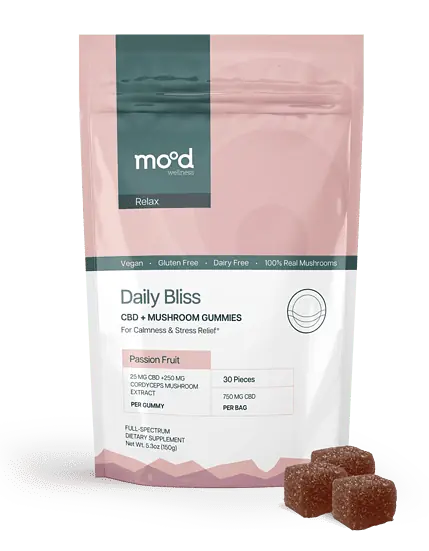
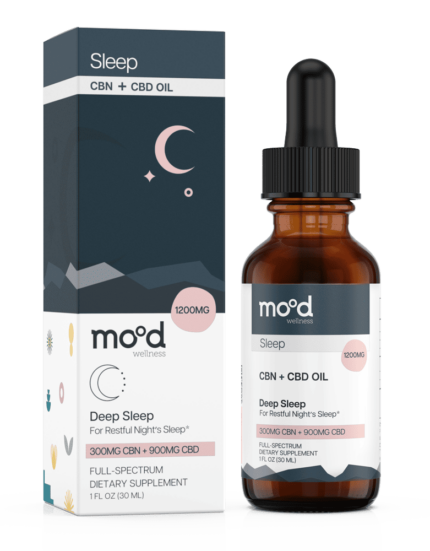
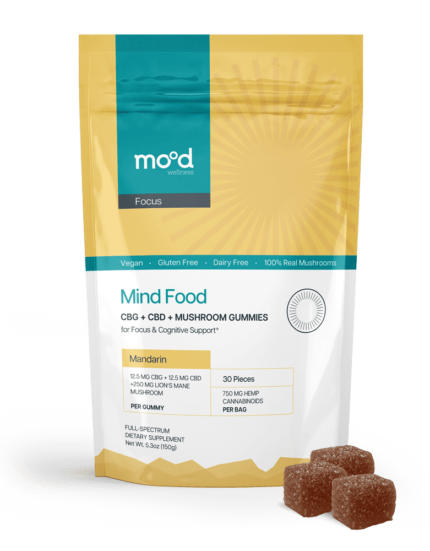
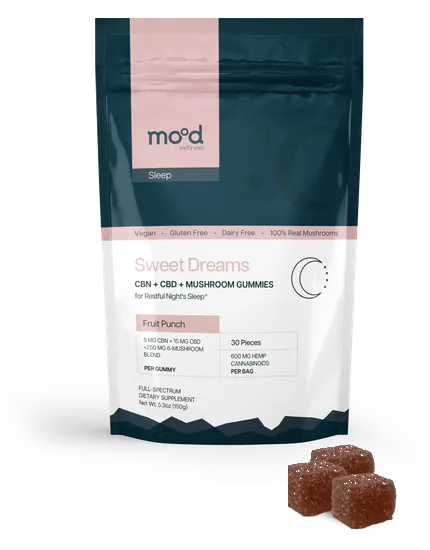
Mood Wellness publishes this guide and sells gummies that combine labeled functional mushroom extracts with cannabinoids. Mood does not sell psilocybin or Amanita gummies. Our formulas are organized around everyday routines, and the current product page and matching laboratory report, not a generic mushroom claim; are the appropriate sources for ingredients and amounts.
If that is the category you intended to shop, compare the Mood functional mushroom formulas by cannabinoid profile, mushroom extract, serving, THC exposure and routine. Mind Food, Daily Bliss and Sweet Dreams use different formulas; none should be presented as psychedelic therapy or treatment for a medical condition.
This is a restrained distinction, not a claim that every functional gummy is right for every person. Review the label, current COA and medication considerations before deciding. If your original goal is treatment for a mental-health condition, speak with a licensed professional rather than selecting a retail gummy from a comparison article.
Quick answers
Mushroom gummy questions
Are functional mushroom gummies magic mushrooms?
No. Functional mushroom products generally use non-psilocybin species such as Lion’s Mane, Reishi or Cordyceps. Verify the complete label because marketing language can be ambiguous.
Are all “magic mushroom gummies” made with psilocybin?
No. Some products refer to Amanita compounds, synthetic substances or unclear blends. Packaging alone cannot establish identity.
Can a functional mushroom gummy make you trip?
A product containing only ordinary functional mushroom ingredients should not cause a psychedelic trip. Unexpected impairment is a reason to stop use, preserve the package and seek medical or poison-control advice.
Are functional mushroom gummies FDA-approved?
Dietary supplements are not approved by FDA for safety and effectiveness before marketing in the same way as prescription medicines.
How do I verify a mushroom gummy?
Check every active ingredient and amount, serving size, preparation, lot number and matching laboratory report. Avoid vague proprietary blends and disease-treatment promises.
Does Mood sell psychedelic mushroom gummies?
No. Mood sells cannabinoid and functional-mushroom supplements, not psilocybin or Amanita products.
Evidence and disclosure
Sources and editorial review
- US Drug Enforcement Administration: Psilocybin drug fact sheet.
- FDA: Investigation of illnesses associated with Diamond Shruumz products.
- CDC MMWR: Severe illness associated with mushroom-containing chocolate products.
- FDA: Dietary Supplements 101.
- NIH Office of Dietary Supplements: What consumers need to know.
Disclosure: Mood Wellness publishes this guide and sells cannabinoid products formulated with functional mushrooms. Mood does not sell psilocybin, Amanita or psychedelic mushroom products.
Educational information only; not medical or legal advice. Laws change, evidence varies by ingredient, and no retail gummy should replace professional diagnosis or treatment.
Written by Mood MagazineMaterially researched and updated September 7, 2026.