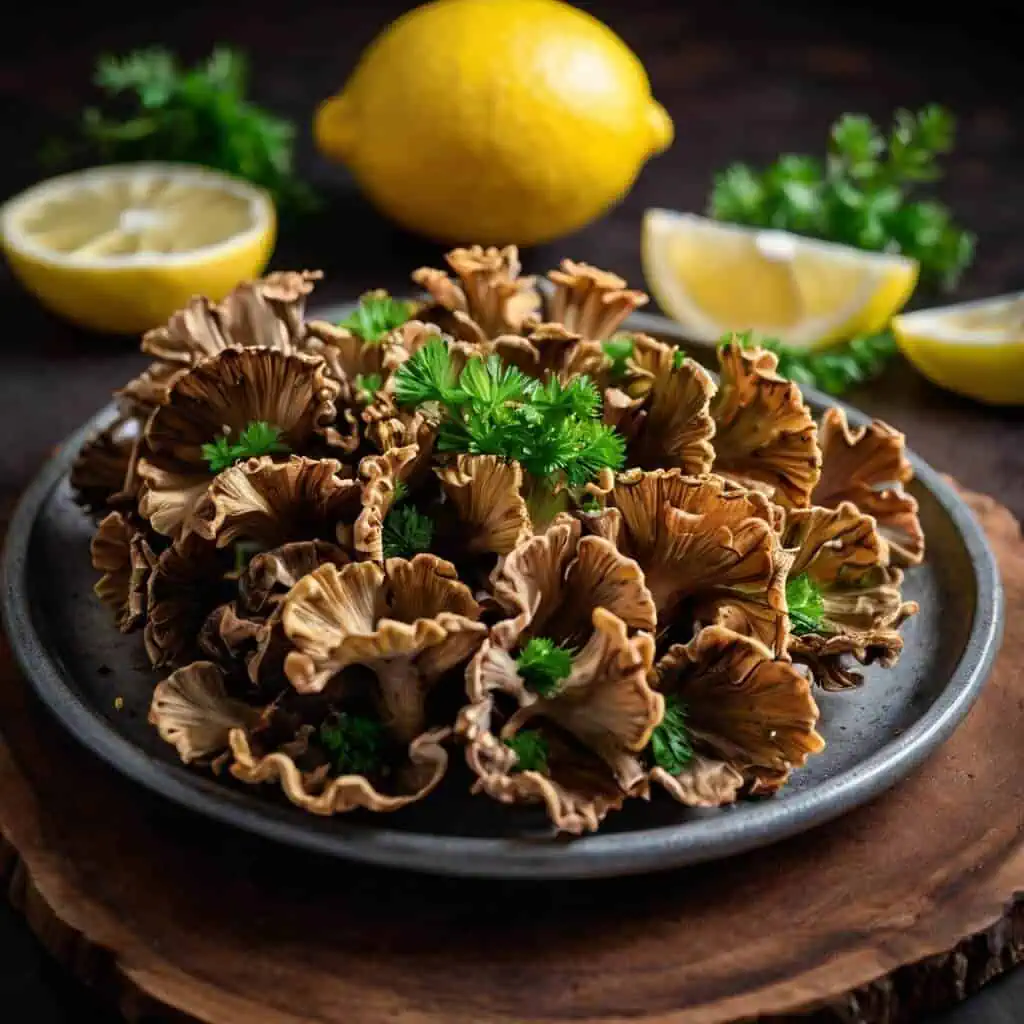
Feathery maitake clusters turn deeply golden at the edges while staying tender inside. A cold sparkling-water batter and steady oil temperature make the coating crisp rather than heavy.
Serve immediately, while the branching edges are at their crispest.
Maitake is naturally built for crunch: its thin, ruffled caps create dozens of delicate edges that brown quickly in hot oil.
The goal is not to bury those layers in batter. The best coating fills a few crevices, clings in a thin film and leaves the mushroom’s branching shape visible. Cold sparkling water limits gluten development, cornstarch encourages a brittle finish, and a thermometer keeps each batch consistent.
This recipe is an appetizer or snack, not a supplement recipe. It uses culinary maitake mushrooms and makes no wellness or medical claims.
Prep
20 min
Cook
20 min
Total
40 min
Yield
4 servings
ON THIS PAGE
Recipe card
Crispy maitake mushrooms
350°F / 175°C
Ingredients
200 g fresh maitake mushrooms
1 cup all-purpose flour
1 cup cornstarch
1 tsp baking powder
1 tsp fine salt
1 tsp black pepper
1 tsp garlic powder
1 tsp smoked paprika
1 cup very cold sparkling water
Vegetable oil, for frying
Lemon wedges
Chopped parsley
Method
Wipe the maitake with a damp cloth. Trim only the firm base and pull the mushroom into compact, bite-size clusters.
Whisk flour, cornstarch, baking powder, salt, pepper, garlic powder and paprika in a large bowl.
Add the cold sparkling water and whisk just until no dry pockets remain. A few small lumps are fine.
Heat 1 to 2 inches of oil in a heavy pan to 350°F (175°C). Set a rack over a sheet pan nearby.
Dip each cluster, let excess batter drip away and lower it carefully into the oil. Do not crowd the pan.
Fry for 2 to 3 minutes per side, until the coating is golden and the fine edges are crisp.
Drain on the rack, season immediately and serve with lemon and parsley.
Optional · the recipe works without it
Want to include CBD?
If you choose to add CBD oil, use a stage that distributes it evenly without prolonged cooking.
How to add it
Hot dishesRemove from heat, cool slightly, then stir it in.
Cold dishesMix into a dressing, filling or topping.
AmountFollow the label and divide evenly by servings.
For adults only. Do not serve CBD to children or guests without their knowledge. Ask a qualified clinician about suitability during pregnancy, breastfeeding, medication use or a medical condition. This is not medical advice.
The method
Three controls create a lighter crunch
Keep the batter cold
Use sparkling water straight from the refrigerator and mix only when the oil is nearly ready. A cold, briefly mixed batter develops less gluten, so the crust sets with a delicate snap instead of turning bread-like.
Hold the oil at 350°F
Oil that is too cool soaks into the coating before it sets. Oil that is too hot colors the outside before the thicker stem sections warm through. Check the temperature between batches and allow it to recover.
Leave room in the pan
Every cluster lowers the oil temperature and releases steam. Frying in small batches gives moisture somewhere to escape and prevents pieces from sticking together. Four smaller batches usually outperform two crowded ones.
Ingredient guide
Why each ingredient is here
Keep the clusters substantial enough to hold together, but small enough to cook evenly.
Maitake
Choose clusters that feel springy and smell clean and woodsy. Avoid wet, slimy surfaces. Compact pieces with both cap and stem hold together better than wispy fragments during coating and turning.
Flour and cornstarch
Flour gives the batter enough structure to cling. Cornstarch reduces chewiness and promotes a dry, crisp surface. Equal parts create a reliable balance without hiding the mushroom.
Sparkling water
Cold carbonated water loosens the batter while limiting gluten formation. Its bubbles are less important than its temperature, so very cold still water is a workable substitute.
Useful variations
Change the seasoning, not the method
Spicy
Add ¼ teaspoon cayenne to the dry mixture and serve with a lime-spiked mayonnaise. Keep the amount modest so the mushroom remains the main flavor.
Herb and lemon
Replace smoked paprika with dried thyme and add finely grated lemon zest after frying. Do not add lemon juice to the batter because extra acid and liquid change its consistency.
Gluten-free
Use a dependable 1:1 gluten-free flour blend with the cornstarch. Check that the baking powder and seasonings meet your dietary requirements. The batter may need a spoonful more water.
Serve while the fine edges are still crisp, with lemon to balance the fried coating.
Storage and reheating
Fresh is best, but leftovers can recover
Fried maitake is at its best within minutes, when steam is still escaping and the coating has not absorbed moisture. If you must store leftovers, cool them completely on a rack before placing them in a loosely covered container in the refrigerator for up to one day. Sealing warm mushrooms traps condensation and softens the crust.
Reheat at 400°F (205°C) in an oven or air fryer until hot and crisp, usually 5 to 8 minutes. Arrange the pieces in one layer and avoid the microwave, which tends to make the coating soft. Do not refry refrigerated pieces; the crust can darken before the center is evenly warm.
Before frying
Shop, clean and portion maitake with care
How to choose a good cluster
Fresh maitake should look layered and lively rather than flattened. The caps range from pale tan to deep gray-brown, and color alone is not a quality test. Pay closer attention to texture and aroma: the cluster should feel resilient, the edges should not be slimy, and the scent should be pleasantly earthy without sour or ammonia notes. A little dryness at the finest tips is usually harmless, but avoid packages with pooled moisture. If mushrooms are sold wrapped, look underneath the tray before buying.
Two hundred grams is enough for four appetizer portions because the batter and branching shape make each piece feel substantial. One large cluster is convenient, but several smaller clusters work equally well. Keep maitake refrigerated in a paper bag or a container lined with a dry towel, and cook it within a few days. Plastic that traps condensation accelerates softening.
Trim less than you think
The thick base holds the fan-shaped layers together. Slice away only the woody or discolored end, then pull the cluster apart along its natural seams. Aim for pieces about two to three inches wide, with a little central stem attached to every portion. Pieces that are too small cook quickly but become awkward to coat; very large pieces may brown before the dense center is tender.
Use a pastry brush or barely damp towel to remove visible soil. Maitake’s folds act like small cups, so rinsing can leave hidden water that later spits in hot oil. If washing is unavoidable, do it briefly, shake the cluster well and spread the pieces on towels until thoroughly dry. Do not coat mushrooms that still feel damp.
Troubleshooting
Fix the texture while you cook
The batter is too thick
It should coat a cluster in a thin, continuous film and drip slowly back into the bowl. If it sits like paste, whisk in cold sparkling water one tablespoon at a time. Avoid a large pour, which can take the mixture from heavy to watery before you have time to assess it.
The coating is pale or oily
This usually means the oil cooled below the target temperature. Remove the finished batch, wait until the thermometer returns to 350°F and reduce the number of pieces in the next batch. A wide, heavy pan loses less heat than a thin pan, but it still needs recovery time.
The edges brown too fast
If delicate tips darken while the center remains pale, the oil is too hot or the clusters are oversized. Lower the heat slightly, verify the thermometer and pull future pieces into smaller portions. Turn each cluster only once or twice so fragile edges stay attached.
Season at the right moment
Salt adheres best immediately after the mushrooms leave the oil. Place them on a rack, sprinkle from above and leave space between pieces. A rack preserves airflow better than a pile of paper towels; if you use paper, transfer the mushrooms to a clean platter after the first minute. Lemon belongs at the table rather than on the whole batch, because juice begins softening the coating as soon as it lands.
Serving plan
Bring each batch to the table at its best
For a relaxed appetizer, set out lemon wedges, chopped parsley and one sauce before heating the oil. A simple garlic aioli matches the crisp coating, while a soy-ginger dip adds acidity and salt without adding more richness. If you are serving several dishes, prepare cold salads and sauces first; fried maitake should be the final item cooked.
When cooking for a group, keep early batches on a rack in a 225°F (105°C) oven for no more than 15 to 20 minutes. This is a holding step, not a reheating method, and extended time will dry the mushroom. Do not cover the tray. Steam trapped under foil reverses the work that created the crisp shell.
The recipe scales well, but scaling the ingredients does not mean filling the pan with more pieces. Double the batter and mushrooms while maintaining the same batch size. Give the oil time to return to temperature after every round. If the batter warms while you work, set its bowl over a larger bowl of ice and stir briefly before coating the next cluster.
Questions
Answers before you start
Do I need to wash maitake mushrooms?
Avoid soaking them. Their layered caps hold water, which thins the batter and can cause splattering. Brush away debris or wipe the surface with a barely damp cloth.
Can I make the batter ahead?
Mix the dry ingredients ahead, but add sparkling water immediately before frying. Resting gives flour time to hydrate and develop gluten, producing a heavier coating.
Why did the coating slide off?
The mushroom may have been wet, the batter too thin or the oil not fully heated. Dry the clusters, let excess batter drip for only a second and verify 350°F before frying.
Can I use an air fryer instead?
You can make a different, lighter version, but wet batter does not behave the same way in an air fryer. For that method, use a dry flour coating followed by crumbs and a light spray of oil.
What can I serve with crispy maitake?
Lemon, parsley and a simple aioli are enough. Spicy mayonnaise, soy-ginger dip or a sharp cabbage salad also balance the rich, crisp coating.