
Mood claims need a defined outcome
Can CBD gummies improve your mood?
Current evidence does not establish retail CBD gummies as antidepressants or as treatments for mood disorders.
“Mood” can mean contentment, irritability, stress, anxiety, motivation or symptoms of depression. Studies do not measure these as one interchangeable outcome. A finding in an acute public-speaking anxiety task cannot prove sustained improvement in everyday mood, and a pharmaceutical CBD preparation cannot validate every gummy.
A systematic review of controlled trials involving mood disorders, anxiety disorders and PTSD found the evidence too small and limited to recommend cannabinoids for these psychiatric conditions. Newer anxiety reviews identify possible signals but also substantial differences in diagnosis, amount, duration and study quality, with contradictory results.
A 2023 feasibility trial in healthy young adults compared 300 mg CBD oil with placebo. Most mood, sleepiness and performance measures were similar after adjustment, while some vigilance measures differed. The amount and oil format do not translate directly to a retail gummy.
Evidence boundary:
CBD may be studied in specific stress and anxiety contexts, but “supports a better mood” is not a proven medical outcome and should not replace mental-health care.
Three questions, three evidence standards
Mood, stress, anxiety and depression are not synonyms
| Term | Useful question | Current CBD boundary |
|---|---|---|
| Everyday mood | Do I feel more content or less irritable? | No standardized retail-gummy benefit |
| Acute stress | How do I respond during a defined challenge? | Some early, context-specific research |
| Anxiety disorder | Do validated symptoms improve over time? | Promising but mixed and insufficient for self-treatment |
| Depression | Do clinically significant symptoms remit? | Insufficient CBD treatment evidence |
Expectancy matters. In a randomized crossover study, healthy adults received CBD-free hempseed oil but were told different information about whether it contained CBD. Beliefs about CBD influenced some stress, anxiety and mood responses. This does not mean every effect is placebo; it shows why blind comparison and concrete tracking matter.
Read the broader CBD benefits evidence guide before turning one promising mechanism into a personal outcome.
A gummy is more than CBD
What can change the mood experience?
- CBD per serving: research often uses defined preparations and amounts unlike retail products.
- Delta-9 THC: full-spectrum exposure can alter perception, anxiety and impairment.
- CBG or CBN: combined cannabinoids make cause difficult to assign.
- Caffeine or stimulant botanicals: these may increase energy, anxiety or palpitations.
- Functional mushrooms: evidence and amounts must be evaluated separately.
- Sugar and gummy base: these affect dietary fit and digestive tolerance.
- Expectation and setting: branding, context and routine can shape reported mood.
A front label may say “bliss,” “calm” or “mood” without defining an outcome. Treat those as positioning. The back label and batch report reveal the formula.
Track context before crediting the gummy
How to evaluate a CBD gummy for mood
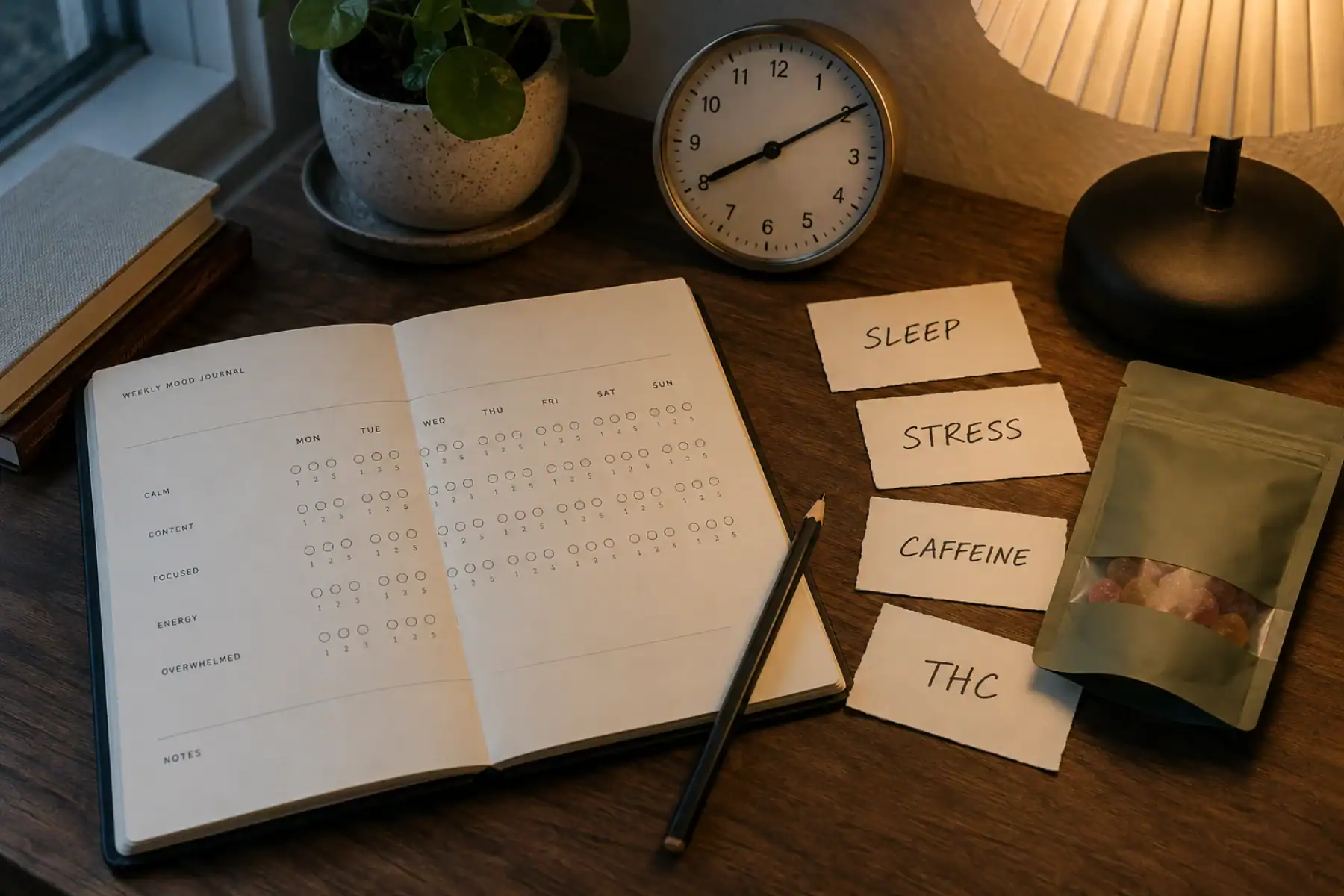
- Choose one measure. Rate irritability, calm or task engagement, not “mood” as a whole.
- Use the same time window. Compare like with like rather than morning with late evening.
- Record the full serving. Include CBD, THC, other cannabinoids and active ingredients.
- Track sleep and stress. Both can move mood more than a subtle product effect.
- Keep caffeine and alcohol visible. They can change anxiety, alertness and sleep.
- Change one variable. Do not alter serving, coffee and bedtime together.
- Review function. Better mood should not come with worse judgment, marked sleepiness or next-day impairment.
If there is no repeatable improvement, taking more is not the automatic next step. A neutral result is useful information.
Compare evidence, not emotional packaging
How to choose CBD gummies for a mood routine
- Read CBD per full serving. Do not use the package total.
- Identify the spectrum. Full spectrum may include trace THC.
- List every active amount. Avoid proprietary blends that hide meaningful quantities.
- Match a current batch report. Verify potency and contaminant scope.
- Reject treatment claims. Gummies should not promise to treat depression, anxiety or PTSD.
- Check sugar, allergens and dietary fit. The delivery format matters.
- Prefer reachable support and clear storage instructions. Keep gummies locked away from children and pets.
The CBD beginner’s guide explains spectrum, format and a first-use routine. For comparison shopping, use the stress-relief gummy guide.
Positive positioning still needs safeguards
Side effects, interactions and when to get support
CBD can cause drowsiness, changes in alertness, diarrhea, appetite changes, irritability or agitation. FDA materials also identify liver injury and medication interactions as concerns. THC, alcohol and sedating medicines can increase risk.
A pharmacist should review the exact gummy, full serving and medication list when interactions matter. Pregnancy, breastfeeding, liver disease, upcoming surgery, multiple medicines and safety-sensitive work warrant particular caution.
CBD gummies are not a substitute for professional care for persistent low mood, loss of interest, major sleep or appetite change, panic, mania or impaired daily function. In the United States, call or text 988 for suicidal thoughts or a mental-health crisis; use emergency services for immediate danger.
For medication questions, read CBD drug interactions. For alcohol, see mixing CBD and alcohol.
Support the day, not a diagnosis
How mood-focused gummies can add value
A mood-focused gummy can be a pleasant cue to pause, reset and return to the day with intention. The pre-portioned format is easy to carry, tastes familiar and can anchor a consistent wellness ritual without measuring a liquid.
Choose the formula by the kind of day you want to support. CBD-forward gummies may fit a calm, balanced routine. CBG or Lion’s Mane combinations may suit a daytime focus theme, while CBN belongs more naturally in an evening formula. Transparent amounts make those differences useful rather than cosmetic.
- Pair the gummy with a repeatable moment, such as after lunch or before an evening wind-down.
- Track one practical outcome, such as ease of transition, steadiness or enjoyment of the routine.
- Compare sugar, serving size, spectrum and verified cannabinoid content.
The value of a gummy can be both functional and experiential: a clear serving, an enjoyable format and a small ritual that supports the broader habits already helping you feel well.

Quick answers
CBD gummies and mood questions
Do CBD gummies make you happy?
No predictable “happy” effect has been established. Some people report calm or lower stress, while others notice no change or unwanted effects.
Can CBD gummies treat depression?
No. Evidence is insufficient and retail CBD gummies are not approved antidepressant treatments.
Are CBD gummies good for anxiety?
Research provides some signals in specific anxiety contexts, but findings are mixed and do not validate every gummy, amount or diagnosis.
How long do mood effects take?
There is no validated mood-gummy timetable. Oral timing varies with formulation, food, serving and the outcome measured.
Can THC worsen mood or anxiety?
THC can alter perception and may increase anxiety in some people, especially with higher exposure or sensitivity.
Can CBD gummies make mood worse?
FDA materials list irritability and agitation among possible mood changes. Stop and seek advice if symptoms worsen.
Can I use CBD gummies with antidepressants?
Interaction potential depends on the medicine and complete formula. Ask a pharmacist or prescriber before combining them.
Evidence and disclosure
Sources and editorial review
- Systematic review of cannabinoids in mood disorders, anxiety and PTSD.
- Systematic review of randomized CBD trials in anxiety disorders.
- CBD effects on mood, cognition and psychomotor function in healthy adults.
- Randomized study of CBD expectancy effects on stress, anxiety and mood.
- FDA consumer information on CBD products and safety.
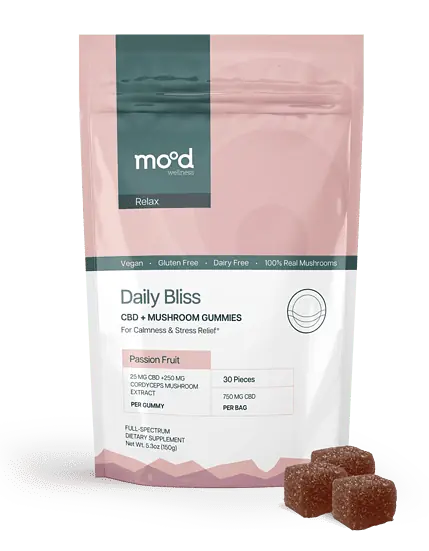
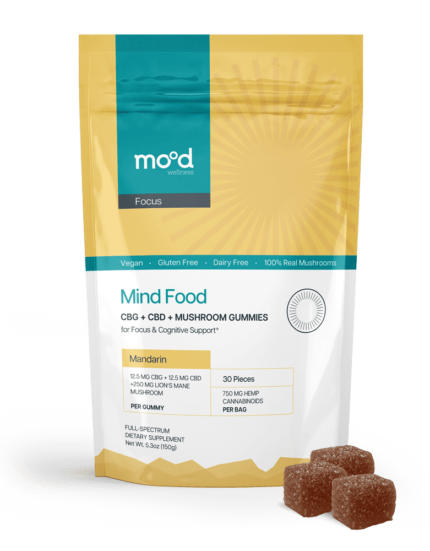
Product disclosure: Mood Wellness sells Daily Bliss, a combined CBD and Cordyceps gummy. It is shown as a formula-reading example, not evidence of mood-disorder treatment.
This article is educational and is not medical advice. It does not diagnose, treat or provide a personalized serving. Medical and mental-health claims require qualified review before publication.
Written by Mood MagazineEvidence and product information checked September 3, 2026. Medical review required before publication.