
Identity before benefits
What is Cordyceps?
Cordyceps is not one uniform mushroom. The name covers multiple parasitic fungi and several cultured materials sold as supplements.
Traditional references usually point to the caterpillar fungus now called Ophiocordyceps sinensis, which grows in high-altitude regions of Asia. Wild material is scarce and expensive. Modern products more often contain cultivated Cordyceps militaris, its fruiting body or mycelium, or a cultured strain such as Cs-4. A result from one preparation cannot automatically be transferred to another.
Researchers study nucleosides, polysaccharides and compounds such as cordycepin. These can influence pathways in cells or animals, but a plausible mechanism is not a demonstrated benefit in people. Species identity, cultivation, extraction and finished-product testing must come before a headline claim.

Evidence hierarchy
Cordyceps benefits at a glance
A 2026 narrative review of exercise and recovery research found a field limited by small samples, heterogeneous protocols, poorly characterized preparations, incomplete randomization reporting and frequent use of multi-ingredient products. That does not mean every result is false. It means confidence should remain proportionate to the study design.
| Claim area | Evidence | Responsible conclusion |
|---|---|---|
| Exercise performance | Small trials with mixed results and different products | Preliminary; no dependable universal boost |
| Fatigue or recovery | Limited, often indirect or multi-ingredient research | Not established for routine consumer use |
| Immune support | Mostly laboratory markers and preclinical studies | No proven protection from infection |
| Blood sugar, heart or kidney health | Predominantly preclinical or condition-specific research | Not a substitute for medical treatment |
| Cancer or anti-aging | Cell and animal mechanisms dominate | No proven treatment or longevity effect |
The comparison rule:
Ask whether the same species, material, amount, duration and outcome were tested. If not, “the research shows” is too broad.
Performance research
Does Cordyceps improve energy or exercise performance?
Some small studies report changes in oxygen use, time to exhaustion or related measures, while others do not show a meaningful performance advantage. Participants range from older adults to trained or recreationally active people. Protocols range from acute doses to multi-week supplementation. Products include Cs-4, C. militaris extracts and blends.
A 2026 randomized crossover study tested a single 1 g dose of standardized C. militaris extract 30 minutes before maximal cycling in only 12 recreationally active young men. Its acute design and very small sample make it useful as an early experiment, not a basis for promising that a consumer will feel more energy.
A frequently cited 2016 study used a mushroom blend. Even when an outcome changes, a blend cannot identify Cordyceps as the active cause. Trained athletes may also respond differently from sedentary adults, and a laboratory endpoint is not always a noticeable real-world benefit.

Ask whether one pre-exercise serving changed a prespecified endpoint and whether the sample was large enough.
Diet, sleep, training load and baseline fitness can easily confound small changes.
An effect from several mushrooms or other actives cannot be credited to Cordyceps alone.
Feeling alert is different from improving oxygen uptake, power or endurance.
Beyond performance
Immune, metabolic and other claimed uses
Cordyceps extracts and isolated compounds have shown immunologic, inflammatory, antioxidant, metabolic and antitumor activity in experimental systems. Such research helps scientists identify questions. It does not demonstrate that an over-the-counter gummy prevents colds, controls diabetes, protects kidneys, treats cancer or extends life.
Cell experiments may use direct concentrations that a human serving never produces. Animal studies may use a different route, material or dose. Condition-specific trials may also involve medical supervision and cannot be generalized to healthy users. Strong clinical claims require well-controlled human trials of the actual preparation, with meaningful outcomes and independent replication.
People managing cancer, diabetes, kidney disease, cardiovascular disease or another ongoing condition should not replace prescribed care with Cordyceps. Bring the exact label and current medication list to an appropriately qualified healthcare professional before adding a supplement.
Species and label literacy
How to compare Cordyceps supplements
| Label term | What it may identify | What to verify |
|---|---|---|
| C. militaris | Cultivated species that can form orange fruiting bodies | Fruiting body or mycelium, extract and amount |
| O. sinensis | Traditional caterpillar fungus | Wild claims, identity, sustainability and authenticity |
| Cs-4 | Cultured fungal strain/material | Exact strain, manufacturing and study match |
| Fruiting-body extract | Extract from the reproductive structure | Solvent, ratio, beta-glucan method and contaminants |
| Polysaccharides | Broad carbohydrate measure | Whether starch contributes; beta-glucans are more specific |
Prefer a label that names the species and mushroom material, gives a finished amount per serving, lists all active ingredients and links the lot to current testing. An extract ratio does not by itself prove potency or clinical equivalence. “Cordyceps complex” without component amounts prevents a meaningful comparison.

Side effects and precautions
Cordyceps side effects and interactions
NCBI LiverTox lists mild reported effects including abdominal discomfort, diarrhea, dry mouth, nausea, poor appetite and rash. It reports no established pattern of clinically apparent acute liver injury and discusses one uncertain 2023 case after long-term use. The absence of a clear signal is not proof that every extract or mixed product is risk-free.
Stop use and seek urgent help for trouble breathing, swelling of the face or throat, fainting or another severe allergic reaction. Persistent vomiting, diarrhea, rash or symptoms that interfere with daily life deserve prompt professional advice.
Interaction data are incomplete. Use extra caution with medicines affecting bleeding, blood sugar or immune function, and around surgery. People who are pregnant or breastfeeding, have a mushroom allergy, use prescription medication or manage a health condition should obtain individualized guidance. A gummy may also contain CBD, THC, sweeteners or other mushrooms with separate effects.
For reactions to a mixed edible, use the dedicated guide to Cordyceps gummies side effects. It separates the mushroom from the rest of the formula.
Amounts and timing
How much Cordyceps should you take?
No universal optimal dose, recommended dietary allowance or established tolerable upper limit exists. Published studies use unlike species, extracts and schedules, so their milligrams are not a personal prescription. A 1 g acute extract trial, for example, is not interchangeable with 1 g of whole powder or a mixed gummy.
Follow the product serving rather than combining products to imitate a study. Introduce one new variable at a time, record the complete product and timing, and do not escalate because you do not feel an immediate effect. There is no clinically established best time of day.
Choose a product for label clarity, identity and testing-not for the largest number on the front. Review the current batch report when available and account for every active ingredient in the serving.
Quick answers
Cordyceps mushroom questions
What is Cordyceps used for?
It is marketed for energy, exercise, recovery and immune support. Human evidence is preliminary and inconsistent, and disease-treatment claims are not established.
Is Cordyceps a stimulant?
It is not a conventional stimulant like caffeine. Some products are positioned for daytime energy, but a predictable stimulating effect has not been established.
Does Cordyceps contain cordycepin?
Some species and preparations can contain cordycepin, but amounts vary. Naming the compound does not prove that a finished product produces a clinical benefit.
Can you take Cordyceps every day?
Some studies use daily schedules, but long-term evidence for every preparation and person is limited. Follow the exact label and obtain guidance when risk factors apply.
Is Cordyceps vegan?
Cultivated products may be suitable for some vegan preferences, while wild O. sinensis naturally involves an insect host. Check the species, substrate, capsule and manufacturer statement.
Can Cordyceps infect humans?
Cordyceps fungi are specialized for particular insect hosts. Consumer Cordyceps does not turn people into “zombies”; the practical questions are product identity, contamination and tolerability.
Evidence and disclosure
Sources and editorial review
- NCBI LiverTox: Cordyceps (updated July 23, 2026).
- Narrative review of Cordyceps, exercise and recovery research (2026).
- Acute randomized crossover cycling study (2026).
- Cordyceps-containing mushroom blend and exercise study (2016).
- Memorial Sloan Kettering clinical summary.
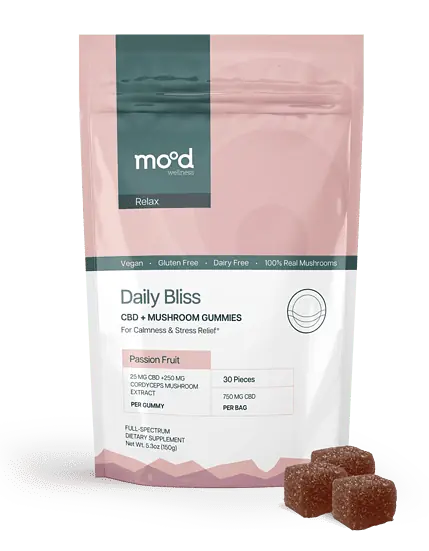
Product disclosure: Mood Wellness sells Daily Bliss. The formula is included to show why mixed products cannot be mapped directly to single-ingredient research.
This article is educational and is not medical advice. Cordyceps is not presented as a treatment or substitute for professional care.
Written and reviewed by Mood MagazineEvidence and product information checked September 2, 2026.