
Start with the honest answer
Why there is no universal Lion’s Mane dosage
“How many milligrams?” sounds precise, but the number loses meaning when two products contain different mushroom parts, extraction methods or combinations.
Lion’s Mane (Hericium erinaceus) is sold as food, dried powder, fruiting-body extract, mycelium preparation, liquid and mixed gummies. The US Food and Drug Administration has not approved a Lion’s Mane dose for treating a disease, and researchers have not established a recommended dietary allowance or tolerable upper intake level for supplements.
That does not mean every amount is equally sensible. It means a useful decision begins with product identity rather than a universal target. “One gram” of dried mushroom powder, “one gram” of a concentrated extract and “one gram” of a multi-ingredient blend do not describe the same exposure.
They do not tell you which part of the mushroom was used or how it was processed.
A 10:1 claim does not by itself prove ten times the biological activity or clinical equivalence.
Population, duration, preparation and outcome determine what a trial can support.
Human research has not defined a simple dose-response curve for retail Lion’s Mane products.
Human evidence
What amounts have Lion’s Mane studies actually tested?
Human trials demonstrate the range and inconsistency of research-not a single optimal serving. The table below reports the material as described by each study. It should not be used to convert one retail product into another.
| Study and population | Material and protocol | What the result means |
|---|---|---|
| Mori et al.; 30 adults aged 50–80 with mild cognitive impairment | Four 250 mg tablets containing 96% dry powder, three times daily: about 3 g/day for 16 weeks | Selected cognitive scores improved during intake, then declined after stopping. Small, condition-specific study. |
| Docherty et al.; 41 healthy adults aged 18–45 | 1.8 g/day for 28 days, plus an acute assessment | A limited signal in one task and a trend in stress were reported; null findings and small sample require caution. |
| Surendran et al.; 18 healthy younger adults | Single 3 g dose of a standardized 10:1 fruiting-body extract | No significant overall improvement in composite cognition or mood; one task-level signal was observed. |
| College-age cohort | 10 g/day for four weeks | No improvement in measured cognition or metabolic flexibility. A larger number did not guarantee benefit. |
Do not turn the highest study amount into a goal.
A research protocol may be designed for a particular material and population under monitoring. It does not establish the best starting point, the maximum safe amount or an equivalent dose for another extract.

Form changes the comparison
Powder, fruiting-body extract and mycelium are not interchangeable
A whole-mushroom powder generally contains dried, milled material. An extract uses water, alcohol or another process to concentrate selected compounds. Mycelium is the fungal network rather than the visible fruiting body, and some mycelium products include growth substrate. Each can have a different chemical profile.
Hericenones are usually discussed in relation to fruiting bodies, while erinacines have been studied in certain mycelium preparations. These mechanistic details do not prove a consumer outcome, and a front-label “polysaccharides” number can include starch. Beta-glucan testing is more informative, but it still does not make two preparations clinically equivalent.

| Format | What the amount tells you | What to verify |
|---|---|---|
| Food or whole dried powder | Mass of culinary or milled mushroom material | Species, mushroom part and serving definition |
| Fruiting-body extract | Mass of the finished extract | Extraction method, ratio or DER, beta-glucan method and testing |
| Mycelium preparation | Mass of mycelial material, sometimes with substrate | Growth medium, residual starch and product-specific standardization |
| Gummy or blend | Mass per gummy or full serving, alongside other actives | Every active, units per serving, cannabinoids, caffeine and current testing |
A five-step label framework
How to compare Lion’s Mane labels without false precision
1
Confirm the species
Look for Hericium erinaceus, not only a marketing phrase such as “mushroom complex.”
2
Identify the mushroom material
Record whether the label names fruiting body, mycelium, whole mushroom, powder or extract.
3
Normalize the serving
Check whether the front number is per gummy, capsule, scoop or multi-unit serving.
4
Read every active ingredient
Caffeine, cannabinoids, herbs and other mushrooms can change effects, interactions and timing.
5
Check testing and lot identity
Prefer current product-specific reports and meaningful beta-glucan or contaminant methods over a generic “lab tested” badge.

Practical use
A conservative start-and-observe approach
If a healthy adult chooses to try a Lion’s Mane supplement, the product’s labeled serving is the relevant starting reference. Do not combine several Lion’s Mane products to recreate a study number, and do not increase the amount simply because an immediate sensation is absent. Many studies lasted weeks, while some found no meaningful overall effect.
Introduce one nonessential supplement at a time. Record the exact product, lot, amount, timing and any changes in sleep, digestion, skin or daily function. A simple record is more useful than changing dose, caffeine and other supplements simultaneously.
If you are choosing between powder and extract, compare identity and testing before price per milligram. A smaller number from a characterized extract is not automatically weaker, and a larger powder amount is not automatically more effective.
Stop when the experiment stops being low risk.
Discontinue a new product and seek appropriate guidance for persistent symptoms. Urgent care is appropriate for breathing difficulty, facial or throat swelling, fainting or another sign of a severe allergic reaction.
Morning versus evening
When should you take Lion’s Mane?
No clinical evidence establishes one universal time of day. Morning is a practical choice for many focus-positioned products because it keeps a new variable away from bedtime and makes daytime reactions easier to observe. That is a routine choice, not proof that Lion’s Mane acts like caffeine.
A mixed formula can change the answer. Review caffeine, CBD, CBG, THC and every other active. If sleep changed after starting a product, use the dedicated guide on Lion’s Mane and insomnia rather than assuming the mushroom is the only cause.
Safety boundary
Who should get individualized guidance first?
Human safety data are limited, and product composition varies. Speak with a qualified healthcare professional before use if you are pregnant or breastfeeding, have a mushroom allergy, manage a health condition or take prescription medication. Bring the complete label, not only the product name.
Reported reactions in clinical summaries include digestive discomfort, nausea and skin rash. Mixed hemp products also require attention to cannabinoid effects, medication interactions, driving impairment and drug-testing policies. “Natural” and “stimulant-free” do not mean interaction-free.
This dosage guide addresses product comparison and label interpretation. For the separate question of upper limits, excessive servings and symptom response, read how much Lion’s Mane is too much.
Quick answers
Lion’s Mane dosage questions
Is 1,000 mg of Lion’s Mane a lot?
The number cannot be interpreted alone. One thousand milligrams of powder, extract or a blend are different materials. Check mushroom part, preparation, full serving and other active ingredients.
Can I take Lion’s Mane every day?
Some human studies used daily protocols for several weeks, but that does not establish long-term safety for every product or person. Follow the label and obtain individualized guidance when health conditions or medications are involved.
Is extract stronger than powder?
An extract may concentrate selected compounds, but “stronger” is incomplete without extraction details, standardization and testing. Do not use an extract ratio as a guaranteed clinical-equivalence formula.
Should Lion’s Mane dosage be based on body weight?
Good human evidence has not established a consumer milligram-per-kilogram formula. Avoid calculators that present a body-weight dose as a clinical standard.
How long does Lion’s Mane take to work?
There is no reliable universal onset. Studies used different outcomes and ranged from acute testing to weeks of use, with mixed results. Lack of an immediate sensation is not a reason to escalate the serving.
Evidence and disclosure
Sources and editorial review
- Systematic review of Lion’s Mane benefits, uses and adverse effects (2025).
- Mori et al. Lion’s Mane in adults with mild cognitive impairment.
- Docherty et al. Acute and 28-day Lion’s Mane supplementation in healthy adults.
- Surendran et al. Acute standardized fruiting-body extract trial.
- Four-week 10 g/day college-age cohort study.
- Memorial Sloan Kettering Cancer Center: Lion’s Mane Mushroom.
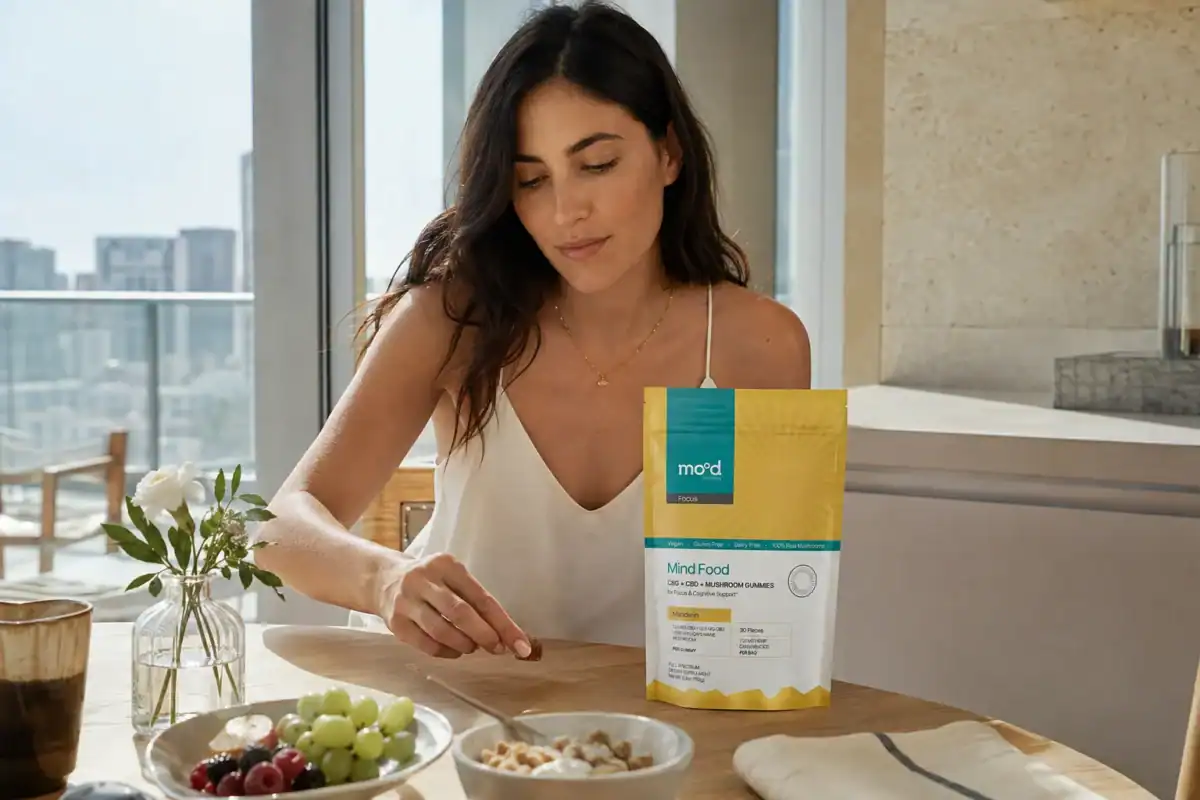
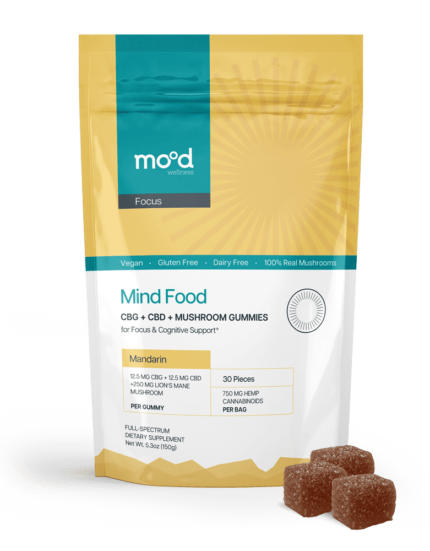
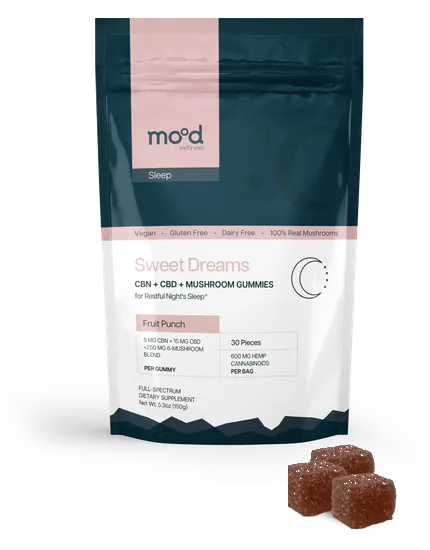
Product disclosure: Mood Wellness sells Mind Food, a CBD, CBG and Lion’s Mane gummy. Its exact label is discussed to demonstrate how a mixed formula differs from single-ingredient research materials.
This article is educational and is not medical advice. It does not establish a personal dose or replace individualized care.
Written and reviewed by Mood MagazineResearch and product information checked September 2, 2026.